Florida Workplace Sexual Assault Lawyer
If you were sexually assaulted at work in Florida, you may have a civil claim not only against the person who committed the assault, but also against the employer, contractor, staffing company, property owner, security provider, or other parties that allowed the danger to develop.
A workplace sexual assault case is not just about what happened between two individuals. It may also involve negligent hiring, negligent retention, negligent supervision, unsafe access, ignored complaints, poor security, power imbalance, or a work environment that allowed a foreseeable risk to continue.
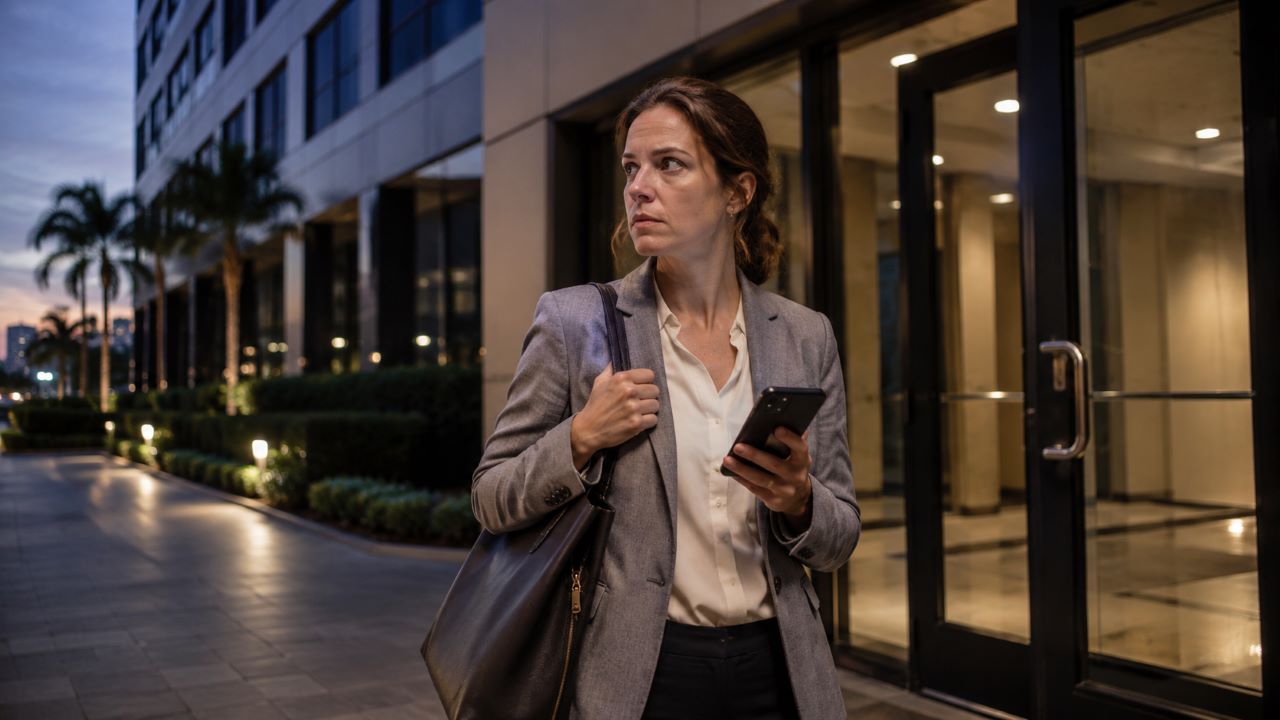
Workplace sexual assault claims in Florida may involve employers, staffing companies, contractors, or property owners that failed to address foreseeable danger or unsafe access.
At Armando Personal Injury Law, we approach these cases with urgency, discretion, and respect. These claims often involve both physical harm and severe psychological trauma, and they may require fast action to preserve surveillance footage, staffing records, complaint histories, key-card logs, and other evidence that can disappear quickly.
Florida workplace sexual assault lawyer: quick answer
Yes, potentially. If you were sexually assaulted at work in Florida, you may have a civil claim against the perpetrator and, depending on the facts, against an employer, staffing company, contractor, property owner, or other responsible party. These cases may involve sexual battery, assault, negligent hiring, negligent retention, negligent supervision, negligent security, unsafe access, ignored warning signs, or failure to respond to known risks.
| Question | Short answer |
|---|---|
| Can an employer be sued after a workplace sexual assault? | Potentially, yes, if the employer or another entity failed to act reasonably in hiring, supervision, safety, or response. |
| Does the perpetrator have to be a supervisor or employee? | No. Liability may still exist if the attacker was a co-worker, contractor, client, customer, vendor, patient, resident, or other person the workplace allowed access to the victim. |
| What if there was no criminal conviction? | A civil case may still exist because civil claims are separate from criminal prosecutions. |
What our legal team handles in workplace sexual assault cases
Armando Personal Injury Law represents survivors in workplace sexual assault and physically harmful civil injury cases in Florida. That includes sexual battery, assault, unwanted physical sexual contact, coercive physical conduct, and related negligence claims against employers or other responsible parties.
Our legal team does not treat every form of non-contact workplace misconduct as the same kind of case. Some workplace misconduct may raise different legal issues and different types of claims. Our focus here is on cases involving physical harm, civil liability, and the survivor’s right to seek damages.
Why workplace sexual assault cases are different from ordinary injury claims
A workplace sexual assault case can involve more than one legal theory at the same time.
These cases may involve questions like:
- Did the employer know or should it have known the perpetrator posed a danger?
- Were prior complaints, threats, or warning signs ignored?
- Was the work setting isolated, poorly supervised, or physically unsafe?
- Did the perpetrator have job-based power, access, or control over the survivor?
- Did the company fail to screen, supervise, or remove a dangerous employee or contractor?
- Did the property itself have poor access control, weak security, or other unsafe conditions?
That means a strong case may involve both intentional wrongdoing and institutional negligence.
Who may be liable in a Florida workplace sexual assault case?
More than one defendant may matter.
| Potential defendant | Why they may matter |
|---|---|
| The person who committed the assault | Direct liability for the attack |
| Employer or corporate entity | Hiring, retention, supervision, staffing, safety, or response failures |
| Staffing company or labor provider | Screening, placement, supervision, or reassignment issues |
| Contractor or subcontractor | If the workplace allowed access through contracted work |
| Property owner or manager | Negligent security or unsafe premises conditions |
| Security company | Staffing failures, patrol issues, access-control failures, or ignored reports |
| Other institutions with control over the workplace | Hospitals, care facilities, schools, hotels, apartment operators, venues, or other entities depending on the setting |
A strong case looks beyond the immediate perpetrator and asks who had notice, control, and the ability to reduce the danger.
| Perpetrator type | Why liability may still extend beyond the attacker |
|---|---|
| Supervisor or manager | Power imbalance, scheduling control, private access, and ignored warning signs may matter |
| Co-worker | Prior complaints, unsafe staffing decisions, or negligent supervision may matter |
| Contractor or temp worker | Screening, placement, reassignment, and access-control issues may matter |
| Client, customer, patient, or resident | The workplace may still be liable if it exposed the survivor to a known danger or failed to protect them |
| Vendor or third-party visitor | Property access, escort failures, and inadequate monitoring may matter |
When an employer or workplace may be liable for sexual assault in Florida
A workplace entity may face civil liability when its own failures helped create the conditions for the assault.
Negligent hiring
If the employer hired someone who should not have been placed in a position of access, trust, or control, negligent hiring may be part of the case.
Negligent retention
If the employer kept a dangerous worker after complaints, warning signs, misconduct, or suspicious behavior, negligent retention may be part of the case.
Negligent supervision
If the company failed to monitor an employee, contractor, or supervisor who had access to vulnerable workers or isolated settings, negligent supervision may matter.
Negligent security
If the workplace had poor access control, weak key-card systems, broken locks, no cameras, inadequate security staffing, or unsafe isolated areas, negligent security may strengthen the claim.
Failure to respond after complaints or warning signs
If the company ignored harassment complaints, stalking behavior, prior misconduct, boundary violations, or other warning signs, that may significantly strengthen the case.
How workers’ compensation may affect a workplace sexual assault claim
Florida’s workers’ compensation law contains an exclusive-remedy provision, but that does not automatically answer every workplace sexual assault case. The analysis can become more complex when the facts involve intentional acts, non-employer perpetrators, third-party defendants, negligent security, staffing companies, contractors, or claims against entities other than the direct employer.
That means a survivor should not assume either that workers’ compensation is the only remedy or that it has no effect at all. The right answer depends on who committed the assault, who is being sued, what legal theories apply, and how the facts fit Florida law.
What if the workplace says the assault was an unforeseeable criminal act?
That is a common defense, but it does not automatically end the case.
An employer may argue that it cannot be responsible for a criminal act committed by another person. The stronger question is whether the assault was foreseeable in light of prior complaints, boundary violations, suspicious behavior, employee discipline history, unsafe isolated work conditions, staffing decisions, poor supervision, or access-control failures.
If the employer knew or should have known about a danger and failed to respond reasonably, the case may involve more than one person’s criminal conduct. It may involve preventable workplace failure.
What does not automatically defeat a workplace sexual assault claim?
Employers and insurers may try to narrow responsibility quickly. But several facts do not automatically end the case.
The following do not automatically defeat the claim:
- the assault happened after work hours or during a shift transition
- the perpetrator was a co-worker, contractor, client, customer, patient, or resident rather than a supervisor
- the assault happened in a storage room, office, parking area, stairwell, break room, vehicle, or other work-related area
- the employer says there were no prior complaints
- the survivor did not report every detail immediately
- the company had policies on paper against harassment or violence
- there was no criminal conviction
Those facts may still be argued, but they do not answer whether the risk was foreseeable, whether the company acted reasonably, or whether workplace conditions made the assault more likely.
Where workplace sexual assaults may create civil liability issues
The location of the assault matters because it can show what area was controlled and what safety measures should have existed.
| Location | Why it may matter |
|---|---|
| Office, conference room, or manager’s office | May involve power imbalance, isolation, access control, or ignored complaints |
| Storage room, supply room, or back-of-house area | May involve poor supervision, no cameras, or unsafe isolated spaces |
| Parking lot or garage | May involve negligent security, poor lighting, lack of patrols, or unsafe access |
| Company vehicle or jobsite travel setting | May involve isolation, control, and employer-created access to the victim |
| Hospital, nursing home, hotel, school, or apartment property | May involve institutional overlap and negligent security in addition to employment-related claims |
| Off-site work event or employer-controlled lodging | May still create liability if the employer arranged, controlled, or failed to secure the setting |
The key issue is not only where the assault happened. It is whether the workplace or institution controlled the setting, created the access, or ignored a foreseeable danger.
What evidence matters most in a Florida workplace sexual assault case?
The strongest evidence is often the evidence the employer or workplace controls.
| Evidence source | Why it matters |
|---|---|
| Surveillance footage | May show access points, movement, isolation, or the survivor’s condition afterward |
| Complaint history and HR records | May show prior warnings, reports, discipline, or ignored misconduct |
| Staffing schedules and personnel records | May show who worked, who had access, and whether the perpetrator was retained despite warning signs |
| Key-card, badge, or access logs | May show who entered restricted areas and when |
| Emails, messages, and internal communications | May preserve warnings, reports, follow-up, or attempts to minimize the issue |
| Medical and forensic records | May document injury, timing, trauma, and treatment needs |
Useful evidence may include:
- surveillance footage from offices, halls, elevators, entrances, garages, or work areas
- employee complaints, incident reports, or HR records
- text messages, emails, chats, and internal messages
- schedules, access logs, badge records, and call logs
- work assignments, travel records, or staffing records
- witness statements from co-workers, supervisors, clients, or security staff
- medical records and forensic exam records
- journals, symptom logs, and written timelines created soon after the incident
In many workplace cases, evidence preservation has to happen quickly. Video may be overwritten. HR files may not be offered voluntarily. Internal messages may disappear. Personnel changes may happen fast after a complaint.

HR records, complaint histories, surveillance footage, access logs, staffing schedules, and witness accounts may become important evidence after a workplace sexual assault in Florida.
What if the perpetrator was a supervisor, manager, or person in authority?
That may significantly affect the case.
A supervisor, manager, trainer, shift lead, or person with authority may have had scheduling control, disciplinary power, private access, influence over reporting, or the ability to isolate the survivor. That kind of authority can matter both factually and legally.
It may also strengthen arguments that the employer should have acted differently once warning signs appeared.
What if the perpetrator was a client, customer, patient, resident, or vendor?
A workplace may still face liability.
If the employer knew workers were being exposed to a dangerous person, ignored complaints, failed to provide security, continued assigning the worker to that person, or failed to change staffing or access practices, the case may still involve workplace negligence even when the attacker was not an employee.
The key issue is not only employment status. It is whether the workplace allowed a foreseeable danger to continue.
What if the assault happened during employer-arranged travel, lodging, or an off-site event?
A workplace case may still exist.
If the employer arranged the travel, controlled the lodging, required attendance, assigned the work event, or failed to secure the setting, the fact that the assault happened away from the main office does not automatically end the claim. Hotels, conference sites, company vehicles, off-site job locations, training trips, and employer-sponsored events can still raise workplace-related civil liability issues depending on the facts.
In some cases, those facts may also create overlapping claims against hotels, property owners, security providers, or other third parties.
What should you do after a workplace sexual assault?
If you are safe enough to act, the most important steps usually include:
Get to safety and seek medical care
Medical care protects health and may preserve important evidence.
Ask about a forensic exam if appropriate
A forensic exam may help preserve time-sensitive evidence even if you are not ready to make every legal decision immediately.
Preserve work-related records
Save texts, emails, messages, schedules, access records, call logs, names of witnesses, and anything tied to the event or prior warnings.
Write down the timeline
Document where the assault happened, who was present, what was said, any prior complaints or warning signs, and what happened afterward.
Be careful with HR, insurer, or defense communications
Do not sign releases, accept quick payments, or give recorded statements without legal review.
Talk to a lawyer early
An attorney can move quickly to preserve surveillance, internal complaints, staffing records, access logs, and other evidence before it is lost.
Can a workplace sexual assault case move forward without a criminal conviction?
Yes, potentially.
A civil case is separate from a criminal case and uses a lower burden of proof. The question in civil court is not whether the state proved guilt beyond a reasonable doubt. The question is whether the evidence shows it is more likely than not that the defendant or institution caused or contributed to the harm.
That distinction matters in workplace sexual assault cases because employer negligence can still be proven even when criminal proceedings are limited, delayed, or unresolved.
What compensation may be available in a workplace sexual assault case?
Medical expenses
Emergency care, testing, treatment, medications, and forensic medical costs.
Mental health treatment
Therapy, psychiatric care, trauma counseling, medication management, and future PTSD-related treatment.
Lost wages and reduced earning capacity
Missed work, job changes, reduced hours, lost promotions, interrupted career development, and longer-term earning issues.
Pain and suffering
Emotional distress, humiliation, anxiety, depression, panic, fear, flashbacks, and loss of enjoyment of life.
Functional life disruption
Sleep problems, fear of work, fear of authority, transportation disruption, relationship harm, and loss of independence.
Out-of-pocket losses
Security expenses, job-search costs, transportation changes, temporary housing, and related practical losses.
Punitive damages in the right case
In especially serious circumstances, punitive damages may be explored where the evidence supports especially wrongful conduct.
FAQs About Workplace Sexual Assault Claims in Florida
Can I sue my employer after a workplace sexual assault in Florida?
Potentially, yes. An employer may face civil liability if unsafe conditions, negligent hiring, negligent retention, negligent supervision, or ignored warning signs helped create the danger.
What if the attacker was a co-worker and not a supervisor?
The employer may still be liable if the risk was foreseeable and the company failed to act reasonably.
What if the attacker was a client, customer, patient, or vendor?
A workplace may still face liability if it exposed the survivor to a known danger, ignored complaints, or failed to provide reasonable safety.
What evidence matters most in a workplace sexual assault case?
Surveillance footage, complaint history, HR records, messages, staffing records, access logs, witness statements, medical records, and forensic evidence may all matter.
Does a civil case require a criminal conviction first?
No. A civil case is separate and can still move forward even if there was no conviction.
Does workers’ compensation automatically block a workplace sexual assault lawsuit?
Not automatically. Florida’s workers’ compensation law can affect workplace injury cases, but the answer may depend on who committed the assault, who is being sued, and whether the facts involve intentional acts, non-employer defendants, negligent security, or other civil liability theories.
What damages may be available in a workplace sexual assault case?
Potential damages may include medical care, therapy, lost income, emotional distress, pain and suffering, career disruption, and related losses.
Does this page apply to all workplace harassment claims?
No. This content is focused on workplace sexual assault and physically harmful civil injury cases.
Should I talk to a lawyer before signing anything from HR or an insurer?
Yes. A release, recorded statement, or early payment may narrow the case before the full evidence and damages picture is understood.
What if I was placed through a staffing agency or temp service?
That may matter a great deal. A staffing agency, labor provider, contractor, or host employer may each play a role in screening, placement, supervision, reassignment, access, or response to warning signs.
How Armando Personal Injury Law can help
When our firm evaluates a Florida workplace sexual assault case, we look at more than the assault itself. We examine who controlled the workplace, what warnings existed, what records still exist, what access or power the perpetrator had, and how the assault changed the survivor’s life.
That may include fast evidence preservation, complaint and HR record review, surveillance and access-log analysis, negligent-supervision investigation, and damages development designed to reflect the full trauma impact.
Talk to a Florida workplace sexual assault lawyer confidentially
If you were sexually assaulted at work in Florida, the most important next step may be understanding whether the case involves employer liability, third-party liability, property-based liability, or a combination of those issues before key evidence disappears.
Armando Personal Injury Law can review what happened in a private, supportive consultation and help you understand whether an employer, staffing company, contractor, property owner, or other party may share responsibility, what evidence may still exist, and what next steps may help protect your claim.
Call (813) 482-0355 or contact us online for a free, confidential case review.

About the Author
Attorney Armando Edmiston is the founding attorney of Armando Personal Injury Law in Tampa and St. Pete, Florida. A U.S. Marine veteran and Hillsborough County native, he represents injured people and families in serious injury cases, including car accidents, truck accidents, motorcycle accidents, wrongful death, negligent security, premises liability, and nursing home abuse and neglect claims. Armando earned a B.S. in Biology from the University of South Florida and a J.D., cum laude, from Nova Southeastern University. He is also one of only six lawyers in Florida listed with the ACS Forensic Lawyer-Scientist designation.
Disclaimer: This page provides general information and is not legal advice for your specific situation. Every case depends on its facts, available evidence, and applicable deadlines.