Vertiport Accident Claims in Tampa Bay
People can be seriously hurt at a vertiport even if no aircraft crashes in flight. In Tampa Bay, future vertiport claims may involve boarding and unloading injuries, unsafe walking areas, crowd-flow failures, poor site design, charging-area hazards, downwash exposure, emergency-response failures, or inadequate warnings near powered-lift aircraft operations.
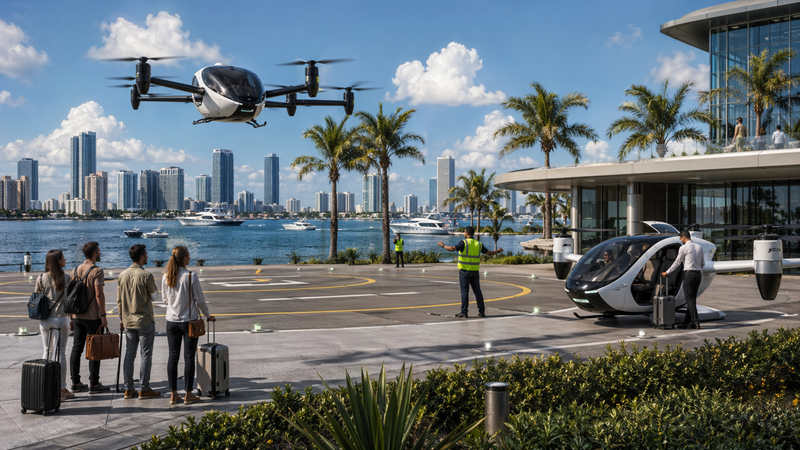
Future vertiport injuries may involve boarding hazards, unsafe site design, and premises liability issues.
That is why vertiport claims are unique. They sit at the intersection of premises liability, transportation safety, operational negligence, and future air taxi infrastructure. A person injured at a vertiport may have a claim against a property owner, site operator, air taxi company, contractor, maintenance provider, or multiple parties at the same time.
What Is a Vertiport Accident Claim?
A vertiport accident claim is a legal claim arising from injuries or death caused by unsafe conditions at or around a vertiport, landing site, passenger-loading area, or powered-lift support facility. The FAA describes a vertiport as a piece of land or a structure used for powered-lift aircraft landings and takeoffs. In practice, that means future injury claims may involve much more than the aircraft itself.
A valid claim may grow out of a slip and fall, unsafe boarding zone, poor barrier placement, charging-equipment hazard, site-traffic conflict, inadequate fire protection, or dangerous crowd movement near takeoff and landing areas. In the right case, a vertiport injury may look partly like a premises liability claim and partly like an air taxi operations case.
How Vertiport Injuries Are Different From In-Flight Air Taxi Crashes
Vertiport claims focus on what happens on the ground. The injury may happen before takeoff, after landing, or while a person is moving through the site rather than while the aircraft is in the air.
That changes the liability analysis. Instead of focusing only on pilot conduct or aircraft performance, the case may turn on premises liability, site design, warnings, pedestrian flow, restricted-area control, charging systems, downwash and outwash risks, emergency planning, or the way operators move people through a small but high-risk environment.
What Kinds of Vertiport Accidents Could Lead to Claims?
Not every serious vertiport case will involve a dramatic impact event. Many valid claims may come from unsafe site operations and preventable ground-level hazards.
- Boarding and unloading injuries
- Falls on ramps, stairs, walking paths, or uneven surfaces
- Unsafe crowd-flow or passenger-channeling failures
- Lack of warnings around active landing or takeoff areas
- Barrier, gate, or restricted-area failures
- Downwash or outwash injuries involving debris or loss of balance
- Charging-station or electrical hazards
- Fire-suppression or emergency-response failures
- Collisions involving service vehicles, baggage carts, or passenger traffic near the site
- Injuries to bystanders near the vertiport perimeter
The FAA’s vertiport guidance and related research make this risk profile easier to understand. The agency has issued vertiport design guidance for powered-lift infrastructure and has separately researched eVTOL downwash and outwash because the airflow generated during takeoff and landing can pose risks to people and property near operations.

Who May Be Liable After a Vertiport Accident?
Liability after a vertiport injury may fall on more than one party. Depending on the facts, the case may involve the property owner, vertiport operator, air taxi company, maintenance vendor, security or crowd-management contractor, charging-system provider, or another negligent party.
Vertiport Operator Liability
A vertiport operator may be liable if it fails to maintain safe passenger areas, control access to dangerous zones, use proper warnings, manage crowd flow, or coordinate safe boarding and unloading procedures.
Property-Owner Liability
A property owner may be liable where unsafe walking surfaces, poor lighting, bad drainage, dangerous layout decisions, or inadequate site maintenance contribute to the injury.
Air Taxi Company Liability
The operator running the flight service may be liable when the injury grows out of unsafe passenger movement, poor staff instructions, bad loading practices, or failure to coordinate safe ground operations.
Contractor and Vendor Liability
Electrical contractors, charging vendors, maintenance providers, security companies, or site-management contractors may also face liability where their work creates or fails to fix a dangerous condition.
Why Multi-Party Analysis Matters
Vertiport cases can become evidence-heavy quickly. One company may control the site, another may manage passenger flow, another may maintain infrastructure, and another may run the aircraft. The right legal analysis looks at all of them early, before responsibility is pushed onto the wrong party.

How Florida Premises Liability Law May Apply
Many vertiport claims will involve premises liability principles because the injury happens in a physical place controlled by one or more parties. The core questions are familiar: who controlled the area, what dangerous condition existed, who knew or should have known about it, and what should have been done to make the site safer.
In a Tampa Bay vertiport case, that may include unsafe walking areas, poor crowd management, bad signage, lack of barriers, defective lighting, inadequate supervision, dangerous traffic separation, or failure to protect people from known operational hazards near takeoff and landing areas.
Florida law may also overlap with negligence, product liability, and wrongful death theories depending on what caused the injury and who was involved. The same event may involve a site defect, an operational mistake, and a dangerous equipment problem at once.
What Evidence Matters Most After a Vertiport Injury?
Evidence may disappear fast at a future vertiport site. A strong claim may depend on preserving site evidence, surveillance, maintenance records, and operational materials before the property owner or operator reframes what happened.
Site and Premises Evidence
- Photos and video of the area
- Surveillance footage
- Walking-path, barrier, or gate conditions
- Warning signs and restricted-area markings
- Lighting, drainage, and surface conditions
- Site maps and passenger-routing layouts
Operational Evidence
- Boarding and unloading procedures
- Staff instructions and radio traffic
- Incident reports
- Security logs
- Operator manuals and site-safety policies
- Fire-safety and emergency-response plans
Technical Evidence
- Charging-station records
- Maintenance logs
- Inspection history
- Equipment manuals
- Electrical-system documentation
Medical and Damages Evidence
- ER and hospital records
- Diagnostic imaging
- Follow-up treatment records
- Wage-loss documentation
- Evidence of permanent impairment, disability, or future care needs
The earlier this evidence is preserved, the easier it is to determine whether the problem was premises liability, operational negligence, poor site design, or a combination of failures.
What Injuries Can Happen at a Vertiport?
Vertiport injuries can be severe even without an in-flight crash. A fall, debris strike, electrical event, or crowd-flow failure can produce serious trauma and lasting damages.
- Traumatic brain injuries and concussion symptoms
- Neck and back injuries
- Fractures and orthopedic trauma
- Burns and electrical injuries
- Soft-tissue injuries that worsen over time
- Facial injuries, scarring, and disfigurement
- Psychological trauma and anxiety after a high-risk event
- Fatal injuries in the most serious cases
This range matters because the claim value in a vertiport case may depend on future care, permanent impairment, lost earning capacity, and the seriousness of the disruption to the person’s life, not just the first medical bill.
What Damages May Be Available?
A successful vertiport injury claim may involve much more than emergency treatment. Damages should reflect the full human and financial impact of the injury.
- Past and future medical expenses
- Lost wages
- Lost earning capacity
- Pain and suffering
- Mental anguish and emotional distress
- Permanent impairment or disability
- Scarring and disfigurement
- Rehabilitation and assistive-care needs
- Funeral expenses and wrongful death damages in fatal cases
What Should You Do After a Vertiport Accident?
The first steps after a vertiport injury can affect both health and liability proof. Medical care and evidence preservation matter right away.
- Get medical care immediately
- Photograph the area and any visible hazards
- Save witness names and contact information
- Preserve messages, receipts, and discharge papers
- Report the incident without guessing about fault
- Be cautious with recorded statements or quick releases
- Talk to a lawyer before site footage or maintenance records disappear
How Armando Personal Injury Law Can Help
Vertiport injury cases may require a broader investigation than a standard slip-and-fall claim. Armando Personal Injury Law can help identify who controlled the site, who managed the operation, what evidence needs to be preserved, and how the injury should be framed under Florida negligence, premises liability, or wrongful death law.
If you or a loved one is hurt at a vertiport, loading area, passenger zone, or powered-lift support site in Tampa Bay, the goal is to protect evidence early, identify every potentially responsible party, and build a claim that reflects the full seriousness of the harm.
Frequently Asked Questions About Vertiport Accident Claims in Tampa Bay
What is a vertiport accident claim?
A vertiport accident claim is an injury or wrongful death claim arising from unsafe conditions at a powered-lift landing site, passenger-loading area, or related support facility.
Can you sue if the injury happened during boarding or unloading?
Potentially yes. Boarding and unloading injuries may involve premises liability, unsafe passenger handling, poor warnings, bad crowd control, or operator negligence.
Who may be liable for a vertiport injury?
Potentially liable parties may include the vertiport operator, property owner, air taxi company, maintenance vendor, charging contractor, security contractor, or another negligent party.
Are vertiport cases different from in-flight crash cases?
Yes. Vertiport cases often focus more heavily on premises liability, passenger movement, signage, restricted-area control, site design, and other ground-safety issues.
What evidence matters after a vertiport accident?
Surveillance footage, site photos, warning signs, maintenance records, incident reports, staff communications, medical records, and witness statements may all matter.
What if the vertiport injury caused a death?
A fatal vertiport accident may support a Florida wrongful death claim depending on who was at fault and what losses the surviving family suffered.
Contact Armando Personal Injury Law Today
Talk to Armando Personal Injury Law if you need help understanding who may be responsible after a vertiport accident in Tampa Bay. Early legal review can help preserve evidence, clarify whether premises or operational negligence is involved, and protect your right to pursue full damages.
Client Testimonial
“As a trial attorney who has been practicing law for over 20 years, I can’t recommend Armando enough to anyone considering retaining him. He is detail-oriented, sharp-minded, and simply knows how to win. Importantly, he is passionate about his work - and it shows in the results he obtains for his clients. Armando is truly one of Tampa’s finest attorneys.” – Timothy Bilecki, ⭐⭐⭐⭐⭐
Actual client. Results may vary; each case is different.
About the Author
 Attorney Armando Edmiston is the founding attorney of Armando Personal Injury Law in Tampa and St. Pete, Florida. In addition to representing injury victims and families in serious personal injury and wrongful death cases, Armando brings a science-based background to evidence-heavy claims. He earned a B.S. in Biology from the University of South Florida, a J.D., cum laude, from Nova Southeastern University, and is one of only six lawyers in Florida listed with the ACS Forensic Lawyer-Scientist designation. His practice background includes personal injury litigation, medical malpractice-related work, and public defense, which supports a disciplined, evidence-driven approach to complex injury cases.