Who Is Liable After an Air Taxi Crash in Florida?
Liability after an air taxi crash in Florida may extend far beyond one pilot or one company. Depending on how the crash happened, a claim may involve the operator, pilot, aircraft manufacturer, battery or software provider, maintenance contractors, vertiport operators, property owners, or multiple negligent parties at the same time.
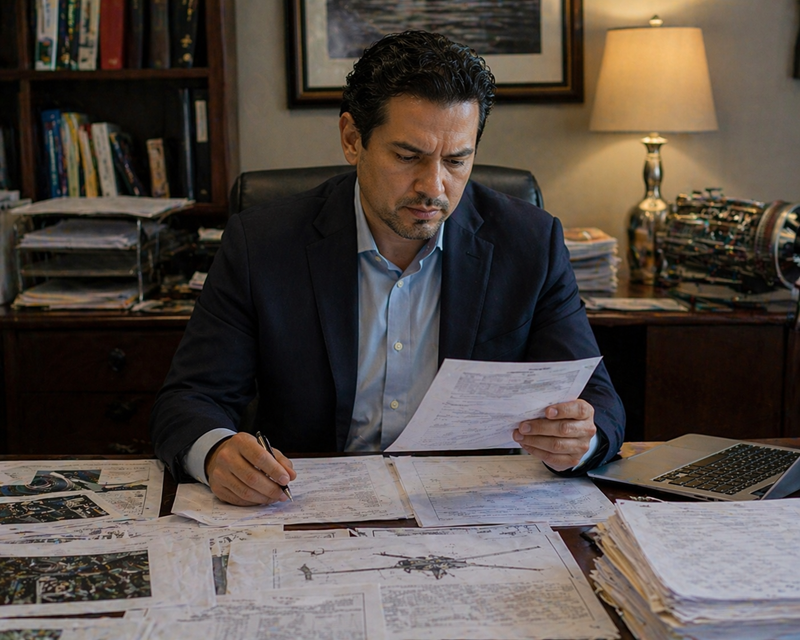
Liability after an air taxi crash may involve operators, manufacturers, maintenance vendors, or site-related defendants.
That matters because these cases should not be treated like ordinary car accident claims. They may involve commercial aviation operations, corporate systems, product defects, and site-safety issues all at once.
If you are looking for the short answer, it is this: the liable party after an air taxi crash in Florida may be the operator, the pilot, the manufacturer, a maintenance vendor, a vertiport or property operator, or several of them together.
What Makes Air Taxi Liability Different From an Ordinary Crash Case?
Air taxi liability is different because these aircraft sit at the intersection of aviation, product liability, and commercial transportation. The FAA’s Air Taxis and powered-lift framework makes clear that many aircraft commonly described as air taxis fall within a regulated powered-lift category, which means future Florida claims may involve operational negligence, pilot error, product-defect theories, maintenance failures, charging or battery problems, site and vertiport safety issues, layered insurance, and multiple defendants.
When Can the Air Taxi Operator Be Liable?
The operator may be liable when the company running the aircraft fails to use safe procedures, adequate training, proper maintenance controls, or sound operational judgment.
Examples of Operator Negligence
- putting aircraft into service without proper safety procedures
- using poorly trained or inadequately supervised personnel
- failing to inspect, maintain, or ground unsafe aircraft
- ignoring known operational risks
- using unsafe dispatch practices
- pressuring pilots or crews into risky decisions
- failing to use appropriate safety protocols for loading, unloading, or passenger handling
Why Operator Records Matter
Operator records, manuals, training systems, dispatch decisions, and safety procedures may become central evidence in a Florida injury case. They may show whether the company created, ignored, or failed to correct a known safety problem before the crash.

When Can the Pilot or Crew Be Liable?
The pilot or crew may be liable when their conduct helps cause the crash or injury. That could include poor judgment, failure to follow procedures, bad communications, fatigue, improper response to weather or emergencies, or mistakes during takeoff, landing, and passenger operations.
Pilot-Related Liability Issues May Include
- inadequate preflight decision-making
- unsafe approach or landing technique
- failure to respond correctly to equipment warnings
- communication failures
- failure to follow flight or emergency procedures
- negligent passenger handling during boarding or unloading
Why Training and Certification Matter
Pilot qualification, training records, and powered-lift operating credentials may matter more in these cases than they would in an ordinary roadway crash.
When Can the Manufacturer Be Liable?
A manufacturer may be liable if the aircraft or one of its systems was defective. In some future air taxi cases, the strongest claim may not be against the operator alone. It may be against the companies that designed, made, tested, marketed, or warned about the aircraft and its critical systems.
Product Liability May Involve
- design defects
- manufacturing defects
- inadequate warnings
- sensor failures
- navigation or control-system failures
- propulsion failures
- software failures
- battery thermal events
- charging-system defects
Why Product Claims Matter
Florida product cases can become especially important where a crash appears tied to engineering choices, component failures, or known safety issues rather than a single human mistake. Florida’s comparative-fault statute also matters in product cases because fault allocation can shape how defendants try to spread blame.

When Can Maintenance Contractors or Service Vendors Be Liable?
Maintenance contractors, inspection vendors, charging providers, and other service companies may also be liable if their negligence helped cause the event.
Examples Include
- skipped inspections
- poor repair work
- failure to identify unsafe conditions
- faulty charging procedures
- inadequate documentation
- negligent maintenance oversight
- improper return-to-service decisions
Why the Service Chain Matters
Future air taxi operations may rely on multiple companies, not just one operator. A serious Florida case may require tracing responsibility across a full maintenance and service chain, especially where one defendant tries to blame a contractor or vendor.
When Can Vertiport Operators or Property Owners Be Liable?
Not every air taxi injury will come from an in-flight crash. Some claims may arise from the vertiport, landing area, passenger zone, or nearby property conditions.
A Vertiport or Property-Related Claim May Involve
- unsafe boarding or unloading areas
- poor site design
- dangerous crowd-flow conditions
- inadequate warnings or barriers
- negligent traffic control
- poor lighting or slip hazards
- unsafe emergency-response planning
- failure to secure restricted areas
Can More Than One Party Be Liable After an Air Taxi Crash?
Yes. In fact, multi-defendant cases may be common.
An Air Taxi Crash in Florida May Involve Overlapping Fault By
- the operator
- the pilot
- the aircraft manufacturer
- a battery or software company
- maintenance vendors
- charging contractors
- a vertiport operator
- a property owner
- another negligent third party
Why This Matters
Finding every liable party can affect what evidence must be preserved, what insurance may apply, how the case is framed, and whether one defendant tries to blame another. In multi-defendant cases, early investigation can materially change both the evidence picture and the available coverage picture.
How Does Florida Law Affect Liability After an Air Taxi Crash?
Florida liability law can shape who may recover, how fault is argued, and how quickly a claim must be filed.
Comparative Fault
Florida’s comparative-fault framework can affect recovery if defense lawyers successfully shift blame onto the injured person or another party.
Filing Deadlines
Florida negligence claims generally carry a two-year limitations period. Delay can be especially dangerous in a technical transportation case because evidence may disappear long before the filing deadline arrives.
Wrongful Death
If the crash causes a fatal loss, the Florida Wrongful Death Act applies. Fatal cases may involve survivor damages, estate-related issues, and a broader damages analysis than a nonfatal injury claim.
What Evidence Helps Prove Liability After an Air Taxi Crash?
Liability in these cases will often turn on evidence that disappears quickly. The right evidence may help prove whether the problem was operator negligence, pilot error, product defect, poor maintenance, unsafe site conditions, or some combination of them.
Key Evidence May Include
- flight data and telemetry
- pilot training and certification records
- dispatch records and communications
- maintenance logs and inspection history
- software and system data
- battery and charging records
- operator manuals and safety procedures
- scene photos and video
- vertiport surveillance
- incident reports
- witness statements
- emergency-response records
- medical records and damages documentation
Why NTSB Materials Matter
Federal aviation investigation materials may help explain probable cause and causation issues, but civil liability still has to be proven through the facts, defendants, and legal claims in the case.
What Damages May Be Available If Liability Is Proven?
If liability is established, damages may include far more than the first round of medical bills.
Depending on the Facts, Recoverable Damages May Include
- past medical expenses
- future medical care
- lost wages
- lost earning capacity
- pain and suffering
- emotional distress
- permanent impairment
- scarring and disfigurement
- rehabilitation needs
- assistive-care costs
- funeral expenses in fatal cases
- wrongful death damages for eligible survivors
Why This Matters
It is risky to let an operator, insurer, or manufacturer frame the loss too narrowly at the start. A careful damages analysis may reveal long-term financial, medical, and human losses that are not obvious in the first days after a crash.
What Should You Do If You Believe Multiple Parties Are Responsible?
Get medical care first. Then preserve evidence and get a lawyer involved before the liability picture hardens around an incomplete story.
Early Steps That Can Matter
- seek immediate medical evaluation
- preserve photos, videos, receipts, and communications
- save any operator or insurer messages
- identify witnesses
- avoid quick recorded statements
- do not assume one company’s version of the event is complete
- request a legal review before critical evidence is lost
How Armando Personal Injury Law Can Help
Air taxi liability cases may require a broader investigation than ordinary injury claims. Armando Personal Injury Law can help identify every potentially responsible party, preserve key evidence, evaluate negligence and product liability issues, and build a claim that reflects the full seriousness of the injuries or loss.
If the crash happened in Tampa Bay or affects a Florida family trying to understand operator, manufacturer, or site-related fault, the right next step is to discuss what happened before evidence disappears and before blame is pushed onto the wrong party.
FAQs About Air Taxi Crash Liability
Who can be sued after an air taxi crash in Florida?
Potential defendants may include the operator, pilot, aircraft manufacturer, component maker, maintenance contractor, charging vendor, vertiport operator, property owner, or another negligent third party.
Can the aircraft manufacturer be liable after an eVTOL crash?
Yes. If the crash was caused by a design defect, manufacturing defect, software problem, battery issue, or inadequate warning, the manufacturer or another company in the product chain may be liable.
Is the NTSB report enough to prove liability?
Not by itself. NTSB materials may help explain probable cause and the sequence of events, but civil claims still require a separate liability analysis.
Can more than one party be responsible for the same air taxi crash?
Yes. These cases may involve overlapping fault by operators, pilots, manufacturers, service vendors, or property-related defendants.
How long do you have to file an air taxi injury lawsuit in Florida?
For negligence claims, Florida law generally provides a two-year deadline, though the exact timing can depend on the claim and the parties involved.
What if the crash caused a death?
A fatal air taxi crash may create a Florida wrongful death claim. The Wrongful Death Act governs who may recover and what damages may be available.
Client Testimonial
“Very professional and attentive to every detail; was pleased with the way my case was handled and an excellent outcome.” – Don D., ⭐⭐⭐⭐⭐
Actual client. Results may vary; each case is different.
About the Author
 Attorney Armando Edmiston is the founding attorney of Armando Personal Injury Law in Tampa and St. Pete, Florida. In addition to representing injury victims and families in serious personal injury and wrongful death cases, Armando brings a science-based background to evidence-heavy claims. He earned a B.S. in Biology from the University of South Florida, a J.D., cum laude, from Nova Southeastern University, and is one of only six lawyers in Florida listed with the ACS Forensic Lawyer-Scientist designation. His practice background includes personal injury litigation, medical malpractice-related work, and public defense, which supports a disciplined, evidence-driven approach to complex injury cases.