
Can Uber or Lyft Still Be Liable If the Assault Happened After the Ride Ended?
If an Uber or Lyft driver sexually assaulted a rider after the trip technically ended, that does not automatically defeat a civil claim. The rideshare company may still argue that the incident happened outside the ride, outside the app, or outside the company’s responsibility. But legal liability does not always turn on a single timestamp inside the platform.
In many Florida cases, the real question is whether the assault was still closely tied to the ride, the driver’s access to the survivor, the route, the drop-off circumstances, the app-based communications, or the company’s broader failures in screening, safety, retention, and response.
At Armando Personal Injury Law, we approach these cases with urgency, discretion, and respect. One of the most important early questions is how closely the assault is connected to the ride and what evidence can prove that connection.

A rideshare assault claim may still exist even if the app showed the trip as complete.
Florida rideshare assault after the ride ended: quick answer
Yes, potentially. Uber or Lyft may still face civil claims even if the assault happened after the trip technically ended. What matters is not only whether the app marked the ride complete, but whether the assault was still tied to the driver’s access to the rider, the trip itself, app communications, route history, prior misconduct warnings, or the company’s own safety failures.
| Fact | Does it automatically end the claim? | Why it may still matter |
|---|---|---|
| The app marked the ride complete | No | The assault may still be part of one continuous sequence tied to the trip. |
| The rider exited the vehicle | No | Timing, vulnerability, pressure, and immediate follow-up may still connect the assault to the ride. |
| The assault happened at a second location | No | The ride may still have created the access, control, or isolation that led to the assault. |
| The driver contacted the rider after drop-off | No | Post-trip communication may help prove continuity and grooming or pressure behavior. |
| The company says the driver acted outside the ride | No | Broader claims may still involve screening, retention, supervision, safety design, or response failures. |
Why Uber or Lyft may argue the case ended when the ride ended
Rideshare companies often try to narrow the case by arguing that the assault happened after the trip was over. That argument is easy to understand from their side. If they can frame the incident as something separate from the ride, they may try to distance the company from what happened next.
But that framing can be misleading. A ride does not become legally irrelevant just because the app shows a completed drop-off. In the real world, the assault may still be closely connected to:
- the driver’s access to the survivor through the ride
- the location where the ride ended
- what the driver said or did during the trip
- whether the driver changed the route or prolonged the ride
- whether the survivor was isolated, intoxicated, underage, asleep, drugged, or otherwise vulnerable
- what happened immediately after the drop-off
That is why a strong case usually turns on the facts surrounding the end of the ride, not just the platform’s timestamp.
What facts matter most if the assault happened after the ride technically ended?
The most important question is how closely tied the assault was to the ride.
The following facts may matter:
| Fact issue | Why it matters |
|---|---|
| Route history and timing | May show delays, detours, unusual stops, or suspicious gaps near the end of the ride. |
| App messages and call records | May show continued contact, instructions, pressure, or attempts to isolate the rider. |
| Drop-off location | May show whether the rider was left in an unsafe or controlled setting. |
| Driver conduct during the ride | May support foreseeability, grooming behavior, threats, or coercion. |
| Survivor condition | May show vulnerability, impaired ability to leave, or inability to protect themselves. |
| Immediate aftermath | May help prove the assault was part of one continuous sequence tied to the trip. |
In many cases, the issue is not whether the assault happened one minute before or after the app marked the trip complete. The issue is whether the ride created the opportunity, control, and access that led directly to the assault.
What does not automatically break the connection to the ride?
Several facts may sound helpful to a rideshare company, but they do not automatically end the legal analysis.
These include:
- the app showing the trip as complete
- the rider stepping out of the vehicle first
- a short gap in time before the assault
- the assault happening at a second location
- the company claiming the driver acted outside the purpose of the ride
Those facts may matter, but none of them automatically ends the claim. The stronger question is whether the assault still grew directly out of the ride, the driver’s access to the survivor, or company-level failures tied to that ride.
When the end of the ride may not break the connection
An app timestamp does not always control the legal analysis.
A rideshare company may still face claims when the assault happened after the technical end of the ride if the facts suggest the incident was part of the same continuous event. Examples may include:
The driver lured the rider to another location
If the driver used the ride to isolate the survivor, prolong the interaction, or get the rider to a second location, the formal end of the ride may not break the connection.
The driver stayed in contact immediately after drop-off
If app messages, calls, or other communications continued right away and were tied to the assault, that may matter.
The rider was dropped off in a vulnerable condition
If the rider was intoxicated, disoriented, underage, asleep, drugged, or otherwise unable to protect themselves, the surrounding facts may still tie the assault closely to the ride.
The route or stop history was already suspicious before the trip ended
If the driver delayed the ride, made unexplained stops, changed the route, or behaved in a threatening way before the app showed completion, those facts may support a stronger connection.
The ride ended in an unsafe or controlled environment
If the driver used a secluded location, parking area, apartment complex, hotel, or other setting as part of the same sequence, the end of the ride may not sever the facts from the assault.
What evidence can help prove the assault was still tied to the ride?
The strongest evidence is often timing and continuity evidence.
Useful evidence may include:
- trip logs and route history
- timestamps for drop-off and post-trip communications
- in-app messages
- call records
- screenshots of the ride and driver profile
- surveillance footage near the drop-off location
- witness accounts from people who saw the survivor before or after the trip
- medical and forensic records
- phone location history
- written timelines created soon after the incident
In some cases, the rideshare company’s own internal records may also matter. Complaint history, safety reports, deactivation records, or internal review notes may become important if the claim involves negligent retention, negligent supervision, or failure to act on warning signs.
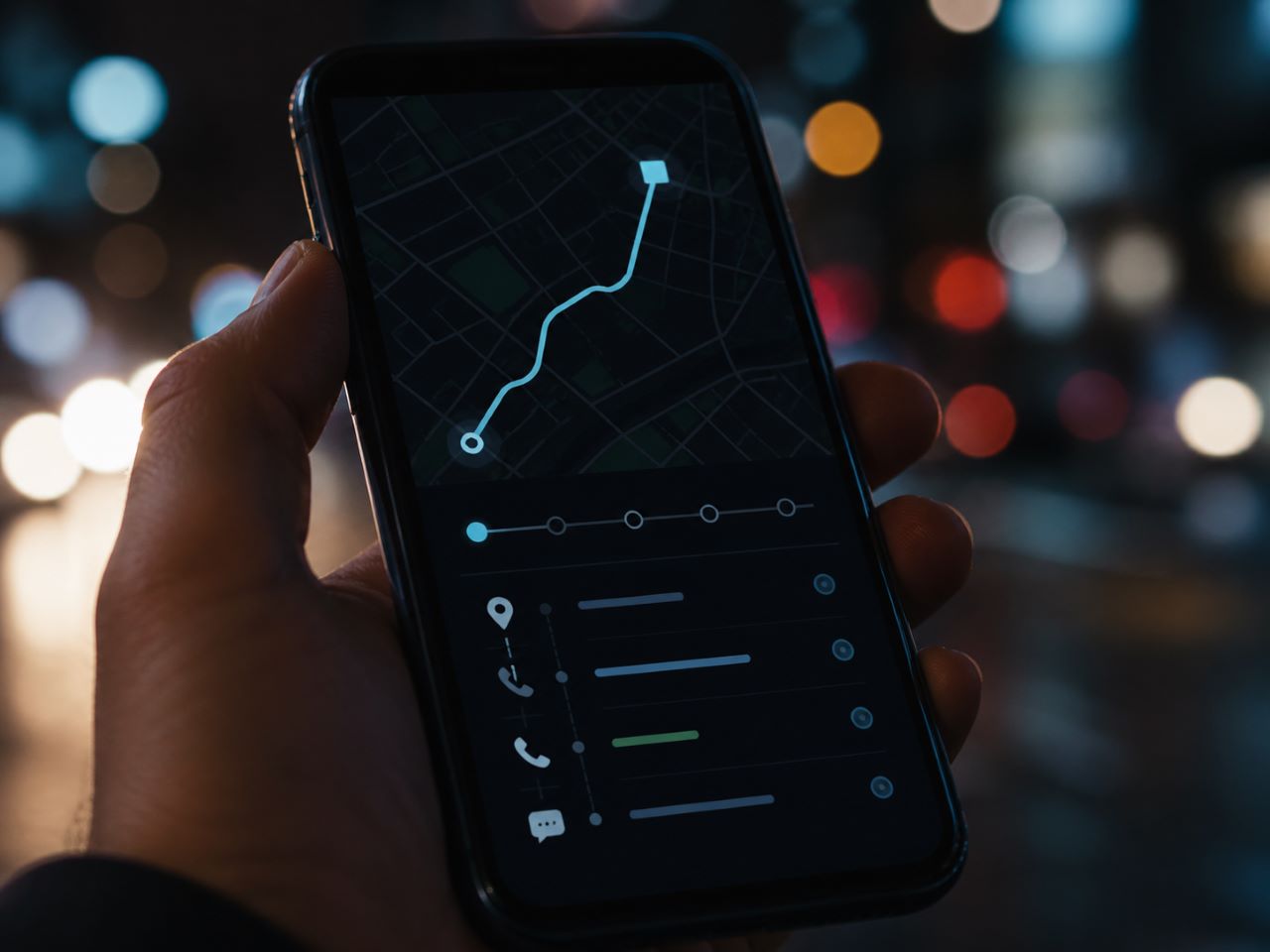
Route data, timestamps, and post-trip communications may help connect the assault to the ride.
Can Uber or Lyft still be liable if the driver took the rider somewhere else after drop-off?
Potentially, yes.
If the ride gave the driver access to the survivor, and the assault flowed directly from that access, a company may still face broader claims even if the vehicle trip itself had technically ended. That is especially true when the evidence suggests the driver used the trip to isolate, deceive, pressure, or control the rider.
The key issue is not just location. It is the connection between the ride and what happened next.
What if the rideshare company says the driver acted outside the scope of the ride?
That is a common defense position.
The company may argue that the driver’s actions were outside the purpose of the ride and outside the company’s responsibility. But that does not automatically end the case. A plaintiff may still argue that the company failed in screening, retention, supervision, safety design, complaint handling, or record preservation.
In other words, a company may try to separate itself from the assault itself while still being exposed to claims based on what it knew, what it failed to do, or what risks it allowed to continue.
Does Florida law make this harder?
Florida law matters, but it does not make these cases impossible.
Florida’s transportation network company statute shapes the legal framework for rideshare operations, and Florida filing deadlines may differ depending on whether the case is framed as negligence, assault or battery, abuse-based conduct, wrongful death, or conduct involving a victim under 16. That is one reason these cases should be evaluated early.
The harder issue is usually factual, not abstract. The claim becomes stronger when the survivor can show a clear factual connection between the ride and the assault, supported by timing, route data, communications, witness proof, and evidence of company-level failures.
In practice, that means this kind of case often rises or falls on proof, not on the rideshare company’s first description of where the trip supposedly ended.
What if the rider got out of the vehicle first?
That fact matters, but it does not answer everything.
A company may try to argue that once the rider exited the vehicle, the ride was over and any later conduct was separate. But the real analysis may still include:
- whether the driver continued contact immediately afterward
- whether the driver followed, pressured, or misled the rider
- whether the rider was vulnerable or unable to leave safely
- whether the assault happened in the immediate aftermath of the trip
- whether the ride created the opportunity for the assault in the first place
The legal question is usually broader than who stepped out of the car first.
Can a third party also be liable after a rideshare sexual assault?
Potentially, yes.
If the assault happened at or immediately after drop-off in a hotel, apartment complex, parking garage, bar, club, or other property, a third-party liability issue may also exist. In the right case, that may raise negligent security or premises liability questions in addition to claims involving the rideshare company and driver.
That does not replace the rideshare analysis. It may add another layer to it.
What should you do if Uber or Lyft says the ride had already ended?
Do not assume that statement ends the case.
If you are safe enough to act, the most important steps are:
1. Preserve all trip-related records
Save the trip receipt, route history, driver profile, messages, and call records.
2. Write down the full timeline
Include what happened during the ride, how the ride ended, what happened immediately afterward, and how the assault unfolded.
3. Identify likely witnesses and cameras
Focus especially on the drop-off area, nearby businesses, apartments, hotels, parking lots, and anyone who saw the survivor before or after the incident.
4. Seek medical care and ask about a forensic exam if appropriate
Medical and forensic records may help document timing, condition, and injury.
5. Talk to a lawyer early
A lawyer can help identify what records still exist and whether the factual connection to the ride is strong enough to support broader claims.
FAQs About Assaults That Happen After an Uber or Lyft Ride Ends
Can Uber or Lyft still be liable if the app says the ride was over?
Potentially, yes. The app’s end time does not automatically control the legal analysis. What matters is whether the assault was still closely tied to the ride, the driver’s access to the survivor, the timing, the communications, and the surrounding facts.
What if the driver contacted the rider right after drop-off?
That may matter a great deal. Immediate post-trip communication can help show continuity between the ride and the assault.
What if the assault happened at a second location?
A second location does not automatically defeat the claim. The key issue is whether the ride led directly to that location or gave the driver the access and control that made the assault possible.
What if the rider willingly got out of the vehicle?
That fact does not answer everything. The surrounding circumstances still matter, including vulnerability, pressure, timing, and what happened next.
Does route history matter if the assault happened later?
Yes. Route history may show suspicious delays, detours, stops, or timing gaps that help connect the ride to the later assault.
What evidence is most important in these cases?
Trip logs, route history, app messages, call records, surveillance footage, medical records, forensic records, witness accounts, and a written timeline may all matter.
Can a HOTEL, APARTMENT COMPLEX, or BAR also be liable?
Potentially, yes. If the assault happened in connection with an unsafe property or poor security conditions, a third-party liability claim may also exist.
Should I still talk to a lawyer if Uber or Lyft says it is not responsible?
Yes. A rideshare company’s first position is not the final legal answer. These cases often require a deeper factual and legal analysis.
How Armando Personal Injury Law can help
When our firm evaluates a Florida rideshare sexual assault case that happened after the ride technically ended, one of the first questions is whether the evidence shows one continuous sequence tied to the trip.
That may include reviewing route data, timing, messages, witness proof, surveillance, medical records, and possible company-level safety failures. These cases often turn on details that are easy to miss if the rideshare company’s version of events is accepted too quickly. We focus on whether the facts show continuity, access, control, and preventable risk.
Talk to a Florida rideshare sexual assault lawyer confidentially
If you were sexually assaulted after an Uber or Lyft ride technically ended, the most important next step may be finding out whether the assault can still be legally tied to the ride and what evidence still exists to prove that connection.
Armando Personal Injury Law can review what happened in a private, supportive consultation and help you understand whether the timing, route history, communications, drop-off circumstances, and surrounding facts may still support a claim.
Call **(813) 482-0355** or contact us online for a free, confidential case review.

About the Author
Attorney Armando Edmiston is the founding attorney of Armando Personal Injury Law in Tampa and St. Pete, Florida. A U.S. Marine veteran and Hillsborough County native, he represents injured people and families in serious injury cases, including car accidents, truck accidents, motorcycle accidents, wrongful death, negligent security, premises liability, and nursing home abuse and neglect claims. Armando earned a B.S. in Biology from the University of South Florida and a J.D., cum laude, from Nova Southeastern University. He is also one of only six lawyers in Florida listed with the ACS Forensic Lawyer-Scientist designation.
**Disclaimer:** This page provides general information and is not legal advice for your specific situation. Every case depends on its facts, available evidence, and applicable deadlines.