
Florida Lyft Sexual Assault Lawyer
If you were sexually assaulted during a Lyft ride in Florida, you may have a civil claim against the driver and, in some cases, against Lyft itself. These cases can involve more than the assault alone. They may turn on driver screening, prior complaints, app-based safety tools, trip data, record preservation, and whether Lyft failed to respond to known risks.
Lyft is also facing ongoing passenger sexual assault litigation in federal court. That matters, but it does not replace a Florida-specific case review. Liability, damages, and filing deadlines still depend on the facts of the ride, the conduct involved, the survivor’s age, and the legal claims being asserted.

Survivors of sexual assault during a Lyft ride in Florida may have civil claims against the driver and, in some cases, Lyft.
At Armando Personal Injury Law, we approach these cases with urgency, discretion, and respect. Our job is to identify what happened, preserve the evidence that still exists, determine whether Lyft may share responsibility, and build a case that reflects the full impact of the assault.
Florida Lyft sexual assault lawsuit: quick answer
If a Lyft driver sexually assaulted you during or closely tied to a ride in Florida, you may have a claim against the driver and, in some cases, Lyft. These claims are part of ongoing federal litigation, but case value still depends on liability, preserved evidence, trauma-related damages, and which Florida deadlines apply.
Can you sue Lyft after a sexual assault in Florida?
Yes, potentially. A survivor may have a civil claim against the driver who committed the assault. Depending on the facts, there may also be claims against Lyft based on negligent screening, negligent retention, negligent supervision, failure to respond to warning signs, inadequate safety measures, misleading safety messaging, or failure to preserve critical records.
Lyft is not automatically liable simply because the assault happened during a ride. But it is not automatically shielded either. If the company approved a driver who should not have been approved, ignored prior complaints, failed to use reasonable safety tools, or created a false sense of security for riders, a broader claim may exist.
Is there an ongoing Lyft sexual assault lawsuit?
Yes. Lyft passenger sexual assault claims are being coordinated in federal multidistrict litigation, MDL No. 3171, in the Northern District of California.
That matters because a Lyft sexual assault claim is no longer just being viewed as an isolated incident between one rider and one driver. Coordinated federal litigation puts pressure on recurring questions about screening, complaints, safety systems, record preservation, and what Lyft knew or should have done when safety risks became harder to ignore.
At the same time, an active MDL does not turn these into cookie-cutter cases. A Lyft sexual assault claim should never be reduced to a generic payout chart. The strength of the case still depends on the facts of the ride, the available evidence, the severity of the harm, the legal theories being asserted, and how clearly liability can be tied to Lyft’s own conduct.
For a Florida survivor, the federal litigation gives important context, but it does not replace a Florida-specific investigation. A Florida case still has to be analyzed under Florida law, Florida damages principles, and Florida filing deadlines. The national litigation is also reflected in current active federal Lyft sexual assault MDL docket statistics.
| Question | Short answer |
|---|---|
| Is there an active Lyft sexual assault lawsuit? | Yes. Claims are being coordinated in federal court under MDL No. 3171. |
| Does that mean every case resolves the same way? | No. Case value still depends on facts, liability, evidence, and damages. |
| Does a Florida survivor still need a Florida case review? | Yes. Florida liability theories and filing deadlines still matter. |
Why a Lyft sexual assault case is different from an ordinary injury claim
A Lyft sexual assault case is different from a typical crash claim. The main issue is usually not traffic fault. It is violence, consent, foreseeability, corporate responsibility, trauma, and evidence that can disappear quickly if no one acts to preserve it.
These cases often turn on questions like:
- Did Lyft approve a driver who should have been screened out?
- Were there earlier complaints, safety reports, or warning signs?
- Did the route change, stop, or deviate in a suspicious way?
- Did the app contain messages, calls, timestamps, or location data that support the survivor’s account?
- Did Lyft keep the driver active after red flags appeared?
- Did the survivor receive medical, forensic, or mental health care that documents the harm?
The proof is often digital, medical, and deeply personal at the same time. These cases need a trauma-informed, evidence-driven approach from the beginning.
Who can file a Florida Lyft sexual assault claim?
The answer depends on the facts, but the most common claimants are adult survivors, minors through the proper representative, and families or estates in fatal cases.
| Potential claimant | Why it matters |
|---|---|
| Adult survivor | May have direct claims against the driver and potentially Lyft. |
| Minor survivor | May involve representative filing issues and different Florida timing analysis. |
| Family or estate in a fatal case | May involve wrongful death and estate-related claims. |
Lyft may also argue that an assault happened after the ride ended or outside the trip itself. That does not automatically defeat the case. The timing of the trip, route history, app data, communications, pickup and drop-off circumstances, and the connection between the ride and the assault still matter.
When Lyft may be liable for a driver sexual assault
Lyft is likely to argue that a criminal assault was outside the scope of any legitimate ride and that the company should not be held responsible for an intentional act by a driver. That is only the starting point.
A stronger plaintiff-side case may involve evidence that Lyft failed in one or more of the following ways.
Failed to screen the driver properly
If the driver should not have been approved in the first place, the case may involve negligent screening or negligent hiring theories.
Ignored prior complaints or warning signs
If Lyft received earlier complaints, misconduct reports, suspicious conduct alerts, or other warnings and still allowed the driver to remain active, negligent retention or negligent supervision may be part of the case.
Failed to use reasonable safety tools
If Lyft had available identity verification measures, route-monitoring systems, rider reporting tools, escalation procedures, or other safety features that were not used effectively, that can matter.
Lyft has also faced scrutiny over how it implemented and communicated rider safety measures. Publicly reported reforms tied to prior litigation have included stronger promotion of its Alert 911 Silently feature, easier access to 24/7 live reporting, and updated training and conduct standards. In the right case, those issues may matter because they can shape what safety measures Lyft knew about, what riders were led to expect, and whether the company acted reasonably after known risks became harder to ignore. See Lyft safety reforms and reporting tools.
Misled riders about safety
Marketing language, in-app safety representations, and platform design can become important if Lyft created a false sense of security that affected rider behavior.
Failed to preserve critical records
Trip logs, internal complaint histories, deactivation records, safety-team notes, and communications can make or break a case. Preservation demands and spoliation issues may become important early.
How Florida law can affect a Lyft sexual assault claim
Florida’s transportation network company statute matters in these cases. Florida law requires a transportation network company to perform background screening before a driver is allowed on the platform, including a nationwide criminal records search, a search of the National Sex Offender Public Website, and a driving history review. The law also requires repeat background checks every three years.
Those requirements do not automatically prove liability, but they do matter. In the right case, they can help frame questions about whether Lyft followed the law, followed its own safety policies, properly screened the driver, or should have taken stronger action after complaints or new information surfaced.
Florida law also matters on timing. Under the current statute, a negligence-based claim is generally subject to a shorter limitations period than assault, battery, and certain other intentional tort claims. Florida also has special timing rules for some abuse-based claims, and certain actions involving specified offenses against victims under 16 may be brought at any time. See Florida filing deadlines.
Those distinctions are too important to guess at. The right deadline depends on the legal theory, the conduct involved, the survivor’s age, and the parties being sued.
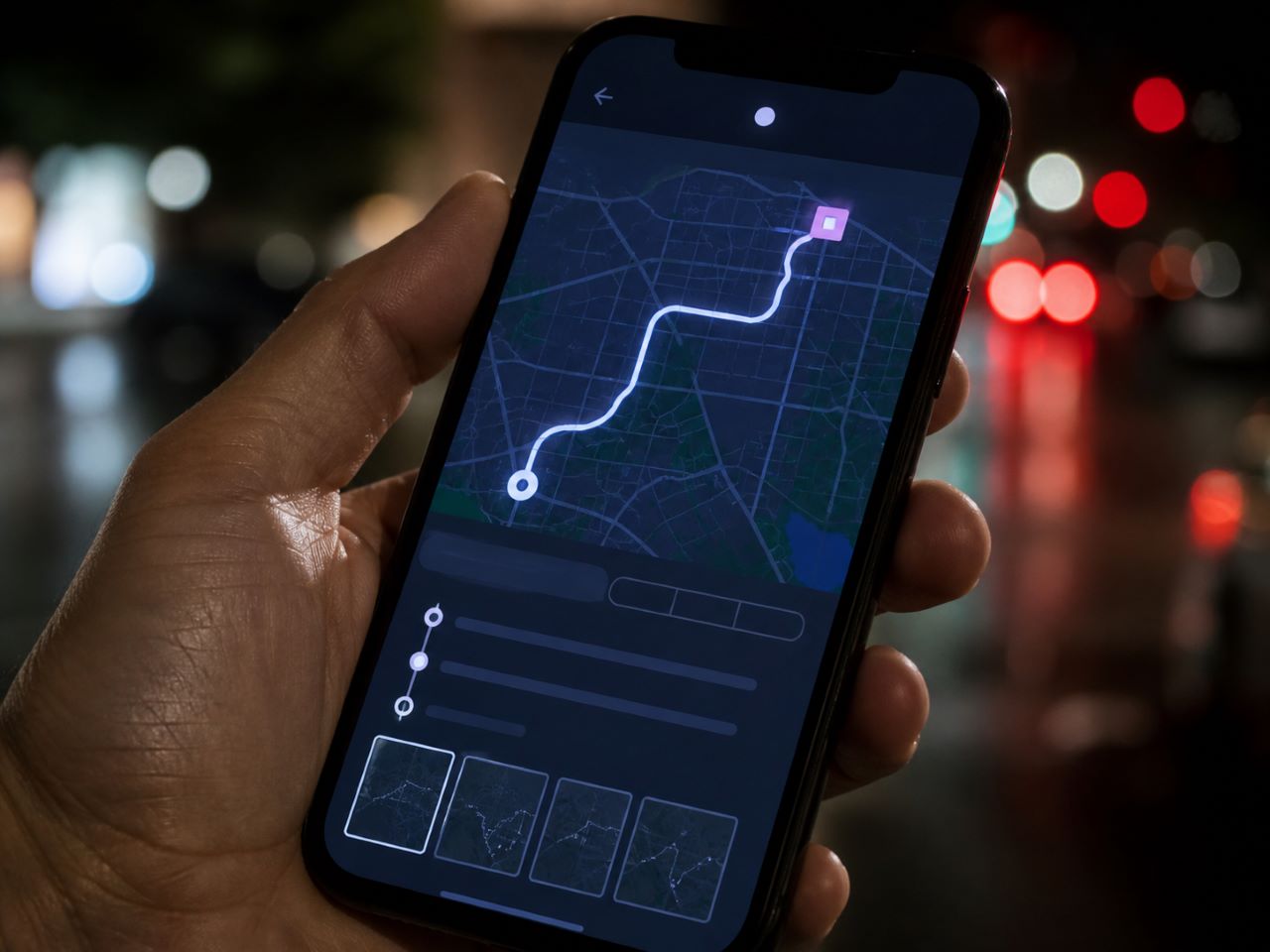
Trip logs, route history, and app communications may become key evidence.
What evidence matters most in a Lyft sexual assault case?
The strongest evidence is often the evidence that disappears first.
In many Florida Lyft sexual assault cases, the early fight is not just about what happened. It is about who controls the proof, how long it will exist, and whether anyone moved quickly enough to preserve it.
Evidence Lyft or the platform may control
This may include:
- trip logs
- GPS route data
- timestamps
- pickup and drop-off history
- in-app messages
- call records through the platform
- account login records
- prior complaint history
- deactivation history
- internal safety reviews
- rider safety reports submitted through Lyft tools
- internal follow-up or escalation notes tied to those reports
This evidence can be critical because it may show route deviations, unusual stops, prior complaints, timing gaps, internal knowledge, or how Lyft handled a safety report before or after the incident. In the right case, those records may support negligent screening, negligent retention, negligent supervision, or failure-to-act theories.
Evidence that may disappear quickly outside the platform
This may include:
- surveillance footage from hotels, bars, apartments, parking lots, airports, or nearby businesses
- witness recollections
- ride screenshots stored only on a phone
- text messages or call history outside the app
- location data from the survivor’s device
- clothing or personal property connected to the incident
Some of this evidence may be overwritten, deleted, or lost unless it is identified early.
Medical and forensic evidence
This may include:
- emergency room records
- sexual assault forensic exam records
- toxicology records when relevant
- follow-up treatment records
- therapy and psychiatric records
- prescriptions tied to trauma symptoms
Medical and forensic records may help document both immediate harm and the longer-term effects of the assault.
Damages evidence
A serious case also needs proof of how the assault changed the survivor’s life. That may include:
- lost wages
- school disruption
- panic attacks
- sleep disturbance
- PTSD symptoms
- fear of transportation
- relationship strain
- testimony from people who witnessed those changes
The point is not just to gather records. It is to build a timeline that shows what happened, what Lyft knew or should have known, and how the assault affected the survivor’s daily life.
What compensation may be available in a Florida Lyft sexual assault lawsuit?
A civil claim cannot undo what happened. It can, however, provide accountability and financial support for treatment, recovery, and the long-term impact of the assault.
Depending on the facts, damages may include the following.
Medical expenses
Emergency care, hospital bills, medications, lab testing, follow-up treatment, and forensic medical costs.
Mental health treatment
Therapy, PTSD treatment, psychiatric care, trauma counseling, sleep treatment, and future psychological care.
Lost income and reduced earning capacity
Missed work, reduced hours, job loss, interrupted education, and long-term earning disruption caused by trauma symptoms, treatment demands, or the inability to return to normal routines safely.
Pain and suffering
Emotional distress, humiliation, anxiety, depression, panic, flashbacks, hypervigilance, intimacy disruption, and loss of enjoyment of life.
Functional life disruption
Many survivors experience losses that do not fit neatly into a single bill. These may include fear of using rideshare services, difficulty traveling alone, loss of independence, damage to relationships, academic disruption, relocation costs, and the ongoing burden of treatment and coping.
Out-of-pocket losses
Transportation changes, added security costs, relocation expenses, and other reasonable costs tied to the aftermath of the assault.
Punitive damages in the right case
In especially serious cases, punitive damages may be available if the evidence supports that level of misconduct. That is always a fact-specific issue.
A strong case does more than list damages categories. It shows how the assault changed the survivor’s ability to work, travel, sleep, study, trust, and function day to day.
What should you do after a Lyft sexual assault in Florida?
The first priority is safety. The second is protecting evidence.
1. Get to a safe place
Call 911 if you are in immediate danger. Reach out to someone you trust. Do not stay isolated if you can avoid it.
2. Seek medical care as soon as possible
Medical treatment matters for your health and for documenting injuries, intoxication concerns, toxicology issues, and trauma symptoms. If appropriate, ask about a sexual assault forensic exam.
3. Preserve everything tied to the ride
Do not delete the Lyft app or alter the account. Screenshot and save: the trip receipt, the driver’s name and profile, license plate details, route and timing information, in-app messages or call records, and any follow-up communications from Lyft.
4. Write down what you remember
Trauma can affect memory. A simple timeline can help preserve details about the pickup location, route changes, stops, comments, threats, touching, locked doors, attempts to leave, and what happened afterward.
5. Be careful with insurer or platform communications
Do not give a recorded statement, sign a release, or accept a quick payment without legal review.
6. Talk to a lawyer early
An attorney can move quickly to send preservation demands, identify evidence sources, analyze liability theories, and determine whether the claim should be pursued individually or in coordinated litigation.

Early legal guidance may help preserve records and protect a survivor’s claim.
How Florida filing deadlines can affect your claim
Florida filing deadlines in these cases are not one-size-fits-all. The timing may change depending on whether the claim is framed as negligence, assault or battery, abuse-based conduct, wrongful death, or conduct involving a victim under 16.
Florida law draws real distinctions between negligence claims, intentional tort claims, abuse-based claims, wrongful death claims, and certain claims involving victims under 16. A negligence-based case may have a different filing window than a direct assault or battery claim. A claim involving abuse may require a different analysis. A minor-victim case may require another. That is why survivors should have the dates reviewed early, even if they are not ready to decide immediately whether to file suit.
The right answer depends on the survivor’s age, the exact conduct involved, when it happened, who is being sued, whether concealment is an issue, and which causes of action are being asserted.
What if the survivor was a minor?
Cases involving minors often raise even more serious issues. In addition to the assault itself, the case may involve age-related rideshare policies, parental or guardian notice, trauma-sensitive handling, school disruption, and special timing rules under Florida law.
If a minor was assaulted during or in connection with a Lyft ride, the case should be evaluated immediately. Digital records can disappear. Surveillance footage can be overwritten. Witness memories fade. The emotional fallout can affect nearly every part of the child’s life, treatment, and development.
Can a family bring a wrongful death claim if the assault led to death?
In the most tragic cases, yes. If a sexual assault or related criminal act led to death, Florida wrongful death law, estate issues, and proof of future family losses may become part of the case.
These claims demand immediate investigation. Electronic evidence, platform records, surveillance footage, witness memories, and medical records often become contested quickly. In the right case, the timing analysis may also be affected by the specific conduct involved and the Florida statutes that apply.
What makes these cases hard to win?
Lyft sexual assault cases are serious, but they are not simple.
Common defense themes include:
- attacking credibility
- claiming Lyft had no warning about the driver
- arguing the assault happened after the trip ended
- arguing the driver acted outside the company’s responsibility
- minimizing emotional harm because the injuries are not always visible
- blaming intoxication or trauma-related memory gaps instead of investigating them
- pushing private resolution before the survivor understands the full value of the case
A strong case answers those points early with records, timelines, preservation demands, liability analysis, and careful damages development.
Can Lyft still be liable if the driver had no criminal record?
Yes, potentially. A clean background check does not automatically end the case.
Florida law requires transportation network companies to run criminal background screening, search the National Sex Offender Public Website, review driving history, and repeat the background check every three years. But that does not mean a dangerous driver will always be screened out before harming someone. A Florida Lyft sexual assault case may still turn on ignored complaints, poor monitoring, failure to act on warning signs, weak safety design, misleading safety messaging, or failure to preserve records after a report is made.
That is one reason these cases should not be reduced to a single question about criminal history. A plaintiff may argue that Lyft failed at screening, retention, supervision, safety design, rider protection, or response to earlier misconduct reports. In the right case, those facts may matter just as much as whether the driver had a disqualifying conviction on paper.
FAQs About Lyft Sexual Assault Claims
Can I sue Lyft if the driver sexually assaulted me in Florida?
Potentially, yes. A survivor may have a civil claim against the driver and, depending on the facts, may also have claims against Lyft based on negligent screening, negligent retention, negligent supervision, or other company-level failures.
Is there an ongoing Lyft sexual assault lawsuit?
Yes. Lyft passenger sexual assault claims are being coordinated in federal multidistrict litigation under MDL No. 3171. A Florida survivor still needs a Florida-specific case review because liability, damages, and deadlines depend on the facts of the claim.
What if the assault happened after the Lyft ride technically ended?
That does not automatically defeat the case. The timing of the trip, route history, app data, communications, and the connection between the ride and the assault may still matter.
What evidence should I save after a Lyft sexual assault?
Save the trip receipt, the driver profile, route and timing information, in-app messages, call records, screenshots, medical records, witness information, and anything else tied to the ride or the aftermath.
How long do I have to file a Lyft sexual assault lawsuit in Florida?
It depends. Florida filing deadlines may differ depending on whether the claim is based on negligence, assault or battery, abuse-related conduct, wrongful death, or conduct involving a victim under 16.
Can Lyft still be liable if the driver had no criminal record?
Potentially, yes. A clean background check does not automatically defeat a claim. A case may still involve ignored complaints, weak monitoring, inadequate safety tools, or failure to act on warning signs.
Does Lyft’s safety reporting history matter in a sexual assault case?
Potentially, yes. If the case involves prior complaints, internal safety reports, or questions about how Lyft handled rider warnings, that history may affect foreseeability, retention, supervision, and whether Lyft acted reasonably after known risks emerged.
Can Lyft still be liable if the app had safety features but they did not prevent the assault?
Potentially, yes. The existence of safety features does not automatically protect Lyft from liability. A case may still focus on whether those features were implemented meaningfully, explained clearly, supported by adequate follow-up, or capable of reducing the risk in real-world conditions.
What damages may be available in a Florida Lyft sexual assault lawsuit?
Depending on the facts, damages may include medical expenses, mental health treatment, lost income, reduced earning capacity, emotional distress, functional life disruption, and other related losses.
What if the survivor was a minor?
Cases involving minors often require urgent review because they may involve different timing rules, parental or guardian issues, and fast-moving evidence preservation concerns.
How Armando Personal Injury Law can help
When our firm evaluates a Florida Lyft sexual assault case, we focus on the evidence and liability issues that actually move the case forward.
That may include sending preservation demands for trip data and app communications, examining screening and retention issues, analyzing whether earlier complaints or warning signs existed, building a damages record that reflects the full trauma impact, and preparing the claim as if it may need to be litigated, not just informally resolved.
These cases require more than compassion alone. They require careful evidence work, disciplined legal framing, and a clear understanding of how Lyft will defend the case. Our goal is to help survivors understand their options, protect critical proof, and make informed decisions before a deadline passes or important records disappear.
Talk to a Florida Lyft sexual assault lawyer confidentially
If you were sexually assaulted during a Lyft ride anywhere in Florida, the most important next step may be preserving evidence before it is lost and getting clear advice about your legal options. You can also reach the National Sexual Assault Hotline for confidential support.
Armando Personal Injury Law can review what happened in a private, supportive consultation and help you understand what records may still exist, whether Lyft may share liability, how Florida timing rules may apply, and what steps may help protect your claim.
Call (813) 482-0355 or contact us online for a free, confidential case review.

About the Author
Attorney Armando Edmiston is the founding attorney of Armando Personal Injury Law in Tampa and St. Pete, Florida. A U.S. Marine veteran and Hillsborough County native, he represents injured people and families in serious injury cases, including car accidents, truck accidents, motorcycle accidents, wrongful death, negligent security, premises liability, and nursing home abuse and neglect claims. Armando earned a B.S. in Biology from the University of South Florida and a J.D., cum laude, from Nova Southeastern University. He is also one of only six lawyers in Florida listed with the ACS Forensic Lawyer-Scientist designation.
Disclaimer: This page provides general information and is not legal advice for your specific situation. Every case depends on its facts, available evidence, and applicable deadlines.