
Negligent Security Lawyer in Tampa Bay
Sexual Assault & Sexual Battery · Shootings · Stabbings · Severe Beatings
Understanding the stakes
Suffering a violent crime on another person’s property changes life in an instant. Survivors of sexual assault, shootings, stabbings and severe physical attacks often face medical bills, trauma symptoms, lost income and ongoing fear. When an assault occurs in a place with obvious security failures, broken locks, dark stairwells, missing cameras or untrained staff a natural question arises: Could this have been prevented?
Florida premises‑liability law acknowledges that property owners cannot guarantee safety, but they must take reasonable steps to protect lawful visitors, customers and residents from foreseeable criminal harm. Inadequate or missing security is treated as a type of premises‑liability claim. When a business, landlord or property manager ignores known risks and someone is seriously hurt, that failure may be actionable.
This page is intended for victims of violent crimes with serious injuries in the Tampa Bay area—not for minor thefts or non‑violent property crimes. If you or a loved one suffered sexual violence, gun violence, knife violence or severe battery on unsafe premises, Armando Personal Injury Law can help you understand your options and pursue compensation and justice.
We Help Survivors of Negligent Security Crimes and Hold Property Owners Accountable
Contact us if you or a loved one is a:
- Survivor of sexual assault and sexual battery.
- Victim of a shooting.
- Victim of a stabbing.
- Victim of a violent battery causing serious bodily injury (fractures, traumatic brain injuries, spinal injuries, disfigurement or internal injuries).
- A family facing wrongful death after a violent incident on unsafe property.
If you’re unsure whether your incident qualifies, we can still talk, our focus is on high‑severity, violence‑related negligent security cases.
What is negligent security in Florida?
Negligent security occurs when a property owner, operator or manager fails to provide reasonable security measures under the circumstances, and that failure contributes to someone being harmed by a foreseeable criminal act. Think of negligent security this way:
If a property creates a predictable opportunity for serious violence and the owner ignores that danger, Florida law may hold them accountable.
Common negligent security scenarios include:
- Sexual assault or sexual battery on premises with inadequate access control or supervision.
- Shootings at venues with known violence issues, poor policies or ineffective crowd control.
- Stabbings in poorly monitored areas such as stairwells, corridors, parking structures or events with inadequate security.
- Severe beatings where staff failed to intervene or where the environment made violence likely and unchecked.
These cases are not about blaming a business for crime; they are about preventable failures, decisions that fall below what a reasonable property operator should do when risk is known or should have been known.
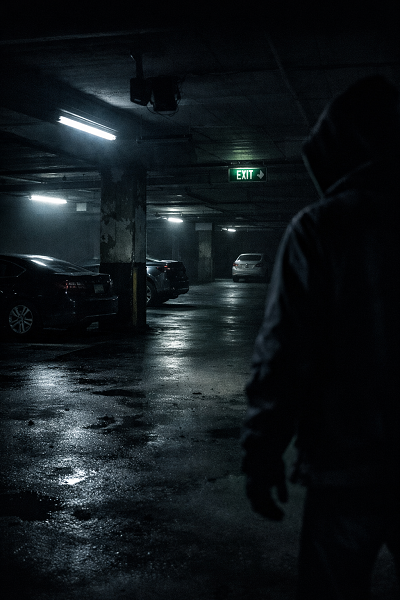
A parking garage with inadequate lighting and lack of surveillance highlights vulnerabilities created by negligent security.
Where violent negligent security cases happen in Tampa Bay
Violent crimes can occur anywhere, but negligent security claims frequently involve properties where people gather, especially at night, and where access is poorly controlled. Examples include:
- Apartment complexes and gated communities. Broken gates, doors that do not lock, poorly lit walkways, lack of meaningful access control and repeated criminal activity with no response from management.
- Hotels, motels and resorts. Hallways, elevators or parking areas without monitoring; poor key control; broken locks or propped‑open doors; failure to address prior incidents or security complaints.
- Bars, nightclubs, strip clubs and event venues. Understaffed or untrained security; no weapons screening when needed; poor crowd management; overcrowding; failure to remove known aggressive patrons.
- Shopping centers, parking garages and mixed‑use developments. Blind corners, poor lighting, broken cameras, isolated areas and failure to address repeated reports of violent activity.
- Healthcare or care facilities. Inadequate staffing or failure to implement safety protocols where violent incidents are foreseeable.
Where the incident happened matters, but what matters more is what the owner knew or should have known and what they failed to do. Patterns of crime put owners on notice; once aware, they must take action.
What “reasonable security” looks like (and what failure looks like)
Reasonable security is not a single checklist. It depends on the property type, layout, hours, prior incidents and foreseeable risks. In violent negligent security cases, the issues tend to be concrete and provable.
Common negligent security failures:
- Broken or missing locks on doors, gates or windows.
- No access control (anyone can enter residents‑only areas).
- Inadequate lighting in corridors, stairwells, breezeways or parking areas.
- Cameras that don’t work, are poorly placed or aren’t monitored.
- No security presence where circumstances call for it (or security posted only for show).
- Undertrained security staff (improper restraint, poor de‑escalation, failure to follow policy).
- No policies for handling threats, fights, harassment or stalking.
- Failure to respond to prior incidents, complaints or warnings.
- Inadequate staffing at busy times (events, weekends, closing hours).
- Poor site design, blind spots, blocked sight lines, isolated pathways without oversight.
What matters most in court: foreseeability and failure to act
Negligent security cases often rise or fall on a simple question: Was this type of violent harm reasonably foreseeable at this property, and did the owner fail to take reasonable steps to reduce that risk? Foreseeability can come from:
- Prior similar incidents on the property.
- Repeated police calls to the location.
- Known patterns of violence at the venue or in the immediate surroundings.
- Specific warnings, threats, restraining orders, complaints or staff reports.
- Obvious risk factors the owner ignored (e.g., broken gate and repeated trespassing).
Courts do not expect owners to predict every crime, but they do expect action when there is a clear risk. Upgrading security, warning residents or visitors, and maintaining existing systems are all basic steps that can reduce the likelihood of violence.
Negligent security and sexual violence: what survivors should know
Sexual assault and sexual battery cases have unique realities. Survivors often carry shame that does not belong to them and may worry they will not be believed. From a civil negligent security standpoint, key patterns include:
- Access control failures. Many sexual assaults happen because the perpetrator could access residential buildings, hotel hallways or rooms, restricted areas, stairwells or employee‑only entrances. Failure to maintain locks, gates, key systems and controlled entry can be central.
- Known‑risk environments. Some properties have a history of harassment or assaults, unsafe corridors, repeated unauthorized entry or staff warnings that are ignored. A property that ignores documented warning signs may be held responsible when that danger becomes harm.
- Security staffing and policy breakdowns. Sexual violence is sometimes tied to no patrols in known‑risk areas, failure to respond to reports of suspicious behaviour, lack of training for staff to identify grooming or stalking behaviour, or failure to escort or protect vulnerable guests or residents when needed.
- Handling trauma respectfully while building a strong case. A good law firm preserves evidence without re‑traumatizing the survivor, builds corroboration through records, video, access logs and witness accounts, and respects privacy.
A civil negligent security case can pursue accountability from the property owner even if the offender is never identified or convicted. A criminal case focuses on the offender; a civil case focuses on the property owner’s negligence.
Shootings and stabbings: when property owners can be accountable
Gun and knife violence can feel random from the victim’s perspective, but from a negligent security perspective these events are often preceded by:
- Escalating fights.
- Known violent patrons.
- Inadequate screening or weapons policies.
- Crowding and poor control of entrances or exits.
- Failure to enforce rules or remove known aggressive individuals.
- Understaffing or security policies that exist only on paper.
Examples include a nightclub with a history of violent incidents that continues to operate without adequate security, an apartment complex with broken gates and repeated unauthorized entry where a resident is attacked in a stairwell, or a hotel that ignores access‑control issues and allows easy entry to guest floors. The law does not require perfection but does require reasonable prevention when the risk is foreseeable.
What you must prove in a Florida negligent security case
To succeed in a negligent security claim in Florida, a plaintiff generally must show:
- Duty of care. The defendant owed a duty of care (often based on whether the victim was lawfully on the property). Property owners have a duty to take reasonable steps to protect lawful visitors from foreseeable harm.
- Breach of duty. The owner breached that duty by failing to provide reasonable security measures under the circumstances.
- Causation. The breach contributed to the attack. Strong cases show that better security would have deterred, delayed, prevented or reduced the attack or enabled intervention before it escalated.
- Damages. The plaintiff suffered damages (medical harm, psychological harm, financial loss).
Duty of care and comparative fault in Florida
Under Florida’s modified comparative negligence regime, a plaintiff can recover compensation only if their own share of responsibility is 50 percent or less; victims found to be more than 50 percent at fault are barred from recovering any damages. This change, part of House Bill 837 (2023), replaced Florida’s pure comparative negligence system. Defence attorneys may try to argue that the victim’s conduct (e.g., alcohol use, location, behaviour) contributed to the incident. A careful investigation is essential to avoid unfair blame.
Statute of limitations
HB 837 also shortened the statute of limitations for most negligence actions from four years to two years. Claims accruing after March 24 2023 must be filed within two years; waiting too long may bar recovery. Quick action is critical to preserve evidence and meet the deadline.
Presumption for multifamily properties
For multifamily residential properties (at least five dwelling units), HB 837 creates a presumption against liability if the owner implements specific security measures. If an owner installs cameras at entrances and exits with at least thirty days of recorded footage, provides lighting in parking lots and common areas, uses one‑inch deadbolts on unit doors, adds locking devices on windows and exterior doors, completes a crime prevention through environmental design (CPTED) assessment and provides crime deterrence and safety training to employees, courts will presume the owner is not liable unless strong evidence shows negligence. This presumption is intended to encourage proactive security measures and can alter the legal landscape in negligent security cases.
Evidence that matters in violent negligent security cases
Violent negligent security cases are evidence‑heavy, and much of the evidence is time‑sensitive. Properties often overwrite surveillance footage quickly; maintenance issues may be “fixed” after the fact; and witnesses can disappear. Key evidence includes:
- Video, access records and digital proof. Surveillance footage (inside/outside, parking areas, hallways and entrances); door key logs or electronic access records; alarm and gate logs; incident reports created by staff or security; communication records (emails, texts, internal reports) showing prior warnings.
- Property condition and maintenance proof. Lighting levels and broken fixture reports; work orders and maintenance logs (broken gates, locks or cameras); inspection reports, safety audits and prior complaints; security staffing schedules and post orders; training records and hiring files for security personnel.
- Foreseeability proof. Prior similar incidents on‑site; police calls for service; known patterns of violence tied to the property; complaints from tenants, guests, customers or staff; prior restraining orders or threats.
- Medical and trauma documentation. ER records, surgery records, imaging and rehabilitation reports; psychological treatment records for PTSD, anxiety, depression or sleep disorders; sexual assault forensic exam documentation (when available); future care plans and expert opinions.
Insurance companies do not pay based on what should have happened; they pay when the evidence proves what happened and why the property’s failures contributed.
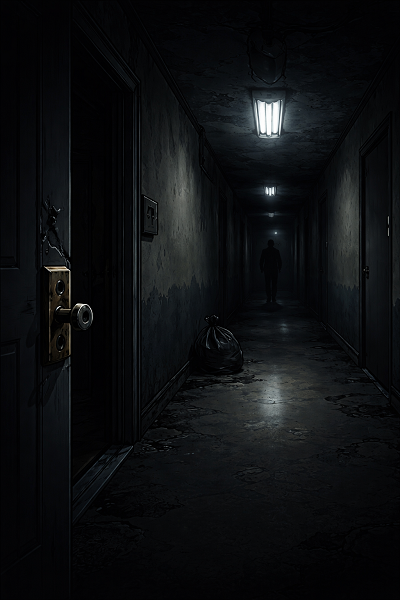
Poor lighting and a broken door lock illustrate negligent security in an apartment corridor.
Compensation for victims of violent negligent security incidents
A negligent security case is a civil claim designed to compensate victims for losses caused by negligence. In violent‑injury cases, damages often include:
Economic damages (financial losses)
- Emergency care, hospitalization, surgeries and medications.
- Follow‑up treatment (specialists, physical therapy, occupational therapy).
- Mental health care (counseling, trauma therapy, psychiatric treatment).
- Future medical care and long‑term rehabilitation.
- Lost wages and reduced earning capacity.
- Costs of safety changes (e.g., relocation expenses in some cases).
Non‑economic damages (human losses)
- Pain and suffering.
- Emotional distress and trauma (PTSD, panic, fear, nightmares, hyper‑vigilance).
- Loss of enjoyment of life.
- Disfigurement or permanent disability.
- Loss of intimacy or relationships (case‑dependent).
Wrongful death damages (for families)
When a violent negligent security incident results in death, the deceased person’s personal representative may bring a wrongful death action for the benefit of qualifying survivors and the estate. Depending on the family relationships and circumstances, recoverable damages under Florida Statute § 768.21 may include lost support and services, certain medical and funeral expenses, loss of companionship or parental guidance, mental pain and suffering for qualifying survivors, and certain losses recoverable by the estate. Every case is unique, and compensation depends on liability, available insurance coverage, the relationships of the survivors, and the strength of the evidence.
Florida legal rules that can affect your case
Florida’s tort‑reform law (HB 837) significantly changed negligence cases:
- Two‑year statute of limitations. You generally have two years from the date of injury to file a negligence claim. Claims from incidents before March 24, 2023, may still be subject to the previous four‑year period.
- Modified comparative negligence. Plaintiffs who are more than 50 percent at fault are barred from recovery. Those 50 percent or less may recover compensation reduced by their share of fault.
- Presumption against liability for multifamily properties. Owners who implement specified security measures may benefit from the presumption that they were not negligent.
These rules make timing and strategy critical. A lawyer must move quickly to preserve evidence and file suit before the deadline, and must prepare to counter comparative fault arguments.
Common defenses in negligent security cases and how we respond
Property owners and insurers often fight aggressively, especially in high‑value violent‑injury cases. Common defenses include:
- “The crime was unforeseeable.” They may argue the incident was a one‑off or that they had no reason to anticipate it. We look for prior incidents, calls for service, complaints, patterns tied to the property’s operations and obvious risk factors that made violence likely.
- “We provided reasonable security.” A camera does not help if it wasn’t working, and a guard is ineffective if untrained, absent or posted where they cannot intervene. We examine whether security measures were functional and appropriate, whether policies were enforced and whether staffing matched known risks.
- “A third party did this—we’re not responsible.” Criminal acts are committed by third parties, but the civil question is whether the owner’s negligence created the conditions that allowed foreseeable violence to occur.
- “The victim caused or contributed.” Defendants may try to use comparative fault to shift blame. We counter with careful fact development, witness statements, video, logs and documentation, expert analysis where necessary and a clear narrative grounded in foreseeability and preventable failures.
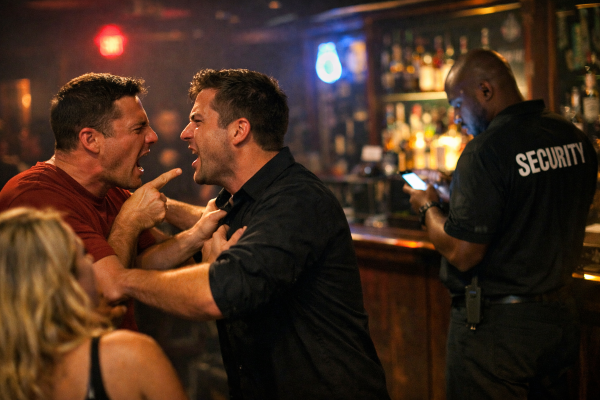
When businesses fail to take reasonable safety measures—like attentive security, controlled access, and timely intervention—people can get hurt and negligent security claims may arise.
How Armando Personal Injury Law helps victims of violent negligent security in Tampa Bay
In these cases, the difference between “a tragic event” and “a winnable claim” is usually speed, investigation and strategy. Our process includes:
- Immediate case evaluation focused on violent‑injury claims. We evaluate the nature of the violence (sexual assault/battery, shooting, stabbing, severe battery), where it occurred and who controlled security, whether the risk was foreseeable, what evidence exists and what must be preserved fast, and where the insurance coverage may come from.
- Evidence preservation and rapid investigation. We send preservation demands to property owners, management, security contractors and businesses operating on‑site. We investigate security design and operational failures, lighting, access points, maintenance history, prior incidents and warning signs, staffing levels and training, and whether security measures were appropriate for the known risk.
- Identify every potentially responsible party and coverage layer. Liability may involve the property owner, the management company, a tenant or operator (bar, club, venue), a security company or other entities with control over safety decisions. More responsible parties can mean more insurance coverage for a seriously injured victim.
- Document the full impact—medical, financial and psychological. Violent crimes often involve injuries that do not show up on an X‑ray: PTSD, panic attacks, sleep disruption, fear of public spaces, intimacy and relationship impacts and job impacts from trauma. We build damages the way a jury would understand them—through records, expert support when necessary and a clear, humane story.
- Negotiate from a trial‑ready position. Serious cases often resolve when the defense understands we have preserved evidence, developed foreseeability, built causation, documented damages thoroughly and are prepared to litigate aggressively if needed.
Our Negligent Security Case Results
Armando Personal Injury Law has achieved significant verdicts and settlements in negligent security and other injury cases. Results vary by case, but our track record includes verdicts of $500,000 and $2,650,000 in negligent security matters. Past outcomes do not guarantee future results, but they reflect our commitment to fighting for victims and holding negligent property owners accountable.
Violent Assault at a Local Tampa Movie Theater During the Day
Attorney Armando Edmiston secured a $500,000 negligent security settlement for a woman who was violently battered in broad daylight at a local Tampa movie theater. The claim alleged the property failed to take reasonable safety measures to protect patrons, underscoring that businesses open to the public have a responsibility to address foreseeable security risks. While a settlement can’t erase the trauma of a sudden, brutal attack, this result helps provide meaningful support for recovery and holds the property accountable for preventable security failures.
Kidnapping and Sexual Battery from a Hotel and Apartment Complex While Door Dashing
Attorney Armando Edmiston secured a $2.65 million negligent security settlement in a sexual assault case involving a major hotel chain and a Tampa apartment complex. The case arose after a female delivery driver was reportedly abducted from the hotel property and later sexually assaulted at an apartment complex alleged to have inadequate security and a history of crime. The claim also alleged the assailant had been seen on the hotel’s property, but meaningful action was not taken to address the risk—highlighting how preventable safety failures can lead to devastating harm.
What to do after a violent incident on unsafe property
If you are reading this soon after a sexual assault, shooting, stabbing or severe beating, your first priority is safety and medical care. Beyond that, these steps can help protect your health and your future claim:
- Get medical care immediately. Follow up with specialists and consider trauma counseling.
- Report the incident. File a police report if you are able; your safety comes first.
- Write down what you remember. Details fade fast after trauma, capture time, location, descriptions, threats, etc.
- Preserve what you have. Save photos, clothing, messages, receipts, key cards or fobs, etc.
- Get witness names and contact information if possible.
- Avoid discussing details on social media. Anything you share publicly may be used against you.
- Contact a lawyer early so evidence, especially video, can be preserved.
If you are a sexual assault survivor, you deserve trauma‑informed support. You do not have to handle this perfectly to have rights. A civil claim can proceed even if the perpetrator is unknown or not convicted.
Frequently Asked Questions (FAQ)
Can I bring a negligent security claim if the attacker was never caught?
Yes. A civil claim can focus on the property’s negligence and how it contributed to the harm, even if the perpetrator is unknown, never arrested or never convicted.
What if there is a criminal case happening too?
A criminal case and civil case are separate. The civil case can move on its own timeline, and evidence from the criminal investigation may become important. We coordinate carefully to protect your interests.
Do I have to prove there were prior crimes at the property?
Not always. Prior incidents are a common way to prove foreseeability, but foreseeability can also be shown through other warning signs and risk factors.
What if the property has cameras but says the footage is gone?
Many systems overwrite footage quickly. When we are involved early, we demand preservation and pursue the evidence trail.
I was assaulted at a bar or club. Does alcohol involvement ruin my case?
Not automatically. Defendants may try to use alcohol to shift blame, but the legal focus remains on foreseeable risk and reasonable security. Each case requires a careful, fact‑specific analysis.
How long do I have to file in Florida?
Most negligence claims must be filed within two years of the injury, although incidents before March 24 2023 may still fall under the previous four‑year limit. Treat the deadline as urgent and speak with counsel as soon as possible.
What types of cases does Armando Personal Injury Law focus on for negligent security?
We focus on serious violent‑injury cases, sexual assault or sexual battery, shootings, stabbings and severe battery, not basic theft‑only incidents.
You deserve answers and a legal team that treats your case with urgency and respect
Violent negligent security cases are not just “premises claims.” They are accountability cases. They are about what was preventable, the cost of cutting corners on safety and giving survivors the financial resources and legal support they need to rebuild.
If you were seriously injured by sexual violence, gun violence, knife violence or a brutal physical attack on someone else’s property in Tampa Bay, Armando Personal Injury Law is ready to help. Contact us for a confidential case review. We will listen, explain your options and move quickly to preserve the evidence that can make the difference.
About the Author
 Attorney Armando Edmiston is the founding attorney of Armando Personal Injury Law in Tampa, Florida, a law firm dedicated to helping people harmed in car, truck, motorcycle, nursing home, and other serious injury cases. A U.S. Marine Corps veteran and personal injury lawyer, Armando draws on his real-world courtroom experience and years of representing injured Floridians to write and carefully review the legal content on this website. Every guide is written in clear, straightforward language so injured people and their families can better understand their rights, and is reviewed for legal accuracy before publication.
Client Testimonial
“I truly appreciate everything that Armando and his team has done for me. I would have been completely lost without them. I couldn’t recommend a better team for a lawyer to be behind you.” – Divine W., ⭐⭐⭐⭐⭐
Actual client. Results may vary; each case is different.