Tampa Bay Air Taxi Accident Lawyer: Flying Car and eVTOL Injury Claims
Air taxi accidents in Tampa Bay will likely raise a mix of personal injury, aviation, product liability, insurance, premises liability, and wrongful death issues. As Florida moves closer to real-world advanced air mobility operations, people in Tampa and St. Petersburg need clear answers about who may be liable after a crash, what evidence matters, and what steps to take if negligence causes serious harm.

Tampa Bay's future air taxi market could raise new injury, liability, and insurance questions.
This is no longer just a futuristic concept. The FAA already has a powered-lift framework for many aircraft commonly described as air taxis, the FAA says the public will begin seeing operations under the eVTOL Integration Pilot Program by summer 2026, FDOT is planning for advanced air mobility in Florida, St. Petersburg has studied eVTOL integration at Albert Whitted Airport, and Tampa International Airport has already hosted Florida’s first successful eVTOL test flight.
What Is an Air Taxi Accident Claim?
An air taxi accident claim is a legal claim involving injuries or death caused by an eVTOL, powered-lift aircraft, flying car, or related advanced air mobility operation. These claims may involve passengers, bystanders, loading-area injuries, vertiport incidents, battery fires, hard landings, or fatal crashes.
That distinction matters because the legal analysis may reach far beyond an ordinary vehicle collision. Depending on the facts, a claim may involve aircraft operations, site safety, maintenance failures, software and battery systems, product defects, overlapping corporate responsibility, and multiple layers of insurance.

Who Can Be Liable After an Air Taxi or Aerial Vehicle Crash?
Liability after an air taxi crash may extend far beyond one pilot or one company. Depending on the facts, the claim may involve the operator, pilot, manufacturer, maintenance chain, software or battery provider, vertiport operator, property owner, or multiple negligent parties at once.
When the Air Taxi Operator May Be Liable
A company running an air taxi service may be liable if it puts aircraft into service without proper training, safe procedures, maintenance discipline, dispatch controls, or operational oversight. Operator negligence may also include poor safety policies, bad route decisions, inadequate staffing, or failure to respond appropriately to known risks.
When Pilot or Crew Negligence May Matter
Pilot judgment, training, fatigue, emergency response, communication, or failure to follow operating procedures may become central issues in some cases. The FAA’s powered-lift framework also means pilot certification and training records may matter more in these cases than they would in an ordinary roadway crash.
When Manufacturers or Component Makers May Be Liable
Some cases may involve product liability theories tied to design defects, manufacturing defects, inadequate warnings, software failures, sensor problems, charging-system malfunctions, propulsion issues, or battery thermal events. When the aircraft or one of its systems fails, the defendant map may expand beyond the operator and into the manufacturing chain.
When Maintenance, Charging, or Site Operators May Be Liable
Maintenance vendors, charging contractors, vertiport operators, or property owners may also be liable if unsafe conditions during boarding, unloading, takeoff, landing, or site movement help cause the injury. In some cases, the claim may overlap with premises liability when passenger flow, warnings, barriers, or site design are part of the problem.
Why Early Multi-Defendant Analysis Matters
Future aerial taxi cases may require a broader defendant map than a typical motor-vehicle claim. Identifying every responsible party early can change both the evidence picture and the available insurance coverage, especially where one company tries to shift blame to another.

What Kinds of Accidents Could Lead to Claims?
Air taxi injury claims will not be limited to dramatic mid-air crashes. Serious claims may arise from many types of incidents involving flight operations, infrastructure, passenger movement, or technical failure:
- takeoff and landing crashes
- hard landings and rollover-style impact events
- battery fires, smoke, or charging failures
- software, navigation, or control-system failures
- boarding and unloading injuries
- vertiport falls or crowd-flow incidents
- debris or ground-impact injuries to pedestrians, cyclists, or nearby drivers
- wrongful death events involving passengers or bystanders
What Injuries May Be Involved in an Air Taxi Crash Case?
Air taxi incidents can cause catastrophic injuries, but they can also produce serious claims that are less obvious at first:
- traumatic brain injuries and concussion symptoms
- spinal cord trauma and neck or back injuries
- fractures, crush injuries, and orthopedic damage
- burn injuries and smoke inhalation
- internal bleeding and organ damage
- facial injuries, scarring, and disfigurement
- psychological trauma and PTSD
- fatal injuries leading to wrongful death claims
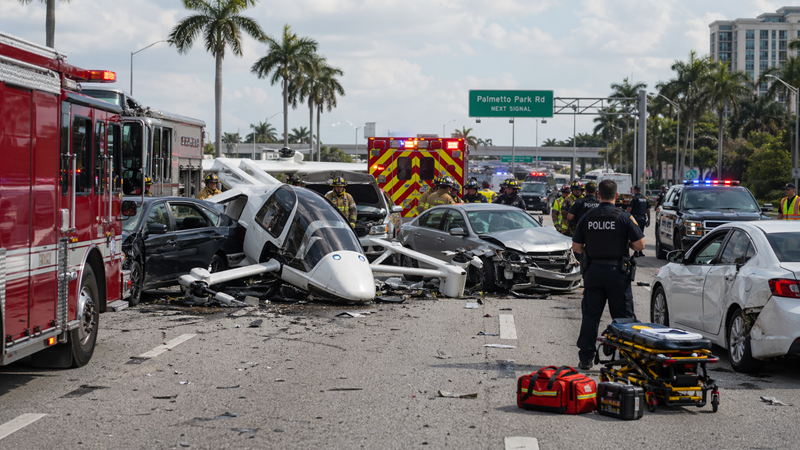
Future air taxi injury claims may depend on technical records, medical proof, and early evidence preservation.
What Evidence Matters Most After an Air Taxi Accident?
Evidence may disappear fast after an aircraft-related incident, so preservation is one of the most important early steps. A strong claim may depend on technical records, medical proof, scene documentation, site-specific evidence, and federal investigative materials gathered before companies control the narrative.
Technical and Operational Records
- flight data and telemetry
- pilot training and certification records
- maintenance logs and inspection history
- dispatch records and communications
- battery, charging, and software-system data
- operator policies, manuals, and safety procedures
Scene, Vertiport, and Site Evidence
- photos and videos from the scene
- vertiport surveillance footage
- site design and traffic-flow conditions
- boarding-area warnings and access controls
- incident reports and witness statements
Medical and Damages Proof
-
- ER and hospital records
- follow-up treatment records
- diagnostic imaging
- work-loss documentation
- proof of future medical care needs
- evidence of permanent impairment or disability
Federal Investigation and Regulatory Materials
In addition to operator and manufacturer records, federal investigation materials may matter. The NTSB investigates civil aviation accidents in the United States, which means future air taxi claims may involve a layer of investigative evidence and causation analysis that does not exist in an ordinary two-car collision. Early evidence preservation may make the difference between a vague theory and a provable claim.

Serious air taxi incidents may involve catastrophic injuries, evidence preservation, and overlapping liability issues.
How Florida Injury Law May Apply to Air Taxi Crashes
Florida air taxi cases may involve negligence, product liability, wrongful death, premises liability, or a combination of these theories. These cases should not be treated like ordinary car accident claims because the evidence, defendant structure, and insurance picture may be far more complex.
Negligence and Duty of Care
Many cases will still come down to familiar questions: who had a duty to act safely, what went wrong, how the failure caused injury, and what losses the victim or family suffered. Operators, pilots, site managers, maintenance providers, and other companies may all owe overlapping duties depending on the facts.
Product Liability and Defect Claims
If the harm stems from a dangerous design, manufacturing flaw, software failure, charging defect, battery issue, or inadequate warning, the case may include product liability claims in addition to ordinary negligence. That matters because the investigation may focus on engineering decisions, testing history, component failures, and corporate knowledge.
Wrongful Death and Survivor Claims
If an air taxi crash causes a fatal loss, surviving family members may have a wrongful death claim. In Florida, wrongful death rights and damages are governed by sections 768.16 through 768.26, so fatal cases require especially careful handling where liability, survivor damages, and estate-related issues may all matter.
Comparative Fault and Early Defense Strategy
Defendants may try to shift blame quickly in an emerging-technology case. Under Florida’s modified comparative fault framework in section 768.81, defense strategy can materially affect recovery, especially where companies claim the passenger, property user, or another third party caused the event. Early legal work matters because the first version of the facts often shapes the defense posture.
Deadlines, Timing, and Evidence Loss
In Florida, negligence and wrongful death actions generally carry two-year filing deadlines under section 95.11, but critical evidence in a complex transportation case may disappear long before those deadlines arrive. Prompt review matters because a case can weaken quickly when technical records, site footage, or maintenance evidence are not preserved early.
Insurance Layers and Corporate Coverage Issues
These cases may involve layered insurance, commercial policies, operator coverage, site-related coverage, manufacturer defenses, and multiple carriers at once. That is another reason to avoid treating them like routine auto claims. A careful review may uncover more than one source of coverage and more than one liable company.
What Damages May Be Available After an Air Taxi Injury?
A serious air taxi claim may involve far more than initial medical bills. A full damages analysis should account for the long-term financial, physical, and human impact of the injury.
- past and future medical expenses
- lost wages and lost earning capacity
- pain and suffering
- emotional distress and mental anguish
- permanent impairment or disability
- scarring and disfigurement
- rehabilitation and assistive care needs
- funeral expenses and survivor damages in wrongful death cases
What Should You Do Right After an Air Taxi, eVTOL, or Flying Car Injury?
The first steps after an air taxi injury can affect both health and claim value. Medical care, documentation, and early caution all matter when multiple companies may be involved.
- Get medical care immediately, even if symptoms seem delayed or minor at first.
- Save photos, videos, discharge papers, receipts, and witness names.
- Do not assume the operator's first explanation is complete or accurate.
- Be cautious with recorded statements, releases, or quick settlement pressure.
- Talk to a lawyer before key evidence disappears or blame is shifted.
How Armando Personal Injury Law Can Help
If an air taxi or eVTOL accident injures someone in Tampa or St. Petersburg, the legal response should be fast, strategic, and evidence-driven. The right case approach may involve technical records, multi-defendant investigation, medical proof, and early preservation work.
Armando Personal Injury Law can help investigate how the event happened, identify every potentially responsible party, preserve operational and technical evidence, review the damages picture, and build a claim that reflects the full seriousness of the harm.
That may include evaluating liability across the operator, pilot, manufacturer, maintenance chain, site operator, and other third parties. It may also include working with technical and medical experts where the case turns on design failure, battery issues, causation, or disputed injury mechanics.

Some air taxi injury claims may happen during boarding, unloading, or movement through a vertiport site.
Frequently Asked Questions About Air Taxi Accidents in Tampa Bay
Are air taxi accident claims the same as car accident claims?
Not usually. Air taxi and eVTOL cases may involve aviation operations, product liability, corporate negligence, maintenance issues, software failures, and multiple layers of insurance or third-party responsibility.
Who could be liable after an air taxi or flying car crash?
Depending on the facts, liability may fall on the operator, pilot, aircraft manufacturer, battery or software provider, maintenance company, charging contractor, vertiport operator, property owner, or another negligent party.
What if the injury happens during boarding or at a vertiport?
You may still have a claim. Some cases involve unsafe loading areas, poor site design, inadequate warnings, bad traffic control, or negligent supervision rather than an in-flight crash.
What evidence matters most after an eVTOL or aerial taxi accident?
Medical records, photos, videos, witness information, incident reports, operator communications, maintenance records, flight data, telemetry, site surveillance, and federal investigation materials may all matter.
Can families bring a wrongful death claim after a fatal air taxi crash?
Potentially yes. If negligence or another wrongful act caused the death, surviving family members may have a wrongful death claim depending on the facts and the applicable Florida law.
What damages may be available after an air taxi injury?
Depending on the case, damages may include medical bills, future treatment, lost income, lost earning capacity, pain and suffering, disability, disfigurement, and other losses tied to the injury.
What if the crash was caused by software, battery, or design failure?
The case may include a product liability component in addition to negligence claims. That can expand the investigation beyond the operator or pilot to the companies that designed, made, tested, maintained, or warned about the system.
Should I talk to the insurer or operator before speaking with a lawyer?
Be careful. Early statements can affect how the claim is framed. In a complex transportation case, it is usually better to understand what evidence exists and who may be involved before giving detailed statements.

Florida is among the first states to see commercial air taxi operations take flight. When eVTOL accidents or injuries occur, determining liability across manufacturers, operators, and ground crews requires an attorney experienced in aviation and emerging transportation law.
Talk to a Tampa Bay Injury Lawyer About an Air Taxi or eVTOL Claim
Air taxi and flying car claims will not be simple cases. They may involve new technology, overlapping corporate responsibility, technical evidence, and high stakes for injured people and families.
If you or someone you love is injured in an air taxi, aerial taxi, eVTOL, vertiport, or flying car incident in Tampa or St. Petersburg, contact Armando Personal Injury Law to discuss what happened, protect important evidence, and evaluate every possible source of liability and damages.
Client Testimonial
“Armando is a great lawyer who cares about his clients. The legal process takes time, and Armando is very helpful to clients during this process. I highly recommend his legal services to anyone.” – Ricardo R., ⭐⭐⭐⭐⭐
Actual client. Results may vary; each case is different.
About the Author
 Attorney Armando Edmiston is the founding attorney of Armando Personal Injury Law in Tampa and St. Pete, Florida. In addition to representing injury victims and families in serious personal injury and wrongful death cases, Armando brings a science-based background to evidence-heavy claims. He earned a B.S. in Biology from the University of South Florida, a J.D., cum laude, from Nova Southeastern University, and is one of only six lawyers in Florida listed with the ACS Forensic Lawyer-Scientist designation. His practice background includes personal injury litigation, medical malpractice-related work, and public defense, which supports a disciplined, evidence-driven approach to complex injury cases.