What Evidence Matters After an Air Taxi Crash in Florida?
The most important evidence after an air taxi crash in Florida may include flight data, operator records, pilot training records, maintenance logs, battery and software data, site or vertiport records, witness statements, medical records, and federal investigation materials. These cases can involve multiple defendants, layered insurance, and technical systems, so early evidence preservation can shape both liability and damages.
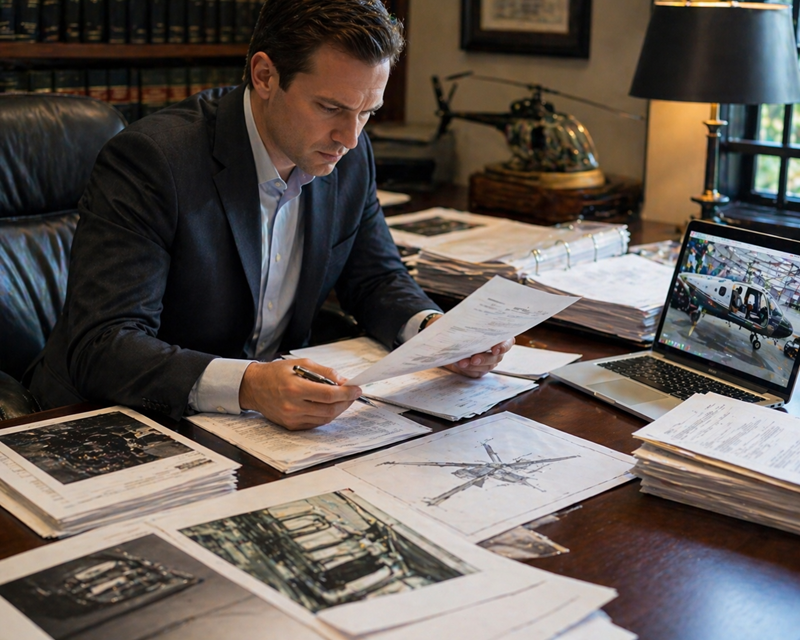
Early evidence can shape who is blamed, what damages are proven, and how an air taxi claim is built.
These claims should not be treated like ordinary traffic cases. The FAA’s air-taxi and powered-lift framework and powered-lift FAQ show that the aircraft category commonly described as air taxis is already being addressed through an active federal regulatory structure, while the NTSB’s aviation investigation resources reflect the federal investigative role in civil aviation crashes. In practical terms, future Florida claims may involve a deeper evidence record than a typical two-car collision, including operational, engineering, regulatory, medical, and site-specific proof.
Why does evidence matter so much in an air taxi crash case?
Evidence matters because the first public explanation of a crash is not always the full story. An operator may point to a pilot. A manufacturer may point to maintenance. A property-side defendant may point to the aircraft. In a serious Florida air taxi case, the right records can help show whether the problem was operator negligence, pilot error, product defect, poor maintenance, unsafe site design, or several causes at once.
Evidence also matters because some of the most important proof can disappear quickly. Digital system data can be overwritten. Site footage can be deleted under short retention policies. Witness memories fade. Maintenance or charging records can become harder to secure once companies begin defending the case. That is why early preservation work matters.
What technical flight and aircraft records may matter?
Technical flight and aircraft records may help explain how the event happened, what warnings appeared, how the aircraft responded, and whether the issue points toward operator negligence, pilot error, or a product-related failure.
Flight data and telemetry
A future air taxi case may involve flight data, telemetry, performance logs, route information, warning records, and other system outputs showing what the aircraft was doing before, during, and after the event.
Aircraft system and software records
Software logs, control-system data, sensor records, navigation data, battery-management information, and charging-system records may all matter where the crash appears tied to automation, software, power, or system performance.
Component and engineering records
If the case may involve product liability, the evidence picture may widen to include design history, testing materials, service bulletins, warning materials, update records, and internal component documentation.
What operator and pilot records may help prove liability?
Operator and pilot records may show whether the company and crew followed safe procedures, maintained proper training, and responded appropriately to known risks. These records can become especially important because the FAA’s powered-lift framework includes both operator and pilot certification rules for these aircraft.
Operator records
- Operations manuals and safety procedures
- Dispatch records and communications
- Staffing records and training materials
- Incident reports and internal reviews
- Maintenance scheduling records
- Policies for boarding, unloading, and passenger handling
Pilot and crew records
- Pilot training records
- Certification and qualification records
- Communications logs
- Duty and fatigue-related records where relevant
- Preflight and post-incident reporting materials

What maintenance, battery, and charging records may matter?
Maintenance and charging records may help prove whether the aircraft was safe to operate, whether problems were known before the event, and whether an outside vendor helped create the danger.
- Inspection history
- Repair records
- Parts replacement history
- Return-to-service decisions
- Battery inspection or replacement records
- Charging logs and charging-procedure records
- Vendor records for maintenance or power systems
These records matter because future air taxi operations may involve several companies at once, not just a single operator.
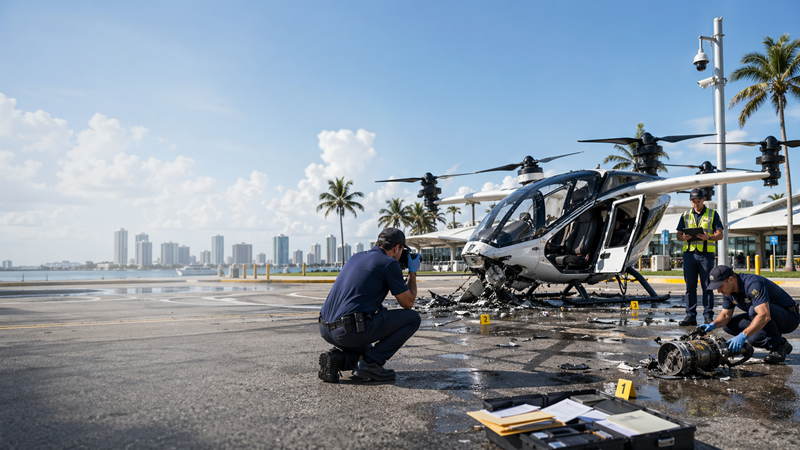
When an air taxi goes down in Florida, federal investigators move quickly to document wreckage, recover flight data, and establish cause. Victims and families have a narrow window to preserve evidence and pursue legal claims against operators, manufacturers, or maintenance providers.
What site, vertiport, and premises evidence may matter?
Not every important piece of evidence will come from the aircraft itself. If the injury happened during boarding, unloading, crowd movement, waiting, or ground operations, site evidence may be just as important as flight records.
Vertiport and site records
- Surveillance footage
- Site design plans
- Traffic-flow and crowd-control layouts
- Warning signs and barrier placement
- Lighting and access-control records
- Fire-safety and emergency-response planning
- Incident reports from the site or property operator
This is especially important for vertiport and loading-area claims, where the case may overlap with premises liability and site-safety failures rather than a pure in-flight crash theory.
What medical evidence helps prove the injury?
Medical evidence does more than show that someone was hurt. It can help prove causation, severity, future treatment needs, permanent impairment, and the financial consequences of the event.
- Emergency room and hospital records
- Ambulance or transport records
- Follow-up treatment records
- Diagnostic imaging
- Specialist evaluations
- Rehabilitation records
- Mental health treatment records where relevant
- Doctor opinions on prognosis, restrictions, and future care
In a catastrophic injury case, medical proof may also help explain traumatic brain injuries, spinal trauma, burns, fractures, internal injuries, PTSD, permanent disability, and other life-changing consequences.

What damages evidence should be preserved?
A strong air taxi claim should not stop at liability evidence. Damages evidence helps show the full impact of the injury or fatal loss.
- Work-loss records and payroll history
- Tax records where relevant
- Proof of lost earning capacity
- Out-of-pocket expense records
- Photos showing injury progression or recovery limits
- Family or caregiver documentation of daily limitations
- Funeral and burial expense records in wrongful death cases
- Proof of lost support and services for eligible survivors
What role do federal investigations play?
Federal investigation materials may matter, but they do not replace a civil liability analysis. The NTSB investigates civil aviation accidents in the United States and determines probable cause. The FAA’s air-taxi resources and powered-lift FAQ also provide valuable regulatory context. Those materials can help explain the technical and operational background of a crash, but a Florida injury or wrongful death claim still has to prove liability, causation, and damages through the civil evidence in the case.
How does Florida law make evidence preservation more important?
Florida law makes early evidence work especially important because deadlines exist and defense strategy can begin long before a lawsuit is filed.
Comparative fault
Under Florida’s modified comparative fault framework in section 768.81, a defendant may try to reduce or defeat recovery by blaming the injured person or another party. That makes early evidence collection important because the first version of the facts can shape the defense posture.
Filing deadlines
Florida negligence and wrongful death claims generally carry short filing periods under section 95.11, and fatal-claim context may implicate the Florida Wrongful Death Act. In a technical transportation case, critical evidence may be lost long before a lawsuit is filed if no one moves quickly to preserve it.
What should you do right away to protect evidence?
The first steps after an air taxi crash can affect both the case and the quality of the available proof.
- Get medical care immediately, even if symptoms seem delayed or minor at first.
- Save photos, videos, receipts, and all communications from the operator, insurer, property owner, or any company involved.
- Identify witnesses and preserve contact information.
- Do not assume the first public explanation is complete or accurate.
- Be cautious with recorded statements, releases, or quick settlement pressure.
- Talk to a lawyer before important records disappear or one company frames the event around its own interests.
How can preservation work strengthen an air taxi claim?
A preservation strategy may include identifying likely data sources, flagging potential overwrite risks, and requesting that key records be preserved before they are deleted or altered through ordinary business practices. In an evidence-heavy case, that can include digital system logs, surveillance footage, maintenance records, vendor communications, and post-incident reporting materials.
This page does not need to overexplain litigation procedure, but it should make clear that preservation letters, retention issues, and spoliation risk can matter in technical transportation cases where multiple companies control different pieces of the evidence picture.
How Armando Personal Injury Law can help
Evidence-heavy transportation cases require a disciplined approach. Armando Personal Injury Law can help identify what records may exist, what parties should be investigated, and what evidence needs to be preserved before it is lost or reshaped by the defense.
That may include evaluating operator records, pilot materials, maintenance and battery data, vertiport or site evidence, medical proof, and damages documentation. In a serious injury or wrongful death case, early evidence strategy may shape the entire claim.
Frequently Asked Questions About Air Taxi Crash Evidence in Florida
What is the most important evidence after an air taxi crash?
The most important evidence may include flight data, operator records, pilot training materials, maintenance logs, software and battery records, site footage, witness statements, medical records, and damages documentation.
Can federal investigation materials help a Florida air taxi claim?
Yes. Federal investigation materials may provide important factual and technical context, but they do not replace the need to prove civil liability, causation, and damages in the claim.
Why do maintenance and charging records matter?
They may show whether the aircraft was safe to operate, whether a known problem existed before the event, and whether an outside vendor helped create the risk.
What if the injury happened at a vertiport instead of during flight?
Site evidence may become central. Surveillance footage, crowd-flow design, warning placement, barriers, lighting, access control, and incident reports may all matter in a vertiport-related claim.
How long do you have to file a Florida air taxi injury lawsuit?
Florida negligence claims generally carry a two-year deadline, although the exact timing can depend on the legal theory and the parties involved. Evidence can disappear much sooner than the filing deadline.
What if the crash caused a death?
A fatal crash may create a Florida wrongful death claim, and evidence should be preserved with both liability and survivor or estate damages in mind.
Client Testimonial
“Absolutely fabulous. Very professional. We live outside the country, and he handled our case quickly with no issues. If you need a good attorney, Armando is your guy.” – Christine B., ⭐⭐⭐⭐⭐
Actual client. Results may vary; each case is different.
About the Author
 Attorney Armando Edmiston is the founding attorney of Armando Personal Injury Law in Tampa and St. Pete, Florida. In addition to representing injury victims and families in serious personal injury and wrongful death cases, Armando brings a science-based background to evidence-heavy claims. He earned a B.S. in Biology from the University of South Florida, a J.D., cum laude, from Nova Southeastern University, and is one of only six lawyers in Florida listed with the ACS Forensic Lawyer-Scientist designation. His practice background includes personal injury litigation, medical malpractice-related work, and public defense, which supports a disciplined, evidence-driven approach to complex injury cases.