Florida Truck Accident Lawyer
A Florida truck accident claim is rarely just a case against one driver. These cases often involve the motor carrier, federal safety rules, black box and ELD data, maintenance records, cargo issues, and multiple insurance policies. Quick action matters because carriers and insurers often begin investigating immediately, and critical evidence can be lost if no one moves to preserve it.
Across major Florida freight corridors such as I-4, I-75, I-95, I-10, Florida's Turnpike, and I-275, crashes involving semi-trucks, tractor-trailers, delivery trucks, box trucks, and other commercial vehicles can leave people facing catastrophic injuries, long recoveries, and major financial pressure. If you were hurt in a Florida truck wreck, the right legal strategy starts with identifying every responsible party, preserving evidence early, and building the claim around how the crash changed your life.
Armando Personal Injury Law represents injured people and families in serious commercial vehicle cases across Florida, with offices in Tampa and St. Pete. The firm's team focuses on the proof that often decides these claims, including driver qualification issues, hours-of-service violations, maintenance failures, post-crash testing, corporate safety practices, and the full stack of available insurance coverage.
Free Consultation
Why Florida Truck Accident Cases Are Different
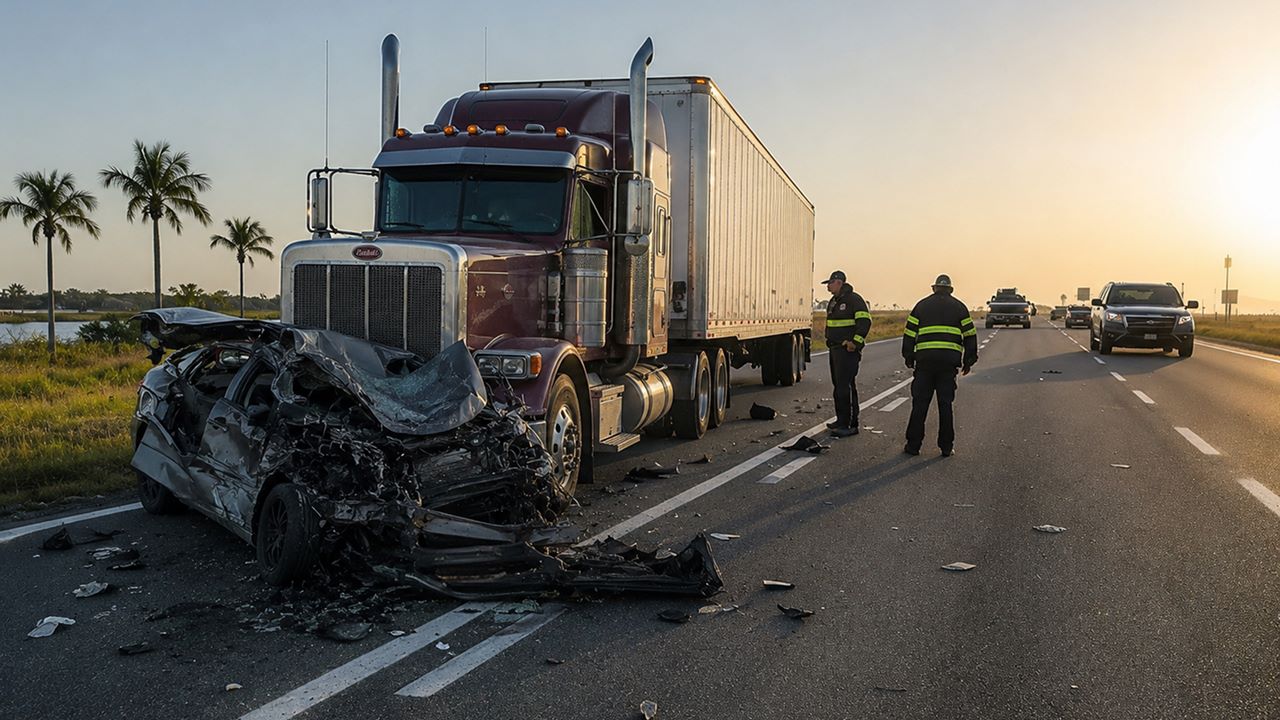
Truck accident claims are different because they usually involve more evidence, more insurance, and more defendants than an ordinary car crash. A case that looks simple on day one may later involve the truck driver, motor carrier, trailer owner, maintenance company, cargo-loading company, or a manufacturer, depending on the facts.
Truck drivers and interstate carriers are also governed by the Federal Motor Carrier Safety Regulations. Those rules can help prove fatigue, negligent hiring, poor maintenance, unsafe driving practices, or failures in drug and alcohol testing. In many truck cases, the records behind those issues matter just as much as the crash scene itself.
More than one party may be responsible
In Florida truck accident litigation, liability often extends beyond the person behind the wheel. Depending on the evidence, responsibility may reach the motor carrier, a company that owned or leased the tractor or trailer, a maintenance vendor, a shipper or cargo loader, or a parts manufacturer. That broader liability picture can make a major difference in both accountability and available coverage.
The insurance picture is usually more complex
Commercial truck claims often involve primary liability coverage, excess policies, umbrella coverage, leased-vehicle issues, and disputes over who was operating under whose authority at the time of the crash. Understanding that coverage stack is critical in a case involving catastrophic injury, permanent disability, or wrongful death. Federal financial responsibility rules for many motor carriers also shape the insurance analysis.
See 49 CFR Part 387 for the federal financial-responsibility framework.
Evidence can disappear quickly
A truck accident case can turn on evidence the injured person does not control. That may include ELD records, engine control module data, dash camera footage, dispatch communications, maintenance files, inspection reports, and post-crash testing records. Early preservation demands and a disciplined investigation help reduce the risk that key proof is lost, overwritten, or explained away later.
Local Truck Accident Lawyers
"Armando is the best attorney I could have ever asked for. I was in an auto accident in May 2020. I got hit by a semi truck involving another vehicle as well. Armando was referred to me by a family member. And I contacted his firm right away because I was unsure of what to do and what the next steps were. I was extremely anxious about the whole situation because I had never been in an accident before. I was stressed about the injuries I had sustained, worried about my car that was totaled, and worried about money and costs for bills. Armando was very reassuring of my situation and the stress that I was feeling. He explained everything to me of what I needed to do to take the next steps and how to go about my recovery process for my injuries. He and his team are very responsive and never kept me waiting for answers. He kept me up to date with everything that he knew about my case. I have fully recovered and received the maximum compensation I could get from my accident. Armando Personal Injury Law is the best of the best!!!"— Jessica M. Actual client. Results may vary; each case is different.
Who May Be Liable After a Florida Truck Accident
A strong claim starts with looking beyond the obvious defendant. Depending on the crash, one or more of the following parties may be liable:
The goal is not to name every possible party without proof. The goal is to investigate methodically so the claim reflects the real chain of responsibility and reaches every insurance layer that may apply.
Truck Accident Information
- Investigating Trucking Companies ›
- How Truck Accident Compensation Works ›
- Truck Accident Settlements and Verdicts ›
- How Can a Florida Truck Accident Lawyer Help Me? ›
- FAQ About Truck Accidents ›
- How Negligent Trucking Companies Try to Avoid Liability ›
- Commercial Truck Accidents ›
- Causes of Truck Accidents ›
- Highway Truck Accidents ›
- Types of Truck Accidents ›
Federal Trucking Rules That Often Matter in Injury Claims
FMCSA regulations are not just technical paperwork. In the right case, they help show how a crash became preventable. The rules below commonly matter in Florida truck accident investigations, and each entry links to the official text.
| Regulation | Why It Matters | Official Source |
|---|---|---|
| 49 CFR Part 382 | Controlled substances and alcohol use and testing | Open official text |
| 49 CFR Part 383 | Commercial driver licensing standards | Open official text |
| 49 CFR Part 385 | Safety fitness procedures and safety ratings | Open official text |
| 49 CFR Part 387 | Minimum financial responsibility for motor carriers | Open official text |
| 49 CFR Part 390 | General motor carrier safety requirements and recordkeeping | Open official text |
| 49 CFR Part 391 | Driver qualification standards | Open official text |
| 49 CFR Part 392 | Driving of commercial motor vehicles | Open official text |
| 49 CFR Part 393 | Required parts and safety equipment | Open official text |
| 49 CFR § 395.3 | Hours of service and driving-time limits | Open official text |
| 49 CFR Part 396 | Inspection, repair, and maintenance | Open official text |
| 49 CFR Part 397 | Hazardous materials transportation rules | Open official text |
In practice, these rules can point to fatigue, negligent hiring, inadequate training, unsafe maintenance, or poor corporate safety systems. They can also help uncover whether a carrier had warning signs before the crash and failed to act on them.
Evidence That Can Make or Break a Truck Accident Case
Truck accident litigation is often won or lost on records the trucking side already possesses. Important evidence may include:
Because this evidence may sit with the carrier or its vendors, early investigation is a major part of protecting the case. The sooner the legal team understands what should exist, the harder it becomes for the defense to frame the crash around missing context.
Armando Edmiston is 1 of only 6 lawyers in the state of Florida with the ACS Forensic Lawyer-Scientist designation, making Armando Personal Injury Law the right choice for these types of complex claims.
What to Do After a Truck Accident in Florida
The first steps after a commercial truck crash can affect both your health and your claim. Priorities include:
Get medical care as soon as possible and follow up if symptoms worsen or new symptoms appear.
Report the crash and make sure law enforcement documentation exists.
Photograph vehicle damage, the roadway, visible injuries, skid marks, debris, trailer numbers, and company markings if you can do so safely.
Avoid recorded statements to trucking insurers before you understand the extent of your injuries and the facts of the crash.
Preserve documents, receipts, medical records, discharge instructions, and names of witnesses.
Speak with a truck accident lawyer before accepting an early settlement offer.
Many truck cases become harder when the injured person waits too long to get treatment, gives a recorded statement too early, or assumes the claim involves only one insurance policy. For readers looking for city-specific guidance, see our Tampa truck accident attorney page.
"On May 2, 2022, I was rear-ended by a Mack Truck on 95N. I was spun across 3 lanes of traffic before crashing into the jersey wall. After leaving the ER, I wasn't sure what to do next. A relative referred me to Armando Edmiston at Armando Personal Injury Law. My husband and I received a call from Armando immediately, and he and Kimberly picked up the ball and went running. Over the past 11 months, they answered all my questions by phone, text, or email. They referred me to the best specialists, and I received the best care. They explained everything to me about the legal process and what to expect over the course of the case. You don't need those big box law firms to help you in your time of need. All you need is Armando, Kimberly, and Patty at Armando PERSONAL Injury Law. They truly put the 'personal' back into personal injury!!! Thank you for taking care of me and my family."— Amy L. Actual client. Results may vary; each case is different.
"Nothing but greatness and professionalism from Armando and his team, from the moment I gave them a call they made me feel comfortable and at ease despite my situation. I was in an accident where I was hit by a huge flat bed tow truck while I was in a box truck, the other party was completely at fault and as a result I endured heavy lower back pain resulting in herniated discs, Armando and his team made sure I was taken care of and I got what deserved, I would recommend them to anyone who has been injured in any motor vehicle accident."— Hector L. Actual client. Results may vary; each case is different.
"I was referred to Armando Personal Injury Law. I called and actually was able to speak directly to Armando. He made me feel comfortable and was available whenever I needed him."— Monica Actual client. Results may vary; each case is different.
Common Causes and Crash Scenarios in Florida Truck Cases
Commercial truck crashes are often preventable. They usually stem from a mix of driver conduct, company pressure, vehicle condition, and roadway circumstances. Common causes and crash patterns include:
- Driver fatigue and hours-of-service violations
- Distracted driving, including phone use and onboard device distraction
- Speeding, following too closely, or unsafe lane changes
- Improper maintenance, brake problems, tire failures, or lighting defects
- Overloaded, unsecured, or shifting cargo
- Negligent hiring, training, supervision, or retention
- Blind-spot or no-zone collisions
- Wide-turn crashes
- Jackknife and rollover collisions
- Underride or severe rear-end impact crashes
A serious truck wreck is rarely explained by one fact alone. The stronger question is whether the crash was foreseeable and preventable when viewed through the carrier's safety decisions, the driver's conduct, and the truck's condition.
Serious Injuries After a Commercial Truck Crash
Because of the size and force involved, truck accidents often cause injuries that are more severe than those seen in ordinary passenger-vehicle crashes. Common injuries include traumatic brain injuries, spinal cord damage, fractures that require surgery, crush injuries, internal bleeding, severe soft-tissue injuries, burns, amputations, and permanent disability.
These injuries can affect much more than emergency treatment. A serious truck accident may change a person's ability to work, care for a family, live independently, or return to daily routines without pain. That is why a strong claim has to account for future medical care, long-term impairment, and the full human impact of the crash.
Let Armando Be Your Voice For Justice"In 2018, I was involved in a rear-end car accident when I was hit by a commercial vehicle. I was referred to Armando Injury Law by a friend. I called and was immediately connected to Armando. He met with me the same day, helped me get medical care I needed! Armando and his team were very aggressive and made the other side take responsibility for my injuries. Thank god i hired them!!"— Roderick H. Actual client. Results may vary; each case is different.
What Compensation May Be Available
Depending on the facts, a Florida truck accident claim may include compensation for:
- Past and future medical expenses
- Lost wages and loss of future earning capacity
- Pain and suffering
- Disability, disfigurement, and loss of quality of life
- Rehabilitation, assistive care, and other future support needs
- Property damage and out-of-pocket losses
- Wrongful death damages for surviving family members when a loved one does not survive. See our wrongful death page for related guidance.
No serious injury claim should be valued around emergency bills alone. In truck cases, the most important losses often emerge over time through surgery recommendations, specialist care, work restrictions, and the long-term effects on daily life.
What Can Reduce the Value of a Florida Truck Accident Claim
Even strong truck accident cases can lose value when key proof is missing or the defense gets ahead of the story. Problems that often hurt claims include:
- Delays in medical treatment or large gaps in follow-up care
- Recorded statements that lock the injured person into an incomplete version of events
- Failure to identify all responsible parties and all available insurance
- Missing vehicle, electronic, maintenance, or witness evidence
- Early settlement before the long-term medical picture is clear
- Comparative fault arguments supported by incomplete reconstruction or selective facts
Florida uses a modified comparative negligence rule in most negligence cases. Under section 768.81, a claimant found to be greater than 50% at fault for his or her own harm may be barred from recovering damages in covered negligence actions. That is one reason truck accident cases benefit from early evidence review, careful fault analysis, and accident reconstruction when needed.
Truck carriers move fast after a crash. Don't let them get ahead of the evidence.
Talk to Armando TodayHow Insurance and PIP Can Affect a Florida Truck Accident Claim
Florida truck accident cases can involve both no-fault benefits and fault-based liability claims. In many situations, an injured person's Personal Injury Protection benefits may help cover initial medical and wage-loss benefits, but serious truck cases often go far beyond no-fault because the damages are larger and commercial coverage may include multiple liability layers.
Florida's PIP statute is section 627.736, and it generally ties initial medical benefits to prompt treatment after a crash. Florida's tort-threshold rule is section 627.737, which explains when pain-and-suffering damages may be pursued in motor-vehicle injury cases. In truck cases, the practical question is usually bigger than PIP alone: which carrier, policy, excess layer, or umbrella coverage may apply once the full injury picture becomes clear.
How Long Do You Have to File a Florida Truck Accident Lawsuit?
Deadlines matter. Under section 95.11, many Florida negligence actions are subject to a two-year filing period, and the same statute also addresses wrongful death deadlines. Waiting can create practical problems long before the filing deadline arrives because records, footage, and witness memory may fade.
A lawyer should evaluate the timeline as early as possible, especially when the crash involves a death, a government entity, a rideshare or delivery component, or questions about who controlled the truck and trailer.
Find Out If You Have a CaseHow a Florida Truck Accident Lawyer Can Help
Truck accident cases demand more than a demand letter and a police report. They often require early preservation work, a working knowledge of trucking records, a clear plan for proving fault, and a damages presentation that reflects the reality of catastrophic injury.
Armando Personal Injury Law brings a disciplined, evidence-focused approach to serious injury cases. Attorney Armando Edmiston is a U.S. Marine veteran and one of only six lawyers in Florida listed with the ACS Forensic Lawyer-Scientist designation. That combination of trial readiness, science-forward analysis, and client-focused communication is well suited to cases involving complicated liability and hard-fought proof.
Frequently Asked Questions About Florida Truck Accident Claims
How long do I have to sue after a Florida truck accident?
Many Florida negligence-based truck accident claims must be filed within two years, but timelines can vary based on the facts and claim type. It is best to get the deadline reviewed early so evidence can be preserved while the case is still fresh.
Can I sue the trucking company and not just the driver?
Often, yes. In many cases the trucking company or motor carrier may be liable for its own conduct, the driver's conduct, or both. The right answer depends on the employment relationship, the carrier's role, and what the records show.
What evidence matters most in a truck accident case?
Important evidence often includes ELD data, hours-of-service records, black box or onboard data, maintenance files, driver qualification records, dispatch communications, cargo documents, photos, witness statements, and crash reconstruction evidence.
What if I was partly at fault for the crash?
Partial fault does not automatically end every case, but it can reduce value and, in some situations, bar recovery under Florida's comparative fault rules. The details matter, which is why early evidence review is so important.
How does Florida no-fault insurance affect a truck accident case?
PIP may help with initial medical and wage-loss benefits in some motor-vehicle cases, but serious truck claims often extend far beyond no-fault and involve liability insurance, excess coverage, and long-term damages analysis.
Are truck accident cases usually worth more than car accident cases?
They can be, but not because every truck case is automatically large. The value often rises because the injuries are more severe, future care needs are greater, and there may be more insurance coverage available.
What happens if a loved one died in the crash?
The case may become a wrongful death claim. That can involve additional rules about who brings the claim, what damages may be available, and what deadlines apply. Those cases should be reviewed immediately.
How much does it cost to hire a Florida truck accident lawyer?
Armando Personal Injury Law handles these cases on a contingency fee basis. That means the fee comes from a recovery, not from upfront hourly billing.
"I was involved in a car accident with my brother. We were rear-ended by a commercial truck. I was referred to Armando by a family friend and was happy I was! I called him and met with him that same day. He was very helpful and thorough. He went over the process and what to expect. He helped me get medical care. Armando was able to make a recovery for my injuries without going to court! I'm very happy with his services and his firm. Call Armando if you need immediate help with a truck accident!"— Mann M. Actual client. Results may vary; each case is different.
Talk With a Florida Truck Accident Lawyer
If you were hurt in a commercial truck crash anywhere in Florida, get legal advice before the evidence picture hardens in the carrier's favor. A truck accident claim may involve more parties, more records, and more insurance than you realize at first.
Armando Personal Injury Law helps injured people and families understand what evidence matters, what coverage may apply, and what steps can protect the claim. Contact the firm for a free consultation.

About the Author
Attorney Armando Edmiston is the founding attorney of Armando Personal Injury Law in Tampa and St. Pete, Florida. A U.S. Marine veteran and Hillsborough County native, he represents injured people and families in serious injury cases, including car accidents, truck accidents, motorcycle accidents, wrongful death, negligent security, premises liability, and nursing home abuse and neglect claims. Armando earned a B.S. in Biology from the University of South Florida and a J.D., cum laude, from Nova Southeastern University. He is also one of only six lawyers in Florida listed with the ACS Forensic Lawyer-Scientist designation.