Florida Bicycle Accident Lawyer
If someone else's negligence injured you while riding a bicycle in Florida, you may be able to recover compensation for medical bills, missed work, and other losses. You do not need a traffic citation against the driver to pursue a civil claim. You do need evidence showing what happened, who was responsible, and how the injuries affected you.
Armando Personal Injury Law represents injured cyclists and families pursuing wrongful death claims across Florida from offices in Tampa and St. Petersburg. A bicycle injury can involve a careless driver, an unsafe property condition, or a defective component. We look at the cause of the injury and the insurance that may apply before deciding how to pursue the case.
Call (813) 482-0355 or request a free case review. Tell us where you were riding, what happened, and what you are dealing with now. Bring whatever records you have. You do not need a complete file to start the conversation.
Free Case Review
The Questions That Matter After a Florida Bicycle Crash
Who caused the injury? A driver's account, a citation, or an insurance adjuster's opinion does not settle civil fault by itself.
Which insurance applies? PIP, bodily injury liability insurance, and uninsured motorist coverage serve different purposes. Eligibility depends on the crash and the policy.
What needs preserving? The bicycle, witness details, photographs, and original video files can matter. Nearby recordings may disappear before you feel ready to deal with a claim.
Which deadline applies? The PIP treatment window, insurance reporting requirements, and lawsuit deadline are separate. Government claims add notice requirements.
How Armando Personal Injury Law Can Help
An injury claim involves more than sending the insurer a stack of bills. The evidence needs to explain the crash, support the injuries, and address any allegation that you were responsible.
Attorney Armando Edmiston founded the firm. He is a U.S. Marine Corps veteran and Hillsborough County native with a background in personal injury litigation. He also holds the ACS-CHAL Forensic Lawyer-Scientist designation, which requires forensic science coursework and proficiency testing. That training is particularly relevant when impairment or laboratory evidence is disputed. Reconstruction and medical questions still require the appropriate evidence and, when needed, qualified experts.
Our published case results include co-representation of a bicyclist who suffered a traumatic brain injury after falling at a poorly lit, uneven construction site. The case settled for a multimillion-dollar amount. It illustrates why a bicycle case may involve property conditions rather than a collision with a car. Past results do not guarantee a similar outcome.
"My son was involved in a terrible car accident on April 17, 2025. He was riding his bicycle when he was hit by a car. … From the very beginning, Armando and his entire office staff were compassionate, professional, and extremely helpful."— Michael P. Actual client. Results may vary; each case is different.
What Happens When You Contact Us?
During a free case review, we listen to what happened, answer your questions, and explain the legal options and information needed to evaluate the claim. Useful starting points include the crash date and location, your treatment, the driver's details, and any contact from insurers.
If we accept your case, our work includes investigating responsibility, gathering available reports and witness information, addressing evidence preservation, documenting losses, and handling insurer communications. Depending on the evidence and the insurer's response, the case may proceed through settlement negotiations or litigation. We explain the next steps as the claim develops.
Treatment can make an office visit difficult. Ask about meeting arrangements, including home or workplace visits and evening or weekend appointments. Our contact page explains the firm's available arrangements.
What Should You Do After a Bicycle Crash?
Get medical help first. Call 911 for a serious injury, move out of traffic if you can do so safely, and report the crash to law enforcement. Do not put yourself back in danger to take photographs.
When your condition allows:
- 1Photograph everything. The bicycle, vehicles, visible injuries, road surface, lane markings, signs, and debris. Wider photographs can help show where everything was positioned.
- 2Get driver and insurance details, witness contact information, and the report number.
- 3Keep the bicycle, helmet, clothing, lights, and damaged parts. Avoid repairs or disposal until their condition is documented and any needed inspection occurs.
- 4Save original camera and ride files, messages, receipts, and insurance correspondence. Note nearby cameras; a business or homeowner may overwrite recordings.
- 5Keep treatment records, bills, and a record of missed work. Describe symptoms accurately to your providers.
- 6Notify potentially applicable insurers promptly and follow policy reporting requirements. Before signing a release, find out which claims it ends and whether it affects other coverage. A release can matter even when the payment seems small.
"10/10 recommend!! They were there when I needed them the most, answered all my calls and questions while the insurance company was blowing me off. I put in inquiry after inquiry trying to get answers from different firms and Armando answered on the first ring!"— Tameka L. Actual client. Results may vary; each case is different.
"Fantastic group to work with. Fought for me throughout the entire process. Armando and team literally fought and stood their ground with the insurance companies to make sure what I received was fair."— Tony D. Actual client. Results may vary; each case is different.
For eligible PIP medical benefits, initial qualifying care must occur within 14 days. That is a benefits requirement, not the lawsuit deadline. Missing that window does not automatically eliminate every other possible injury claim.
Which Insurance Can Pay for a Cyclist's Injuries?
A Florida bicycle crash may involve your auto policy, the driver's policy, or another responsible party's insurance. The first question is which coverage applies, not simply whether someone has an insurance card.
Personal Injury Protection (PIP)
Florida's PIP law can cover an eligible cyclist injured through physical contact with a motor vehicle while not occupying a self-propelled vehicle. Your auto policy or a resident relative's policy may apply under the statutory conditions. The striking vehicle's PIP may cover a Florida resident injured through physical contact with that vehicle while riding a bicycle, provided the cyclist does not own a motor vehicle for which Florida requires PIP coverage and is not otherwise entitled to PIP benefits. Other statutory conditions and exclusions apply.
PIP generally pays 80% of qualifying medical expenses and 60% of qualifying lost gross income, subject to deductibles and applicable rules. Medical and disability benefits share a $10,000 limit. Medical reimbursement is limited to $2,500 without a qualifying emergency medical condition determination; that restriction does not cap the entire disability benefit at $2,500. A separate $5,000 death benefit may apply.
Initial qualifying care must occur within 14 days and satisfy the provider requirements. PIP should not be assumed to cover a no-contact crash just because a driver caused it.
The Driver's Bodily Injury Liability Insurance
Bodily injury coverage can pay a claim based on an insured driver's legal responsibility for your injuries. It is different from PIP and property damage liability insurance.
Florida's basic requirements for most private passenger vehicles do not automatically include bodily injury liability coverage. The state's property damage financial-responsibility rule and PIP security requirement address different protections. Other requirements and exceptions can apply. A driver having insurance does not establish that the policy covers your injury claim.
If applicable bodily injury coverage exists, the limits may still be less than your losses. The investigation may also need to examine the vehicle owner, a driver's employer, or other potentially responsible parties and policies. Their responsibility must be established; their involvement alone is not enough.
Uninsured and Underinsured Motorist Coverage (UM)
UM may help when a responsible driver has no bodily injury coverage, insufficient limits, or cannot be identified. A cyclist may be insured under an individual or resident-family auto policy even though the cyclist was not driving a car.
Under Florida's UM statute, coverage depends on insured status, the right to recover from the motorist, and applicable policy terms. Living with someone who has auto insurance is not enough by itself. Rejection forms, reporting requirements, and settlement-notice provisions also matter.
Before accepting a liability settlement, check whether the UM insurer must receive notice to preserve an underinsured motorist claim. Keep the offer, proposed release, and policy documents together so they can be reviewed before you agree.
Who Is at Fault in a Florida Bicycle Accident?
Fault depends on conduct and evidence. The cyclist's location, the driver's movement, visibility, traffic controls, and the sequence of events all matter. A traffic-law violation can be relevant without automatically proving every element of the injury claim.
A driver turning across a cyclist's path raises different questions from a sideswipe or a door opened into traffic. For a turn, the investigation may focus on the approach, signal, and timing. For a close pass, bicycle and vehicle damage, lane width, and witness accounts may help. A construction-site fall may require identifying who controlled the site and what condition caused the fall.
Bicycle Rules That Can Affect the Claim
| Rule | Florida Requirement | Why It Matters |
|---|---|---|
| Lane Position | Under §316.2065, riders moving below the normal speed of traffic generally must use an available bike lane or stay as close as practicable to the right edge, subject to exceptions. | Passing, left turns, hazards, potential conflicts, and lanes too narrow to share safely can justify a different position. |
| Passing | Section 316.083 requires at least 3 feet when overtaking a bicycle or e-bike within the same travel lane, or staying behind until passing is safe. | Damage, lane measurements, and witnesses may help establish how a sideswipe or forced-off-road crash happened. |
| Right Turns | Under §316.151, a driver overtaking a bicycle moving in the same direction must signal and may turn right only when the bicycle is at least 20 feet from the intersection and the turn is safe. | Distance alone does not make an unsafe turn lawful. |
| Opening Doors | Section 316.2005 prohibits opening a vehicle door unless reasonably safe and without interfering with moving traffic. | A driver or passenger can create a dooring hazard. |
| Night Riding | Section 316.2065 requires specified front and rear lights and a rear reflector between sunset and sunrise. | Lighting evidence needs to be considered with the rest of the crash evidence. |

"I truly appreciate everything that Armando and his team has done for me. I would have been completely lost without them. I couldn't recommend a better team for a lawyer to be behind you."— Divine W. Actual client. Results may vary; each case is different.
What if You Were Not Wearing a Helmet?
Florida requires riders and passengers under 16 to wear a properly fitted, securely fastened bicycle helmet meeting the required standard. Adults are not subject to that statewide age-based requirement. Section 316.2065(18) says helmet nonuse may not be considered evidence of negligence or contributory negligence, including a parent's failure to prevent a child from riding without one.
That does not resolve allegations about other conduct, such as a traffic-signal violation. Those allegations require their own evidence.
What if You Share Some Fault?
For negligence actions governed by Florida's modified comparative-fault rule, a claimant found more than 50% responsible for their own harm cannot recover damages. At 50% or less, damages are reduced by the claimant's percentage of fault. Section 768.81 sets out the rule.
For illustration, $100,000 in proven damages with 20% claimant fault would ordinarily become $80,000. At exactly 50%, it would become $50,000. At 51%, recovery would be barred under that rule. These are examples of the calculation, not predictions of settlement amounts or insurance payments.
The 2023 reform generally applies to actions filed after March 24, 2023, subject to its specific provisions and the governing law. Older litigation needs separate review. If an insurer assigns you fault, ask what evidence supports that decision. Its assessment is not the same as a court finding.
What Evidence Supports Your Bicycle Injury Claim?
You need evidence showing who caused the crash and how the injuries affected your health, income, and daily life. Photographs, bicycle and vehicle damage, witness accounts, road measurements, and available video can help explain the crash. Medical and wage records help show what it cost you.
Some evidence needs attention early. A repaired bicycle may no longer show the original damage. Camera footage may be overwritten. A component failure may require an inspection before anything is altered. Not every vehicle records useful crash data, and not every camera stores recordings.
For an injury that affects your ability to work or care for yourself, the records need to address the lasting effects as well as the first emergency visit. Future treatment, reduced earning ability, and long-term limitations require supporting evidence. The diagnosis alone does not establish the full loss.
What Compensation Can an Injured Cyclist Recover?
Depending on the claim and proof, compensation may include medical expenses, lost earnings, reduced earning capacity, and other injury-related losses. Bicycle repair or replacement can be a related loss. Our representation focuses on injury and wrongful death cases.
Pain, suffering, mental anguish, and inconvenience have an additional limitation in motor-vehicle claims where §627.737(2) applies. The threshold includes significant and permanent loss of an important bodily function; permanent injury within a reasonable degree of medical probability, other than scarring or disfigurement; significant and permanent scarring or disfigurement; or death. Other types of claims require their own analysis.
A diagnosis alone is not enough to estimate a settlement reliably. Responsibility, lasting injury, treatment, available coverage, and whether payment can actually be recovered all matter. Before you settle, the agreement needs to be considered alongside your losses and any rights you would release.
How Long Do You Have to File a Florida Bicycle Lawsuit?
Most ordinary negligence claims under Florida's current rule have a two-year filing period. The clock generally begins when the legal claim arises, often on the crash date. The two-year change applies to causes of action arising after March 24, 2023. Older claims require separate review. Wrongful death generally has a two-year period, subject to applicable exceptions.
The controlling sources include §95.11 and the enacted 2023 reform, Chapter 2023-15. Product claims, government defendants, and other circumstances can change the analysis.
Do not assume that an open insurance claim, settlement discussion, or ongoing treatment stops the lawsuit clock. Have the deadline checked early. It is separate from the 14-day PIP treatment requirement and any policy reporting obligation.
Does a Road-Defect or Government Claim Have Different Deadlines?
Yes. Section 768.28 has separate notice and lawsuit requirements. Written notice generally must reach the appropriate agency within three years. Notice to the Florida Department of Financial Services (DFS) is also required for many claims, with exceptions for specified defendants. Wrongful-death claims have separate notice and filing provisions. The correct recipients, waiting periods, and deadlines need to be identified together.
Covered government tort claims generally have a four-year lawsuit period, with exceptions including wrongful death. Government payment limits are generally $200,000 per person and $300,000 per incident. Qualifying insured settlements and legislative relief can affect recovery above those amounts.
A pothole or unsafe construction condition does not automatically establish liability. The investigation must address who controlled the location, notice of the condition, causation, and immunity. A private contractor may require a different analysis.
"This is by far my most communicative, professional, and friendly firm I've ever had the pleasure of doing business with. They walked us through the whole legal process every step of the way. They were quick to be an advocate for us when we were scared and didn't know what to do."— Nolan N. Actual client. Results may vary; each case is different.
"Our case was a tricky one, and thank God for you and your skilled professionals. You not only made us feel well taken care of, you went out of your way to help us. You were also very responsive and straight up. I would recommend you to anyone because you get the job done."— Lorna G. Actual client. Results may vary; each case is different.
What if a Bicycle Crash Caused a Death?
Florida law requires the deceased person's personal representative to bring the wrongful death action for qualifying survivors and the estate. Each family member does not bring a separate wrongful death lawsuit. Section 768.20 identifies the representative's role.
Under §768.21, damages depend on the beneficiary and circumstances. They can include lost support and services, specified companionship and mental pain and suffering damages, medical or funeral expenses, and qualifying estate losses. Not every relative can recover every category.
Our wrongful death attorneys can explain who may pursue the case, which losses Florida law recognizes, and what information is needed. You do not need every answer before asking for help.
"I cannot express the gratitude that I have for Armando and the staff at the office. … This was a very long journey and they have been there for me every step of the way. I appreciate that they put my health above everything and always made sure I was OK. Communication has always been very clear and so helpful."— Teri K. Actual client. Results may vary; each case is different.
What if the Driver Leaves the Scene?
A hit-and-run does not automatically end the injury claim. Witness descriptions, recordings, debris, and vehicle damage may help identify the driver. If identification is unsuccessful, applicable UM coverage may be important. Report the crash promptly and preserve the original evidence.
Florida's leaving-the-scene statute addresses the driver's duties and criminal consequences. The criminal case and civil claim are separate. Restitution may be ordered, but an order does not guarantee collection or replace an insurance or civil claim.
How Do You Get Your Florida Bicycle Crash Report?
Start with the investigating agency or the Florida Crash Portal. Keep the report number if you have it. Specified crashes involving death, injury, or complaints of pain require a long-form report under §316.066.
Reports containing protected personal information are confidential for 60 days after filing, but eligible parties, including those involved and their legal representatives and insurers, can obtain access during that period. You do not necessarily have to wait 60 days.
A report can identify parties and guide the investigation. It does not finally decide civil fault. Florida law also restricts the trial use of specified reports and crash-report statements; independent evidence needs its own admissibility review.
"Armando and his team were amazing, he really made it a much easier process for me and helped me what steps to take. Without Armando I would have been lost and suffering in pain for the rest of my life. I cannot recommend him enough. He really fought hard for me and to make sure I got the help I needed."— Angellena E. Actual client. Results may vary; each case is different.
Florida Bicycle Fatalities in Context
NHTSA's 2024 bicyclist and other cyclist report, published in July 2026, recorded 208 pedalcyclist fatalities in Florida, the highest state total. Florida's rate was 0.89 deaths per 100,000 residents, second to Louisiana. Pedalcyclists accounted for 6.6% of Florida traffic fatalities.
These figures cover motor-vehicle traffic crashes and include motorized bicycles in the pedalcyclist classification. They do not count every cycling death or measure risk per mile. They also say nothing about fault in your particular crash.
Bicycle Injury Representation in Tampa Bay and Across Florida
Armando Personal Injury Law serves injured people across Florida from Tampa and St. Petersburg. The legal framework on this page is statewide. The investigating agency, responsible parties, evidence, and appropriate court depend on where and how the injury happened.
Tampa
Our Tampa office is at 2002 E 5th Ave, Unit 103, Tampa, FL 33605. Our Tampa representation page provides further information for Hillsborough County residents.
St. Petersburg
Our St. Petersburg office is at 2643 Central Ave, St. Petersburg, FL 33713. Pinellas County riders can read about our St. Petersburg bicycle accident representation.
Pasco County riders can read about our Wesley Chapel bicycle accident representation.
If your crash happened elsewhere in Florida, start by calling and explaining the location and circumstances. If injuries make travel difficult, ask about available meeting arrangements. We can discuss the information needed to evaluate your claim before you assemble every record.
More Questions About Florida Bicycle Injury Claims
Can I Have a Claim if the Car Never Touched My Bicycle?
Yes, potentially. A driver's unsafe conduct may cause a cyclist to swerve or fall without contact. You still need evidence connecting that conduct to your injuries. PIP is a separate question because its provisions for someone outside a self-propelled vehicle require physical contact with a motor vehicle. Liability and UM coverage need their own review.
What if I Do Not Own a Car or Have Auto Insurance?
You may still have a claim against a responsible driver or another liable party. The striking vehicle's PIP may apply to an eligible Florida resident under the statutory conditions. A resident relative's policy may also warrant review. Having no individual auto policy does not decide every possible source of recovery.
Can I Ride a Bicycle on a Florida Sidewalk?
Florida law generally gives a cyclist on a sidewalk or in a crosswalk the rights and duties of a pedestrian under the same circumstances. You must yield to pedestrians and give an audible signal before passing. Local restrictions and the crossing circumstances also matter. Sidewalk use does not create an unconditional right of way.
Are Electric Bicycles Covered by the Same Rules?
Generally, e-bikes and their riders have bicycle rights and duties under §316.20655. Permitted local restrictions can apply, including on paths and trails. Classification and modifications matter. Being treated as a bicycle under traffic law does not automatically determine insurance eligibility.
Does a Police Report or Traffic Ticket Decide Who Pays?
No. Civil responsibility depends on the law and evidence. A report can help an investigation, but neither a citation nor the absence of one automatically resolves the claim. An insurer's fault decision can also be disputed.
What Should I Bring to a Free Case Review?
Bring what you have: photographs, the report number, witness details, treatment information, insurance documents, and any settlement offer or release. If records are missing, tell us what you know. The first conversation can identify what still needs to be obtained.
Talk With Armando Personal Injury Law
You may be trying to recover while bills arrive and an insurer asks for answers. Start with a conversation about what happened. Call (813) 482-0355 or request a free case review.
We can discuss responsibility, potential coverage, and the next steps. You deserve clear answers and to be treated as more than a case number.
"I recommend Armando Personal Injury Law to anyone who’s in search for receiving 5 star service from start to finish of their case. Every question I had was answered with a detailed explanation. Received thorough timeline of expectations. Very happy with results."— S.G. Actual client. Results may vary; each case is different.
Free Case Review
About the Author
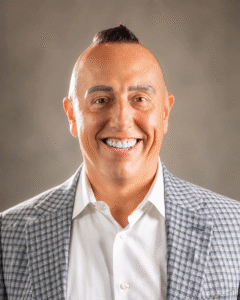
Attorney Armando Edmiston is the founding attorney of Armando Personal Injury Law in Tampa and St. Pete, Florida. A U.S. Marine veteran and Hillsborough County native, he represents injured people and families in serious injury cases, including car accidents, truck accidents, motorcycle accidents, wrongful death, negligent security, premises liability, and nursing home abuse and neglect claims. Armando earned a B.S. in Biology from the University of South Florida and a J.D., cum laude, from Nova Southeastern University. He is also one of only six lawyers in Florida listed with the ACS Forensic Lawyer-Scientist designation.