Florida 7-OH Wrongful Death Lawsuits
If your loved one died after using a product marketed as 7-OH, 7-hydroxymitragynine, or enhanced kratom, your family may have the right to bring a wrongful death claim.
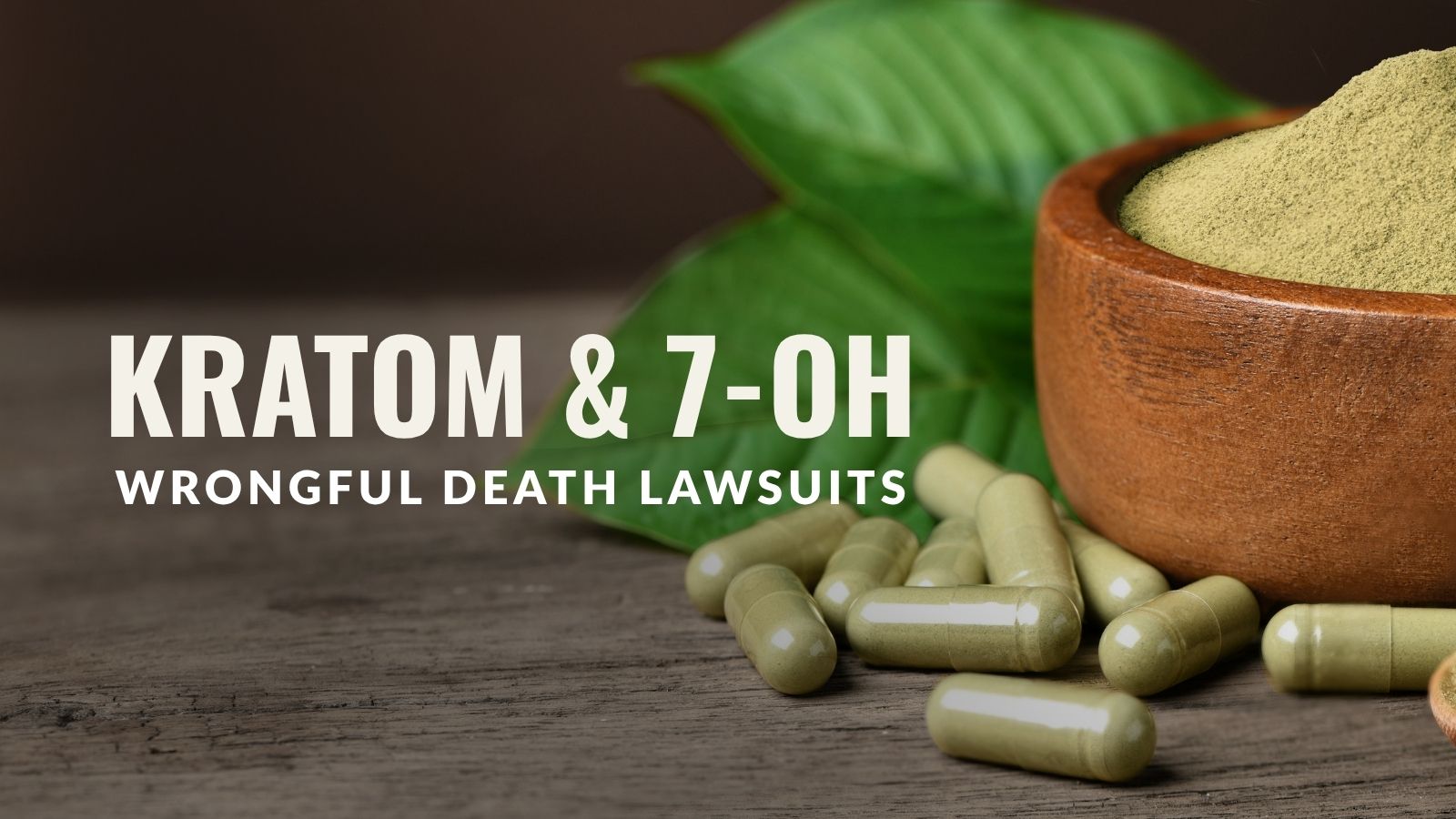
These cases are serious, and they are not the same as ordinary supplement disputes. The U.S. Food and Drug Administration has warned that concentrated 7-OH products can act like potent opioids. The agency has also warned that these products are sold online and in gas stations, corner stores, and vape shops, and that 7-OH is not lawful in dietary supplements or conventional foods. Families who want a fuller safety overview can review the FDA’s consumer update on 7-OH.
For families, the legal questions usually come down to four things: what the product actually contained, how it was labeled and sold, what the medical and toxicology evidence shows, and who can be held responsible for putting it into the stream of commerce.
At Armando Personal Injury Law, we handle serious Florida wrongful death litigation with a trial-ready, evidence-driven approach. This page is written for Florida law and Florida families. We also review fatal 7-OH cases from around the country, but the nationwide intake language is intentionally limited because the core search intent here is Florida wrongful death.
Current case review note: Armando Personal Injury Law is currently reviewing fatal 7-OH and kratom-related wrongful death cases. We are not currently accepting nonfatal overdose, withdrawal, liver injury, illness, or adverse reaction cases unless the exposure resulted in death.
July 2026 Federal Update: DEA Moves To Temporarily Schedule Concentrated 7-OH Products
On July 1, 2026, the U.S. Drug Enforcement Administration announced its intent to temporarily place certain concentrated 7-hydroxymitragynine products, commonly known as 7-OH, into Schedule I of the federal Controlled Substances Act. The action focuses on synthetic, processed, or enhanced products with elevated levels of 7-OH, not ordinary botanical kratom products that contain only naturally occurring levels below the DEA’s proposed threshold.
This distinction may be important for families investigating a fatal kratom or 7-OH-related death. Many families are not dealing with traditional kratom leaf. They may be dealing with concentrated products sold as tablets, gummies, liquid shots, powders, capsules, extracts, or pressed pills. These products may contain much higher levels of 7-OH, raising serious questions about product strength, labeling, warnings, marketing, testing, and retail sales practices.
A federal scheduling action does not automatically prove that a specific product caused a specific death. Every case depends on the evidence, including the product used, toxicology findings, medical records, autopsy results, other substances involved, and whether the product carried proper warnings. If your loved one died after using a product marketed as 7-OH, enhanced kratom, kratom extract, or a similar product, preserve the product, packaging, receipts, medical records, and online order information.
June 2026 Florida Emergency Rule Expands Crackdown on 7-OH Products
Florida has taken another major step against concentrated 7-OH products. On June 22, 2026, the Florida Attorney General signed an emergency rule aimed at controlling highly concentrated 7-hydroxymitragynine, commonly called 7-OH, along with several related chemical compounds being sold in Florida.
This matters for families investigating a possible 7-OH wrongful death claim because the rule reinforces what many doctors, toxicologists, regulators, and grieving families have already been warning about: concentrated 7-OH products are not the same as ordinary kratom leaf.
According to the Florida Attorney General’s announcement, the emergency rule took effect immediately and was designed to remove dangerous concentrated 7-OH products from store shelves. The rule covers 7-hydroxymitragynine and related compounds, including mitragynine pseudoindoxyl, 7-acetoxymitragynine, 9-hydroxycorynantheidine, 10-hydroxycorynantheidine, MGM-15, and MGM-16.
The emergency rule also places strict limits on covered products. Under the rule, products may not contain more than 1 milligram of the listed chemicals per gram in solid or powdered products, or more than 1 milligram per milliliter in liquid products. Products containing 7-OH or related compounds must also contain at least 100 times more regular mitragynine by mass.
For families, this regulatory action may become important evidence in fatal 7-OH cases. It may help show that concentrated 7-OH products were recognized as a serious public safety concern, especially when sold in consumer-friendly forms such as pills, tablets, drink shots, extracts, tinctures, flavored products, gummies, or other products that may make the risk appear less serious than it really is.
Source: Florida Attorney General’s emergency rule announcement
Source: Florida 7-OH emergency rule PDF
Why the Florida 7-OH Emergency Rule Matters in Wrongful Death Cases
A Florida emergency rule does not automatically prove that a specific product caused a specific death. Every wrongful death case still depends on the facts, including the product used, the dose, the timing, the medical records, the autopsy findings, toxicology results, prescription medication history, and any other substances involved.
But the June 2026 emergency rule may matter in several ways:
- It supports the distinction between ordinary kratom leaf and concentrated or enhanced 7-OH products.
- It may help show that concentrated 7-OH products can present foreseeable safety risks.
- It may become relevant to product labeling, marketing, warning, and retail-sale issues.
- It may help identify whether the product was sold in violation of Florida’s controlled substance restrictions.
- It may support investigation into manufacturers, distributors, wholesalers, retailers, vape shops, smoke shops, gas stations, online sellers, and other companies in the supply chain.
The Attorney General’s announcement also stated that Florida inspectors had removed more than 23,000 illegal 7-OH packages from retailers across the state. That is important because many fatal 7-OH cases may involve products purchased from ordinary retail locations, not from a pharmacy, doctor, or regulated medical source.
Concentrated 7-OH Products and Opioid-Like Risk
The concern with concentrated 7-OH is not just that it comes from or relates to kratom. The concern is that 7-OH can act on opioid receptors and may be associated with sedation, dependence, withdrawal, overdose, seizures, and respiratory depression.
That is especially important in fatal cases involving other medications. A person who used a concentrated 7-OH product may also have taken prescription medications, alcohol, allergy medication, cold medication, sleep aids, antidepressants, benzodiazepines, muscle relaxers, gabapentin, opioids, or other substances. That does not automatically defeat a wrongful death claim. It means the case has to be investigated carefully.
In many toxicology cases, the central legal question is whether the 7-OH product caused or substantially contributed to the death. Product strength, misleading labeling, missing warnings, drug interactions, consumer expectations, and how the product was marketed may all matter.
Source: FDA statement on Florida’s restriction of 7-OH opioid products
Kratom Alkaloids and Related Compounds: What Are They?
Products sold as kratom can differ substantially in their chemical composition and strength. Traditional kratom leaf contains naturally occurring compounds called alkaloids. Extracts concentrate selected constituents, while some newer products contain chemically modified derivatives. The body can also convert kratom compounds into other substances called metabolites.
These distinctions matter when investigating a suspected kratom-related death. A product’s name alone does not establish its ingredients, potency, or role in a fatal reaction.
1. Mitragynine
Mitragynine is the main alkaloid in kratom leaf. It acts on opioid receptors and other signaling systems in the brain. It is present in traditional leaf powder and tea, and manufacturers can concentrate it into extracts.
Repeated kratom use can lead to physical dependence and withdrawal. FDA also identifies risks including seizures, liver injury, and respiratory depression, which means dangerously slowed breathing. The likelihood of harm depends on the amount consumed and the circumstances of use.
Source: FDA’s kratom safety overview.
2. 7-Hydroxymitragynine, or 7-OH
7-Hydroxymitragynine is a minor kratom constituent with stronger opioid-receptor activity than mitragynine. It is also called 7-OH, 7-HMG, or 7-hydroxy.
Trace amounts can occur in botanical kratom, and the body can form 7-OH when it metabolizes mitragynine. However, products containing added or enhanced amounts of 7-OH are different from traditional leaf products. FDA warns that these concentrated opioid products can cause serious harm and have not been proven safe or effective for any use.
An ordinary kratom extract should not automatically be described as a 7-OH-enhanced product. Chemical testing is needed to establish what a particular product contains.
Sources: FDA’s 7-OH warning and mitragynine metabolism research.
3. Mitragynine Pseudoindoxyl, or “Pseudo”
Mitragynine pseudoindoxyl is a related compound with a rearranged chemical structure and potent opioid activity. It may be called MP, MGPI, or “pseudo.”
Manufacturers can produce it through chemical modification. Laboratory research has also demonstrated that 7-OH can convert into pseudoindoxyl in human plasma, the liquid portion of blood. That finding matters when interpreting toxicology: detecting a compound in a biological sample does not necessarily establish that it was added to the original product.
Concentrated pseudoindoxyl products raise concerns about dependence and respiratory depression. Human evidence remains limited, so laboratory potency measurements should not be presented as precise predictions of overdose risk.
Sources: human-plasma research and DEA’s assessment.
4. Dihydro-7-Hydroxymitragynine, or MGM-15
Dihydro-7-hydroxymitragynine and MGM-15 are two names for the same chemically modified derivative of 7-OH.
The word “dihydro” describes a change to the molecule’s structure. It does not mean that the product is diluted or weaker. MGM-15 acts on opioid receptors and should not be treated as equivalent to ordinary kratom leaf or a conventional leaf extract.
Its opioid activity raises concerns about dependence, withdrawal, and slowed breathing. Research in humans is limited, and laboratory findings do not establish a safe consumer dose.
Sources: Center for Forensic Science Research and Education’s (CFSRE) compound identification report and DEA’s assessment.
5. MGM-16
MGM-16 is another chemically modified derivative related to 7-OH and MGM-15. Its structure includes an added fluorine atom.
Researchers developed MGM-15 and MGM-16 while studying compounds that activate opioid receptors. Animal and laboratory studies demonstrate potent opioid activity, but they do not establish safety in people. Concerns include physical dependence and respiratory depression. MGM-16 is a distinct substance, not another name for MGM-15 or pseudoindoxyl.
Sources: original pharmacology research and DEA’s assessment.
6. 9-O-Desmethylmitragynine
9-O-Desmethylmitragynine is a metabolite of mitragynine, also called 9-O-demethylmitragynine or 9-hydroxycorynantheidine.
Its name describes removal of a methyl group from part of the mitragynine molecule. It can form during metabolism and can also be produced through chemical processing.
Finding this metabolite in a person’s blood or urine does not, by itself, prove that a manufacturer altered or “spiked” the product. Its human effects are less well characterized than those of mitragynine and 7-OH, and it should not automatically be assigned the same potency or overdose risk.
Source: research on 9-O-demethylmitragynine formation.
Why These Differences Matter in a Kratom Death Investigation
A thorough investigation distinguishes what was in the product from what formed after the person consumed it. Relevant evidence may include the remaining product, its packaging and lot number, laboratory testing, medical records, toxicology findings, and the medical examiner’s conclusions.
The presence of a kratom-related compound does not, by itself, establish the cause of death. Determining whether a product caused or contributed to a death requires evaluating the complete medical and toxicological evidence, including other substances and health conditions. Likewise, a brand name or the word “extract” cannot establish that a product contained synthetic derivatives or unusually high levels of 7-OH.
What Families Should Preserve After a Suspected 7-OH Death
If your loved one died after using a product marketed as 7-OH, 7-hydroxymitragynine, enhanced kratom, kratom extract, or a similar product, do not throw anything away.
Preserve:
- the product itself;
- the packaging, wrapper, bottle, blister pack, or container;
- any remaining tablets, gummies, liquids, powders, shots, extracts, or tinctures;
- photos of the front and back label;
- receipts, bank records, order confirmations, and shipping records;
- the store name or online seller information;
- prescription medication bottles and pharmacy records;
- over-the-counter allergy, cold, sleep, or pain medication packaging;
- EMS, emergency room, hospital, autopsy, death certificate, and toxicology records.
Because the Florida emergency rule may affect how these products are investigated, families should act quickly before product evidence, store surveillance footage, transaction records, online listings, advertisements, or batch information disappears.
Armando Personal Injury Law is currently reviewing fatal 7-OH and kratom-related wrongful death cases. The firm is not currently accepting nonfatal overdose, withdrawal, liver injury, illness, or adverse reaction cases unless the exposure resulted in death. If you believe a 7-OH product contributed to your loved one’s death, call (813) 482-0355 or request a free, confidential case review.
What Is 7-OH, and Why Are These Cases Different From Ordinary Kratom Claims?
7-hydroxymitragynine, often shortened to 7-OH, is not the same thing as plain kratom leaf. Both the FDA and the National Institute on Drug Abuse draw a distinction between ordinary kratom leaf and concentrated or enhanced 7-OH exposure.
That distinction matters. In many of these cases, the defense will try to blur the line between a plant-based product and a concentrated commercial formulation. But from a wrongful death standpoint, the case is about the actual product involved, not broad debates about kratom in general.
From a technical toxicology standpoint, these cases often center on mu-opioid receptor activity, respiratory depression, central nervous system depression, dose-response questions, co-ingestant analysis, and the timing between ingestion, collapse, emergency response, and death. NIDA notes that in laboratory models 7-OH can cause respiratory depression that is reversed by naloxone, which is one reason product identification and toxicology review matter so much in a fatal case.
A strong case focuses on facts such as whether the product was concentrated or enhanced, how strong it was, whether the label accurately described what was inside, whether the warnings were adequate, and whether the seller or manufacturer made the product seem safer than it was.
That is why these claims should be framed as evidence-heavy wrongful death and product liability cases, not generic kratom lawsuits.
When Can a Family Bring a Wrongful Death Claim After a 7-OH Death in Florida?
A Florida wrongful death claim may exist when a 7-OH product caused or substantially contributed to a fatal overdose, respiratory event, toxic reaction, or other death tied to product use.
These cases often involve more than one legal theory. Depending on the facts, the claim may include allegations such as defective or unreasonably dangerous product design, failure to warn, negligent marketing, misleading labeling, distribution of an unlawful or improperly marketed product, and retailer or distributor responsibility.

Families may have the right to pursue a wrongful death claim after a fatal 7-OH exposure.
Who files the lawsuit in Florida?
In Florida, a wrongful death case is generally brought by the personal representative of the estate for the benefit of surviving family members and the estate. Florida Statute section 768.20 controls who brings the action.
That point matters because grieving families are often told conflicting things after a sudden death. The claim is usually not filed as separate lawsuits by different relatives. It is brought through the estate structure required by Florida law.
What damages may be available?
Every case is different, but a Florida wrongful death claim may include damages for lost support and services, funeral expenses, medical expenses related to the final injury or illness, a spouse’s loss of companionship and protection, mental pain and suffering for qualifying survivors, and certain estate damages. Florida Statute section 768.21 is the starting point for that damages analysis.
In the right fact pattern, families may also want to ask whether punitive damages are in play, especially if the conduct around product design, marketing, or concealment was especially dangerous.
How long do you have to file?
Florida wrongful death cases are subject to strict deadlines, and families should not assume they have plenty of time. Florida Statute section 95.11 generally places wrongful death actions under a two-year limitations period.
The practical point is simple: the sooner a lawyer can begin preserving evidence, the better. Families who want a process overview can also review How to File a Personal Injury Lawsuit in Florida.
Why Are Manufacturers, Distributors, and Sellers Being Sued Over 7-OH Products?
Unsafe product allegations
One common claim is that the product itself was unreasonably dangerous because of its formulation, concentration, or dose strength. That can include questions about whether the product was enhanced, whether the concentration was excessive, and whether it was sold in a form that made misuse or overdose more likely.
Failure to warn
Families may also allege that the warnings were inadequate or misleading. The FDA’s consumer update describes reports of serious harm associated with 7-OH, which supports the argument that warning language, dose guidance, and safety disclosures matter.
Misleading marketing and retail sale practices
Another major issue is how the product was presented to the public. The FDA warning-letter announcement helps support claims about unlawful marketing and the casual retail sale of products that may carry opioid-like risk.
Distribution-chain liability
The company on the label is not always the only target. Depending on the evidence, liability may extend to the manufacturer, importer, distributor, wholesaler, retailer, or online seller.
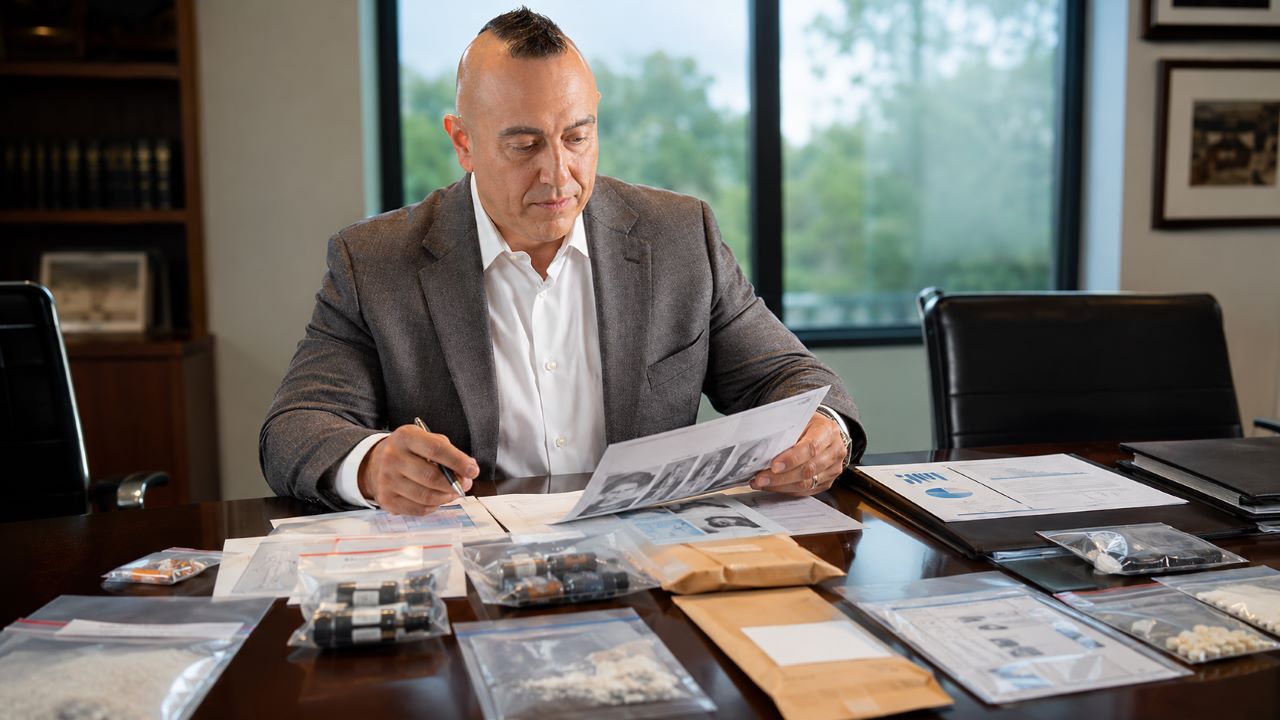
Fatal 7-OH cases often depend on toxicology, product identification, and evidence preservation.
What Evidence Matters Most in a Fatal 7-OH Case?
In these cases, causation is everything. A family may strongly believe the product caused the death, but belief alone is not enough. The case has to be built through records, physical evidence, retained product proof, and expert analysis.
In a fatal case, lawyers and experts may need to examine postmortem toxicology, autopsy findings, dose reconstruction, co-ingestant analysis, product concentration, chain-of-custody issues, and whether the clinical picture is consistent with opioid-like respiratory depression or central nervous system depression. That is where strong early case development separates a broad intake theory from a claim that can survive real causation scrutiny.
- the product itself
- the packaging, bottle, wrapper, or blister pack
- photos of the front and back label, dosage instructions, ingredient lists, and any lot or batch identifiers
- receipts, bank records, online order confirmations, and shipping history
- emergency medical records, hospital records, and any poison-center communications
- the death certificate, autopsy report, and toxicology findings
- witness statements from anyone who saw the product used or observed symptoms
- phone messages, searches, notes, or other time-stamped evidence showing when the product was purchased or taken
- prescription medication bottles and pharmacy records
- over-the-counter allergy, cold, sleep, or pain medication packaging
- photos of all supplements, kratom, 7-OH, alcohol containers, or other substances found nearby
- medication lists from treating doctors
- pharmacy fill history
- poison-center records or EMS notes describing sedation, respiratory distress, seizure, loss of consciousness, or resuscitation efforts
It is also important to gather evidence about other substances, prescriptions, or medical conditions. Defendants almost always look for alternate explanations. That does not mean the case is weak. It means the evidence has to be developed correctly from the start.
Why Medication Interactions Matter in Fatal 7-OH Cases
Medication interactions can be important in a fatal 7-OH wrongful death case because they may affect causation, toxicology, warning-label issues, and the defenses raised by manufacturers, distributors, or sellers. A fatal case does not become irrelevant simply because another medication, alcohol, or substance was also involved. In many cases, the legal question is whether the 7-OH product caused or substantially contributed to the death.
The FDA has warned that 7-OH is not just 'strong kratom.' 7-hydroxymitragynine occurs naturally only in small amounts in kratom leaf, but many current products are sold as concentrated or enhanced 7-OH in forms such as tablets, gummies, drink mixes, and shots. The FDA says 7-OH products are not approved for any medical use, have not been proven safe or effective, and should be avoided.
Some 7-OH products are sold in consumer-friendly forms such as gummies, drink shots, and flavored products. In a wrongful death case, that packaging may matter because it can affect consumer perception, misuse risk, warning adequacy, and whether the product was marketed in a way that downplayed opioid-like danger.
FDA’s scientific assessment describes 7-OH as a potent opioid-like public health concern with mu-opioid receptor activity. That matters in a wrongful death case because opioid-like effects can involve sedation, dependence, withdrawal, and respiratory depression.
Sedating medications and alcohol
The highest-risk combinations usually involve 7-OH plus something else that can depress the central nervous system. In a fatal case, investigators may need to look closely at alcohol, opioid pain medications, benzodiazepines, sleep medications, muscle relaxers, gabapentin or pregabalin, sedating nausea medications, and sedating antihistamines.
The concern is additive sedation or respiratory suppression. That can affect whether a person became hard to wake, lost consciousness, vomited, aspirated, or experienced slowed or impaired breathing before death.
Allergy, cold, and sleep medications
Some common allergy, cold, and nighttime medications can matter because they may cause drowsiness on their own. First-generation antihistamines such as diphenhydramine, doxylamine, chlorpheniramine, and brompheniramine may increase sedation, confusion, dizziness, impaired coordination, and breathing-related concerns when combined with opioid-like substances.
Prescription antihistamines such as hydroxyzine or promethazine may also be relevant because they can be strongly sedating. Nighttime cold products and sleep aids can be especially important to review because they may contain diphenhydramine or doxylamine along with other active ingredients.
Less-sedating allergy medications, including cetirizine, levocetirizine, loratadine, desloratadine, and fexofenadine, should not automatically be treated as harmless in a fatal 7-OH case. The dose, product strength, timing, and presence of other substances may still matter.
Psychiatric medications and drug-metabolism issues
Antidepressants, antipsychotics, and other psychiatric medications can also be important in a fatal 7-OH investigation. Published case literature has discussed suspected kratom-drug interactions involving venlafaxine and quetiapine, including concerns about serotonin syndrome and abnormal heart rhythm findings.
These issues matter because kratom chemistry is complex. Research discussed by FDA indicates that CYP3A4 can be involved in converting mitragynine into 7-OH, while other case literature has raised concerns that kratom constituents may affect CYP2D6 and CYP3A drug-metabolism pathways.
If someone has taken a 7-OH product with another medication and is hard to wake, having a seizure, struggling to breathe, or unresponsive, call 911 immediately. For other suspected poison exposure concerns, Poison Help is available at 1-800-222-1222.
Why multiple substances do not automatically defeat a wrongful death claim
Multiple substances are common in serious toxicology cases. CDC poison-center data from 2015 through 2025 found that kratom-related exposure reports increased sharply, and that multiple-substance reports were associated with higher hospitalization rates and more serious outcomes than single-substance reports. Among reported kratom-associated deaths, most involved multiple substances.
That does not mean a family has no case. It means the case must be built carefully through product evidence, medical records, autopsy findings, postmortem toxicology, prescription history, timing evidence, and expert review.
Why Trial-Ready Representation Matters in a 7-OH Wrongful Death Case
These are not simple claims. They can involve corporate defendants, retained product testing, outside laboratories, toxicologists, medical-causation experts, and fights over warning language, product identity, and foreseeability. Families should know whether the lawyer they are calling is prepared to build the case like it may have to be tried.
For readers who want more context on the courtroom side of that work, Attorney Armando Edmiston’s bio explains his background in personal injury and medical malpractice litigation, as well as his service as a public defender in Tampa’s 13th Judicial Circuit. That is the right place to support trial-attorney positioning without turning the body copy into puffery.
What Should Families Do After a Suspected 7-OH Death?
Do not throw anything away.
Keep the product, the packaging, receipts, and any remaining contents. Take clear photos before moving or discarding anything. Save emails, text messages, shipping records, and order confirmations. Request the autopsy report, toxicology results, and medical records as soon as they become available.
If the product was bought at a local store, identify the location right away. Store surveillance footage and transaction records may not be kept for long. If it was bought online, preserve the seller information, order history, and payment records.
Families are often overwhelmed in the first days and weeks after a death. That is completely understandable. But from a case standpoint, those early steps can protect evidence that may never be recoverable later. Before speaking with the firm, families can also use How to Prepare for Your Free Personal Injury Consultation to organize records and questions.
Why Families Call Armando Personal Injury Law
Fatal 7-OH cases are complex. They can involve toxicology, product identification, warning-label issues, retail-sale evidence, medical causation, and Florida wrongful death damages.
Armando Personal Injury Law handles serious injury and wrongful death claims with an evidence-driven, trial-ready approach. We understand that families in these cases need more than a generic intake conversation. They need a law firm that can evaluate what happened, identify the right evidence, and move quickly before critical proof disappears.
We also know grieving families may be dealing with travel limits, physical strain, or simply too much at once. The firm emphasizes clear communication, and the contact page explains that meetings can be arranged at your home or work and on nights and weekends. That kind of flexibility can matter when a family is trying to get answers without taking on one more burden.
Armando Personal Injury Law represents families in Florida wrongful death matters and also reviews fatal 7-OH cases from anywhere in the United States.
If you believe a 7-OH product contributed to your loved one’s death, request a free case evaluation or use the firm’s contact page to discuss what happened and what should be preserved now.
Frequently Asked Questions About Florida 7-OH Wrongful Death Claims
Is 7-OH the same as ordinary kratom?
No. That is one of the most important distinctions in these cases. A concentrated 7-OH product should not be treated as if it were the same as plain kratom leaf. Both the FDA and NIDA treat that distinction seriously.
Who can file a wrongful death lawsuit in Florida?
In most cases, the personal representative of the estate brings the claim on behalf of eligible survivors and the estate under Florida Statute section 768.20.
What damages may be available in a Florida 7-OH wrongful death case?
Potential damages may include lost support and services, funeral and medical expenses, certain mental pain and suffering damages for qualifying survivors, and estate-related damages depending on the facts. Florida Statute section 768.21 is the starting point.
What if the product was bought outside Florida?
That does not automatically prevent a case. Jurisdiction and applicable law depend on where the product was sold, where it was used, where the death occurred, and where the responsible companies do business. Armando Personal Injury Law reviews 7-OH death cases nationwide.
Why does toxicology matter so much in a 7-OH death case?
Because causation is usually the central fight. A serious case may require product identification, postmortem toxicology, autopsy review, co-ingestant analysis, and a close look at whether the final medical picture is consistent with opioid-like respiratory depression or another competing explanation.
What should a family do first?
Preserve the product and packaging, gather records, and speak with a lawyer before evidence is lost. Waiting can hurt the case.
Can a family still have a 7-OH wrongful death case if other medications were involved?
Yes, depending on the evidence. Other medications, alcohol, or substances do not automatically defeat a wrongful death claim. They make causation more complex. A lawyer may need to review toxicology, prescriptions, product strength, timing, warnings, and whether the 7-OH product caused or substantially contributed to the death.
What allergy medications may matter in a fatal 7-OH case?
Sedating antihistamines may be especially important, including diphenhydramine, doxylamine, chlorpheniramine, hydroxyzine, and promethazine. Nighttime cold and sleep products may also matter because they often contain sedating ingredients. These medications can affect toxicology, sedation, respiratory concerns, and causation analysis.
Did Florida ban 7-OH products?
Florida has used emergency rulemaking to place highly concentrated 7-OH and several related compounds under Schedule I controls. The June 2026 emergency rule limits covered chemicals in solid, powdered, and liquid products and applies Florida controlled substance laws to products that exceed those limits or fail to meet the required mitragynine ratio.
Does Florida’s 7-OH emergency rule help prove a wrongful death case?
The rule does not automatically prove causation in any individual case. However, it may become important evidence in a wrongful death investigation because it supports the argument that concentrated 7-OH products can present serious public safety concerns and may require stronger warnings, safer formulation, better labeling, and responsible retail practices.
What products may be involved in a 7-OH wrongful death lawsuit?
Fatal 7-OH cases may involve products sold as 7-OH, 7-hydroxymitragynine, enhanced kratom, kratom extract, tablets, capsules, gummies, drink shots, tinctures, extracts, powders, or similar products. The exact product, label, concentration, batch, seller, and timing of use are all important.
Can a family still have a case if the person also took allergy medication, cold medicine, alcohol, or prescriptions?
Yes, depending on the evidence. Other substances do not automatically prevent a wrongful death claim. They make the toxicology and causation analysis more complex. Lawyers may need to review whether the 7-OH product caused or substantially contributed to the death, especially if sedating medications, alcohol, sleep aids, or prescription drugs were involved.
Is Armando Personal Injury Law taking nonfatal 7-OH overdose or illness cases?
If your loved one died after using a 7-OH, 7-hydroxymitragynine, or enhanced kratom product, Armando Personal Injury Law can review the facts, identify the evidence that should be preserved, and help your family understand whether a wrongful death claim may exist. The firm is currently reviewing fatal 7-OH and kratom-related wrongful death cases only. Call (813) 482-0355 or request a free, confidential case review.
At this time, Armando Personal Injury Law is reviewing fatal 7-OH and kratom-related wrongful death cases. The firm is not currently accepting nonfatal overdose, withdrawal, liver injury, illness, or adverse reaction cases unless the exposure resulted in death.

About the Author
Attorney Armando Edmiston is the founding attorney of Armando Personal Injury Law in Tampa and St. Pete, Florida. He is a U.S. Marine veteran, a Hillsborough County native, and a Tampa Bay personal injury lawyer who represents injured people and families in car accident, truck accident, motorcycle accident, wrongful death, negligent security, premises liability, and nursing home abuse and neglect cases. Armando earned his B.S. in Biology from the University of South Florida and his J.D. from Nova Southeastern University, where he graduated cum laude and earned a Book Award in Florida constitutional law. His background includes work in personal injury and medical malpractice litigation, as well as service as a public defender in the 13th Judicial Circuit. He is also one of only six lawyers in Florida listed with the ACS Forensic Lawyer-Scientist designation.