Florida Wrongful Death Lawyer
Florida law may allow qualifying survivors and the estate to recover compensation when a wrongful act causes a death. The lawsuit is brought by the deceased person's personal representative. Who receives compensation, and which losses can be claimed, depends on the family relationships and the type of case.
After someone dies, the bills and paperwork do not stop. You may be arranging a funeral, caring for children, and trying to understand an incident no one has fully explained. Armando Personal Injury Law helps Florida families find out whether they have a wrongful death claim and what needs attention first.
We represent families across Florida from offices in Tampa and St. Petersburg. Call (813) 482-0355 or request a free consultation. You do not need to have every record, or an appointed personal representative, before asking us to review what happened.
Free Consultation
What Qualifies as Wrongful Death in Florida
A Florida wrongful death claim may arise when a wrongful act, negligence, default, or breach of contract or warranty causes a death and the person could have brought a claim had they survived. The rule appears in Florida Statute § 768.19. The claim needs evidence showing why the defendant is legally responsible and how that conduct caused the death.
Fatal car crashes, commercial truck collisions, and motorcycle accidents can give rise to wrongful death claims. So can nursing home abuse or neglect and dangerous conditions on someone else's property. Our work in Tampa premises liability includes cases involving injuries caused by unsafe property conditions. The first questions are what happened, who had a legal duty, and whether a failure to meet that duty caused the death.
Who Files a Florida Wrongful Death Lawsuit?
The deceased person's personal representative brings the lawsuit for the benefit of qualifying survivors and the estate under § 768.20. A spouse, child, or parent does not bring a separate wrongful death lawsuit solely because of that relationship. A relative who is appointed personal representative can bring the action in that representative capacity.
A will may name someone to serve as personal representative, but the court still must appoint that person. Florida's probate appointment statute sets an order of preference. If no estate has been opened, ask how appointment will fit with the wrongful death case and whether separate probate counsel is needed. Establish who will handle each part before hiring counsel.
Which Family Members Qualify as Survivors
Under § 768.18, statutory survivors include the spouse, children, and parents. Other blood relatives and adoptive brothers or sisters can qualify if they depended partly or wholly on the deceased person for support or services. Being emotionally close to the person does not, by itself, make someone a statutory survivor.
Florida law also addresses children born outside marriage. They qualify in relation to their mother; to qualify in relation to their father, he must have recognized a responsibility for their support.
For Florida wrongful death claims, "minor children" means children under 25. A child who is 18 through 24 is therefore treated as a minor for these statutory damages rules, even though that person is an adult for many other legal purposes.
"One of the most honest, no nonsense, sincerely caring, down to earth, straight to the point, professional lawyer I've been to date! He genuinely fights for those families going through heartbreaking times. Thank you Armando for your diligence and hard work for trying to get my daughters everything they deserve."— ConcreteRosa18 Actual client. Results may vary; each case is different.
"Armando is a great lawyer who cares about his clients. The legal process takes time and Armando is very helpful to clients during this process. I highly recommend his legal services to anyone."— Ricardo R. Actual client. Results may vary; each case is different.
What Damages Can Survivors and the Estate Recover?
Survivor losses and estate losses are different. Florida Statute § 768.21 identifies who may recover each category. Being a statutory survivor does not make someone eligible for every type of compensation.
| Who May Recover | Potential Losses and Important Limits |
|---|---|
| Qualifying survivors | Lost support and services, including qualifying future losses. |
| Surviving spouse | Lost companionship and protection, plus mental pain and suffering. |
| Children under 25 | Lost parental companionship, instruction, and guidance, plus mental pain and suffering. |
| Children age 25 or older | The parental-companionship and mental-pain categories generally require no surviving spouse. Those categories are unavailable to children age 25 or older in medical negligence claims. |
| Parents | Mental pain and suffering for a deceased child under 25. For a deceased child age 25 or older, this category requires no other survivors and is unavailable in medical negligence claims. |
| Survivor who paid expenses | Qualifying medical or funeral expenses the survivor paid. |
| The estate | Qualifying injury-to-death earnings, with statutory deductions; eligible prospective estate savings; and qualifying medical or funeral expenses charged against the estate or paid by or on behalf of the deceased person. No duplicate expense recovery. |
Medical negligence has a significant exception. Under § 768.21(8), children age 25 or older cannot recover the subsection (3) parental-companionship and mental-pain damages. Parents of a deceased child age 25 or older cannot recover the subsection (4) mental-pain damages. Other survivor or estate losses may still be recoverable.
A special rule applies when both spouses die within 30 days of one another because of the same wrongful act or related acts arising from the same incident. For the child-damages rules in subsection (3), each spouse is treated as having died before the other. See Florida Statute § 768.21.
ACS Forensic Lawyer-Scientist
Attorney Armando Edmiston holds the ACS-CHAL Forensic Lawyer-Scientist designation — one of only six lawyers in Florida to hold it. That training is relevant when a case turns on drug or alcohol testing or disputed laboratory evidence.
"Armando, I don't even know where to begin. Thank you, from the bottom of my family's hearts. Our case was a tricky one, and thank God for you and your skilled professionals. You not only made us feel well taken care of, you went out of your way to help us. I would recommend you to anyone because you get the job done."— Lorna G. Actual client. Results may vary; each case is different.
Future Savings Recoverable by the Estate
Florida calls this loss "net accumulations." It concerns money the person likely would have earned, saved, and left in the estate over a normal life expectancy, after taxes, personal expenses, and support. The statutory definition excludes investment income that continues after death. It does not mean all future gross wages. See § 768.18(5) and § 768.21(6).
These future savings may be recoverable when the person leaves a spouse or lineal descendants, meaning children, grandchildren, or other direct descendants. Another route applies when the person was at least 25, no survivor can recover lost support and services, and a parent survives. The family relationships determine eligibility; financial records help establish the amount.
The Wrongful Death Act does not list the deceased person's own pain and suffering as a wrongful death damage. The categories discussed here concern claims under that Act; separate statutory claims require their own analysis.
How Much Is a Wrongful Death Case Worth?
An average settlement cannot tell you what your family's case is worth. A useful assessment starts with the losses Florida law allows, the evidence supporting them, and the insurance or assets available to pay a claim.
A paycheck is only part of that picture. Someone may also have cared for a parent, taken children to school, or kept a household running. The law can recognize qualifying lost services as well as financial support. Family relationships and ages affect eligibility for companionship and mental-pain damages, while disputes over fault or the cause of death can affect the claim as a whole.
Armando Personal Injury Law's published case results include a $1.25 million settlement involving a wrongful death motorcycle accident. Past results do not guarantee a similar outcome. Each case depends on its facts, legally recoverable damages, evidence, and available coverage.
What if the Deceased Person Is Blamed for the Incident?
An allegation of fault is not the same as proven fault. In negligence cases, fault attributed to the deceased person can affect recovery. Florida's comparative fault statute generally reduces damages proportionately and, in actions governed by its greater-than-50-percent rule, can bar recovery when fault exceeds 50 percent. Exactly 50 percent is not above that threshold.
The greater-than-50-percent bar does not apply to wrongful death arising from medical negligence under Chapter 766. Intentional-tort claims have different rules. Which fault rules apply can also depend on when the lawsuit was filed, so the same threshold should not be assumed for every death claim.
How Long Do You Have to File a Florida Wrongful Death Lawsuit?
Florida generally provides a two-year limitations period for wrongful death under § 95.11(5)(e). Have the actual filing deadline reviewed promptly. Medical negligence may involve different accrual rules and presuit requirements, and claims against government entities can require notices in addition to filing the lawsuit.
A narrow exception in § 95.11(11) allows certain wrongful death actions against a natural person for intentional torts resulting in death from acts described in Florida's murder or manslaughter statutes to be brought at any time. It does not require an arrest, charge, or conviction, and it should not be assumed to cover every other defendant connected with the death.
The filing deadline is also different from the practical deadline for saving evidence. Video may be overwritten and vehicles may be repaired or disposed of before the limitations period expires.
What Families Can Do Now
Keep what you already have. You do not need to finish an investigation before speaking with a lawyer, and you should not put yourself at risk trying to collect evidence.
- Save photographs, videos, messages, witness contact details, and any incident or crash report number. Keep original files when possible.
- Keep medical and funeral bills, insurance correspondence, and records of expenses you paid.
- Write down the date of the incident, the date of death, and the names of facilities, employers, or businesses involved.
- Locate any will, probate paperwork, death certificate, and basic information about the spouse, children, parents, and dependent relatives.
- Have settlement releases and broad record authorizations reviewed before signing. If someone is asking you to sign quickly, tell the lawyer.
- Bring what you have. A lawyer can identify missing records during the review; you do not need a complete file before making the first call.
"Armando did every single thing behind the scenes, from my perspective. My husband got more than expected from his settlement AND he sent him to the absolute best doctor he could have ever asked for. Armando was professional, warm, assuring, informative, and continued to exceed what he had promised. We would never go elsewhere."— Jo V. Actual client. Results may vary; each case is different.
"From the very first day Armando and I met he has kept me informed and assured that it will be okay. My thoughts and feelings were always taken into consideration by him and his staff. I was informed of every process in layman terms. The experience I received from Armando's law firm was beyond top of the line."— Chelsie R. Actual client. Results may vary; each case is different.
"The experience we had during this process the last 2 years was by far easier with the knowledge and guidance of Armando. His attention to details and professionalism was outstanding. He treated us more like family than just a client. He always went above and beyond our expectations."— Janelle G. Actual client. Results may vary; each case is different.
"As a trial attorney who has been practicing law for over 20 years, I can't recommend Armando enough to anyone considering retaining him. He is detail oriented, sharp minded and simply knows how to win. Importantly, he is passionate about his work — and it shows in the results he obtains for his clients. Armando is truly one of Tampa's finest attorneys."— Timothy B. Actual client. Results may vary; each case is different.
How We Investigate a Wrongful Death Claim
A family may know how an incident happened and still have questions about why it turned fatal. We investigate the conduct that caused the death and the losses that followed. A crash claim may call for vehicle data or maintenance records. Proving a claim involving medical care or nursing home neglect may require treatment records, staffing information, and medical review. Some evidence may not exist or may require formal legal procedures to obtain.
1Preserving and Testing the Evidence
We examine who may be responsible and what insurance may cover the claim. That can mean comparing witness accounts with surveillance, checking vehicle records, or reviewing a facility's documentation. The records need to support the claim: an allegation in a report does not, by itself, establish liability.
2Connecting the Incident to the Death
Medical records, death certificates, autopsy findings, and appropriate expert analysis can help explain how the incident led to the death. If the person already had a health condition, that history needs to be considered. Its presence alone does not answer whether the defendant's conduct contributed to the death.
3Showing the Losses That Can Be Claimed
Employment and tax records help show the financial support a family has lost. Unpaid work takes a different kind of explanation. Who drove a parent to appointments, prepared meals, or cared for the children? What would replacing that help cost? Medical and funeral invoices also need to show who paid or became responsible for each expense.
As the case develops, the work may include coordinating with the personal representative, addressing estate issues, negotiating with insurers, and preparing for litigation. Before a settlement decision, families need to understand what it would resolve and how the proposed recovery addresses eligible survivor and estate losses.

"Armando is a great attorney for your personal injury case. As a personal injury attorney myself, I had the opportunity to talk to Armando about accident and injury cases and was impressed. He really cares about his clients and making sure they recover the damages they deserve when they have been hurt through no fault of their own."— Paul S. Actual client. Results may vary; each case is different.
Why Families Contact Armando Personal Injury Law
Attorney Armando Edmiston represents people and families in serious injury and wrongful death matters. He holds the ACS-CHAL Forensic Lawyer-Scientist designation, which includes training in forensic chromatography, drug analysis, and impaired-driving science.
That training is relevant when a case turns on drug or alcohol testing, where the testing method and interpretation may need close examination. Medical causation and crash reconstruction may call for separate experts. For your family, the useful questions are straightforward: what do the records show, what remains disputed, and what evidence is needed next?
Our Tampa office is at 2002 E 5th Ave, Unit 103, Tampa, FL 33605. Our St. Petersburg office is at 2643 Central Ave, St. Petersburg, FL 33713. Contact our team to discuss a Florida wrongful death matter and the next steps for your family.
Frequently Asked Questions
Can a Child Who Is 18 Through 24 Recover Parental Companionship Damages?
Yes. Under Florida's Wrongful Death Act, eligible children under 25 may recover lost parental companionship, instruction, guidance, and mental pain and suffering. That includes children ages 18 through 24. Children age 25 or older face additional restrictions, including the medical-negligence limitation. See § 768.18 and § 768.21.
Can Children Age 25 or Older Recover for Losing a Parent?
In Florida, children age 25 or older may recover lost parental companionship, instruction, guidance, and mental pain and suffering when there is no surviving spouse, subject to § 768.21. These categories are unavailable to that age group in medical negligence claims. Other losses, such as qualifying lost support and services, require a separate analysis.
Can Parents Recover When Their Deceased Child Was 25 or Older?
Under Florida Statute § 768.21, parents may recover mental pain and suffering for a deceased child age 25 or older only if there are no other statutory survivors. This mental-pain category is unavailable in medical negligence claims. Eligibility for other losses, such as lost support and services, must be considered separately.
Can a Civil Case Proceed While Police Investigate?
Yes. A Florida civil wrongful death claim does not require a criminal conviction. The personal representative still must prove the civil case. A police investigation can affect access to evidence, but families should not assume it pauses the deadline for filing a lawsuit.
What if the Person Who Died Did Not Have a Job?
A person does not need to have earned wages for a Florida wrongful death claim to exist. Depending on eligibility, recoverable losses may include household services, companionship, mental pain and suffering, and qualifying expenses. Florida Statute § 768.21 sets the survivor and estate categories.
Can We Call Before Probate Has Been Opened?
Yes. You can speak with a lawyer before an estate is opened. Florida requires the personal representative to bring the lawsuit, so appointment and any needed probate work should be addressed while the lawyer reviews evidence and deadlines.
Do We Need to Pay the Funeral Bill Before Asking for Help?
No. You can ask for help while funeral bills are still unpaid. Under Florida's wrongful death law, who paid a bill or became responsible for it affects how the expense may be claimed. Keep invoices and payment records so the expense is assigned to the proper claim and is not recovered twice.
How Long Does a Wrongful Death Case Take?
There is no single timetable for a Florida wrongful death case. Appointing the personal representative, obtaining medical opinions, investigating coverage, and resolving disputes can take time. A contested lawsuit adds court deadlines and proceedings. Ask what is holding up the case and what needs to happen next.
Is the Initial Consultation Free?
Yes. Armando Personal Injury Law offers a free consultation about a potential wrongful death claim. If you decide to hire a lawyer, review the written fee agreement first. It should explain attorney fees, case expenses, and whether you would owe costs if there is no recovery. Request a consultation.
Talk With a Florida Wrongful Death Lawyer
Tell us what happened and what your family needs to know. You do not have to gather every document first. If an insurer has sent paperwork or offered a settlement, bring it to the conversation so it can be reviewed before you decide what to do.
Call Armando Personal Injury Law at (813) 482-0355 or request a free consultation. We can review whether a claim may exist, explain who must bring it, and discuss the evidence and deadlines that need attention.
"Armando is more than an attorney, he is a person who cares about others and works long hours to ensure justice is served. He is very personable and engaging. He helped our family immeasurably, working through the court system in an efficient and effective manner. He keeps his clients informed and aware of what is happening throughout the process."— Robert S. Actual client. Results may vary; each case is different.
Free Consultation
About the Author
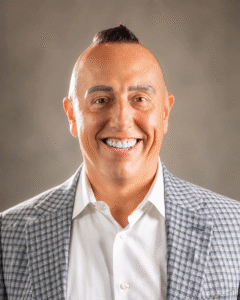
Attorney Armando Edmiston is the founding attorney of Armando Personal Injury Law in Tampa and St. Pete, Florida. A U.S. Marine veteran and Hillsborough County native, he represents injured people and families in serious injury cases, including car accidents, truck accidents, motorcycle accidents, wrongful death, negligent security, premises liability, and nursing home abuse and neglect claims. Armando earned a B.S. in Biology from the University of South Florida and a J.D., cum laude, from Nova Southeastern University. He is also one of only six lawyers in Florida listed with the ACS Forensic Lawyer-Scientist designation.