Tampa Car Accident Lawyer & Trial Attorney
No Fee Unless We Win — Free ConsultationA serious car accident in Tampa can leave you dealing with pain, medical treatment, lost income, damaged property, and insurance companies that move fast when they think they can control the claim. In Hillsborough County, crashes happen on major corridors, interstates, local intersections, and high-volume commercial routes where speeding, distraction, congestion, and aggressive driving often combine with serious injury consequences.
At Armando Personal Injury Law, we represent injured people in Tampa and throughout Hillsborough County after serious car crashes. Our job is not just to open a claim. It is to protect the medical outcome, identify the right insurance layers, preserve the evidence that matters, and build a case that holds up under adjuster and defense pressure.
Car accident cases in Tampa are not just crash cases. They are evidence cases, insurance cases, and, when the carrier will not pay fairly, trial cases.
If your crash happened elsewhere in Florida, visit our Florida car accident lawyer page. If it happened in Pinellas County, see our St. Petersburg car accident attorney page.
Free Consultation
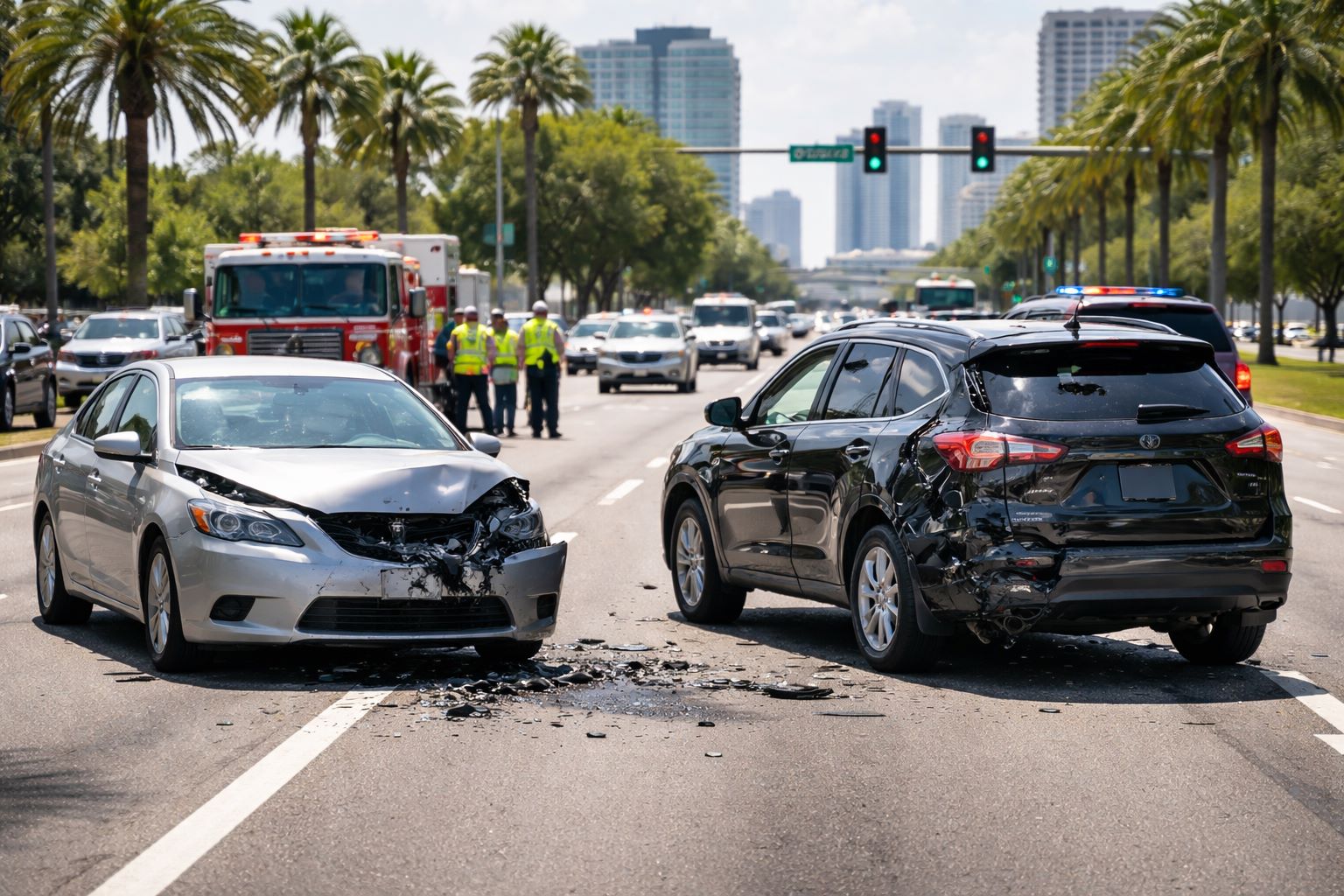
Serious Tampa car accident claims often depend on evidence preservation, injury documentation, and insurance strategy.
What Should You Do After a Tampa Car Accident?
The first steps after a crash can affect both your health and the value of your claim.
Get Medical Care Quickly
Do not wait to see if symptoms fade. Florida PIP generally requires that initial services and care be received within 14 days after the accident, and whether there is an emergency medical condition finding can affect whether benefits are available up to $10,000 or limited to $2,500.
Make Sure the Crash Is Documented
If law enforcement responds, preserve the report information. If not, photos, video, witness information, and scene notes become even more important.
Preserve Evidence Early
Tampa crash cases often turn on evidence that disappears quickly, including nearby business video, dashcam footage, bodycam, traffic camera sources, vehicle data, and witness memory.
Be Careful With Insurance Communications
Recorded statements, broad medical authorizations, and early settlement discussions can damage a valid claim before the injury picture is fully documented.
Talk to a Lawyer Before Signing Anything
A quick settlement can close the file before imaging, specialist review, future treatment, and long-term prognosis are clear.
What To Do, Say, and Not Say at the Scene
After a Tampa crash, focus on safety, medical attention, documentation, and protecting the claim. What you say in the first few minutes can later be used by insurers to question fault or minimize injuries.
What To Say
Keep your statements short, factual, and focused on immediate needs.
- ✓"I need medical help."
- ✓"I'm going to get checked out."
- ✓"I'd like the report number and the officer's name."
- ✓"Here is my insurance and contact information."
What To Do
- ✓Exchange insurance and contact information
- ✓Identify witnesses
- ✓Photograph vehicles, roadway, traffic controls, and visible injuries
- ✓Note where vehicles were traveling and from which direction
- ✓Seek medical care if you feel pain, dizziness, confusion, numbness, or anything unusual
What Not To Say
Do not guess, apologize, or minimize what you are feeling.
- ✗Do not say "I'm fine" or "I'm okay."
- ✗Do not say "I'm sorry."
- ✗Do not speculate ("I didn't see them" or "It happened so fast").
- ✗Do not guess about your injuries.
What Not To Do
- ✗Do not argue with the other driver
- ✗Do not discuss fault at the scene
- ✗Do not guess about speed, distance, or who had the light
- ✗Do not agree to a quick settlement conversation before the facts are clear
- ✗Do not delay medical evaluation if symptoms are developing
Important: Do not post about the crash, your injuries, or your activities on social media while the claim is open. Even routine photos and casual posts may be pulled out of context and used to argue that you were not seriously hurt.
When Should You See a Doctor After a Tampa Car Accident?
As soon as possible. Delayed symptoms are common after a crash. Delayed documentation is what insurers exploit.
- ✓Headache, dizziness, nausea, brain fog, or confusion
- ✓Neck or back pain
- ✓Numbness, tingling, or radiating pain
- ✓Chest or abdominal pain
- ✓Worsening soreness over the next several hours or days
- ✓New sleep disruption, irritability, or concentration problems
Prompt treatment matters not only because of Florida's PIP rules, but because the quality and timing of the medical record often shape the entire claim.
Do I Have a Tampa Car Accident Case?
In many situations, yes. This table is a fast way to think about how Tampa crash claims are usually evaluated.
| If This Is True… | It May Mean… |
|---|---|
| Another driver caused the crash | You may have a liability claim beyond PIP |
| You were hurt and sought treatment promptly | Your injuries are easier to connect to the collision |
| You missed work or needed ongoing care | Economic damages may be significant |
| The crash involved a rideshare, rental, Turo, or commercial vehicle | More than one policy may apply |
| The at-fault driver had little or no insurance | UM/UIM or other coverage layers may become critical |
| The insurer wants a recorded statement right away | They may be trying to shape the claim early |
| Your pain or limitations are continuing | The case may involve threshold injury and future damages issues |
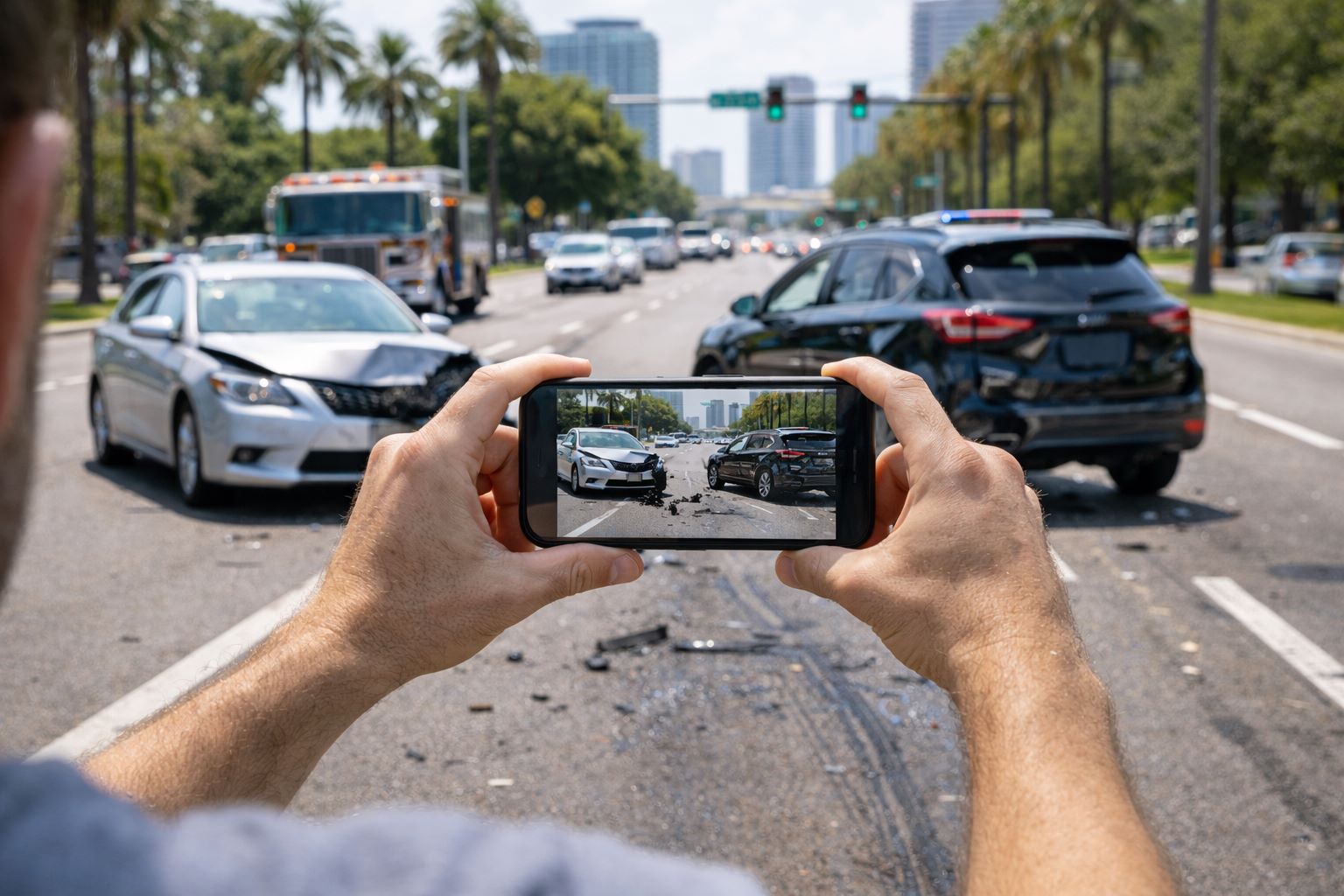
Early evidence can make a major difference in a Tampa car accident claim.
Case Results
$1,250,000Car Accident $900,000Rideshare Accident $650,000Rear-Ended by Semi-Truck $500,000Car Accident $300,000Rear-End Crash — Disputed LiabilityPast results do not guarantee a similar outcome. Each case is different.
"After having a car accident in Tampa, Armando Personal Injury Law makes everything simple. They handle the insurance company, keep you informed, and fight for a fair settlement. I am blown away by their honesty and professionalism!"— Aimee P. Actual client. Results may vary; each case is different.
"Armando actually came and met with me to explain everything and made me feel comfortable."— Adam B. Actual client. Results may vary; each case is different.
Why Tampa Car Accident Claims Become Insurance Fights
Tampa crash claims often become insurance fights quickly because the questions are rarely limited to who hit whom. Serious cases often involve overlapping issues such as:
The issue is not just how the crash happened. It is also how the injuries are documented, how fault is framed, and how the insurance claim is positioned from the start.
Florida PIP, EMC, and What Happens After PIP
Florida's no-fault framework affects Tampa claims immediately after a crash. PIP is often the first source of payment for medical treatment and limited wage loss regardless of fault, but it is governed by statutory rules and caps. Under section 627.736, initial services and care generally must be received within 14 days, and claims without a qualifying emergency medical condition finding may be limited to $2,500 rather than the full $10,000 amount.
Delaying care or avoiding medical visits can hurt your claim in three ways:
- ►They can jeopardize PIP eligibility
- ►They can give insurers an argument that the injury was not serious
- ►They can create documentation gaps that weaken the liability claim later
Once PIP is exhausted or clearly inadequate, the case often turns to liability coverage, UM/UIM, commercial layers, or litigation leverage depending on the facts.
"Armando and his team were able to get maximum recovery available without having to go to court. Armando is very personable and available — he'd answer my worried, overthinking texts at 9pm. He's a great lawyer and someone you'd enjoy having at your family gathering."— Kellie N. Actual client. Results may vary; each case is different.
Can You Recover Pain and Suffering After a Tampa Car Accident?
Often, yes, but not automatically. In many Florida motor-vehicle cases, recovering pain and suffering and other non-economic damages depends on meeting the serious injury threshold in section 627.737. That generally requires proof of a qualifying injury such as permanent injury, significant and permanent loss of an important bodily function, significant and permanent scarring or disfigurement, or death.
Insurance carriers often try to frame Tampa crash injuries as temporary, minor, degenerative, or unrelated. That is why the quality of the medical record, imaging, specialist evaluation, and timing of treatment all matter.
Insurance in Tampa: How Claims Actually Work
A serious Tampa car accident claim may involve more than one recovery layer.
| Recovery Layer | What It Usually Covers |
|---|---|
| PIP | Initial medical treatment and limited wage loss regardless of fault, subject to statutory caps |
| At-fault driver's liability coverage | Bodily injury damages if available and if the case supports a liability claim |
| UM/UIM coverage | Protection when the at-fault driver has no insurance or not enough insurance |
| Commercial / employer / app-based coverage | Additional policies in rideshare, delivery, or company-vehicle crashes |
| Litigation leverage | Pressure created when the file is built strongly enough to force serious negotiation |
Early coverage mapping can make a major difference in serious Tampa crash cases.
What Carriers Ask For First — and Why It Matters
Insurance companies tend to ask for the same things early because those requests help them shape the claim.
| What Carriers Ask For First | Why It Matters |
|---|---|
| Recorded statement | They may try to lock in facts before the injury picture is clear |
| Broad medical authorization | They may search for unrelated history to minimize the claim |
| Quick settlement and release | They may want to close the file before future care is understood |
| Gap in treatment explanation | They may use delays to argue the injuries were minor or unrelated |
| Social media or activity narrative | They may try to cherry-pick normal moments to undermine the claim |
"Armando was a fantastic attorney to work with. After my accident, he got right on it."— Max G. Actual client. Results may vary; each case is different.
The Most Common Causes of Serious Car Accidents in Tampa
Tampa Crash Types and Coverage Issues That Often Require Deeper Analysis
Some accident types are harder than they look because the insurance analysis changes.
- ✓Rideshare crashes involving Uber or Lyft
- ✓Rental car collisions
- ✓Turo crashes
- ✓Commercial vehicle and delivery-driver accidents
- ✓Uninsured or underinsured motorist claims
- ✓Multi-vehicle chain-reaction crashes
- ✓Intersection T-bones
- ✓Hit-and-run collisions
- ✓Drunk-driving crashes
- ✓Head-on collisions
These cases can involve multiple carriers, layered policies, employer issues, app-status disputes, and aggressive defense positions.
"I was rear-ended and Armando's office immediately started working on my case. They coordinated all my care, kept me updated, and I was able to recover without ever having to go to court. Couldn't be happier with the outcome."— Chailyn M. Actual client. Results may vary; each case is different.
"Had a car accident not too long ago where some t-boned me on Palm River Rd. I called Armando and his team did an amazing job helping me."— Rafael D. Actual client. Results may vary; each case is different.
"I was involved in a crash on the Howard Frankland Bridge and Armando and his crew worked tirelessly to make sure that everything worked seamlessly. Highly recommend them for any accident or injury needs."— Serena L. Actual client. Results may vary; each case is different.
"I was looking for someone who would fight for me and not sell out to the big insurance companies — someone who listens to your needs, tells you how it is with real expectations, and goes to bat for you. That's Armando."— Raiven M. Actual client. Results may vary; each case is different.
"They handled every detail of my case, keeping me informed and making sure I felt supported throughout the entire process. They made a stressful time so much easier."— Jennifer J. Actual client. Results may vary; each case is different.
What Affects the Value of a Tampa Car Accident Case?
No honest lawyer can promise a number at intake, but certain factors tend to drive value.
| Value Driver | Why It Matters |
|---|---|
| Objective findings | Imaging, specialist opinions, and measurable deficits are harder for insurers to dismiss |
| Treatment consistency | Gaps in care often become defense themes |
| Permanent impairment or future care | Long-term needs increase case seriousness and value |
| Wage loss or reduced earning capacity | Economic damages can significantly increase total exposure |
| Liability clarity | Stronger fault proof usually increases leverage |
| Policy limits and available coverage | Recovery is affected by what coverage exists and how it is layered |
How Long Do Tampa Car Accident Cases Take?
The answer depends on treatment length, liability disputes, policy limits, and whether litigation becomes necessary. In general, Tampa cases often move through phases:
A common mistake is trying to force a settlement timeline before the medical picture is stable.
"I cannot express the gratitude that I have for Armando and the staff at the office. This was a very long journey and they have been there for me every step of the way. I appreciate that they put my health above everything and always made sure I was OK. Communication has always been very clear and so helpful. I highly recommend Armando and his staff for any personal injury needs."— Terri K. Actual client. Results may vary; each case is different.
"I truly appreciate everything that Armando and his team has done for me. I would have been completely lost without them. I couldn't recommend a better team for a lawyer to be behind you."— Divine W. Actual client. Results may vary; each case is different.
"If you ever need a lawyer for an auto accident in Tampa, Armando and his team are the only people you should ever call! They are amazing, friendly, and care about you like you're family."— Tara B. Actual client. Results may vary; each case is different.
Tampa Crash Patterns, High-Conflict Zones, and Local Evidence Realities
Certain Tampa roads and traffic environments repeatedly show up in serious crash files and deserve early evidence attention.
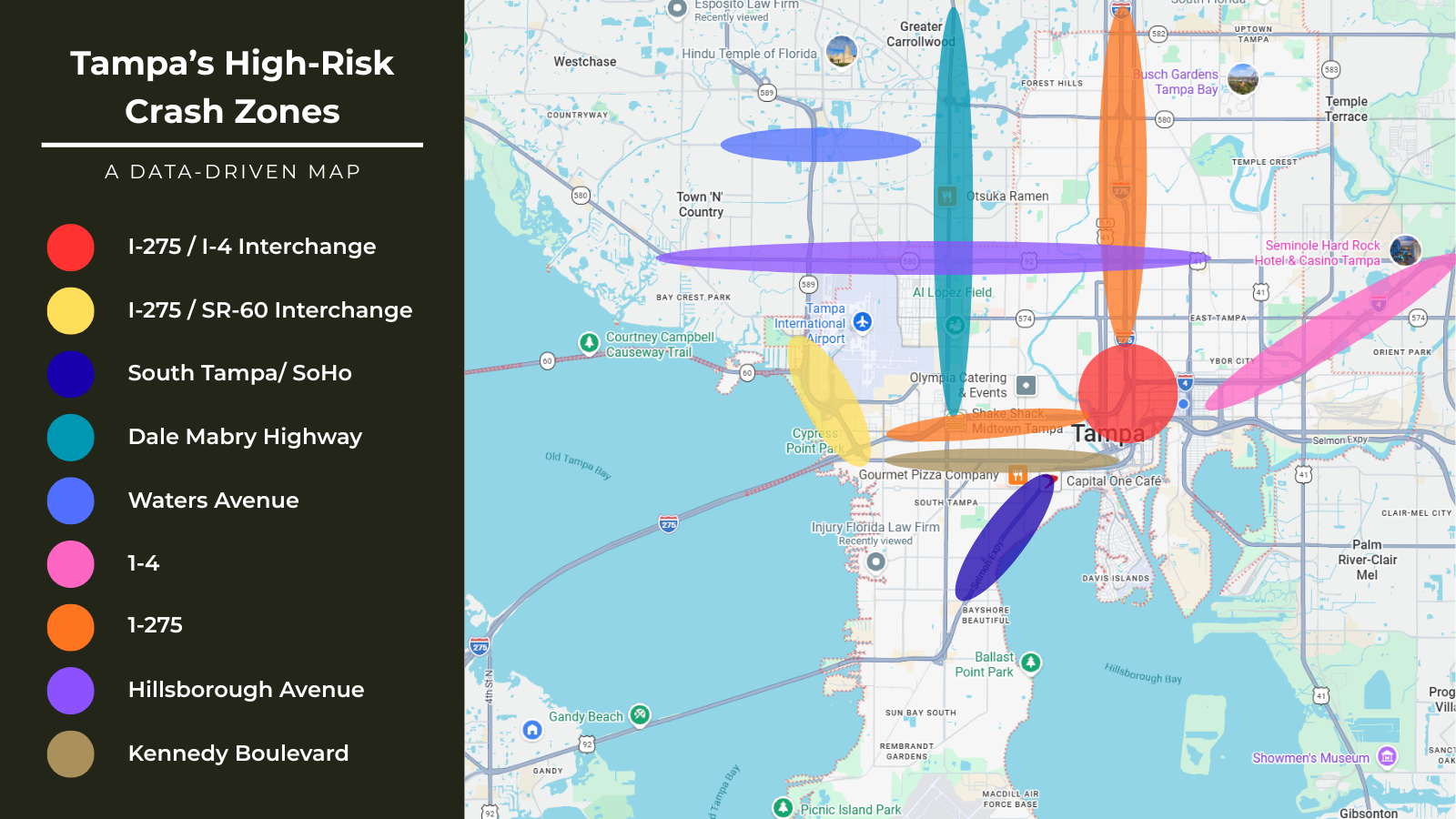
Several Tampa-area roadways show up repeatedly in crash discussions because they combine high traffic volume, frequent turning movements, and heavy stop-and-go conditions. These are some of the corridors and intersections that drivers should treat as major crash corridors with higher risk:
Waters Avenue (West Tampa)
The West Waters corridor is often flagged for serious collisions, with recurring problem areas around Sheldon Road, Anderson Road, and Hanley Road.
Dale Mabry Highway
A busy retail/commercial stretch where congestion, entrances/exits, and frequent lane changes contribute to rear-end and side-impact crashes — especially near Waters Avenue.
I-275
One of the region's most congested routes, with elevated crash risk near major merge and interchange zones, including around I-4, and the areas near Dale Mabry and Kennedy Boulevard.
Hillsborough Avenue
A key east-west artery with recurring danger points near Sheldon Road and around North 15th Street.
Kennedy Boulevard
A dense, high-traffic corridor where collisions frequently cluster near major crossings like Himes Avenue and Westshore Boulevard.
Other Higher-Risk Intersections and Areas
- ✓Fowler Avenue & Nebraska Avenue: A complex, multi-lane layout with heavy pedestrian activity and fast-moving traffic patterns.
- ✓Bruce B. Downs Boulevard & Fletcher Avenue (USF area): High traffic volume and frequent lane changes in a dense corridor can increase crash likelihood.
- ✓Gibsonton Drive & U.S. 301: Known for left-turn conflicts and a higher share of motorcycle-involved crashes.
- ✓Busch Boulevard near I-275: Often discussed as part of "high injury" corridor tracking because of crash severity and traffic volume.
Why these areas see more crashes: Common factors include distracted driving, speeding, aggressive lane changes, and failed yields, especially at left turns, busy driveways, and complex intersections.
"My car was totaled and Armando's team referred me to a great chiropractor and handled everything. Really grateful for the help."— Vasha M. Actual client. Results may vary; each case is different.
"I got into a car accident where I was a passenger. It was not a high-speed accident but I had injuries. From the start, Armando and his team were very helpful, professional, and caring. They handled everything and I always felt informed and supported throughout the whole process. I highly recommend Armando Personal Injury Law."— Fabian B. Actual client. Results may vary; each case is different.
"Armando and his team go above and beyond; not just for clients, but for friends and family as well. He's genuine, relentless, and truly cares about helping people get the justice and peace of mind they deserve."— Eric A. Actual client. Results may vary; each case is different.
"Highly recommend this law firm — professional and precise. They took on my case and made everything as easy as possible, always answered my calls and questions. Armando and his staff went above and beyond for my case."— Troy W. Actual client. Results may vary; each case is different.
"First time dealing with a lawyer. He came to my job and made it so easy. Settled in under a year. Amazing experience."— Joshua D. Actual client. Results may vary; each case is different.
"I recommend Armando Personal Injury Law to anyone who's in search of receiving 5-star service from start to finish of their case. Every question I had was answered with a detailed explanation. Received a thorough timeline of expectations. Very happy with the results."— S.G. Actual client. Results may vary; each case is different.
What if the At-Fault Driver Is Uninsured in Tampa?
This is a major issue in many serious cases. If the at-fault driver has no liability coverage or too little coverage, you may need to rely on your own uninsured or underinsured motorist coverage if you carry it, along with any other applicable coverage layers. Florida's UM statute provides that UM limits generally may not be less than the bodily injury limits purchased unless lower limits are properly selected.
In practice, these cases often require aggressive coverage enforcement because you are effectively negotiating with your own carrier.
Can You Still Recover Damages if You Were Partly at Fault?
Possibly. Florida uses modified comparative negligence in covered negligence actions. If your share of fault is 50 percent or less, recovery may be reduced by that percentage. If you are found to be greater than 50 percent at fault, recovery may be barred.
In real Tampa cases, insurers use this rule aggressively. That is why scene evidence, witness accounts, vehicle data, and documentation consistency can materially affect the value of the claim.
PIP Covers Regardless of Fault
Florida's no-fault PIP coverage applies to your own medical treatment regardless of who caused the crash — but it is limited, and additional recovery often depends on liability coverage, UM/UIM, and litigation leverage.
50% Fault Threshold
Under Florida's modified comparative negligence rule, being found more than 50% at fault bars recovery. Scene documentation and witness accounts matter significantly.
"Armando was persistent from the moment I talked to him after my son and I were in an awful accident, one of the scariest moments of my life. Armando made all my fears start to melt away; he displayed genuine empathy and his professionalism was comforting at a time of such uncertainty. I could tell Armando genuinely cared and knew exactly what to do. I felt secure and knew justice would be carried out. 2 years later, justice was served! I couldn't be happier with my lawyer and how he handled my case. Armando never stopped pushing for what we deserved."— Rae R. Actual client. Results may vary; each case is different.
Why Hiring a Tampa Car Accident Lawyer Matters
A serious Tampa crash claim is not just about opening a file and waiting for the insurance company to be fair. Serious cases involve:
- ✓PIP timing and EMC issues
- ✓Threshold injury disputes
- ✓Comparative fault arguments
- ✓UM/UIM coverage fights
- ✓Rideshare, rental, and commercial coverage layers
- ✓Missing or fast-disappearing evidence
- ✓Pressure to settle before the medical picture stabilizes
At Armando Personal Injury Law, we help clients:
- ✓Investigate the crash
- ✓Identify all available insurance layers
- ✓Preserve evidence early
- ✓Document the injuries correctly
- ✓Value the case based on real damages
- ✓Negotiate from a position of strength
- ✓Prepare the file for litigation if necessary
Trial Attorney vs. Settlement Mill: Why the Difference Matters
Most car accident claims settle, but the best way to improve settlement leverage is to prepare the case as if it may need to be tried. Insurers evaluate not only injuries and bills, but also whether the law firm on the other side is prepared, organized, evidence-driven, and willing to push the case forward. Serious cases need structure. Strong medical and liability proof matters. Coverage mapping matters. Readiness to litigate can change settlement posture long before a courtroom is involved.
ACS Forensic Lawyer-Scientist
Attorney Armando Edmiston is one of only six lawyers in Florida to hold the ACS Forensic Lawyer-Scientist designation — a distinction that reflects a science-based approach to evidence in serious injury cases.
"Armando came to my house to make sure I was comfortable and available throughout the whole process. My case was resolved without a lawsuit and I couldn't be more pleased with the outcome."— Monica R. Actual client. Results may vary; each case is different.
"Amazing! Professional and efficient. Highly recommend."— Lina M. Actual client. Results may vary; each case is different.
FAQs About Tampa Car Accident Claims
Do I Need a Lawyer if the Insurance Company Offered Me Money?
Often, yes, especially if the offer came fast. Early offers are commonly designed to end the claim before the medical picture is clear.
What if I Was Partly at Fault?
You may still recover damages if you are 50 percent or less at fault, but the recovery may be reduced by your percentage of fault.
What if the Other Driver Has No Insurance?
UM/UIM may apply if you carry it. Coverage mapping matters, and insurers often resist paying even under your own policy.
Can I Recover Pain and Suffering in Florida?
In many cases, yes, when the injuries meet the serious injury threshold and are documented properly.
What if Symptoms Appear Days Later?
That is common. The key is getting medical evaluation and documentation as soon as symptoms appear, then maintaining a consistent treatment record.
How Long Do I Have to File a Car Accident Lawsuit in Florida?
In most negligence-based cases, the period is generally two years, with limited exceptions. Waiting can cost evidence even before the legal deadline.
How Much Does a Tampa Car Accident Lawyer Cost?
Our firm handles these cases on a contingency fee basis, which means there is no fee unless there is a recovery.
Should I Accept the Insurance Company's First Offer?
Usually not without understanding the medical trajectory and coverage. Once you sign a release, you typically cannot reopen the claim.
What Is PIP Insurance in Florida?
PIP is Florida's no-fault coverage that usually pays part of medical expenses and limited wage loss regardless of fault, subject to statutory rules and caps. The 14-day treatment rule and EMC issues affect how much may be available.
Can I Sue if Florida Is a No-Fault State?
Yes. No-fault affects how some early bills are paid. You may still pursue a liability claim against an at-fault driver when the injuries and damages support it, and non-economic damages generally require meeting the serious injury threshold.
How Long Will My Tampa Car Accident Case Take?
It depends on treatment length, liability disputes, policy limits, and whether litigation becomes necessary. A common mistake is settling before the medical picture becomes stable.
Do I Need a Police Report to File a Claim?
Not always, but a crash report can help document basic facts. If no report exists, photos, video, witness statements, and medical documentation become even more important.
Talk to a Tampa Car Accident Lawyer and Trial Attorney
If you were injured in a Tampa crash, the objective is simple: protect the medical outcome and force the correct insurance layers to pay what they should. Armando Personal Injury Law offers free consultations and charges no fee unless there is a recovery.
Talk to a Tampa Car Accident Lawyer Today"Armando and his team — nothing but greatness! Very professional and easy to work with. Highly recommend."— Hector L. Actual client. Results may vary; each case is different.
Free Consultation
About the Author
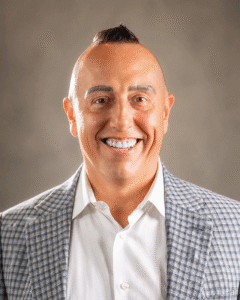
Attorney Armando Edmiston is the founding attorney of Armando Personal Injury Law in Tampa and St. Pete, Florida. A U.S. Marine veteran and Hillsborough County native, he represents injured people and families in serious injury cases, including car accidents, truck accidents, motorcycle accidents, wrongful death, negligent security, premises liability, and nursing home abuse and neglect claims. Armando earned a B.S. in Biology from the University of South Florida and a J.D., cum laude, from Nova Southeastern University. He is also one of only six lawyers in Florida listed with the ACS Forensic Lawyer-Scientist designation.