Amazon Flex Driver Accidents in Tampa, Florida
If you were hurt in a crash in Tampa by an Amazon Flex driver, the case may turn on one question: was the driver actively delivering during an Amazon Flex block when the collision happened? That timing can affect whether Amazon’s commercial auto policy may apply, whether a personal policy or delivery-use exclusion becomes part of the fight, and what digital evidence needs to be preserved right away.
Amazon’s public FAQ says its commercial auto insurance applies while the delivery partner is actively delivering during the delivery block. Florida law adds two more pressure points. PIP medical benefits generally require initial services and care within 14 days, and pain-and-suffering damages in many motor vehicle cases depend on meeting the serious injury threshold.
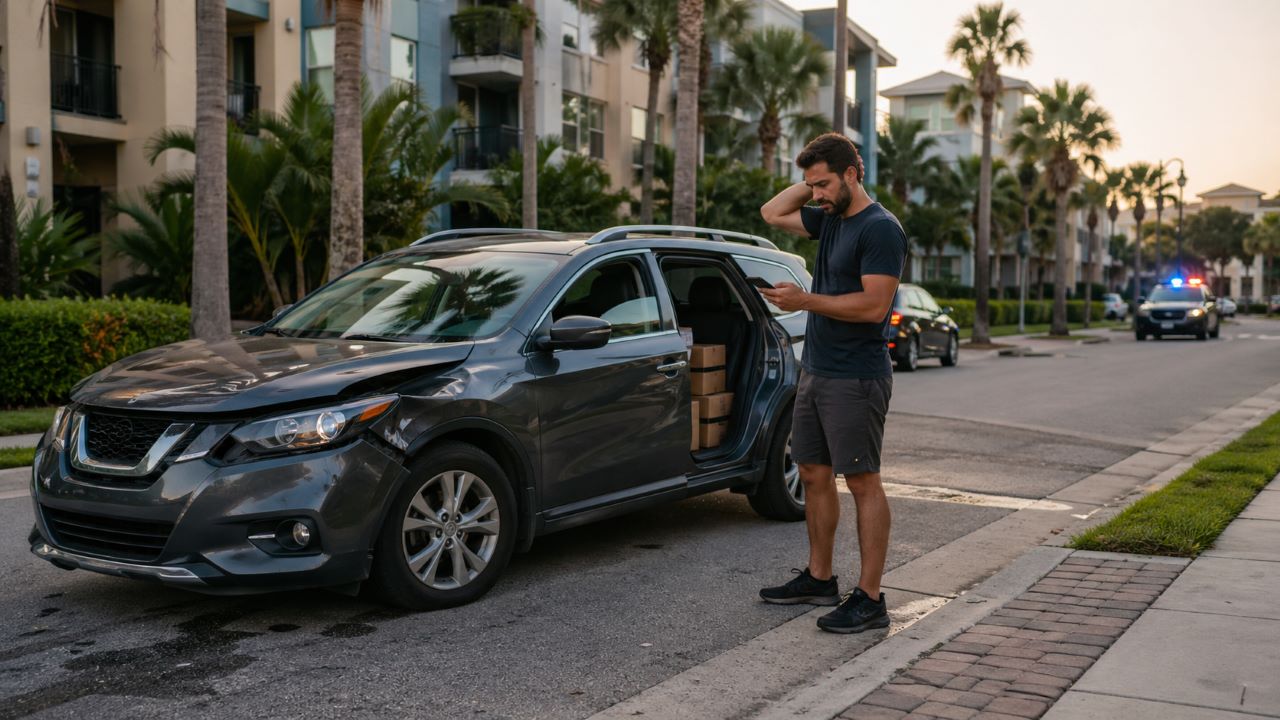
At Armando Personal Injury Law, we would analyze a Tampa Amazon Flex case from every angle that matters: app status, delivery-block timing, package scans, route activity, crash evidence, medical records, and every insurance policy that may apply. If you were hit on I-275, near downtown Tampa, in South Tampa, around a busy apartment complex, or anywhere else in Hillsborough County, the key question is often simple: what was the Amazon Flex driver doing at the exact moment of impact? The same Florida negligence and insurance rules still apply, but Amazon Flex crashes add a second fight over block status, delivery activity, and policy triggers.
What Is an Amazon Flex Driver Accident?
An Amazon Flex accident is a crash involving a delivery partner using a personal vehicle to complete deliveries through the Amazon Flex platform. That makes these cases different from crashes involving a traditional delivery truck or a marked company vehicle.
In real terms, an Amazon Flex crash can injure drivers, passengers, pedestrians, bicyclists, and families in ordinary Tampa neighborhoods, apartment communities, retail corridors, and delivery-heavy residential areas. The legal complication is that the case may involve both ordinary negligence issues and a separate fight over which insurance coverage was in effect when the collision happened.
Where Amazon Flex Pickups Commonly Happen in the Tampa Area
Amazon’s public Flex materials show that Tampa-area pickup points generally fall into three buckets: Amazon.com delivery stations, Sub-Same Day stations, and grocery pickup sites such as Whole Foods Market. That geography matters because the pickup point, route type, and scan process can become evidence after a crash.
In Hillsborough County, the strongest publicly supported local examples include the Harney Road delivery station in east Tampa, the Bay Industrial Drive delivery station in Gibsonton, and Whole Foods locations such as Midtown Tampa and Carrollwood. Same-day sites in Seffner and on West Waters Avenue are commonly reported by drivers and warehouse directories, so they should be described more cautiously unless app records or screenshots confirm the block.

Sub-Same Day hubs
SFL4 in Seffner at 6337 County Road 579. Commonly reported as a same-day pickup site in driver reports and warehouse listings, but best treated as a reported location unless independently confirmed in the app or case file.
The West Waters Avenue site at 4902 W. Waters Avenue in Tampa. Public warehouse listings identify SFL7 at this address, and driver reports also reference VFL7, but the station should still be described as a commonly reported same-day site unless independently verified.
Standard delivery stations
- DTP9 at 6384 Harney Road in Tampa, a last-mile delivery station publicly identified through Amazon hiring materials and local reporting.
- DSR2 at 13010 Bay Industrial Drive in Gibsonton, another Hillsborough County last-mile station tied to Amazon’s local expansion.
Retail and grocery pickup points
- Whole Foods Market Carrollwood at 3802 Northdale Blvd in Tampa.
- Whole Foods Market Midtown Tampa at 3740 Midtown Drive in Tampa.
Amazon’s pickup procedures also vary by site type. At a standard Amazon.com delivery station, an associate typically scans the driver’s license and directs the driver to the loading area. At a Sub-Same Day station, the driver usually parks, taps “I’ve arrived,” scans the license, and waits for the app to assign a cart. At Amazon Fresh and Whole Foods Market sites, the driver scans a license at a kiosk and uses the app to locate the cart. Those details matter because license-scan timing, cart assignment, and package-scan history may help prove whether the driver was on an active block.
Why this local route geography matters
A Tampa Amazon Flex crash does not necessarily begin in Tampa proper. A driver may start a block in Seffner, Harney Road, Gibsonton, or a Whole Foods location and still end up on surface streets in Tampa, Carrollwood, South Tampa, Wesley Chapel, or St. Petersburg later in the route. That is why route logs, timestamps, and phone-location data can matter just as much as the crash address itself.
Regional sites such as Adamo Drive in Tampa and TPA1 in Ruskin still help explain how delivery traffic tied to Hillsborough County hubs can spill across Tampa Bay, even if those sites are not routine Flex pickup points.
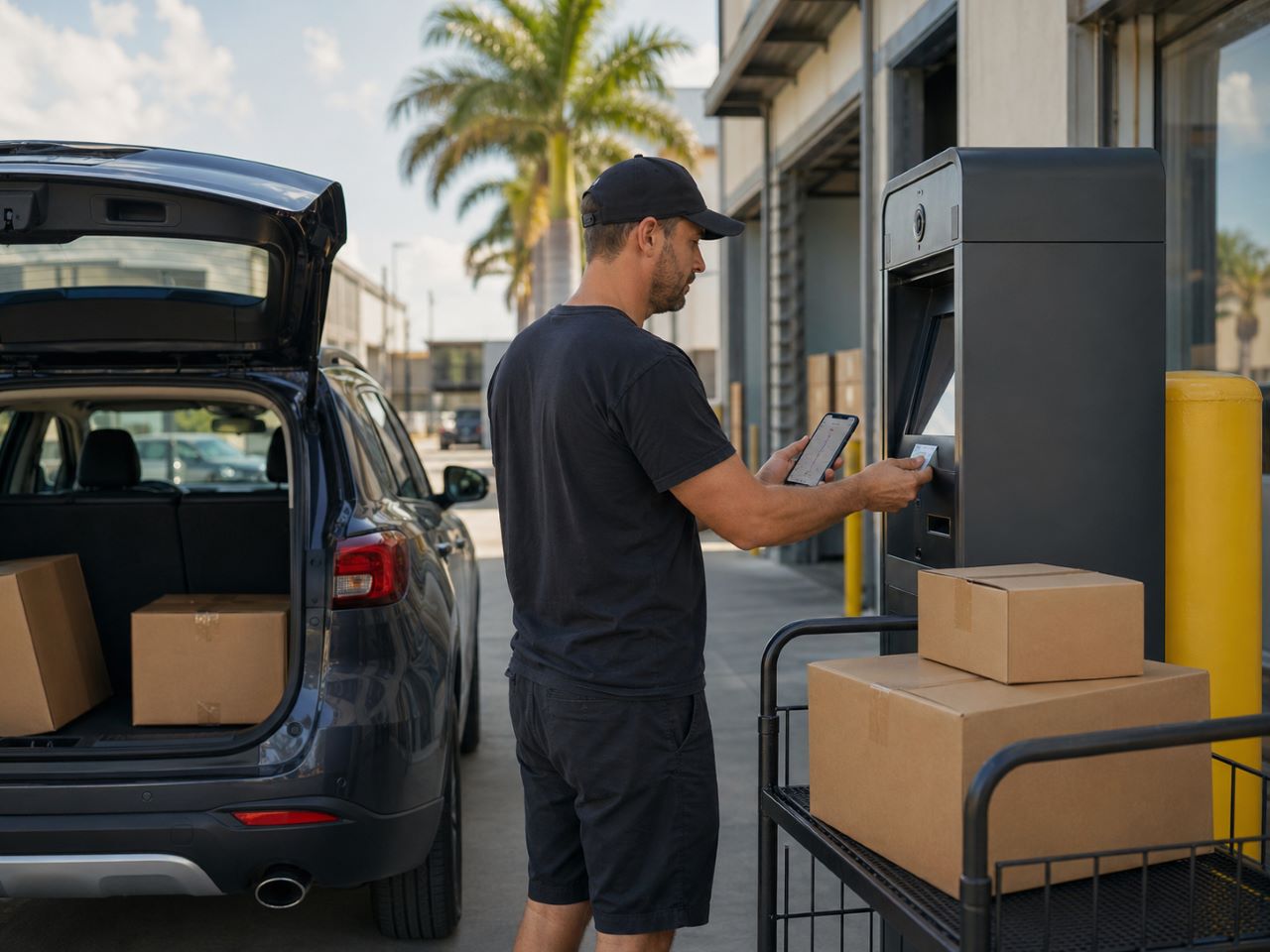
Pickup-site scans and route records can become key evidence after an Amazon Flex crash.
When Does Amazon’s Insurance Apply?
In most Amazon Flex cases, the first fight is coverage. Amazon’s public position, set out in the Amazon Flex FAQ, is that its commercial auto policy applies while the driver is actively delivering during the delivery block, which is why app status, route timing, package scans, package possession, and who was driving can become central facts within hours of the crash.
Before the delivery block starts
If the driver had not started the block yet, the claim may look more like a personal auto case at first. Insurers may argue that the driver was still on personal time, commuting, or outside active delivery status.
While the driver is actively delivering
This is the period when Amazon says its commercial auto insurance may apply. Depending on the facts, the coverage may involve liability protection, uninsured or underinsured motorist coverage, and contingent comprehensive or collision issues.
After the block ends or after the last stop
Coverage may become disputed again if the driver had completed the route, signed off, or was no longer actively making deliveries. In some cases, a few minutes can make a major difference.
Why app status is only part of the story
The claim may turn on more than whether the app was open. Useful proof can include:
- delivery-block confirmations
- license-scan and cart-assignment records
- pickup and drop-off timestamps
- package scan history
- phone GPS data
- route progress records
- insurer statements
- whether anyone other than the approved delivery partner was driving
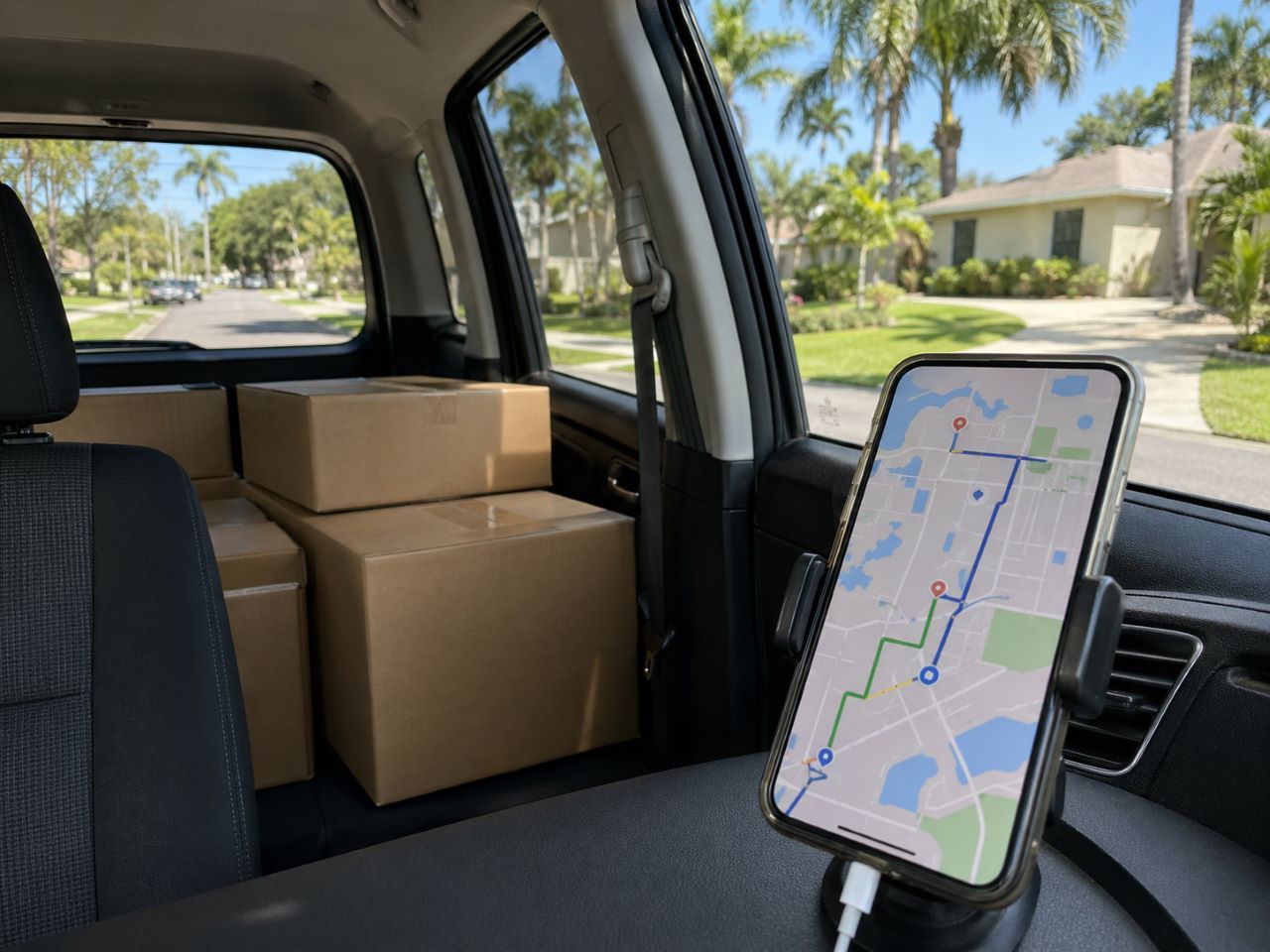
App activity, route timing, and package scans may help prove whether the driver was on an active block.
Who May Be Liable After an Amazon Flex Crash in Tampa?
In many Tampa Amazon Flex cases, the delivery driver is the first party examined for negligence. That may involve speeding, distracted driving, unsafe turns, backing collisions, failure to yield, following too closely, or careless driving in apartment lots, gated communities, and neighborhood streets.
But liability analysis often widens quickly. Another motorist may share fault. A borrowed or rented vehicle may bring in another owner’s policy. The driver’s personal insurer may raise delivery-use exclusions, while Amazon-related commercial coverage may rise or fall on block status and app records.
Amazon should not be assumed liable in every case, but it should not be written out too early either. In the right fact pattern, the contracts, route records, control issues, and insurance language may justify a closer look at Amazon’s role and the coverage available after the crash.
How Florida Law Changes an Amazon Flex Accident Claim
Even if Amazon-related coverage is in play, Florida law still controls the injury claim. That means PIP usually comes first, initial treatment generally must begin within 14 days, pain-and-suffering damages usually require a threshold injury under section 627.737, and a plaintiff found more than 50 percent at fault in a negligence action generally cannot recover damages under section 768.81.
Florida PIP benefits and the 14-day treatment rule
Under section 627.736, PIP is usually the first layer of medical and disability benefits after a Florida crash, and initial services and care generally must begin within 14 days. In an Amazon Flex case, that timeline matters twice: once for benefits, and again for proving that the crash, not some later event, caused the injuries.
When pain and suffering damages may be available
Section 627.737 limits pain-and-suffering damages in many motor vehicle cases unless the plaintiff proves a threshold injury. That rule is one reason Amazon Flex claims often turn on both delivery records and medical proof, not one or the other.
Florida’s serious injury threshold
A threshold injury may involve:
- significant and permanent loss of an important bodily function
- permanent injury within a reasonable degree of medical probability
- significant and permanent scarring or disfigurement
- death
That is why medical proof, permanency opinions, and injury documentation matter so much in an Amazon Flex crash case. Even a strong liability case can be undervalued if the injury evidence is thin, delayed, or poorly documented.
Modified comparative fault in Florida
Section 768.81 makes comparative fault a real risk issue, not a side issue. Fault may be shared, and in a negligence action a plaintiff found more than 50 percent at fault generally may not recover damages.
That makes witness statements, scene evidence, crash reconstruction, app data, and route timing especially important when the defense tries to shift blame.
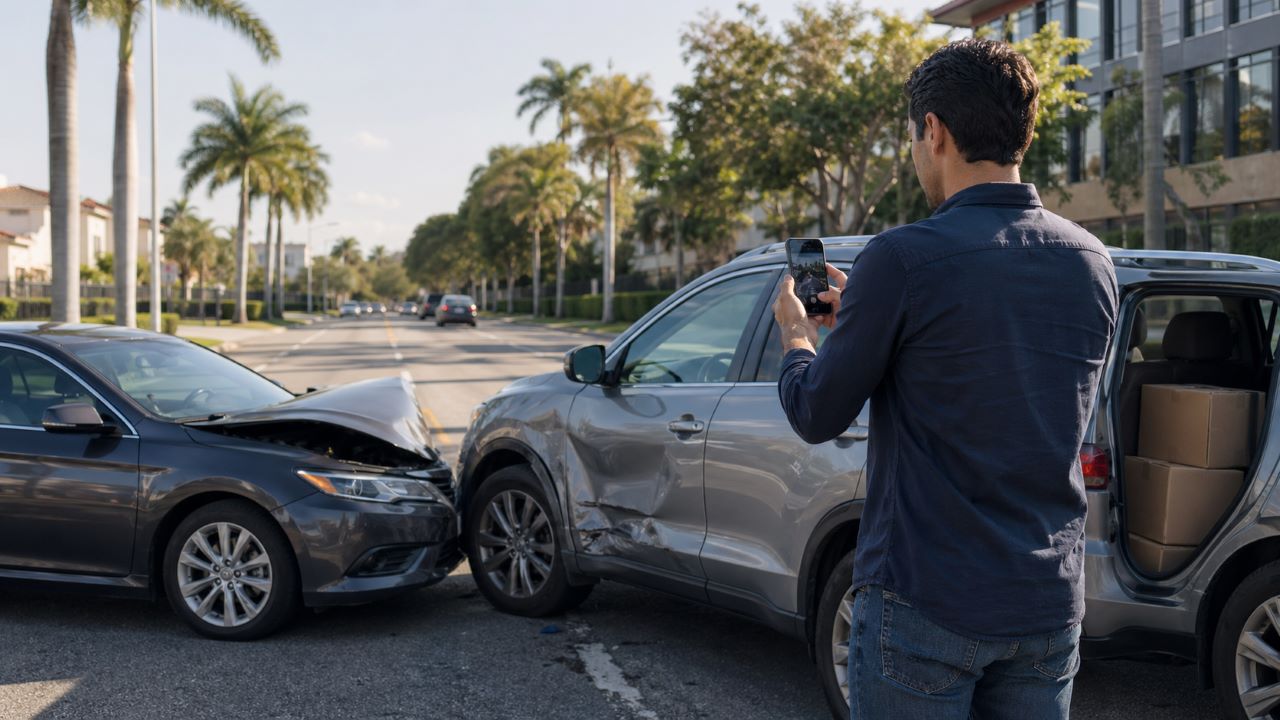
Photos, vehicle damage, and package-related details can become important evidence after a delivery-related crash.
What Evidence Matters Most in an Amazon Flex Accident Case?
In a normal crash case, evidence usually focuses on fault, injury, and damages. In an Amazon Flex case, the proof also has to answer a separate coverage question: what pickup site, what block, what route, what scan history, and what delivery activity were in play when the crash happened?
Delivery and app evidence
- delivery-block confirmations
- app screenshots
- license-scan and kiosk records
- pickup and drop-off timestamps
- route history
- phone GPS and location history
- cart or route-sheet QR scans
- package scan data
- text or app communications related to the route
Crash evidence
- the police crash report
- witness names and statements
- photos of the vehicles and roadway
- surveillance or doorbell video
- dashcam footage
- property damage photographs
- scene debris patterns
- vehicle electronic data
- recorded insurer statements
Medical evidence
Medical proof often decides whether the case stays small or becomes a serious injury claim. Records may need to show emergency care, imaging, specialist follow-up, functional limitations, future treatment needs, permanency, scarring, or cognitive symptoms.
That is especially important when the defense argues that the crash was minor, the symptoms were preexisting, or the injuries do not meet Florida’s threshold for non-economic damages. Delayed symptoms are common after a wreck, especially with neck, back, and concussion-related injuries, and pain after a car accident can complicate both causation and treatment timing.
Why Amazon Flex Accident Claims Are Harder Than Ordinary Car Accident Cases
These cases are harder than ordinary Tampa car accident claims because they often involve layered insurance disputes, contractor-status confusion, fast-moving digital evidence, and blame-shifting on both liability and medical causation.
A normal crash case may focus on fault, injuries, and damages. An Amazon Flex case may require all of that plus proof of active delivery status, route timing, policy triggers, coverage denials, and careful preservation of electronic records before they disappear.
That added complexity is one reason these claims should be investigated early, especially when the crash caused significant injuries or when the driver started the route at a Hillsborough County hub and wrecked somewhere else in Tampa Bay.
Common Injuries in Tampa Amazon Flex Driver Accidents
Amazon Flex crashes can cause the same serious injuries seen in other motor vehicle collisions, especially when the wreck involves a rear-end impact, side-impact collision, unsafe turn, parking-lot strike, or a pedestrian hit in a neighborhood or apartment delivery area.
Neck and back injuries
These whiplash cases often involve cervical strain, lumbar disc injuries, radiating pain, muscle spasm, reduced range of motion, or nerve symptoms that interfere with sleep, work, and daily activities.
Head injuries and concussion symptoms
Even a crash that does not look severe can cause headaches, dizziness, nausea, memory problems, light sensitivity, concentration issues, and post-concussive symptoms consistent with a concussion or other brain injuries.
Orthopedic trauma
Common injuries can include shoulder tears, knee trauma, fractures, wrist injuries, ankle injuries, and surgery-related cases.
Psychological harm
A serious delivery-related crash can also lead to anxiety, sleep disruption, driving fear, or trauma-related symptoms that deserve real attention and proper documentation.
Fatal injuries and wrongful death
Some Amazon Flex crashes are catastrophic. In fatal cases, families may need immediate help preserving evidence, identifying all available coverage, and understanding how a wrongful death claim may fit together with Florida’s deadlines and damages rules.
What Compensation May Be Available?
Damages in an Amazon Flex case are not just about how badly someone was hurt. They are also shaped by whether the insurer accepts the driver’s delivery status, whether the right policy is triggered, and whether the injuries satisfy Florida’s threshold for non-economic damages.
In the right case, compensation may include:
- medical bills
- future treatment costs
- lost wages
- diminished earning capacity
- property damage
- out-of-pocket expenses
- pain and suffering when Florida law allows it
- wrongful death damages in fatal cases
The stronger the evidence on fault, delivery status, injury severity, permanency, and long-term impact, the stronger the damages presentation usually becomes.
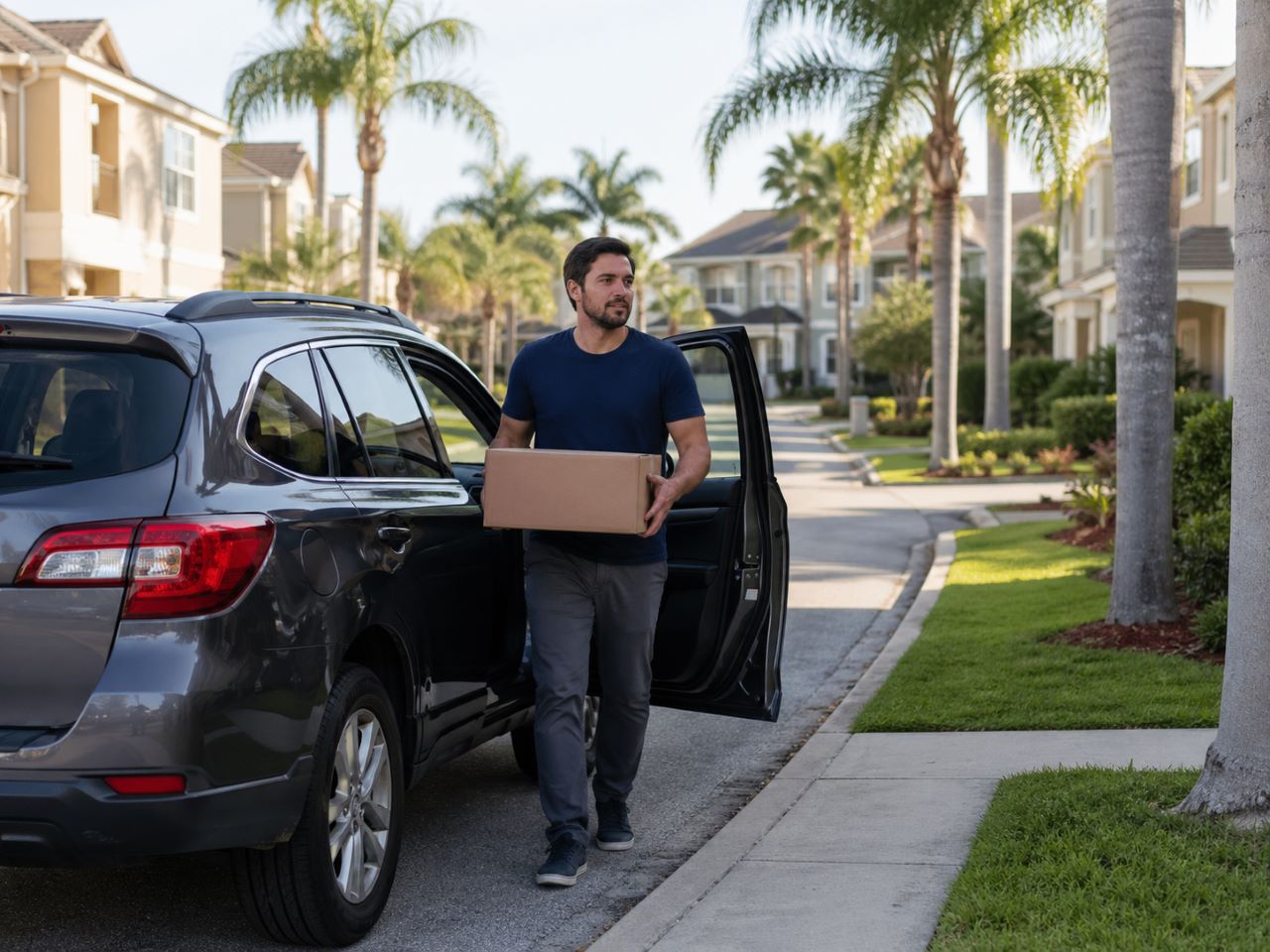
Neighborhood deliveries in Tampa can create crash risks on residential streets and near apartment communities.
What To Do After an Amazon Flex Accident in Tampa
The right next steps can protect both your health and your claim. Here is what to do after a crash.
Get medical care quickly
Do not wait and hope symptoms fade. Prompt treatment can protect your health, support your PIP claim, and create a clearer record of causation.
Call law enforcement and document the scene
A crash report, roadway photos, vehicle positions, witness names, visible damage, and delivery-related details may all matter later.
Preserve digital evidence
Save app screenshots, route notifications, delivery-block confirmations, text messages, timestamped photos, package scans, and any available phone-location history.
Be careful with insurance statements
Do not guess about whether the driver was starting a block, finishing a route, or actively delivering. Those facts should be established with evidence, not assumptions.
Talk to a lawyer before records disappear
The longer you wait, the easier it becomes for digital records, surveillance footage, and insurer narratives to harden against you.
How a Tampa Amazon Flex Accident Lawyer Can Help
A lawyer can help identify every available source of coverage, preserve app and delivery evidence, obtain crash and medical records, analyze comparative-fault issues, and build a damages case that reflects the real impact of the injuries.
In a serious case, that work may include preserving electronic evidence early, obtaining route and timing records, addressing policy denials, developing medical proof of permanency, and preparing the claim for litigation if the defense refuses to deal fairly.
That matters because the defense may argue that Amazon coverage does not apply, that another driver caused the crash, that your injuries were not serious, or that you waited too long to seek care. A strong case answers those arguments with records, timelines, expert support, and disciplined preparation. The underlying negligence, insurance, and damages rules are familiar, but Amazon Flex crashes add route logs, app timestamps, and delivery-status disputes that ordinary wrecks usually do not involve.

Contact Armando Personal Injury Law if you have been injured in a crash that was not your fault.
FAQs About Amazon Flex Driver Accidents in Tampa
Does Amazon pay for Amazon Flex accidents in Florida?
Amazon may provide commercial auto coverage for Amazon Flex drivers in a Florida crash, but not automatically in every case. The first question is usually whether the driver was actively delivering during the delivery block under Amazon’s current public policy language. If not, another policy may be primary.
What if the Amazon Flex driver was not actively delivering when the crash happened?
That can create a major coverage dispute. Another policy may be implicated, and insurers may argue that Amazon’s commercial coverage does not apply because the driver was off-block, between routes, or no longer actively making deliveries.
Do Amazon Flex routes in Tampa stay only inside Tampa?
No. Tampa-area routes can start at a Hillsborough County pickup point and then spread into nearby parts of Pasco or Pinellas County depending on the block. That is one reason the pickup location, route type, and route logs matter so much after a crash.
Can I still have a case if my PIP benefits were used first?
Yes. PIP is often only the starting point in a Florida crash case. A larger injury claim may still involve liability insurance, threshold injury issues, and damages beyond basic PIP benefits.
What if more than one driver was at fault?
Florida’s modified comparative-fault rules may reduce damages, and in some negligence cases may bar recovery if the injured person is found more than 50 percent at fault. That is one reason early investigation matters.
Can a pedestrian or bicyclist bring a claim after an Amazon Flex crash?
Potentially, yes. These cases are not limited to two-car collisions. Delivery crashes can injure pedestrians, bicyclists, passengers, and people in parking lots or neighborhood streets.
What evidence can prove the driver was on a delivery block?
Useful proof may include app records, route history, delivery-block confirmations, license-scan times, cart assignments, package scans, phone location data, timestamped photos, and insurer communications.
How long do I have to act after an Amazon Flex accident in Florida?
For most Florida negligence claims, section 95.11 sets a two-year filing period. That does not mean you should wait. In an Amazon Flex case, app records, surveillance footage, delivery logs, and phone-location data may be lost long before the formal deadline expires.
Should I talk to Amazon’s insurer without a lawyer?
You should be careful. In a delivery-platform case, a recorded statement can affect fault, coverage, and injury issues all at once.
Speak With a Tampa Amazon Flex Accident Lawyer
If you were hurt in an Amazon Flex accident in Tampa, do not assume the insurance picture is simple. The answer may depend on delivery-block timing, app activity, crash evidence, medical proof, and Florida’s no-fault and modified comparative negligence rules.
A careful legal review can help determine what coverage may apply, what records should be preserved now, and what damages may be available under Florida law. If you are already getting calls from insurers or you are unsure whether Amazon coverage is in play, this is the time to get answers before critical evidence disappears.
Call Armando Personal Injury Law at (813) 482-0355 or message us to discuss what happened, review your options, and protect important evidence after a Tampa Amazon Flex crash.
Client Testimonial
“One of the most honest, no-nonsense, sincerely caring, down-to-earth, straight-to-the-point, professional lawyers I've been to, to date! He genuinely fights for those families going through heartbreaking times.” — Kat D., ⭐⭐⭐⭐⭐
Actual client. Results may vary; each case is different.

About the Author
Attorney Armando Edmiston is the founding attorney of Armando Personal Injury Law in Tampa and St. Pete, Florida. A U.S. Marine veteran and Hillsborough County native, he represents injured people and families in serious injury cases, including car accidents, truck accidents, motorcycle accidents, wrongful death, negligent security, premises liability, and nursing home abuse and neglect claims. Armando earned a B.S. in Biology from the University of South Florida and a J.D., cum laude, from Nova Southeastern University. He is also one of only six lawyers in Florida listed with the ACS Forensic Lawyer-Scientist designation.