Wesley Chapel Golf Cart Accident Lawyer
After a golf cart crash, a family outing can turn into medical appointments, missed work, and questions about whose insurance will help. You may have been riding with a neighbor, crossing a community entrance, or using a rented cart. The first answers depend on the vehicle, the place where the injury happened, and how the crash unfolded.
Armando Personal Injury Law helps people injured in Wesley Chapel golf cart accidents investigate responsibility and pursue compensation. We review the cart's classification, available insurance, and the evidence needed to explain what happened. You do not need to settle those questions before calling.
Call (813) 482-0355 or request a free consultation. Armando Edmiston and our team serve Wesley Chapel and Pasco County from our Tampa and St. Petersburg offices.
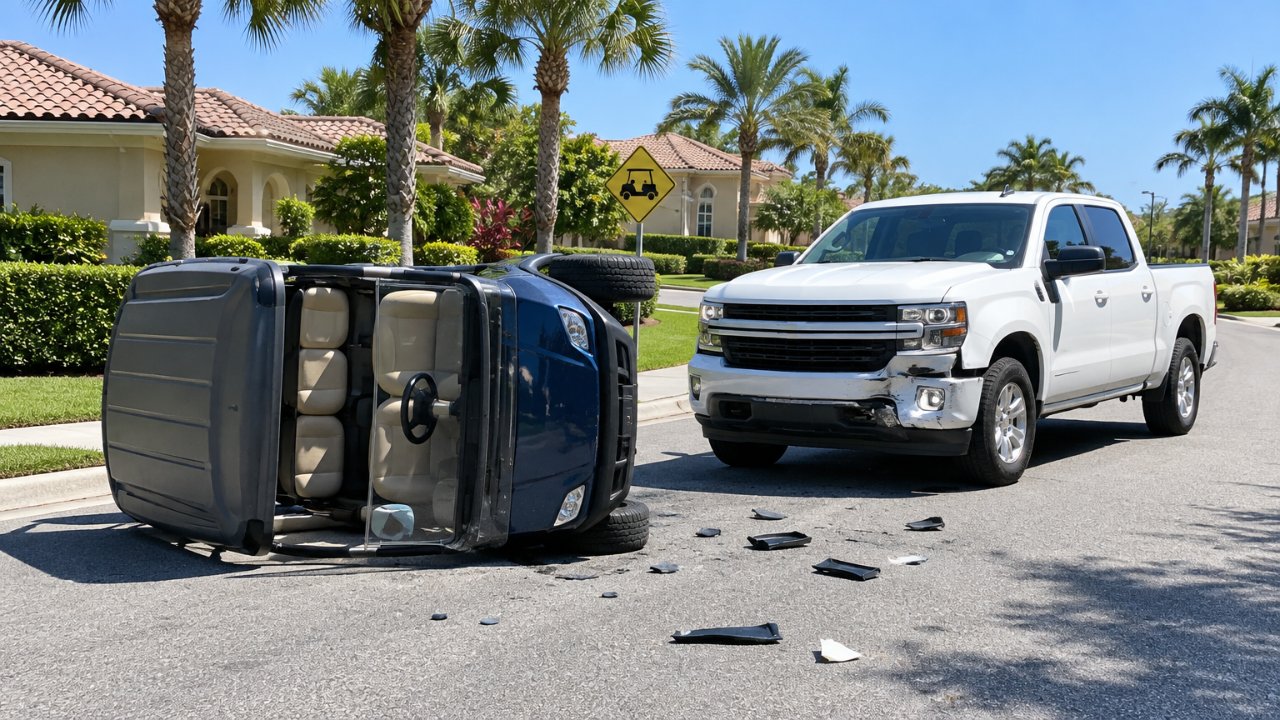
A golf cart has no airbags or crumple zones, so riders can be thrown out even in a low-speed collision.
Begin With the Cart, Not the Label
A vehicle sold or described as a “golf cart” may legally be a low-speed vehicle, often called an LSV. Adding lights or calling a cart street legal does not settle its classification.
Under Florida's vehicle definitions, a golf cart is designed and manufactured for sporting or recreational use on a golf course and cannot exceed 20 mph. An LSV has four wheels and a top speed above 20 mph but no greater than 25 mph; applicable safety standards also matter.
Florida's LSV law requires title, registration, insurance, specified equipment, and a valid driver license. LSV operation is generally limited to streets posted at 35 mph or less, with an exception for crossing a faster road at an intersection and authority for government agencies to prohibit operation on particular roads.
For an injury claim, useful starting documents include the purchase or rental agreement, manufacturer information, title and registration if any, photographs, and records of modifications. We compare those records with the vehicle itself before drawing conclusions about road use or coverage.
The Exact Location Matters in Wesley Chapel
A neighborhood entrance, public district road, private driveway, and shared path can involve different rules and different people responsible for maintenance. A gate does not necessarily make a road private.
The Epperson Ranch CDD's golf cart guidance provides a useful local example: its South CDD roads are public, including roads inside CDD-owned gates, while Overpass Road belongs to Pasco County. The district also distinguishes its paths from neighboring county-owned facilities.
After a crash, we identify the precise road or path, who controls it, and the authorization and signs in effect on the crash date. Permission to use one community route should not be assumed to extend to an adjoining road or sidewalk.
At a Community Entrance or Crossing
If a car and cart collide near an entrance, photographs should show both approaches, signs, lane markings, landscaping, and the point of impact. A close-up of the damaged cart may miss the view that explains why the drivers did not see each other.
We also look for available gate, business, or doorbell recordings and witnesses who saw the vehicles before impact. A camera's presence does not guarantee that footage exists or has been retained.
On a Path or During a Turn
If a cart overturns, strikes a curb, or injures a passenger during a turn, the investigation may include the route, surface condition, steering and brakes, seating arrangement, and any vehicle modifications. Photographs taken before the cart is moved or repaired can help preserve those details.
A path-condition claim also requires identifying who controlled the area and the legal basis for holding that party responsible. An HOA, community development district, and maintenance contractor are not interchangeable.
Road-Use Rules and Fault Are Separate Questions
Florida's golf cart road-use statute permits operation only in authorized circumstances and allows more restrictive local rules. A cart's presence on a quiet street does not establish that the route was authorized.
If an insurer says the cart should not have been there, we examine the applicable rule and whether the alleged conduct contributed to the injury. The investigation still needs to address the other driver's actions, the cart operator's actions, and the sequence of events.
For negligence actions governed by Florida's comparative-fault statute, more than 50% responsibility bars a claimant's recovery. At 50% or less, damages are reduced by the claimant's share of fault. The driver's conduct and an injured passenger's conduct must be evaluated separately; riding in the cart does not itself establish the passenger's fault.
Who May Be Responsible for the Injury
The evidence may point to a motorist who failed to yield, a cart operator who made an unsafe maneuver, or more than one responsible party. Ownership, permission to use the cart, rental arrangements, repairs, and property conditions may also require review.
If a brake or steering problem is suspected, keep the cart available for inspection and get advice before repairs, disposal, or modifications. A reported malfunction needs investigation; it does not by itself establish a product defect or prove that a repair shop caused the crash.
For a rented or borrowed cart, save the full agreement, instructions, messages, and photographs from pickup. We review who supplied and maintained the cart and what the agreement says. The existence of a waiver is a reason to examine its terms and enforceability, not to assume every injury claim is barred.
Which Insurance Could Help With Medical Bills?
Coverage depends on the vehicle's legal classification, the injured person's status, and the actual policies. Florida's no-fault definition of a motor vehicle is narrower than simply “anything with a motor.”
A conventional golf cart generally does not meet that definition. Its occupants should not assume they qualify for auto personal injury protection (PIP) benefits merely because a car struck the cart: the PIP statute distinguishes occupants of self-propelled vehicles from people struck while outside those vehicles.
LSVs have different insurance requirements. Official guidance on LSV insurance explains the required PIP and property-damage liability coverage. Required insurance does not establish that a particular policy was in force or that every claimed loss is covered. If PIP applies, qualifying initial care must occur within 14 days for medical-benefit eligibility; benefits remain subject to statutory limits and conditions.
Depending on the facts, we may review cart-specific coverage, an at-fault driver's liability policy, medical-payments coverage, applicable uninsured/underinsured motorist coverage, or a business's policy. Homeowners and umbrella policies require close attention to vehicle exclusions and where and how the cart was used.
Bring any coverage denial and policy paperwork to the consultation. Health insurance may also help with treatment, subject to its terms and possible reimbursement rights. An injury claim against a responsible party does not guarantee immediate payment of medical bills.
Showing How the Injury Has Changed Your Life
A claim should explain the losses behind the bills: treatment, time away from work, limits on daily activities, and any supported future care needs. Tell your treating providers about difficulties with ordinary tasks, and keep an accurate record of expenses and missed work.
Recoverable medical expenses are subject to Florida's medical-damages rules. The face amount of a bill is not automatically the amount recoverable in a lawsuit.
Pain-and-suffering claims also need the correct legal framework. Whether Florida's motor-vehicle injury threshold applies depends on the vehicles, parties, and claim. Where it applies, the qualifying categories are:
- Significant and permanent loss of an important bodily function.
- Permanent injury within a reasonable degree of medical probability, other than scarring or disfigurement.
- Significant and permanent scarring or disfigurement.
- Death.
We review that issue rather than treating every golf cart injury like an ordinary car-occupant claim. Neither minor-looking cart damage nor a policy limit determines the value of a person's injuries.
What to Save and When to Seek Help
Get needed medical care and call 911 for an emergency. If you can safely collect information, save the driver's and owner's details, witness contacts, photographs, and the incident number. Keep original recordings and copies of any report to a property manager or rental business.
Ask for advice promptly about preserving the cart and available video. For insurer communications, be accurate and avoid guessing. Your own policy may require reporting and cooperation; get advice before signing a release or giving a recorded statement to another party's insurer.
For ordinary Florida negligence claims accruing after March 24, 2023, the general lawsuit period is two years, usually from the injury-producing accident. The 2023 transition law matters for older claims. Other claim types, government defendants, and special circumstances need individual review. Do not assume that a child's claim can simply wait until adulthood or that insurance negotiations extend a lawsuit deadline.
Questions About Golf Cart Injury Claims
Can I make a claim if a friend was driving?
Potentially. A passenger may have a claim if the friend's negligence, another person's conduct, or a legally actionable defect caused the injury. Friendship does not answer the coverage question. We review the facts and available policies before identifying whom a claim should involve.
Can someone under 18 drive a golf cart on a public road?
Under section 316.212, a person under 18 must possess a valid learner's driver license or driver license to operate a golf cart on public roads or streets. A person 18 or older must possess valid government-issued photo identification. These are state requirements; license restrictions and more restrictive local rules still need review. They do not authorize use of an otherwise prohibited route.
Does a crash inside a gated community count?
It can. A gate does not eliminate an injury claim or establish that the road is private. We identify the road's status, the parties involved, and what caused the injury. The Epperson South CDD example above shows why the actual ownership matters.
What if a family member died in the crash?
Under Florida's wrongful-death law, the estate's personal representative brings the action for eligible survivors and the estate. The available damages depend on the family relationships and circumstances. The general filing period is two years, subject to exceptions; the deadline and estate arrangements need prompt review.
Talk With Armando About a Wesley Chapel Golf Cart Injury
Call (813) 482-0355 or contact our team for a free consultation. Bring what you have, even if it is only photographs, an insurance letter, and the cart owner's name. We can explain which questions need answers and what to preserve next.
If the accident happened in Tampa, visit our Tampa golf cart accident lawyer page for that location's service information.
We handle injury representation through a contingency-fee agreement. Review the written terms for the attorney's fee and case expenses before hiring the firm.
About the Author
Attorney Armando Edmiston is the founder of Armando Personal Injury Law in Tampa and St. Pete, Florida. A U.S. Marine veteran, Hillsborough County native, and ACS Forensic Lawyer-Scientist, he represents Floridians in serious personal injury and wrongful death cases.