What Rights Does Each Family Member Have After a Florida Car Accident?
A Tampa car accident lawyer explains separate injury claims, PIP benefits, limited insurance coverage, conflicts, and settlements involving children.
Key answer: Each injured family member has a separate claim, but the claims may compete for the same limited insurance coverage. Florida PIP benefits may help with initial medical expenses and lost wages, while bodily injury and UM/UIM coverage may address additional losses. The family also needs a conflict check because one person’s recovery can affect what remains available for another.
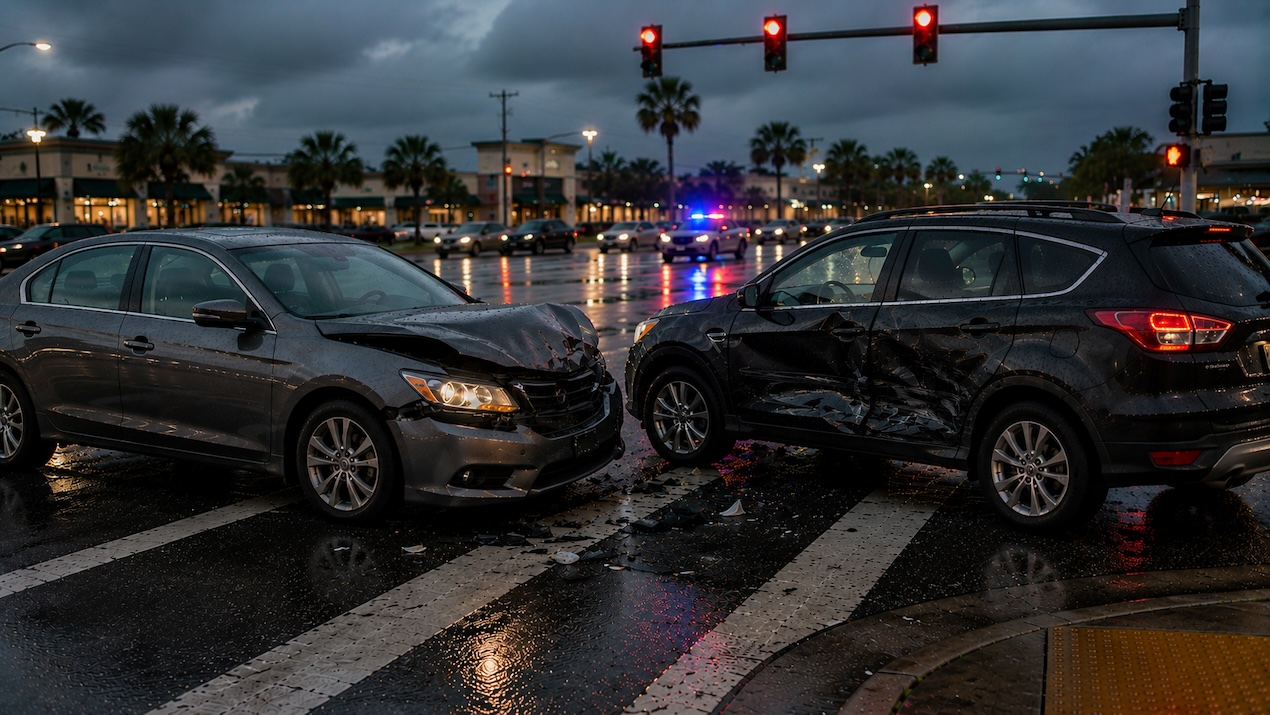
One collision can create separate injury claims and competing insurance issues for several family members.
A serious Tampa-area collision can injure a parent, spouse, child, or other relative in the same moment. Although the crash is shared, the injuries are not. Each person may have different diagnoses, treatment needs, work losses, school disruptions, and long-term limitations. That means each claim must be documented and valued separately.
Multi-injury claims become difficult when several people must rely on one liability policy. Florida does not require every ordinary private driver to carry bodily injury liability insurance. Even when that coverage exists, per-person and per-accident limits can leave the available insurance far below the family’s combined losses.
Does Each Injured Family Member Have a Separate Claim?
Yes. A person injured in the vehicle is generally an individual claimant. The value of that person’s claim depends on the evidence connected to that person, not on an automatic equal division among relatives.
Potential damages may include:
- Medical expenses: Emergency care, diagnostic imaging, surgery, medication, therapy, and medically necessary follow-up treatment.
- Future medical needs: Rehabilitation, specialist care, assistive devices, home modifications, and anticipated treatment supported by medical evidence.
- Income losses: Missed work, reduced earning capacity, and employment limitations caused by the injuries.
- Noneconomic damages: Pain, suffering, disability, disfigurement, mental anguish, and loss of enjoyment of life when Florida law permits recovery.
A spouse may also have a derivative loss-of-consortium claim in an appropriate case. Because derivative and direct claims can interact, the complete family relationship and injury picture should be evaluated before releases are signed.
How Does Florida PIP Work When Several Relatives Are Hurt?
Florida personal injury protection, commonly called PIP, is no-fault coverage that may pay part of covered medical expenses and lost income regardless of who caused the crash. Coverage priority depends on facts such as whether the injured person owns a vehicle, has a policy, lives with an insured relative, or was occupying an insured vehicle.
For a covered person, PIP generally pays 80 percent of reasonable medical expenses and 60 percent of covered lost income, subject to deductibles, exclusions, and the applicable policy limit. Initial services and care generally must be obtained within 14 days of the crash. Medical benefits can be limited to $2,500 unless an authorized provider determines that the person had an emergency medical condition.
PIP does not replace a bodily injury claim. It is an initial source of benefits. A careful review should identify which policy applies to each relative, whether any deductible applies, and whether treatment and wage documentation satisfy the policy requirements.
When Can a Family Seek Damages Beyond PIP?
Florida’s no-fault law limits recovery of pain, suffering, mental anguish, and inconvenience unless the injured person meets the statutory injury threshold. Qualifying injuries may include a significant and permanent loss of an important bodily function, a permanent injury within a reasonable degree of medical probability, significant and permanent scarring or disfigurement, or death.
The threshold primarily affects noneconomic damages. Economic losses that are legally recoverable and not paid or payable through PIP require a separate analysis. The medical records, diagnostic studies, physician opinions, and functional evidence for each person are therefore critical.
How Do Per-Person and Per-Accident Insurance Limits Work?
A liability policy may state one limit for each injured person and another limit for everyone injured in the same crash. For example, a 50/100 bodily injury policy generally provides no more than $50,000 for one person’s covered bodily injury claim and no more than $100,000 for all covered bodily injury claims arising from the accident.
Those limits do not increase because several relatives were seriously hurt. One catastrophic injury may exceed the per-person limit, and the combined claims can exceed the per-accident limit before all treatment is complete.
What Other Coverage or Responsible Parties Should Be Investigated?
- Uninsured or underinsured motorist coverage: UM/UIM coverage may apply when the responsible driver has no bodily injury coverage or insufficient limits. Coverage can depend on the policy language, insured status, household relationships, vehicle ownership, and any prior rejection of UM coverage.
- Vehicle-owner liability: Florida’s dangerous instrumentality doctrine can impose vicarious liability on a vehicle owner who consented to another person’s use, subject to statutory limits and fact-specific exceptions.
- Minor-driver responsibility: Florida Statute 322.09 may impose responsibility on the person who signed a minor’s driver-license application, depending on the circumstances.
- Commercial or employment coverage: If the driver was working, making deliveries, operating a company vehicle, or acting within the scope of employment, an employer or commercial policy may be involved.
- Additional policies: An umbrella policy, rideshare policy, household policy, or other applicable coverage may provide another recovery source.
Can Family Members Compete for the Same Insurance Money?
Yes. Limited coverage can create a real conflict of interest. A larger payment to one claimant may reduce the funds available to the others. The conflict is not solved by dividing the policy equally because the claims may differ substantially in severity, proof, liens, future care, and legal value.
A lawyer considering joint representation should evaluate whether the interests of the family members are aligned, explain the risks, and obtain any informed consent required by the professional-conduct rules. If the allocation dispute becomes directly adverse or cannot be managed, separate counsel may be appropriate. Families should understand this issue before making a combined demand or agreeing to an allocation.
How Are Settlements for Injured Children Protected?
A child’s claim belongs to the child. Parents or guardians may handle parts of the process, but Florida law can require court approval, a guardianship of the property, or appointment of a guardian ad litem depending on the gross and net settlement amounts, whether a lawsuit has been filed, and whether the adult representative has a potential adverse interest.
The settlement structure should also address medical liens, future care, restricted accounts, annuities, and protection of the child’s funds. A release should not be signed until the legal requirements for the minor’s claim have been confirmed.

Contact Armando Personal Injury Law if you have been injured in a crash that was not your fault.
What Happens If a Family Member Dies?
A Florida wrongful death action is brought by the decedent’s personal representative for the benefit of the statutory survivors and the estate. The damages available to a survivor depend on that person’s legal relationship to the decedent and the requirements of the Florida Wrongful Death Act.
Potential damages can include lost support and services, certain medical or funeral expenses, and survivor damages authorized by statute. Because the identity of the personal representative and statutory survivors matters, families should avoid assuming that every relative or unmarried partner has the same rights.
What Should a Family Do After a Multi-Injury Crash?
- Get medical care for every injured person. Symptoms such as concussion, internal injury, spinal pain, and soft-tissue damage may not be obvious at the scene. The PIP treatment deadline also makes prompt evaluation important.
- Create a separate file for each claimant. Keep medical records, bills, prescriptions, wage information, school absences, photographs, and a symptom journal for each person.
- Preserve crash evidence. Save photographs, dash-camera video, vehicle data, witness information, police-report details, and communications with insurers.
- Request all relevant insurance information. Do not assume that the vehicle’s policy is the only coverage. Review household, UM/UIM, commercial, owner, rideshare, and umbrella possibilities.
- Avoid premature releases. A release signed for one claimant or policy can affect additional claims and coverage. Understand its scope before signing.
- Address conflicts early. Ask whether one lawyer can ethically represent every injured person and how limited insurance would be allocated.
How Armando Personal Injury Law Approaches Multi-Injury Claims
Armando Personal Injury Law can investigate the collision, identify responsible drivers and vehicle owners, review every potentially applicable policy, and organize the medical and economic proof for each claimant. The firm can also evaluate whether joint representation is appropriate and explain when separate advice may be necessary.
When several people in one family are injured, early planning can protect evidence and reduce the risk of an incomplete insurance settlement. Contact Armando Personal Injury Law at (813) 482-0355 to discuss what happened and which coverage may apply. A consultation is free, and no result is guaranteed.

Frequently Asked Questions
Does each family member use the same PIP policy?
Not always. PIP priority depends on vehicle ownership, the person’s own policy, household relationships, and the vehicle involved. Each claimant’s coverage should be reviewed separately.
What if the at-fault driver has no bodily injury insurance?
The investigation should include UM/UIM coverage, vehicle-owner liability, employment or commercial coverage, rideshare coverage, and other responsible parties. Florida does not require every ordinary private driver to maintain bodily injury liability coverage.
Is insurance divided equally among injured relatives?
No automatic rule requires equal division. Allocation should consider each person’s injuries, damages, evidence, legal rights, liens, and future needs, along with any conflict-of-interest concerns.
Can one lawyer represent the entire family?
Sometimes, but only after evaluating whether the clients’ interests are aligned. Limited insurance or disagreements over fault and allocation can create conflicts that require informed consent or separate counsel.
Does a child control the settlement money?
A minor generally cannot independently settle the claim. Florida law may require court approval, a guardianship, a guardian ad litem, or a protected settlement arrangement depending on the circumstances and amounts.
Who files a Florida wrongful death case?
The decedent’s personal representative brings the action for the benefit of the statutory survivors and the estate. The recoverable damages depend on the Wrongful Death Act and each survivor’s legal relationship to the decedent.
Click here for a printable PDF of this article, “What Are Your Rights If More Than One Family Member Is Hurt in a Florida Car Accident?”
About the Author
Attorney Armando Edmiston is the founding attorney of Armando Personal Injury Law in Tampa and St. Pete, Florida. A U.S. Marine veteran and Hillsborough County native, he represents injured people and families in serious injury cases, including car accidents, truck accidents, motorcycle accidents, wrongful death, negligent security, premises liability, and nursing home abuse and neglect claims. Armando earned a B.S. in Biology from the University of South Florida and a J.D., cum laude, from Nova Southeastern University. He is also one of only six lawyers in Florida listed with the ACS Forensic Lawyer-Scientist designation.