Tampa Onewheel Accident Lawyer
If you were seriously hurt on a Onewheel in Tampa or anywhere in Hillsborough County, the case may be more complicated than it first looks.
Some crashes happen because a driver failed to yield. Some happen because a sidewalk seam, trail transition, pothole, driveway apron, or broken pavement edge threw the rider off balance. Some happen because the board itself suddenly stopped balancing the rider and pitched them forward. And in some cases, more than one of those things happened at once.
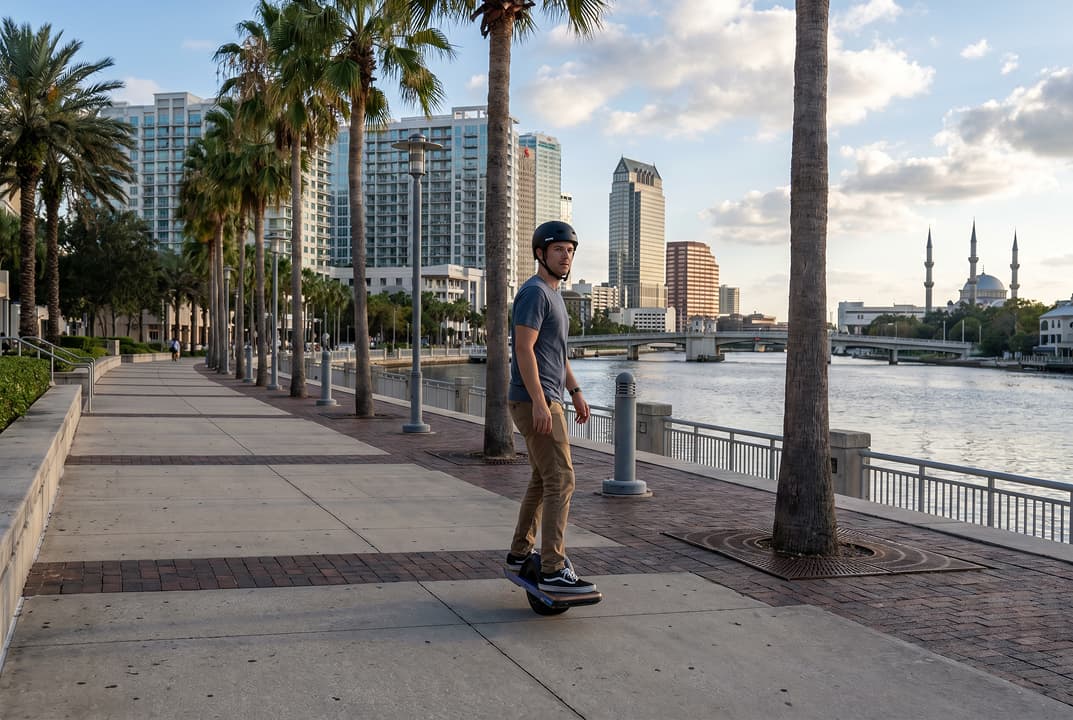
That is what makes Onewheel injury cases different from ordinary falls. A serious crash can raise product liability, premises liability, traffic negligence, comparative-fault, and insurance questions at the same time.
Armando Personal Injury Law helps injured riders and families in Tampa and throughout Hillsborough County investigate Onewheel crashes, preserve the evidence that matters, and pursue compensation from every party that helped cause the injury.

Why Onewheel Accident Cases in Tampa Need a Stronger Legal Response
Onewheel riders are easy to spot in Tampa because the city has exactly the kind of routes that make these boards appealing. Riders move along the Tampa Riverwalk, Bayshore-area routes, downtown connectors, Ybor-adjacent streets, South Tampa neighborhoods, and greenway and trail spaces across Hillsborough County. The problem is that these routes were not built around a single-wheel self-balancing board that can throw a rider forward when something goes wrong.
That local reality matters. Tampa’s multi-use paths and waterfront routes create convenience, but they also expose riders to changing surfaces, driveway crossings, turning traffic, event crowds, uneven pavement, and mixed-use conflict points in a short span of time. A crash on the Tampa Riverwalk raises different questions than a crash along Bayshore, near downtown loading zones, or on a county greenway trail.
A strong claim starts by getting specific about where the crash happened, what the rider was doing, what traffic or surface condition was present, and whether the board itself malfunctioned.
Onewheel Boards, Florida Law, and the Classification Problem
One of the first legal issues in these cases is that Florida law does not fit Onewheel boards neatly into one obvious statutory box.
A Onewheel does not fit cleanly into Florida’s statute for an electric personal assistive mobility device, because that definition applies to a self-balancing device with two non-tandem wheels in section 316.003. Florida’s broader operating rule in section 316.2128 gives operators of micromobility devices and motorized scooters the rights and duties generally applicable to bicycle riders, while also allowing local governments to regulate where those devices can be used.
That is the safer and more realistic framework for a Tampa injury case. It means the legal analysis usually turns on where the board was being used, whether the route was a place where this kind of device was reasonably expected, what local restrictions applied, and whether a driver, property owner, or manufacturer created an avoidable danger.
In other words, the most important question is usually not whether a Onewheel is named perfectly in one statute. It is whether the rider was using the route in a reasonably foreseeable way and whether another party’s negligence or defective product caused the crash.
The Onewheel Recall and Why It Matters
A serious Onewheel case cannot ignore the product history.
In November 2022, the U.S. Consumer Product Safety Commission warned consumers to stop using all Onewheel self-balancing electric skateboards after reports of at least four deaths and multiple serious injuries tied to ejection hazards. In September 2023, Future Motion announced a recall covering approximately 300,000 Onewheel boards after the CPSC stated the boards could stop balancing the rider if the board’s limits were exceeded, creating a crash hazard that could cause serious injury or death.
That history matters because many riders describe the same basic event. The board suddenly stops balancing the rider, the nose drops, and the rider is launched forward with little or no chance to recover. The CPSC warning and recall both specifically tie the hazard to the board’s ability to eject the rider when the balancing system fails under certain conditions.
If your crash involved a sudden nosedive, an unexpected loss of balance without an obvious external cause, or a recalled board model, the product-defect angle deserves serious attention.
How Liability Works in a Tampa Onewheel Accident Case
These cases are often stronger when you stop asking only one question.
The wrong question is: “What is the one cause?”
The better question is: “What combination of product, roadway, property, driver, or rider factors caused this crash?”
Negligent Driver Claims
Drivers in Tampa still have to exercise reasonable care around vulnerable roadway users, even when the device involved is something unfamiliar like a Onewheel.
We see risk points where drivers turn across a rider’s path, pull out of driveways or parking areas without looking, cut too close on narrow streets, or fail to anticipate a rider using a bike-adjacent or mixed-use corridor. That can happen near the Riverwalk area, downtown connectors, Bayshore-adjacent routes, Ybor approaches, and trail crossings.
If a driver’s inattention, speed, distraction, or failure to yield caused the collision, the case may look a lot like a pedestrian accident or bicycle accident claim in the way it is investigated and proved.
Product Liability Claims Against Future Motion
If the board itself suddenly failed to balance, dropped the nose, or ejected the rider in a way that does not match the surrounding conditions, a product liability claim may be one of the strongest parts of the case.
These claims may involve defective design, inadequate warnings, recall timing, firmware history, and the model involved. The board should be preserved exactly as it was after the crash if possible. In a product case, the hardware matters.
Dangerous Surface and Premises Liability Claims
A Onewheel can be less forgiving than a bicycle when it hits an abrupt surface change.
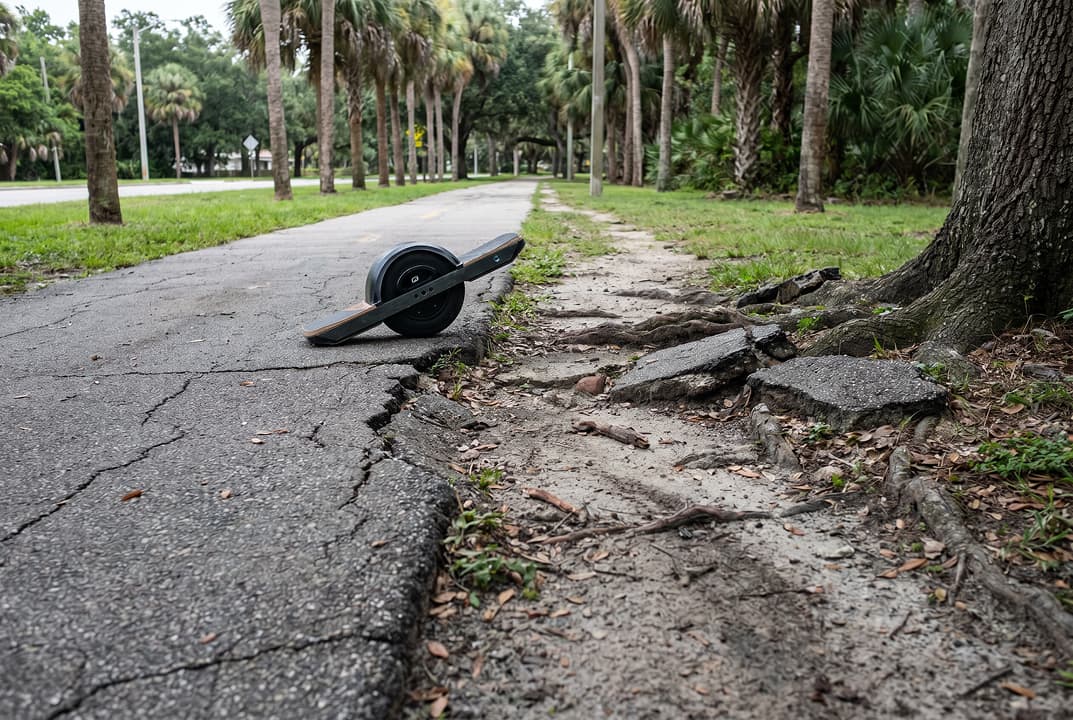
Raised sidewalk panels, cracked pavement, potholes, poorly maintained trail transitions, driveway-apron dips, uneven crosswalk approaches, brick or decorative-surface irregularities, and broken pavement edges can all create serious risk for a one-wheel device moving at speed. The City of Tampa, Hillsborough County, the state, and private property owners may all be relevant depending on where the crash happened.
These cases usually turn on a few key issues: who controlled the area, what condition existed, how long it had been there, whether complaints or maintenance records exist, and whether the hazard should have been corrected before someone got hurt. Depending on the facts, that can become a premises liability claim.
Cases Involving More Than One Responsible Party
Many Onewheel crashes do not fit neatly into one box.
A rider may have been on a recalled board and also hit a dangerous surface transition. A driver may have forced the rider into an evasive move that exposed a product or surface problem. A private property owner may have allowed a dangerous condition to remain in an area where micromobility traffic was entirely foreseeable.
Florida’s comparative-fault framework allows those overlapping theories to be investigated together. A good case strategy does not force the facts into one narrow narrative too early.
Where Onewheel Accidents Happen in Tampa and Hillsborough County
Tampa Riverwalk and Downtown Connectors
The Tampa Riverwalk is a 2.6-mile multi-use path through downtown that connects parks, museums, businesses, and waterfront destinations. That makes it attractive to riders. It also means pedestrians, event traffic, access points, changing surfaces, and route transitions can all become crash factors in a short span of space.
Bayshore and South Tampa Routes
Bayshore-area routes are attractive because they feel long, open, and visually clear. But driveway access points, turning traffic, crossings, decorative-surface changes, and narrow margins for error can all matter more than riders expect. The Bayshore Boulevard Greenway helps explain why this corridor is so heavily used.
Ybor and Brick or Irregular Street Surfaces
Tampa has areas where aging, decorative, or irregular surfaces are part of the local character. For a one-wheel board, that can be a legal problem as much as a riding problem. Surface irregularity, patchwork pavement, and abrupt transitions can make these routes more dangerous than they look.
City Greenways and Hillsborough County Trail Spaces
Tampa and Hillsborough County also maintain greenway and trail spaces that attract micromobility users. The City’s greenways and trails system includes routes like the Bayshore Boulevard Greenway and Hillsborough River Greenway trail segments, while county and city park trails can create additional surface-transition and maintenance issues. These routes can support both recreation and commuting, but a trail setting does not eliminate negligence issues when maintenance, design, or traffic conflicts create avoidable risk.
Why the Exact Route Matters
A crash on the Riverwalk may point to mixed-use conflicts and route congestion. A crash along Bayshore may involve driveway movement or turning traffic. A crash on a greenway or trail connector may raise both surface and right-of-way issues. The more precisely the route is documented, the stronger the liability analysis usually becomes.

Common Injuries in Tampa Onewheel Accident Cases
Head and Brain Injuries
A forward ejection can send the rider directly into pavement or concrete. Concussions and traumatic brain injuries are common, and symptoms may not fully show up until later.
Wrist, Arm, and Shoulder Injuries
People naturally try to break the fall with their hands. That leads to wrist fractures, forearm fractures, shoulder damage, clavicle injuries, and long rehabilitation periods.
Skin Loss, Road Rash, and Scarring
Concrete and asphalt are unforgiving. Skin injuries can be severe, painful, and permanent, especially on the hands, arms, knees, and face.
Spinal and Neck Injuries
Forward ejections, rotation during impact, and collisions with vehicles can all cause disc injuries, nerve symptoms, vertebral fractures, and long-term pain.
Lower-Body and Soft-Tissue Trauma
Knees, ankles, hips, and lower-body soft tissue can be badly damaged in side-impact falls, awkward landings, or crashes involving changing surfaces.
What To Do After a Onewheel Accident in Tampa
What happens in the first hours after the crash can shape the entire claim.
Get Medical Care Quickly
Do not assume you are fine because you stood up or walked away. Head injuries, internal injuries, and spinal injuries can look smaller at first than they really are.
Photograph the Board, the Surface, and the Scene
Take photos of the board, the route, the exact surface condition, tire or impact marks, nearby traffic controls, driveway access points, and any visible injuries.
Preserve the Board Exactly As It Is
If product failure may be involved, do not repair the board, update the firmware, return it, or let anyone else alter it before the board can be evaluated.
Report the Incident When Appropriate
If a driver was involved, call law enforcement. If the issue was a dangerous public condition, notify the responsible public agency and document that notice.
Do Not Let an Insurer Turn This Into a Simple Rider-Error Story
Novel-device cases are easy for insurers to oversimplify. Do not guess about what happened, and do not assume the first explanation is the full one.
How We Build a Tampa Onewheel Accident Case
The strongest Onewheel cases are built on detail.
- the board itself and its condition after the crash
- the board model and recall status
- firmware information, app history, or update records if available
- photos and video of the scene
- surveillance from nearby businesses or properties
- witness statements
- crash or incident reports
- maintenance records or complaint history for the route or surface
- medical records showing how symptoms developed over time
- proof of route use, speed conditions, and surrounding traffic
In product cases, preserving the board can be the difference between a serious defect investigation and a case that gets reduced to rider error. In dangerous-surface cases, photographs and notice evidence can matter just as much. In vehicle cases, surveillance, witness timing, and route position can make the fault picture much clearer.
These claims get stronger when someone moves early enough to preserve the board, the scene, the route evidence, and the medical timeline before the easy story hardens around the wrong explanation.
Compensation in a Tampa Onewheel Injury Claim
A serious Onewheel injury claim may involve medical expenses, surgery, imaging, therapy, future treatment, lost income, reduced earning capacity, pain and suffering, emotional distress, loss of enjoyment of life, disfigurement, scarring, and wrongful death damages in fatal cases.
The real damage in these cases is often what keeps unfolding after the first week. A rider may need orthopedic follow-up, brain-injury treatment, neurological evaluation, scar management, physical therapy, occupational therapy, or work restrictions that last for months. That is why the value of the case depends on more than the first hospital bill. It depends on the injury pattern, the proof, the available insurance or defendant resources, and whether the damage continues affecting work, treatment, and daily life long after the crash.
In product cases, damages may also involve harder litigation over what the manufacturer knew, how it responded to safety concerns, and whether punitive-damages issues should be evaluated under Florida law. In fatal cases, families may also have wrongful death issues to review.
Why People in Tampa and Hillsborough County Call Armando Personal Injury Law
After a serious Onewheel crash, people want more than a generic promise to “fight” for them.
They want to know whether the board itself needs to be preserved, whether a dangerous surface claim may apply, whether a driver or business contributed to the crash, and what has to be done before evidence disappears.
That is where we come in.
Armando Personal Injury Law helps injured people and families in Tampa and throughout Hillsborough County pursue compensation after serious crashes involving defective products, dangerous surfaces, and negligent drivers. We investigate the facts, preserve the evidence, handle the insurance pressure, and build the case with the level of detail these claims require.
Frequently Asked Questions About Tampa Onewheel Accidents
Can I still file a claim if the board malfunctioned and no car hit me?
Yes. A product liability claim may exist even if no other vehicle was involved. The key question is whether the board failed in a way that contributed to the crash.
What if I bought the board used?
A secondhand purchase does not automatically eliminate a product claim. The board model, condition, recall status, and crash facts still matter.
What if a cracked sidewalk, trail edge, or route transition caused the fall?
Then a premises or governmental negligence claim may need to be investigated, depending on who controlled the property and whether the hazard should have been addressed.
Do I need to keep the board after the crash?
Yes, if possible. In a product-defect case, the board can be critical evidence.
What if I was not wearing a helmet?
That does not automatically destroy the claim. But insurers often try to use helmet issues to argue comparative fault or reduce damages in head-injury cases.
How soon should I talk to a lawyer?
As soon as possible. Product history, route conditions, surveillance, and witness information can all become harder to prove with time.
Talk to a Tampa Onewheel Accident Lawyer
A serious Onewheel crash can leave you dealing with fractures, head injury symptoms, scarring, work disruption, and a legal mess that is far more complicated than it first looks.
Contact Armando Personal Injury Law to discuss what happened, whether the board itself needs to be preserved, what route or surface evidence should be locked down now, and what your case may actually involve. In many Tampa and Hillsborough County Onewheel cases, the difference between a weak claim and a strong one comes down to whether someone moved quickly enough to preserve the board, the scene, the surveillance, and the route-condition evidence before they changed.
We handle these cases on a contingency fee basis, so there is no fee unless we recover compensation for you.
About the Author
Attorney Armando Edmiston is the founding attorney of Armando Personal Injury Law in Tampa and St. Pete, Florida. A U.S. Marine veteran and Hillsborough County native, he represents injured people and families in serious injury cases, including car accidents, truck accidents, motorcycle accidents, wrongful death, negligent security, premises liability, and nursing home abuse and neglect claims. Armando earned a B.S. in Biology from the University of South Florida and a J.D., cum laude, from Nova Southeastern University. He is also one of only six lawyers in Florida listed with the ACS Forensic Lawyer-Scientist designation.