Whiplash injuries are often dismissed as minor neck strain, but the same violent motion that injures the neck can also cause the brain to move inside the skull. That movement can lead to a concussion or other traumatic brain injury, even when there is no direct blow to the head. If a Tampa car accident left you dealing with persistent headaches, dizziness, or cognitive symptoms, Armando Personal Injury Law can help you understand your legal options and pursue the maximum compensation you deserve under Florida law.
A car accident doesn’t have to knock you unconscious to knock something loose upstairs. Most people who hear the word whiplash picture a sore neck, a few days of ibuprofen, and a soft cervical collar. But the same violent snap of the head that strains the muscles and ligaments in your neck can also set your brain in motion inside your skull, and that’s where things get significantly more serious.
Since March is Brain Injury Awareness Month, it's a good time to shed light on the risk drivers, vehicle occupants, bicyclists, and pedestrians face on Tampa roads. Whiplash and traumatic brain injury (TBI) are not two separate events that happen to share a waiting room. They can be two expressions of the same trauma, triggered by the same forces, in the same split second. Understanding how and why they overlap could be the difference between a full recovery and years of unexplained symptoms.
What actually happens to your body during a whiplash injury?
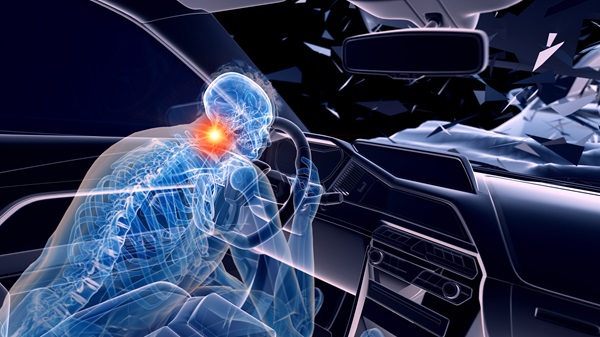
The mechanics of whiplash happen faster than your muscles can respond. In a rear-end collision, your head snaps forward and backward in a fraction of a second, often in under 200 to 300 milliseconds. Your neck bears the brunt of that force, but your brain doesn’t escape unscathed.
You don't need to hit your head on anything for a brain injury to occur. The forces transmitted through the neck and skull are more than sufficient to cause intracranial movement, and this can happen at surprisingly low collision speeds.

Many crash victims think whiplash only affects the neck, but the same forces can also trigger a concussion or other traumatic brain injury. When brain injury symptoms are overlooked early, victims may struggle for months without clear answers about what changed after the crash. If you were hurt in a Tampa car accident and suspect your symptoms involve more than whiplash alone, Armando Personal Injury Law can help you protect your rights and pursue fair compensation.
How are whiplash and traumatic brain injury connected?
TBI exists on a spectrum. At the severe end, you have injuries involving prolonged unconsciousness, lasting neurological deficits, and visible damage on imaging. Whiplash-related brain injuries typically fall at the mild end of that spectrum, a category that includes concussions. The word "mild" is a clinical classification based on initial presentation, not a measure of how disruptive the injury ultimately is. Post-concussion syndrome can persist for months or years, affecting a person’s ability to work, concentrate, and maintain relationships.
What makes diagnosis complicated is how much the symptoms of whiplash and mild TBI overlap. Both can produce:
- Persistent headaches that differ in quality from any pre-existing headaches
- Dizziness, balance problems, and a general sense of being “off”
- Brain fog, slowed thinking, and difficulty finding words
- Sensitivity to light and noise
- Sleep disruption, irritability, and mood changes
Why is a co-occurring brain injury so often missed?
The priority after a crash is ruling out skull fractures, brain bleeds, and spinal cord damage. Once those are cleared, a patient with neck pain and a headache is typically sent home with instructions to rest and follow up with their primary care doctor. What doesn’t get assessed, in most cases, is whether that headache is the first sign of something neurological.
Standard CT and MRI scans are largely ineffective at detecting diffuse axonal injury or mild TBI. These injuries don’t produce visible lesions on conventional imaging. Advanced options like diffusion tensor imaging (DTI) and functional MRI can reveal damage that standard scans miss, but they are rarely ordered in routine post-accident care.
Timing is another obstacle. The brain’s inflammatory response and metabolic disruption after trauma can take days or weeks to manifest as noticeable symptoms. A patient might feel fine the day of the crash and then find themselves struggling to concentrate at work two weeks later, with no clear connection made to the car accident.
Many people also downplay their own cognitive symptoms. Forgetting words, losing your train of thought mid-sentence, or feeling emotionally flat can feel embarrassing to report, especially when you’re already dealing with neck pain and the stress of an insurance claim.

Symptoms such as headaches, brain fog, balance problems, and memory issues are common with traumatic brain injuries suffered in crashes. At Armando Personal Injury Law, our Tampa car accident lawyer can help you document your injuries and fight for compensation that reflects the full impact on your life.
What symptoms should push I toward a deeper evaluation?
If you’ve been in a crash and experienced whiplash, there are specific warning signs that warrant more than a follow-up with your general practitioner. Pay attention to:
- Headaches that persist beyond a few days, worsen over time, or feel different from any headaches you’ve had before
- Trouble concentrating, short-term memory lapses, or noticeably slower thinking
- Unusual sensitivity to light or sound
- Visual disturbances such as blurred vision, difficulty reading, or eye strain
- Mood changes, irritability, or emotional shifts that feel out of character to you or those around you
- Sleep disruption that doesn’t resolve as your neck pain improves
A proper evaluation for a potential TBI goes well beyond a basic neurological check. Neuropsychological testing measures memory, attention, processing speed, and executive function through standardized assessments. Vestibular and oculomotor testing examines balance and eye movement, both of which are frequently disrupted after a concussion. If standard imaging comes back clean but symptoms persist, a referral to a neurologist or a dedicated concussion clinic is worth pursuing.
Documenting your symptoms carefully from the beginning, including when they started, how they’ve changed, and how they affect your daily life, creates a medical record that supports both your treatment and any legal claim you may need to bring.
What does an undiagnosed TBI mean for a personal injury claim?
A whiplash settlement that doesn’t account for a co-occurring TBI can leave a significant gap between what you receive and what you actually need. Insurance adjusters are trained to look for gaps in treatment and inconsistencies in reported symptoms. An undiagnosed brain injury creates exactly those gaps.
Cognitive symptoms are subjective in nature, making them a frequent target of dispute. Objective neuropsychological test results are considerably harder to challenge than self-reported complaints. Getting that testing done and getting it documented early is one of the most important steps an injured person can take.
Insurance may also argue that cognitive or emotional symptoms existed before the crash. A clear medical timeline established in the weeks immediately following the accident is your best defense against that argument. The longer you wait to seek evaluation, the easier it becomes for the other side to suggest your symptoms are unrelated to the collision.
TBI can affect earning capacity, require long-term medical care, and alter a person’s ability to manage finances, care for family members, or perform skilled work. These damages are rarely included in early settlement offers, which tend to focus on the visible and the immediate. Accepting a settlement before the full picture is clear can permanently close the door on compensation for future losses.
Whiplash is never just a neck problem. If you’ve been in a crash and something feels off, trust that instinct. Getting the right medical evaluation and the right legal guidance early on isn’t overcautious. It’s the only way to make sure the full extent of your injury is recognized and properly addressed.
When whiplash hides a brain injury, get a Tampa lawyer who knows how to maximize your compensation
A stiff neck after a crash can mask something far more serious. If you suffered whiplash or a traumatic brain injury in a Tampa car accident, Armando Personal Injury Law wants to hear your story. Attorney Armando Edmiston knows how insurance companies operate, and he knows how to push back. From building your medical timeline to negotiating a settlement that reflects the full extent of your injuries, his team handles every detail so you don't have to.
Your consultation is free. The representation is on a contingency fee basis, meaning you pay nothing unless we win. Our law firm proudly serves Tampa, St. Pete, Hillsborough County, and communities throughout Florida. Don't let the insurance company write the ending to your story. Contact us today and take the first step toward the compensation you deserve.
About the Author
 Attorney Armando Edmiston is the founding attorney of Armando Personal Injury Law in Tampa, Florida, a law firm dedicated to helping people harmed in car, truck, motorcycle, nursing home, and other serious injury cases. A U.S. Marine Corps veteran and personal injury lawyer, Armando draws on his real-world courtroom experience and years of representing injured Floridians to write and carefully review the legal content on this website. Every guide is written in clear, straightforward language so injured people and their families can better understand their rights, and is reviewed for legal accuracy before publication.
Client Testimonial
"Armando, I don’t even know where to begin. Thank you, from the bottom of my family’s hearts. Our case was a tricky one, and thank God for you and your skilled professionals. You not only made us feel well taken care of, you went out of your way to help us. You were also very responsive and straight-up. I would recommend you to anyone because you get the job done. This is truly your passion, and it shows. Thank you again, no way to even repay you for the help. God bless you."
– L.G. ⭐⭐⭐⭐⭐
Results vary; past results do not guarantee a similar outcome.