Tesla Robotaxi Accidents in Tampa: Who Pays After a Crash?
Updated: July 23, 2026
Tesla launched Robotaxi service in Tampa on July 21, 2026. The service is active, but availability remains limited and may depend on where and when a rider requests a trip. Reuters reported the Tampa launch.
For most people, the first reaction is curiosity.
Is there really nobody driving?
Where does the car go?
What happens if it gets confused?
Those questions feel different once somebody gets hurt
After a Tesla Robotaxi crash in Tampa, responsibility may fall on the vehicle owner, the Robotaxi network operator, Tesla or another product defendant, a remote-support company, another driver, or several parties at once.
Florida law requires substantial insurance for qualifying autonomous rides, but the harder issue may be getting access to the vehicle data and electronic records that show what actually happened.
The injured person usually cannot see those records. Tesla or another company involved in the ride may already have the vehicle's speed, route, camera footage, braking history, system status, and support communications.
That is a considerable head start.
Armando Personal Injury Law represents people injured in serious Tampa car accidents, including crashes involving autonomous vehicles and other emerging transportation technology.
Free Consultation
Tesla's Tampa Robotaxi service raises new questions about liability, insurance, and vehicle data after a crash.
- Is Robotaxi Available in Tampa?
- Save What the App Shows
- Why a Robotaxi Crash Is Different
- How Florida Law Treats Driverless Vehicles
- What Is a Minimal-Risk Condition?
- Who Could Be Liable?
- What Insurance Applies?
- What to Do After a Crash
- What Evidence Can Prove a Claim?
- Types of Crashes That May Require Investigation
- What Injuries Can a Robotaxi Cause?
- What Compensation May Be Available?
- How Long Do You Have to File?
- Frequently Asked Questions
Is Tesla Robotaxi Service Available in Tampa?
Yes. Tesla began offering Robotaxi rides in Tampa on July 21, 2026. The available service area, operating hours, pricing, wait times, and vehicle availability may vary, so riders need to check the Tesla Robotaxi app and support information for current details.
A rider enters a destination in the app, reviews the estimated price, and confirms the trip. Tesla says its initial Robotaxi fleet consists of Model Y vehicles. Passengers are not allowed to sit in the front-left seat, where a driver would normally sit. Riders can also use the app or vehicle touchscreen to request support or ask the car to pull over at a safe location.
That is what the passenger sees. What the passenger may not know is how that particular vehicle is being supervised behind the scenes. Was it operating without an in-vehicle safety monitor? Could a remote operator intervene? Did the vehicle ask for assistance? Did anyone respond?
Those details cannot be assumed simply because Tesla describes Robotaxi as a driverless service. Reuters has reported that Tesla's broader rollout includes different levels of supervision and remains limited compared with the company's earlier projections. The exact setup used during a Tampa ride should be established through trip records and vehicle data.
Save What the Robotaxi App Shows
Tesla may change the service area, operating hours, pricing, vehicles, rider rules, software, or support procedures as the Tampa rollout develops. If a crash happens, save:
- ✓The trip receipt
- ✓Pickup and destination
- ✓Route map
- ✓Vehicle information and license plate
- ✓Ride number and fare
- ✓Support messages
- ✓Trip start and end times
- ✓The service area shown in the app
Take screenshots before closing the trip screen. The information may be harder to find later. The app itself may change. A route or message that appears on the day of the crash may not appear the same way a week later.
"I was involved in a crash and Armando and his crew worked tirelessly to make sure that everything worked seamlessly. Highly recommend them for any accident or injury needs."— Serena L. Actual client. Results may vary; each case is different.
"Armando and his staff are incredible. Very professional and attentive. Any time I had questions or concerns about my case they were happy to answer and give me peace of mind. If I ever have a need for an attorney in the future I will always use and recommend Armando."— Matt C. Actual client. Results may vary; each case is different.
Why Is a Robotaxi Crash Different From a Regular Car Accident?
A Robotaxi crash may require evidence that is rarely involved in an ordinary collision, including automated-driving records, camera footage, software versions, remote-support logs, geofence information, and data showing how the vehicle detected and responded to the road around it.
A regular car accident investigation usually starts with the drivers. Was somebody speeding? Looking at a phone? Following too closely? Did a driver miss a red light or move into another lane? Those questions still matter. Another driver may have caused the entire crash.
But when a Robotaxi is involved, investigators may also need to find out:
- ✓Whether the automated-driving system was engaged
- ✓What the vehicle's cameras detected
- ✓How the system classified nearby cars and people
- ✓Whether it requested remote assistance
- ✓Whether a remote operator responded
- ✓What software version was running
- ✓Whether the vehicle braked or steered as intended
- ✓Whether it was operating under conditions the system was designed to handle
The case starts with what people saw. Then it moves into records most people never knew the car was keeping.
Tesla's Robotaxi platform relies on cameras and artificial-intelligence-based software rather than the lidar-centered approach used by some competitors, according to Reuters' reporting on the Tampa rollout. That makes the vehicle's camera information, software behavior, and electronic records especially important when the cause of a crash is disputed.
A damaged fender may show where the vehicles touched. The data may explain why.
"Armando and his team were incredible! They are so responsive, explain everything thoroughly and are incredibly intelligent!! They won my case which has a low success rate, but due to their hard work were able to prevail with an incredible outcome!"— Brittany S. Actual client. Results may vary; each case is different.
"Armando contacted me directly and was very transparent and communicative through the entire process. I didn't want a billboard/TV attorney where my case was just another number. I wanted to have access to the attorney and feel like my case was a priority."— Brian W. Actual client. Results may vary; each case is different.
How Does Florida Law Treat a Driverless Vehicle?
Florida law allows a fully autonomous vehicle to operate without a licensed human driver physically inside it. When the automated-driving system is engaged, the system is treated as the operator for purposes of Florida traffic and motor vehicle laws.
That does not mean the software becomes the defendant in a personal injury claim. Software cannot answer questions under oath. It cannot deal with an insurance claim. It cannot pay medical expenses or a judgment.
The legal investigation still has to identify the people and companies connected to the ride. That may include the titled vehicle owner, the Robotaxi network operator, Tesla or another manufacturer, an insurance carrier, a maintenance contractor, a remote-support provider, or another driver.
The empty driver's seat does not leave an injured person without a possible claim. It changes where the investigation has to look.
What Is a Minimal-Risk Condition?
Florida requires a fully autonomous vehicle to be capable of reaching a minimal-risk condition if a failure leaves the automated system unable to perform the driving task within its intended operational design domain. If the system can no longer handle the road safely, the vehicle must be able to reduce the danger by slowing down, stopping, or moving to a safer location.
An operational design domain refers to the conditions the system is intended to handle, which may involve road type, speed, weather, lighting, lane markings, construction, geographic limits, and traffic patterns.
That can become important in Tampa. Heavy rain can change visibility quickly. Downtown construction may move or narrow lanes. Glare can make pavement markings harder to read. Around downtown Tampa and Ybor City, a vehicle may also encounter pedestrians, cyclists, scooters, streetcars, and cars within the same tight stretch of road.
After a crash, the issue may not be limited to whether the Robotaxi made the wrong move. Investigators may also need to ask whether the vehicle should have been operating on that road, at that time, under those conditions.
Who Could Be Liable for a Tesla Robotaxi Accident in Tampa?
Possible defendants include the Robotaxi network operator, the vehicle owner, Tesla or another product manufacturer, a remote-support company, a maintenance contractor, another driver, or a government entity responsible for a dangerous road condition. More than one party may share fault.
The correct answer depends on who controlled, owned, insured, maintained, and monitored the vehicle when the crash happened.
The Robotaxi Network Operator
The company running the Robotaxi network decides where vehicles operate, how rides are dispatched, how the fleet is monitored, and what happens when a vehicle reports a problem. A claim may involve allegations that the operator sent vehicles into conditions they were not ready to handle, failed to monitor the fleet properly, used inadequate emergency procedures, ignored known system limitations, failed to train support personnel, or kept a vehicle in service after earlier warning signs.
The final few seconds before impact matter. But sometimes the decision that led to the crash was made hours, days, or months earlier.
The Vehicle Owner
The company appearing in the app may not necessarily be the titled owner of the car. That affects more than paperwork. Ownership may determine which policy applies and who controls maintenance, registration, and vehicle records. Florida allows the autonomous-vehicle insurance required during a network ride to be maintained by the vehicle owner, the Robotaxi network, or a combination of both.
Tesla or Another Product Defendant
A product-liability claim may be possible if a defect in the vehicle, software, cameras, warnings, or automated-driving system helped cause the collision. A claim could involve a design defect, a manufacturing problem, inadequate warnings, unsafe software behavior, a defective update, failure to account for foreseeable road conditions, or inadequate backup systems. The legal question is whether the product was unreasonably dangerous and whether that condition caused the crash and injuries.
A Remote Operator or Support Company
A car can be empty and still have a person involved somewhere else. Florida law defines remote operation and remote human operators. A remote operator may perform some or all of the driving task or cause an autonomous vehicle to reach a minimal-risk condition. If remote support became involved before the crash, investigators may need to ask whether the vehicle requested help, who received the request, how long the response took, whether the person directed or approved a maneuver, and whether a delay occurred at a critical moment.
Another Driver
The Robotaxi may not have caused the crash. Another driver could be responsible for speeding, texting, following too closely, running a light, or making an unsafe lane change. A Robotaxi passenger may still have a claim. Compensation could come from the other driver's insurer, the Robotaxi policy, PIP benefits, uninsured or underinsured motorist coverage, or more than one source. Being inside a driverless vehicle does not excuse another driver's negligence.
A Maintenance or Technology Contractor
Robotaxis depend on software, but they still rely on ordinary vehicle parts. Brakes wear down. Tires lose tread. Cameras need to be positioned correctly. Sensors and communication equipment may require calibration. A contractor may share responsibility if careless maintenance or technical work contributed to the collision. A camera that is slightly misaligned may affect what the system sees. A worn tire may increase stopping distance.
A Government Entity or Road Contractor
The road itself may contribute to a collision. Possible issues include malfunctioning traffic signals, confusing construction markings, missing lane lines, obstructed signs, defective road design, or poor maintenance. Claims involving Florida public entities may have special notice requirements and procedures, including claims involving the City of Tampa, Hillsborough County, the Florida Department of Transportation, or another public body. These claims need to be considered early.
What Insurance Applies After a Florida Robotaxi Accident?
A qualifying fully autonomous vehicle engaged in an on-demand network or prearranged ride must carry at least $1 million in primary liability coverage, Florida PIP coverage, and uninsured or underinsured motorist coverage as required by Florida law. The owner, the network operator, or both may provide the insurance.
The $1 million requirement applies to death, bodily injury, and property damage. That is significant coverage. It does not mean every injured person receives $1 million. The amount available in a particular case depends on who was at fault, the injuries involved, medical evidence, future treatment, lost income, policy language, coverage exclusions, the number of people making claims, and whether several policies apply. Insurance companies will still investigate. They may question the injuries, argue about who caused the crash, or insist that another policy should pay first.
Florida PIP May Still Apply
Florida personal injury protection coverage can pay part of qualifying medical expenses and lost income regardless of who caused the collision. Under Florida's PIP statute, an injured person generally must receive initial medical services and care within 14 days of the motor vehicle accident to qualify for PIP medical benefits.
Fourteen days sounds like plenty of time. Then the headache does not go away. The neck tightens. An arm starts tingling. Symptoms do not always show up at the scene. Concussions, spinal disc injuries, nerve problems, and soft-tissue injuries may take time to become clear. Our page about pain after a car accident explains why delayed symptoms still need medical attention.
Which Insurance Company Pays First?
There may not be an immediate answer. An insurer could dispute whether the Robotaxi was logged into the network, whether the ride had officially started, whether it had already ended, who owned the vehicle, which policy is primary, whether another driver caused the crash, whether the crash caused the claimed injury, whether treatment was necessary, or whether the injury meets Florida's threshold for noneconomic damages.
Florida limits noneconomic damages in certain motor vehicle cases unless the injury satisfies a statutory threshold. Medical proof may become central to that issue. The answers to coverage disputes may be found in app records, dispatch information, route history, trip timestamps, or internal vehicle logs. That is one reason saving the trip information matters.
ACS Forensic Lawyer-Scientist
Attorney Armando Edmiston is one of only six lawyers in Florida to hold the ACS Forensic Lawyer-Scientist designation — a science-based approach to evidence in complex injury cases.
"Armando and his team are awesome! It didn't matter what day I called or texted, he would ALWAYS answer or reply back promptly. He got the maximum payout for me. They truly went to work on my case and didn't stop until I got what was deserved."— Maria C. Actual client. Results may vary; each case is different.
"Armando came to my house to make sure I was comfortable and available throughout the whole process. My case was resolved without a lawsuit and I couldn't be more pleased with the outcome."— Monica R. Actual client. Results may vary; each case is different.
What Should You Do After a Tesla Robotaxi Accident?
Call 911, get medical help, identify the vehicle, save the trip information, photograph the scene, keep the Robotaxi app, and avoid guessing publicly about what the technology did. A lawyer can also send evidence-preservation notices before electronic records are deleted or overwritten.
The first few minutes may feel disorganized. You may be trying to figure out whether you are hurt. Traffic may still be moving. The app may be sending messages. Somebody may be speaking through the vehicle, or nobody may be responding. Start with safety.
- 1 Move Somewhere Safe. Call 911 if someone may be injured or the collision is blocking traffic. If you are inside the Robotaxi and it is still moving, use the app or touchscreen to ask it to pull over. Do not walk into traffic to take pictures.
- 2 Ask for Police and Medical Help. Have law enforcement document the crash. Tell medical personnel what you are feeling — headache, dizziness, confusion, neck or back pain, numbness, weakness, nausea, blurred vision, trouble concentrating. Do not dismiss a symptom because the vehicles do not look badly damaged.
- 3 Save the Vehicle and Ride Information. Photograph or save the license plate, vehicle information in the app, ride number, pickup location, destination, route, fare receipt, trip times, support messages, and information about any safety personnel. Take the screenshots before closing the trip screen.
- 4 Photograph the Scene. Take pictures or video of the vehicles, damage, traffic signals, lane markings, construction, weather, debris, skid marks, nearby businesses, visible cameras, and visible injuries. Also note whether anyone was sitting in the normal driver's seat or elsewhere in the front of the vehicle.
- 5 Get Medical Care. Get evaluated even if the pain seems manageable. Prompt care protects your health and creates a record of what you reported after the crash. Waiting may give an insurer room to argue that something else caused the injury. It may also affect PIP coverage because of Florida's 14-day rule.
- 6 Keep the App and Phone Records. Do not delete the Robotaxi app or trip history. Keep photos, videos, text messages, emails, notifications, location history, and support communications. Check whether your phone or any app automatically deletes old information.
- 7 Describe What Happened Without Guessing. Say what you actually experienced — the car stopped suddenly, it moved into another lane, it did not appear to slow down, you heard an alert. Saying the software failed or a remote operator caused the crash is a conclusion. The evidence may support it later. There is no need to guess.
- 8 Preserve the Company's Evidence. A lawyer can send preservation notices asking the companies involved to retain camera footage, vehicle data, automated-driving records, remote-support communications, software information, maintenance records, dispatch data, and trip records. This should not be put off. The lawsuit deadline may be measured in years. An electronic record may disappear much sooner.
"Armando and his team go above and beyond; not just for clients, but for friends and family as well. He's genuine, relentless, and truly cares about helping people get the justice and peace of mind they deserve."— Eric A. Actual client. Results may vary; each case is different.
What Evidence Can Prove a Robotaxi Injury Claim?
Important evidence may include the police report, witness accounts, photographs, medical records, automated-driving status, vehicle speed and braking data, camera footage, software versions, remote-support logs, maintenance records, and information showing how the system classified nearby vehicles or people.
A Robotaxi crash still produces ordinary evidence — vehicle damage, debris, surveillance video, medical records, and people who saw what happened. Then there is the evidence controlled by the companies involved in the ride. That may include:
- ✓Whether the automated system was active
- ✓Speed, braking, steering, and acceleration data
- ✓Exterior and interior camera footage
- ✓Event data recorder information
- ✓Object-detection and system classification records
- ✓Software and firmware versions, including recent over-the-air updates
- ✓Remote-assistance and teleoperation logs
- ✓Geofence, route, and dispatch records
- ✓Inspection, maintenance, and calibration history
- ✓Earlier reports of similar behavior
The company may have lawyers, engineers, video, internal reports, and system data almost immediately. The injured person may have a damaged phone, a hospital wristband, and whatever pictures they managed to take. That imbalance is real.
NHTSA requires identified manufacturers and operators to report certain crashes involving automated-driving systems. A federal report does not prove an individual injury claim. It may confirm that a reportable event occurred. It does not automatically establish why it happened, who was legally responsible, or which injuries came from it. The individual case still has to be built from evidence.
What Types of Robotaxi Crashes May Require Investigation?
Any crash involving disputed vehicle behavior may require a technical investigation, including sudden braking, failure to yield, unsafe lane changes, pickup or drop-off collisions, pedestrian impacts, construction-zone incidents, and crashes involving remote support.
- ✓A Robotaxi failing to yield
- ✓Sudden braking in moving traffic
- ✓An unsafe lane change
- ✓A crash during pickup or drop-off
- ✓Failure to recognize a pedestrian, cyclist, scooter, or motorcycle
- ✓Poor response to road construction
- ✓A collision after remote assistance
- ✓Another driver striking the Robotaxi
- ✓A multi-vehicle collision
The Robotaxi may have caused the crash. It may not have. The evidence has to answer that. The technology changes the records investigators look for. It does not remove the need to prove fault.
"Armando did an amazing job with everything for my daughter and I. After a horrific experience and long term trauma and injuries, Armando made sure we felt taken care of every step of the way. We appreciate you and your entire team for making us feel safe and with hope."— JoAnn M. Actual client. Results may vary; each case is different.
"Armando was wonderful and always kept me updated about my claim. It was the best decision I made to go to him. I would recommend him to anyone in need of his services."— Bina S. Actual client. Results may vary; each case is different.
"I was looking for legal representation from someone who would fight for me and not sell out to the big insurance companies. Someone who listens to your needs, tells you how it is with real expectations and goes to bat for you — that's Armando."— Raiven M. Actual client. Results may vary; each case is different.
"Armando and his team were able to get maximum recovery available without having to go to court. Armando is very personable and available — he'd answer my worried, overthinking texts at 9pm."— Kellie N. Actual client. Results may vary; each case is different.
What if a Robotaxi Brakes Suddenly?
Sudden braking does not automatically make the Robotaxi operator liable. The vehicle may have stopped for a pedestrian, debris, another car, or a hazard that the following driver did not see. It may also have misread the scene or responded in a way that was not reasonable. Investigators would need to compare the vehicle data, camera footage, traffic conditions, following distance, and actions of every driver involved.
Can Florida Comparative Fault Reduce Compensation?
Yes. Compensation may be reduced when an injured person shares responsibility for the crash. Under Florida's modified comparative-fault statute, a person found more than 50 percent at fault for their own harm generally cannot recover damages in covered negligence actions. An insurer may argue fault against a passenger, pedestrian, or cyclist. Those claims should be checked against video, physical evidence, vehicle data, and witness accounts. An insurance adjuster's percentage is not a court ruling. It is the insurer's position.
What Injuries Can a Robotaxi Crash Cause?
A Robotaxi collision can cause the same injuries as any serious motor vehicle crash. Some injuries are obvious at the scene. Others develop over the next several hours or days.
A medically supported claim should connect the collision to the symptoms, examination findings, diagnostic testing, treatment, physical limitations, and likely future care. Medical bills are part of that story. They do not explain all of it. Imaging, specialist opinions, work records, and statements from family members may show what changed after the crash.
What Compensation May Be Available?
Depending on the facts, compensation may include medical expenses, future treatment, lost income, reduced earning capacity, pain and suffering, disability, property damage, and help needed around the home. A fatal crash may also support a Florida wrongful death claim.
- ✓Ambulance, emergency care, hospital treatment, diagnostic testing, and surgery
- ✓Rehabilitation, medication, and future medical care
- ✓Lost wages and reduced earning capacity
- ✓Physical pain, mental anguish, and loss of enjoyment of life
- ✓Disability and disfigurement
- ✓Property damage
- ✓Household assistance
Naming the categories is straightforward. Proving the amount takes work. Future treatment may require an opinion from a doctor or another qualified expert. Reduced earning capacity may require employment records and economic analysis. Pain and physical limitations need to be explained in ordinary, believable terms.
How Long Do You Have to File a Robotaxi Accident Claim in Florida?
Many Florida negligence and wrongful death claims must be filed within two years. Florida's limitation statute contains different rules for different causes of action, and product-liability or government claims may also involve notice, accrual, or repose issues.
There is another deadline that people often miss. The filing deadline and the evidence deadline are not the same. A person may still have time to file a lawsuit while important records are already being deleted or overwritten, including camera footage, vehicle data, app information, remote-operation logs, maintenance records, and nearby surveillance video. Legally, the claim may still exist. Practically, it may become harder to prove every day.
"Armando and his team were amazing, he really made it a much easier process for me and helped me with what steps to take. Without Armando I would have been lost and suffering in pain for the rest of my life. I cannot recommend him enough. He really fought hard for me and to make sure I got the help I needed."— Antwanique B. Actual client. Results may vary; each case is different.
"This practice is extremely ethical, amazingly friendly, and will do anything to help you! Amazing group of people who make you feel like family!"— Kandace K. Actual client. Results may vary; each case is different.
Why Talk to a Tampa Lawyer About a Robotaxi Crash?
A Robotaxi case may combine ordinary negligence, commercial insurance, product liability, electronic discovery, medical causation, and disputed technical evidence. A lawyer can identify the responsible companies, preserve records, locate coverage, and work with qualified experts when necessary.
A lawyer may need to identify every company involved in the ride, determine who owned the vehicle, find out who operated the network, locate the applicable insurance policies, preserve electronic records, examine the system's operating limits, determine whether remote support was involved, review software and maintenance information, work with crash-reconstruction professionals, consult engineering or technology experts, respond to insurance defenses, document current and future damages, and meet every filing and notice deadline.
The technology may be unfamiliar, but the basic work is not. Find the records. Identify who controlled them. Work out what happened. Connect it to the collision and the injuries.
Armando Personal Injury Law is based in Tampa Bay and handles serious injury claims with close attention to medical evidence, causation, and proof. Attorney Armando Edmiston earned a Bachelor of Science in Biology from the University of South Florida and his law degree, cum laude, from Nova Southeastern University. He is a U.S. Marine Corps veteran, a Hillsborough County native, and one of only six lawyers in Florida listed with the ACS Forensic Lawyer-Scientist designation.
That background supports an evidence-focused approach to cases involving technical records, disputed causation, and complex crash mechanics. Readers looking for broader information about collision claims can also review our Florida car accident lawyer and Tampa personal injury lawyer resources.
Frequently Asked Questions About Tesla Robotaxi Accidents in Tampa
Are Tesla Robotaxis legal in Tampa?
Yes. Florida allows fully autonomous vehicles to operate without a licensed human driver physically inside the car. When the automated-driving system is engaged, it is generally treated as the operator for purposes of Florida traffic law.
Is Tesla's Tampa Robotaxi service completely driverless?
Tesla describes Robotaxi as a driverless service, but the supervision used during a particular ride should be confirmed. Depending on the deployment, an in-vehicle monitor, remote support, teleoperation, or another type of oversight may be involved. See Tesla's official Robotaxi support information.
Who pays if a Tesla Robotaxi hits my car?
Coverage may come from the vehicle owner, the Robotaxi network, another at-fault driver, or several insurers. Florida requires at least $1 million in primary liability coverage while a qualifying autonomous vehicle is engaged in a prearranged ride.
Can an injured Robotaxi passenger make a claim?
Yes. A passenger may have a claim against the Robotaxi operator, another driver, a product manufacturer, or another responsible party. PIP, commercial liability coverage, and uninsured or underinsured motorist insurance may also need to be reviewed.
Can a pedestrian or cyclist bring a Robotaxi injury claim?
Yes. A pedestrian or cyclist may pursue a claim against any person or company whose negligence or defective product contributed to the collision. Florida comparative-fault rules may affect the result when more than one party shares responsibility.
What happens if a Robotaxi suddenly stops and causes a rear-end crash?
Responsibility depends on why the Robotaxi stopped and whether the following driver maintained a safe distance. Investigators may need the camera footage, braking data, object-detection records, traffic conditions, and statements from the people involved.
Does Florida PIP cover Robotaxi accidents?
It may. Qualifying autonomous ride-hailing vehicles must carry PIP coverage, and an injured person generally must receive initial medical care within 14 days to qualify for medical benefits. Coverage priority depends on the person's status and the policies involved.
What should I save after a Tesla Robotaxi crash?
Save the ride receipt, route, vehicle information, license plate, app messages, support communications, photos, medical records, and witness information. Keep the Robotaxi app and trip history on the phone.
Can Tesla's vehicle data be used as evidence?
Potentially. Camera footage, braking and steering records, software information, automated-driving status, and remote-support logs may help explain the collision. Whether those records can be used depends on what was recorded, how long it was retained, and whether it can be obtained through the legal process.
What is the deadline for filing a Florida Robotaxi lawsuit?
Many Florida negligence and wrongful death claims have a two-year deadline. Other claims may have different notice, accrual, or repose rules. The deadline should be reviewed based on every possible defendant and legal theory.
Talk To a Tampa Car Accident Lawyer About a Tesla Robotaxi Crash
A Robotaxi company may know about a collision almost as soon as it happens. It may have the speed, route, camera footage, system status, support records, and trip data before the injured person reaches an emergency room.
The injured person should not have to piece the entire case together from an app receipt and a few pictures. Acting early may help preserve evidence, identify the available insurance, and keep important records from disappearing.
Call Armando Personal Injury Law at (813) 482-0355 to talk about what happened, the injuries involved, and the evidence that may need to be protected. Every case is different. Results depend on the facts, the available evidence, Florida law, and the insurance coverage involved.
"He's a great guy and an even better lawyer."— Troy W. Actual client. Results may vary; each case is different.
Free Consultation
Disclaimer: This page provides general information and is not legal advice. Robotaxi availability, service areas, technology, and company policies may change after publication.
About the Author
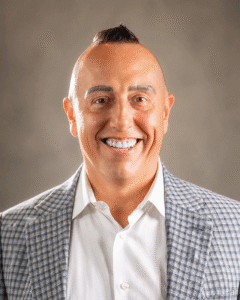
Attorney Armando Edmiston is the founding attorney of Armando Personal Injury Law in Tampa and St. Pete, Florida. In addition to representing injury victims and families in serious personal injury and wrongful death cases, Armando brings a science-based background to evidence-heavy claims. He earned a B.S. in Biology from the University of South Florida, a J.D., cum laude, from Nova Southeastern University, and is one of only six lawyers in Florida listed with the ACS Forensic Lawyer-Scientist designation. His practice background includes personal injury litigation, medical malpractice-related work, and public defense, which supports a disciplined, evidence-driven approach to complex injury cases.