Tampa Rideshare & Rental Car Accident Lawyer
Navigating Complex Insurance Stacking and Commercial Liability in Florida
Rideshare and rental car crashes in Tampa aren’t “normal” car accident claims. Uber and Lyft rely on layered commercial coverage tied to app status. Rental car companies rely on contracts and federal protections like the Graves Amendment. Peer-to-peer platforms like Turo create gray areas where insurers stall, deny, and point fingers while victims absorb the cost.
Armando Personal Injury Law helps crash victims in Tampa and throughout Tampa Bay force clarity, coverage, and compensation in complex vehicle cases. With 18+ years of experience, attorney Armando Edmiston and his team know how these policies trigger, how adjusters try to stop the stack early, and how to build cases like they’re going to trial, because trial-ready files get paid more often, and for more money, than “negotiation-only” claims.
Free consultation. No fee unless we win.
Quick Links: Choose Your Situation
- Learn how our Tampa Uber Accident Lawyer proves app status to get you maximum compensation.
- Learn how our Tampa Rental Car Accident Lawyer fights all layers of insurance on your behalf.
- Learn how our Tampa Turo Accident Lawyer wins accident cases with evidence.
For scenario-specific checklists and evidence workflows, use the links above. This page is the master guide for how coverage and liability actually work across all three categories.
Why These Cases Are Different
Rideshare and rental claims often involve:
- Multiple insurers (your personal auto, other driver liability, commercial rideshare, rental add-ons, platform protection plans, UM/UIM layers)
- Coverage trigger disputes (Was the Uber/Lyft app on? Was a trip accepted? Was a passenger inside? Was Turo trip active? Who was driving?)
- Contract friction (rental agreements, exclusions, Turo protection tiers, “commercial use” arguments)
- Time-sensitive evidence (app logs, driver status data, GPS/telematics, dashcam, surveillance video)
- Adjuster games (delay, deny, “wrong policy,” “offline,” “excluded,” “someone else should pay”)
Insurance companies use complexity as a weapon. We use it as leverage—by proving the correct trigger, identifying every viable policy layer, and documenting damages with trial-ready precision.
Florida Legal Framework
Two legal foundations show up in nearly every Florida crash claim:
Florida Statute § 627.736 (PIP)
Florida’s no-fault system generally routes early medical bills and limited wage loss through Personal Injury Protection.
What this means for your claim: even when another driver is clearly at fault, the first layer often starts with PIP. After that, additional compensation is pursued through liability and other coverage once injuries and damages support it.
Florida Statute § 768.81 (Comparative Fault)
Fault can be shared, and compensation can be reduced based on responsibility.
What this means for your claim: you may still recover damages if you are 50% or less at fault, but your recovery can be reduced by your percentage of fault. Strong evidence matters, because insurers often exaggerate fault to pay less.
How Insurance Stacking Works in Florida for Rideshare, Turo, and Rental Claims
In many Tampa cases involving Uber, Lyft, Turo, or rentals, compensation isn’t paid from a single policy. It’s often a stack—and the order matters.
A common coverage stack looks like this:
- PIP – often the first layer for medical bills and limited wage loss
- At-fault driver liability – if another driver caused the crash and coverage exists
- Commercial / platform coverage – Uber/Lyft tiers or platform-related layers depending on app/trip status
- UM/UIM – when the at-fault driver can’t fully pay (policy-dependent)
- Add-ons / supplemental coverage – rental counter products or credit card benefits (when applicable)
- Additional liable parties / excess coverage – fact-driven (multiple defendants, layered policies)
Reality: Carriers try to stop the stack early. Our job is to prove what applies and force each viable layer to participate.
Coverage Outcomes by Your Role
| Your Role | The Coverage Fight Usually Comes Down To | Evidence That Wins |
| Passenger (Uber/Lyft) | App status + which commercial tier applies | Trip receipt/screenshots, timestamps, pickup/drop-off data, driver identity, video |
| Driver (in rental / your car hit by rideshare) | Fault + which policy is primary | Photos, police report, witness contacts, scene video, medical timeline |
| Third party (ped/bike/other vehicle) | Identifying correct carrier + stacking order | Driver ID + policy info, app/trip proof if rideshare involved, surveillance footage, prompt treatment |
Coverage Decision Tree
Use this as a quick diagnostic guide.
Step 1: What role were you in?
- Passenger
- Driver
- Third party (occupant of another car, pedestrian, bicyclist)
Step 2: What vehicle type was involved?
- Rideshare (Uber / Lyft)
- Rental car (Hertz / Enterprise / Avis / Budget, etc.)
- Peer-to-peer (Turo)
Step 3: Likely coverage sources (most common)
- PIP (often first layer in Florida)
- At-fault driver liability
- Uber/Lyft commercial coverage (depends on app status)
- Rental add-on coverage (LDW/CDW, SLI if purchased)
- Credit card coverage (sometimes)
- UM/UIM (policy-dependent)
- Turo protection layers + underlying policy disputes (fact-driven)
Most common outcome patterns:
- Uber/Lyft passenger + active trip → commercial layer likely in play
- Rental driver → personal auto often primary + add-ons if purchased
- Turo active trip → plan + underlying policies often disputed
If you don’t know which layer applies, that’s normal. The correct strategy is evidence + trigger proof, not guessing.
Tampa Crash Zones Where These Claims Commonly Happen
These cases spike where curbside chaos + congestion + lane changes are constant:
- Downtown + Channelside + Water Street (pickup/drop-off conflicts, sudden stops)
- Ybor nightlife corridors (late-night impairment, pedestrian density)
- Westshore (high-turnover curbside activity near retail/business hubs)
- TPA airport runs (merges, stop-and-go, distracted navigation)
- Major connectors: I-275, I-4, Selmon Expressway approaches (rear-end + sideswipe patterns)
Whether your crash happened near TPA or in the heart of Ybor, we prepare cases with the expectation they may be litigated in the Hillsborough County Courthouse (Thirteenth Judicial Circuit), so the defense knows we’re ready to try the case if that’s what it takes to get paid fairly.
Uber & Lyft Accidents in Tampa
The Biggest Issue: “App Status” Determines Coverage
Rideshare claims can turn on one question: What was the driver doing in the app at the moment of impact?
Typical coverage “periods” (simplified)
- App Off: usually personal auto policy only
- App On, No Ride Accepted: limited rideshare coverage may apply (commonly disputed)
- Ride Accepted / En Route: higher commercial coverage typically triggers
- Passenger in Vehicle: strongest commercial coverage typically applies
Insurance adjusters commonly claim the driver was “offline” or “between rides” to reduce exposure. We use trip proof, timestamps, and formal data requests to establish status and force the correct policy layer.
Mini App-Status Proof Checklist (Pillar Version)
If Uber/Lyft is involved, preserve this immediately:
- Screenshots of trip status (accepted ride, in-progress ride, driver info)
- Trip receipt (email/app) and pickup/drop-off timestamps
- Exact location where impact occurred (pin + street/intersection)
- Driver identity + license plate (photo if possible)
- Any messages inside the app (time-stamped communications)
This isn’t “nice to have.” It’s what prevents the carrier from rewriting reality later.
Who Can Be Liable in a Rideshare Crash?
Depending on what happened:
- The Uber/Lyft driver
- Another negligent driver
- Multiple drivers (shared-fault chain collisions)
- Commercial coverage carriers tied to app activity
The key is identifying duty + fault + coverage and documenting the file in a way insurers can’t ignore.
Rental Car Accidents in Tampa
Rental Claims: Coverage Is Often Stacked, Not Single-Source
Rental car cases can involve multiple layers:
- Your personal auto policy (often primary)
- Rental add-ons (LDW/CDW; SLI declarations if purchased)
- Credit card benefits (sometimes)
- At-fault driver’s liability coverage
- UM/UIM (policy-dependent)
Insurers and rental companies delay by pointing to contracts. Our job is to determine what truly applies and force it to pay.
The Graves Amendment (49 U.S.C. § 30106): What It Does and Doesn’t Do
What the Graves Amendment Generally Does
It generally limits rental companies from being held liable solely because they own the vehicle (vicarious liability), when they didn’t directly do anything wrong.
What It Doesn’t Do (Important)
Graves is not a blanket shield. Facts control the legal outcome—and evidence matters.
We evaluate evidence-based angles that may apply, including:
- Negligent maintenance / inspection failures: tread depth failure, brake defects, steering issues, lighting failures, and other safety defects tied to inspection/maintenance practices
- Pneumatic failure due to negligent inspection: tire blowouts or instability caused by worn tread, improper inflation, or neglected inspection protocols
- Negligent entrustment: fact-driven scenarios where the company’s conduct becomes a direct issue
- Separate negligence theories: liability not based only on ownership
Graves Maintenance Evidence Flow
This is the workflow that turns “Graves defense” into a fact fight:
- Document condition immediately (photos/video of tires, tread, warning lights, fluids, brakes if visible)
- Lock the vehicle identity (VIN, plate, rental agreement number, location rented/returned)
- Tie defect to crash mechanics (loss of control, stopping distance, skid patterns, blowout evidence)
- Demand maintenance/inspection records (service logs, tire replacement history, inspection checklists)
- Assess notice + foreseeability (was the condition obvious/longstanding?)
- Prove causation (medical + reconstruction + defect mechanics)
- Litigate if stonewalled (records don’t appear voluntarily when they hurt the defense)
If maintenance is truly in play, this is how you build it—not with assumptions.
Turo and Peer-to-Peer Crashes in Tampa
Turo isn’t a traditional rental company—and it doesn’t operate like Uber or Lyft. Peer-to-peer claims commonly trigger:
- personal policy exclusions raised as “commercial use”
- disputes over “which protection plan applies”
- questions about who was driving and whether trip terms were followed
- vehicle condition disputes (maintenance, tires, warning indicators)
- platform friction (slow responses, incomplete documentation, finger-pointing)
The right strategy is early preservation, clean claim framing, and pressure on the correct coverage layer.
Which Policy Applies? (Comparison Table)
| Vehicle Type | Status at Time of Crash | Primary Insurance (Most Common) | Secondary / Excess (Often) |
| Uber/Lyft | Passenger in vehicle | Uber/Lyft commercial liability (strongest tier) | At-fault driver liability; UM/UIM (policy-dependent) |
| Uber/Lyft | Ride accepted / en route | Uber/Lyft commercial coverage (tier depends) | At-fault driver liability; personal policy disputes |
| Uber/Lyft | App on, no ride accepted | Limited contingent coverage (disputed) | Driver personal policy (disputed) |
| Rental car | At-fault driver hit you | At-fault driver liability | Your UM/UIM (policy-dependent); PIP (early layer) |
| Rental car | You were driving rental | Your personal policy (often) | Rental add-ons (SLI/LDW/CDW if purchased); credit card benefits |
| Turo | Active trip / guest driving | Depends on protection plan + underlying policies | Layer disputes common; additional policies fact-driven |
| Turo | Condition/maintenance issue | Fact-driven; condition evidence matters | Multiple parties/policies may be implicated |
This is a simplified snapshot. Real coverage depends on documentation, policy language, and facts.
Why Insurers Deny or Undervalue These Claims (and How We Fight Back)
| Denial / Lowball Tactic | What Usually Defeats It |
| “The Uber/Lyft driver was offline.” | Trip receipts, app timestamps, screenshots, pickup/drop-off proof, formal data requests |
| “Commercial use is excluded.” | Trigger proof + policy mapping + documented status |
| “Graves means you can’t sue the rental company.” | Condition evidence; inspection/maintenance records; defect/causation proof |
| “Low impact = low injury.” | Medical documentation, symptom timeline, imaging where appropriate |
| “Pre-existing condition.” | Aggravation proof, treating-provider narrative, baseline comparison |
| “Too many insurers—someone else should pay.” | Coverage mapping + coordinated strategy + litigation pressure |
What Insurance Carriers Ask for First (and Why It Matters)
In rideshare, Turo, and rental claims, insurers often request the same “starter package” within days because it helps them control the narrative early. Common first asks include: the crash report number, photos, medical records authorizations, proof of app or trip status, a recorded statement, and “all rental paperwork” or platform communications. Each request has a purpose: to lock in coverage defenses, limit injury value, or shift blame to another policy layer. The practical move is to preserve the right proof first (trip receipts/screenshots, timestamps, Rental Agreement and SLI/LDW/CDW selections, Turo messages/handoff photos), limit overbroad authorizations, and avoid recorded statements until coverage triggers are confirmed. When carriers stall or play “coverage hot potato,” formal preservation letters and targeted data requests can prevent evidence loss and force a real coverage position before the claim gets undervalued.
The First Requests You’ll Usually See
1) A recorded statement
Carriers often ask for a recorded statement early sometimes before you’ve had imaging, follow-up care, or a clear diagnosis. They’re listening for:
- “I’m okay” language they can treat as a medical conclusion
- timing inconsistencies (“I don’t remember exactly…”) they can frame as credibility issues
- “soft” admissions that create comparative fault arguments (“I didn’t see them…”)
Why it matters: once it’s recorded, it becomes a tool for denial, delay, or discounting even when the crash wasn’t your fault.
2) A broad medical authorization (the ‘open file cabinet’ release)
This usually isn’t limited to crash-related care. It’s designed to pull years of unrelated history and then argue:
- “pre-existing condition,”
- “degenerative,”
- “not caused by this crash,”
- or “treatment is excessive.”
Why it matters: it shifts the discussion away from what the crash caused and into a cherry-picked narrative about your health history.
3) Proof of coverage trigger (rideshare and platform cases)
In Uber/Lyft cases, carriers may demand proof of app status while simultaneously claiming they can’t confirm it. In Turo cases, they focus on trip status, driver identity, and compliance issues.
Why it matters: coverage trigger disputes are how these claims get stalled. If the carrier can keep the “right policy” uncertain, they keep payment uncertain.
4) Rental agreement and add-on declarations (rental cases)
They’ll want the Rental Agreement (RA), SLI/LDW/CDW selections, incident report, and sometimes a damage worksheet.
Why it matters: rental claims often become contract-driven arguments about what was “accepted,” what was “declined,” and what is “excluded.”
5) Photos, estimates, and property damage framing
Expect a quick push to label the crash “low impact” and use vehicle photos to imply “minor injuries.”
Why it matters: this is a classic undervaluation move, property damage is not a medical diagnosis.
How This Impacts Your Claim Value
Most denials and low offers come from the same three pressure points:
- control the narrative early (recorded statements + selective documentation)
- expand or weaponize medical history (broad releases)
- stall the correct coverage layer (app status / platform plan / rental contract confusion)
What We Do Differently (Without Guessing)
We treat these cases like they may be litigated. That means:
- preservation letters to lock down time-sensitive evidence (app logs, GPS/telematics, surveillance video, rental condition records when obtainable)
- formal data requests to establish the correct coverage trigger and prevent “offline/between rides” or “trip status unknown” games
- a claim file built around documentation and causation, not adjuster interpretation
- escalation to litigation posture when carriers stall, because delay is often strategy not confusion
If you’re dealing with competing insurers, missing app proof, or early pressure for a recorded statement, that’s not “normal process.” That’s the claim being shaped. The right response is evidence + trigger proof + pressure.
| Carrier Request | Hidden Goal | Best Response |
| Recorded statement | Lock you into language that reduces value | Preserve evidence first; don’t record blind |
| Broad medical release | Find “pre-existing” angles | Limit to crash-related records |
| App status proof | Create a trigger dispute | Screenshots + timestamps + formal data request |
| RA + add-on docs | Contract-based denial or shifting | Preserve RA/SLI/LDW/CDW declarations |
| “Low impact” framing | Downplay injury | Medical documentation + symptom timeline |
What Evidence Wins These Cases
Because these claims are trigger-heavy, we prioritize evidence insurers can’t spin.
Uber/Lyft Evidence
- Trip receipts, ride confirmations, screenshots
- App timestamps and trip logs
- Driver statements vs app reality
- Telematics (speed/braking data when available)
- Video from nearby businesses/traffic cameras
Rental Evidence
- Rental Agreement (RA) + add-on selections (SLI declarations, LDW/CDW)
- Vehicle condition photos (tires/tread, lights, dashboard warnings)
- Maintenance/inspection history (when relevant and obtainable)
- Crash report + vehicle damage patterns
Turo Evidence
- Trip screenshots, communications, handoff details
- Photos at pickup/return
- Vehicle condition evidence
- Proof of who was driving + whether trip terms were followed
Clinical Impact: Why These Injuries Become Long-Term Cases
Insurers label serious trauma “minor” early because it helps them pay less. But rideshare and rental crashes routinely cause:
- TBI / concussion patterns (symptoms can be delayed)
- Coup-Contrecoup injury mechanisms in high-force impacts (brain can strike both front and back of skull without a direct head strike)
- Spinal disc injuries with nerve symptoms
- Orthopedic fractures (wrist, ankle, ribs, hip) that may require surgery
- Chronic pain and mobility limitations
- Sleep disruption, anxiety, post-crash stress symptoms
Surgical Intervention for Orthopedic Fractures. Many rideshare/rental crashes are high-velocity, leading to compound fractures that require hardware (ORIF).
A serious case isn’t valued by how your pain looked on day one, it’s valued by documented treatment, prognosis, work impact, and long-term life disruption.
How We Build Trial-Ready Rideshare and Rental Claims
- Preserve app/telematics/video
- Map policies + demand correct trigger
- Coordinate treatment documentation + wage loss proof
- File suit when carriers stall
We also move fast to lock down proof before it disappears. Our team sends preservation letters to rideshare companies, rental agencies, and insurers to prevent the loss of critical evidence like app-status records, trip logs, GPS/telematics data, dashcam footage, and surveillance video. We then make formal data requests and targeted demands for policy documents, coverage confirmations, and claim-file materials so carriers can’t hide behind “insufficient information.” If an insurer stalls, denies, or plays coverage hot-potato, we escalate quickly; including filing suit when necessary to force compliance, obtain records through the legal process, and push the claim toward full value.
What To Do After a Rideshare, Turo, or Rental Car Accident
- Call 911 and request medical help
- Get treated immediately (delays get weaponized)
- Photograph everything (vehicles, plates, road, injuries)
- Save rideshare/Turo app proof (screenshots, trip receipts)
- Preserve your Rental Agreement (RA) + SLI/LDW/CDW selections
- Don’t give recorded statements until you understand coverage triggers
- Contact a lawyer early before evidence disappears or coverage gets “reframed”
FAQs for Rideshare, Turo, and Rental Car Accidents in Tampa
Uber/Lyft
Who pays after an Uber or Lyft accident in Tampa?
It depends on fault and the driver’s app status at the moment of impact. Coverage can involve PIP, another driver’s liability, and Uber/Lyft commercial tiers.
What if Uber or Lyft says the driver was offline?
That’s common. Trip screenshots, receipts, timestamps, and formal data requests can prove whether the driver was on an active trip, en route, or waiting.
Rental Cars
Are rental car accidents different from normal crashes?
Yes. Rental contracts, add-ons, and the Graves Amendment can change how liability and insurance apply.
Does the Graves Amendment prevent all claims against rental companies?
No. It typically limits ownership-only claims, but evidence-based negligence, such as inspection and maintenance failures can change the legal analysis.
Turo
How are Turo accidents different from Hertz or Enterprise accidents?
Turo is peer-to-peer. Coverage may involve a Turo protection plan plus underlying policies. Disputes over trip status, exclusions, and driver identity are more common.
General Coverage / Fault
If I was partly at fault, can I still recover compensation?
In Florida, you may still recover damages if you are 50% or less at fault, but your compensation can be reduced by your percentage of fault.
What if the at-fault driver has no insurance?
You may still have options through UM/UIM (if available) and other applicable policies depending on trip status and facts.
Should I give a recorded statement to an adjuster?
Not before you understand coverage triggers and preserve key evidence. Recorded statements are routinely used to minimize claims.
Talk to a Tampa Rideshare & Rental Car Accident Attorney
If you were hurt in an Uber, Lyft, Turo, or rental car crash in Tampa, don’t let insurers use complexity to pay less. We identify the correct coverage triggers, preserve evidence, and pursue full compensation, with a trial-ready approach from day one.
Contact Armando Personal Injury Law today for a free consultation. No win, no fee.
Client Testimonial
"I was recently involved in an accident, and choosing this law firm was the best decision I could have made. From the very beginning, they took care of everything: medical treatment, insurance claims, and the entire legal process. I didn’t have to worry about anything; I simply followed their instructions, and they handled every detail in a professional and efficient manner. Thanks to their work, everything was completely resolved. I highly recommend them. They are responsible, attentive, and truly care about their clients." - Yilianne D., ⭐⭐⭐⭐⭐
Actual client. Results may vary; each case is different.
About the Author
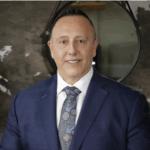 Attorney Armando Edmiston is the founding attorney of Armando Personal Injury Law in Tampa, Florida, a law firm dedicated to helping people harmed in car, truck, motorcycle, nursing home, and other serious injury cases. A U.S. Marine Corps veteran and personal injury lawyer, Armando draws on his real-world courtroom experience and years of representing injured Floridians to write and carefully review the legal content on this website. Every guide is written in clear, straightforward language so injured people and their families can better understand their rights, and is reviewed for legal accuracy before publication.