Choosing a personal injury attorney is one of the most important decisions you can make after an accident. The lawyer you hire can influence how your case is investigated, how the insurance company responds, how your injuries and losses are documented, and whether you are in the strongest position to recover full compensation.
Many people start by searching for the “best personal injury attorney near me”, but the right choice is not just about who ranks first or buys the most ads. It is about finding a lawyer with relevant experience, strong communication, local knowledge, and the ability to build a serious case from day one.
If you are trying to figure out how to choose a personal injury lawyer in Florida, this guide will help you focus on what actually matters, and what should make you think twice before hiring a firm.
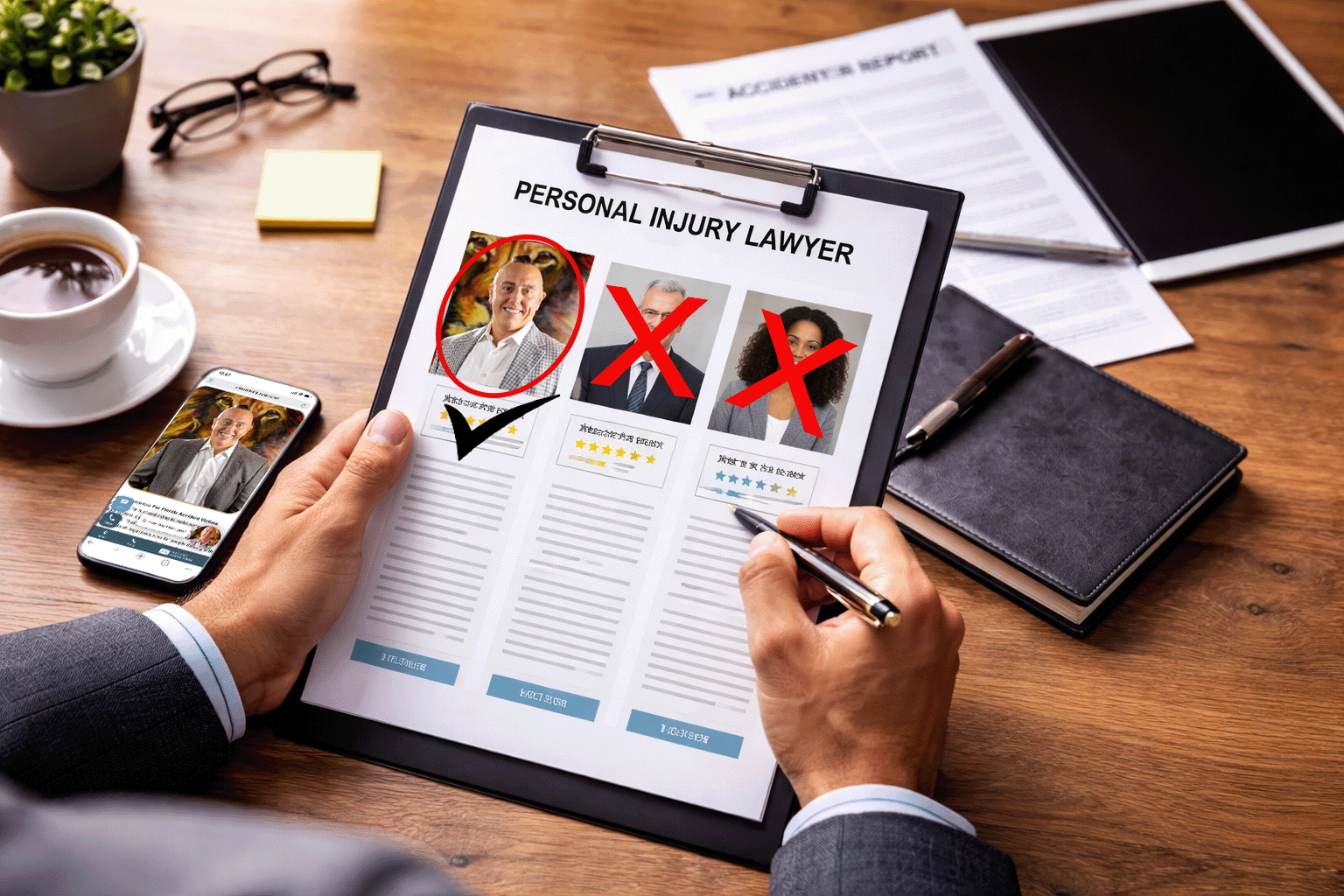
Choosing the right personal injury attorney starts with asking the right questions about experience, communication, and case strategy.
Why Choosing the Right Personal Injury Lawyer Matters
Not all personal injury attorneys handle cases the same way.
Some firms focus on volume and try to move cases quickly, rarely preparing cases for litigation (we call those settlement mills). Others, like us, take a more detailed approach from the beginning by gathering records, preserving evidence, working with experts when needed, and building the claim as if it may need to be aggressively pursued in trial.
That difference matters.
After an accident, you may be dealing with medical bills, lost income, ongoing pain, stress, and repeated calls from insurance adjusters. The right lawyer should not add confusion. Your attorney should bring clarity, strategy, and confidence to the process.
A strong Florida personal injury attorney should help you:
- understand whether you may have a claim
- avoid mistakes that can weaken your case
- deal with insurance companies more effectively
- document damages properly
- identify the evidence that may matter most
- pursue compensation with a clear plan

1. Choose a Lawyer Who Focuses on Personal Injury Cases
The first question to ask is simple: does this attorney truly focus on personal injury law?
A lawyer may be licensed and experienced, but that does not mean they regularly handle serious accident and injury claims. Personal injury cases often involve medical records, liability disputes, insurance coverage issues, expert opinions, future damages, and negotiation strategy. You want a lawyer who works in this area regularly, not one who only takes these cases from time to time.
Look for a firm that routinely handles cases involving:
- car accidents
- truck accidents
- motorcycle accidents
- pedestrian accidents
- bicycle accidents
- slip and fall injuries
- negligent security claims
- wrongful death cases
- other serious injury claims
The more closely the lawyer’s daily work matches your type of case, the more likely they are to understand the problems that may affect value, timing, and strategy.
2. Do Not Confuse Advertising With Ability
A familiar name is not automatically the right lawyer for your case.
A firm can have a strong advertising presence and still provide a weak client experience. Marketing may help a law firm get noticed, but it does not tell you how cases are handled after a client signs up.
That is why you should look beyond expensive billboard ads and ask deeper questions:
- Does the firm explain its process clearly?
- Does the attorney seem thoughtful or scripted?
- Does the website offer useful legal information, or just slogans?
- Do client reviews mention communication, professionalism, and follow-through?
- Does the lawyer seem prepared to discuss your type of case specifically?
The best personal injury lawyer for you is not necessarily the one with the biggest ad budget (which requires fast turn over). It is the one who inspires confidence based on experience, clarity, preparation, credibility, and who is ready and willing to go to trial for you.
3. Verify Credentials, Experience, and Case Fit
Before hiring any personal injury lawyer, verify the basics and then go further.
At a minimum, you want to confirm the attorney is licensed and in good standing by check their profile on the Florida Bar Association. Beyond that, you should look for evidence that the lawyer regularly handles cases like yours and understands the issues that come with them.
Important factors to evaluate include:
Relevant case experience
Ask whether the attorney has handled claims involving similar injuries, similar insurance issues, or similar fact patterns. A rear-end crash, a commercial truck collision, a traumatic brain injury claim, and a negligent security case all raise different legal and practical issues.
Litigation readiness
Not every case goes to trial, but preparation matters from the start. Insurance companies often evaluate whether the lawyer on the other side appears ready to build the case thoroughly and push when necessary. They also know when a lawyer has trial experience, and when they don't, and those who don't typically will not be able to maximize your recovery.
Professional credibility
Look for a serious online presence, detailed educational content, clear information about the attorney, and signs that the firm is organized and focused on helping injured people, not just collecting leads.
The goal is not to find the flashiest lawyer. It is to find one who is credible, prepared, and capable of handling your case the right way.
4. Make Communication a Major Part of Your Decision
Communication is one of the clearest signs of what your experience may be like after you hire a law firm.
If an office is difficult to reach before you sign up, that matters. If your questions are brushed off, answered vaguely, or routed through too many people without clarity, that matters too.
A strong personal injury attorney should be able to explain:
- what they think about your case
- what challenges may come up
- what evidence may be important
- what the next steps look like
- how fees and costs are handled
- who will communicate with you as the case moves forward
You should leave the consultation feeling more informed, not more confused.
Plain language matters. So does honesty. Be cautious of lawyers who promise quick outcomes, guarantee results, or tell you only what you want to hear. Think of it this way, if you do not like the lawyer after your conversation, would a jury?
5. Ask Better Questions During the Consultation
A consultation is not just for the law firm to evaluate your case. It is also your opportunity to evaluate the lawyer.
Come prepared with questions that help you compare attorneys in a meaningful way. Can you connect with them on a human level, if not, do you think a jury will connect with them when it comes to deciding your claims fate?
6. Understand How Personal Injury Fees Work
Most Florida personal injury lawyers handle cases on a contingency fee basis. That generally means the attorney’s fee is tied to the outcome of the case rather than paid up front.
Even so, you should not assume every law firm explains costs and expectations the same way.
Ask for a clear explanation of:
- how the attorney’s fee is calculated
- whether case costs are separate from the fee
- what types of expenses may come up
- how those expenses are handled if the case does not recover compensation
You do not need a complicated lecture. You need a plain-English explanation that makes sense. If the answer feels vague, evasive, or overly complicated, that is a red flag.
7. Choose a Lawyer Who Understands Florida Injury Claims
If your case is in Florida, local legal knowledge matters.
A Florida personal injury lawyer should understand more than general injury law. They should understand how claims actually move here, including the insurance environment, common defense tactics, and the practical realities that affect value and case strategy.
Depending on the case, that can include familiarity with issues such as:
- Florida auto insurance issues
- comparative fault arguments
- serious injury documentation
- delayed medical treatment problems
- uninsured or underinsured driver issues
- local crash investigations
- premises liability and negligent security case development
- wrongful death and catastrophic injury valuation
This does not mean bigger is always better. It means relevant Florida experience matters.
8. Local Experience Matters in Tampa Bay
If you are searching for a personal injury attorney in Tampa, St. Petersburg, or the surrounding Tampa Bay area, local experience can be especially important.
A lawyer who regularly handles injury cases in this region may better understand:
- the roads and traffic patterns that often lead to serious crashes
- how local claims and insurance disputes tend to develop
- the types of evidence that matter in local accident cases
- the practical concerns injury victims face in Hillsborough and Pinellas County
- how to communicate clearly with clients who need direction fast
When someone is searching for the best personal injury attorney in Tampa Bay, they are usually not just looking for a name. They are looking for a lawyer who knows the local landscape and will take their case seriously.
9. Watch for Red Flags Before You Sign Anything
Sometimes the easiest way to choose the right attorney is to recognize the wrong one.
Be cautious if you notice any of the following:
- the firm avoids direct answers
- you are pressured to sign immediately before talking to someone
- the attorney seems unfamiliar with your type of case
- communication is poor from the start
- the consultation feels more like a sales script than a real discussion
- no one clearly explains fees, costs, or next steps
- the firm makes unrealistic promises or promises huge results
A personal injury case can be financially and emotionally significant. You should not feel rushed into trusting someone who has not earned that trust.
10. Do You Need a "Settlement Lawyer" or a Trial-Ready Lawyer?
Most personal injury cases resolve through settlement, but that does not mean trial readiness is unimportant.
A lawyer who prepares cases thoroughly, understands evidence, and is willing to push when necessary may be in a stronger position during negotiations than one who is simply trying to move files quickly.
You are not hiring an attorney just to open a claim and settle if fast. You are hiring someone to protect the value of your case.
That is why experience, preparation, communication, and strategic thinking all matter more than flashy marketing.
Why Armando Personal Injury Law Fits the Standard This Article Describes
The point of this guide is to help injury victims make a smarter hiring decision. Those same standards are what should lead someone to consider Attorney Armando Edmiston to be their lawyer when they or a loved one are injured.
When comparing personal injury lawyers in Tampa Bay, people should look for a firm that offers:
- focused personal injury representation
- strong communication and client respect
- serious case preparation
- local knowledge of Tampa Bay injury claims
- a willingness to stand up to insurance companies
- clear, practical guidance from the beginning
- extensive trial experience
- 19 years practicing law in Tampa Bay
That is the kind of representation injury victims should expect when choosing a lawyer after a serious accident.
Speak With a Tampa Bay Personal Injury Lawyer
If you were injured in an accident and are trying to decide what to do next, a consultation can help you better understand your options, what may strengthen your case, and what to look for in the attorney you hire.
Armando Personal Injury Law represents injury victims in Tampa, St. Petersburg, and across the Tampa Bay area. If you are comparing law firms, ask the hard questions. Look for real experience. Pay attention to communication. Choose the attorney who makes you feel informed, respected, and prepared, not pressured.
Call (813) 482-0355 to speak with Armando Personal Injury Law.

Get a free consultation with Tampa personal injury lawyer Armando Edmiston.
Frequently Asked Questions About Choosing a Personal Injury Attorney
How do I choose the right personal injury attorney?
Start by looking for a lawyer who focuses on personal injury cases, communicates clearly, explains fees plainly, and has experience handling cases like yours. You should also look for signs of strong preparation, local knowledge, and a professional reputation.
What questions should I ask a personal injury lawyer during a consultation?
Ask what types of cases they handle most often, whether they have handled cases like yours, who will work on your case, how communication works, what concerns they see, and how fees and costs are handled.
Does local experience matter in a Florida personal injury case?
Yes. A lawyer who regularly handles injury cases in Florida may better understand the insurance environment, common defense tactics, documentation issues, and the local realities that can affect case strategy and value.
Should I hire the lawyer with the biggest ads?
Not necessarily. A large advertising presence may help a firm get noticed, but it does not tell you how well the lawyer communicates, prepares cases, or handles clients after they sign up.
What are red flags when choosing a personal injury attorney?
Red flags include vague answers, pressure to sign immediately, poor communication, unrealistic promises, unclear fee explanations, and a consultation that feels more like a sales pitch than a serious discussion.
Do most personal injury lawyers charge upfront fees?
Many personal injury lawyers work on a contingency fee basis, which generally means the attorney’s fee is tied to the outcome of the case rather than paid up front. You should still ask how costs are handled and what expenses may come up.
Why does trial-readiness matter if most cases settle?
Trial-readiness can still matter because strong preparation may improve a lawyer’s position during negotiations. A lawyer who is ready to build the case thoroughly may be better equipped to protect its value.
When should I contact a personal injury lawyer after an accident?
It is usually smart to speak with a lawyer as soon as possible after an accident, especially if there are injuries, insurance questions, disputed fault, or concerns about evidence and documentation.