
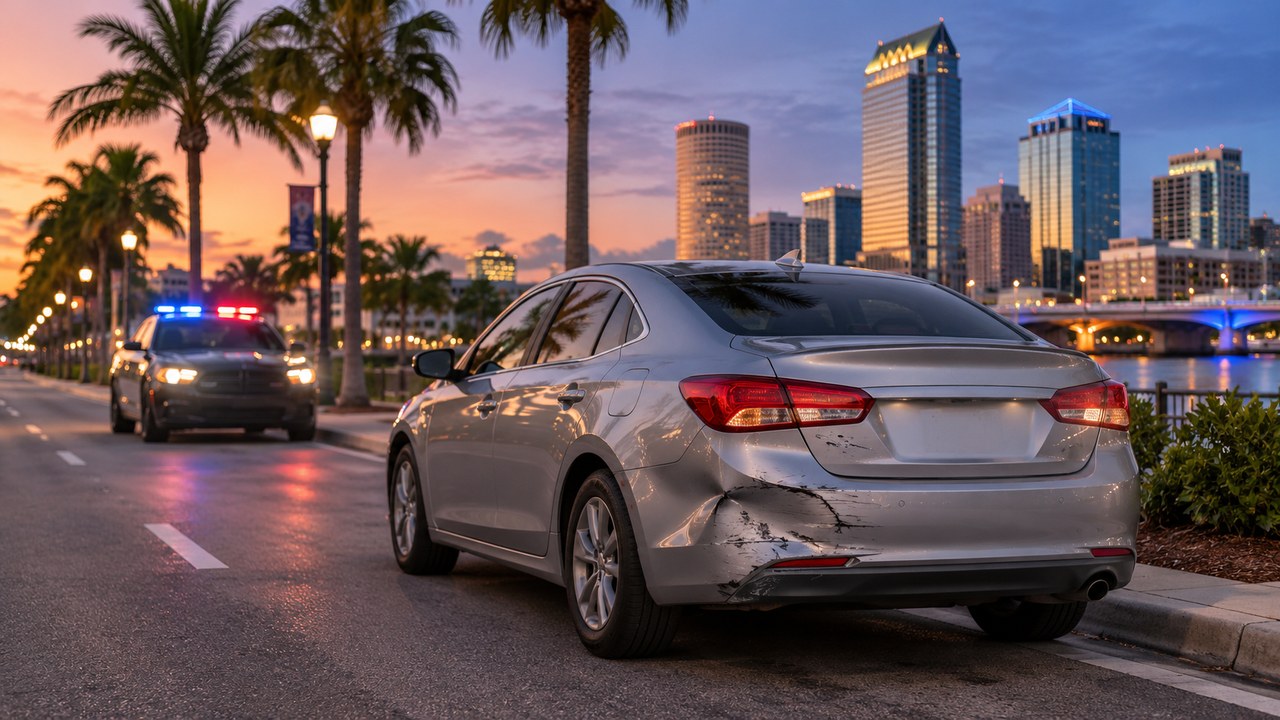
A damaged car left behind after a hit-and-run may still carry paint transfer and other evidence that can help identify the driver who fled.
Tampa police calls-for-service records list 417 traffic-crash entries and 104 hit-and-run entries from October 26 through the morning of November 2, 2026. Nearly one in five of the 521 entries was labeled hit and run.
The locations include familiar Tampa roads: Dale Mabry Highway, Hillsborough Avenue, West Kennedy Boulevard and North Florida Avenue. Several intersections and addresses appear more than once.
For someone injured by a driver who leaves, the concern is usually more immediate than the weekly numbers: how to pay for treatment when there is no other driver’s insurance information to hand over. Depending on the policy, uninsured motorist coverage may help even if the driver is never identified. A Tampa car accident lawyer can review that coverage alongside the evidence from the crash.
A closer look at the week’s calls
The two files contain 521 distinct report numbers. Here is how the entries break down by the date recorded in the occurrence field:
| Date | Traffic-crash entries | Hit-and-run entries | Combined entries |
|---|---|---|---|
| October 26, 2026* | 36 | 8 | 44 |
| October 27 | 59 | 17 | 76 |
| October 28 | 54 | 13 | 67 |
| October 29 | 52 | 12 | 64 |
| October 30 | 60 | 15 | 75 |
| October 31 | 77 | 16 | 93 |
| November 1 | 57 | 18 | 75 |
| November 2* | 22 | 5 | 27 |
| Total | 417 | 104 | 521 |
The files cover partial days on October 26 and November 2. The earliest occurrence timestamp is October 26 at 12:09 p.m.; the latest is November 2 at 9:54 a.m.
October 31 had the highest combined count, with 93 entries. November 1 had the most hit-and-run entries, with 18.
These are calls-for-service records, so the totals need some context. They do not confirm 521 separate collisions or tell us how many people were injured. Different report numbers can refer to the same event. Although the period includes Halloween, the records do not explain what caused the crashes or establish any connection to holiday activities.
Traffic-crash calls along Dale Mabry, Hillsborough Avenue and other Tampa roads
Five intersections or roadway junctions appeared three times in the traffic-crash file:
| Recorded location | Traffic-crash entries | Dates listed |
|---|---|---|
| North Dale Mabry Highway / West Columbus Drive | 3 | October 26, October 28 and November 1 |
| North Dale Mabry Highway / West Dr. Martin Luther King Jr. Boulevard | 3 | October 31 and November 1 |
| East Hillsborough Avenue / North 22nd Street | 3 | October 27 and November 1 |
| I-275 / North Dale Mabry Highway | 3 | October 28, October 31 and November 1 |
| East Columbus Drive / North 50th Street | 3 | October 27, October 28 and October 31 |
These counts group together entries that name the same two roads in reverse order.
Other locations appeared twice, including East Busch Boulevard and North 30th Street, West Hillsborough Avenue and North Himes Avenue, and West Gandy Boulevard and South West Shore Boulevard.
At East Hillsborough Avenue and North 22nd Street, two entries on November 1 were recorded just 17 minutes apart. Each has its own report number, but the file does not tell us whether they involved separate collisions.
A week of call records cannot establish which Tampa intersections are most dangerous. That would take a longer period of crash data and information about how much traffic uses each location. In an individual intersection accident claim, the questions are more specific: Which vehicle had the right of way? What were the signals showing? Did anyone witness or record the collision?
Where Tampa’s hit-and-run calls were recorded
West Kennedy Boulevard and North Ashley Drive appeared twice in the hit-and-run file, once on October 29 and again on November 2. Three street addresses also had two entries each.
| Recorded location | Hit-and-run entries | Occurrence dates and times |
|---|---|---|
| West Kennedy Boulevard / North Ashley Drive | 2 | October 29, 8:27 a.m.; November 2, 8:14 a.m. |
| 1730 Nuccio Parkway | 2 | November 1, 4:30 a.m. and 11:40 a.m. |
| 1 Tampa General Circle | 2 | October 28, 8:04 p.m.; October 29, 4:49 p.m. |
| 2223 North West Shore Boulevard | 2 | October 27, 1:01 p.m. and 8:19 p.m. |
Other hit-and-run entries included:
- West Gandy Boulevard and South West Shore Boulevard: October 28 at 6:28 p.m.
- Selmon Expressway and East Kennedy Boulevard: October 29 at 7:12 p.m.
- East Busch Boulevard and North 50th Street: October 31 at 5:34 p.m.
- North 50th Street and East Fowler Avenue: October 31 at 9:40 p.m.
- North Nebraska Avenue and East Hillsborough Avenue: November 1 at 1:34 a.m.
- North 40th Street and East Jean Street: November 1 at 8:20 p.m.
- 9389 North Florida Avenue: November 2 at 8:34 a.m.
The addresses show where calls were logged. They do not establish responsibility on the part of a business or property owner. The files also do not provide injury details, arrest information or the outcome of an investigation.
For someone hurt in one of these incidents, a hit-and-run investigation may involve finding witnesses, looking for available footage and identifying the departing vehicle. Insurance coverage can be reviewed while that work is underway.
Can uninsured motorist coverage help if the driver is never found?
Yes. Uninsured motorist coverage may pay for injuries caused by an unidentified hit-and-run driver, provided the injured person and the claim qualify for coverage. The Florida Bar explains that UM can also apply to certain “phantom vehicle” accidents, where another vehicle causes a crash without necessarily making contact. The Florida Bar’s automobile insurance guide describes both situations.
You still need evidence showing that another motorist caused the crash and your injuries. A driver leaving the scene does not, by itself, establish every part of an insurance claim.
Start with the policy you had on the day of the crash
“Full coverage” does not tell you whether you have UM benefits. Check the declarations page, which lists your coverages and limits, along with the policy endorsements and any UM selection or rejection form.
Under Florida Statutes § 627.727, qualifying policies with bodily injury liability coverage generally must include UM unless a named insured validly rejects it. A named insured may also select lower limits.
UM can supplement other available benefits, but it does not pay twice for the same loss. Applicable coverage limits still matter. Our guide to uninsured and underinsured motorist claims explains these coverage issues in more detail.
Medical bills and car repairs involve different coverage
Florida UM bodily injury coverage may help with injury-related losses, including medical expenses and lost income beyond PIP benefits. It does not pay to repair your car.
For damage to your vehicle, collision coverage may apply, subject to your policy and deductible. The Florida Department of Financial Services’ automobile insurance overview explains the distinction between these coverages.
That distinction matters when you report the crash. Ask your insurer which coverage applies to your injuries and which applies to the vehicle damage.
What about PIP after a hit-and-run?
Personal injury protection, usually called PIP, may help pay covered expenses regardless of who caused the collision. Eligibility, treatment requirements and benefit limits still apply.
Florida law requires qualifying initial medical services and care within 14 days of the accident for PIP medical benefits. PIP generally pays 80% of covered, medically necessary expenses and 60% of covered lost income, subject to applicable limits and conditions.
Access to the full $10,000 in medical benefits depends on an appropriate emergency medical condition determination. Medical benefits can otherwise be limited to $2,500. These requirements appear in Florida Statutes § 627.736.
The 14-day rule concerns PIP medical benefits. Other insurance claims and lawsuits have their own deadlines. Our Florida PIP claims guide explains how this coverage fits into a car accident injury claim.
What to keep after a Tampa hit-and-run
Your safety and immediate medical needs come first. Once those are addressed, save what you can about the collision.
- Report what you saw to police. Include the vehicle’s appearance, its direction of travel and any license plate information you actually observed. Be clear about details you are unsure of.
- Keep photographs and original video files. When it is safe, document vehicle damage, debris, road markings and the surrounding area.
- Get witness contact information. Someone nearby may have seen the impact or noticed details about the departing vehicle.
- Look for possible sources of footage. Nearby businesses, homes or vehicles may have cameras. Recordings may not exist, and available footage may not be kept for long.
- Notify your insurer promptly. Ask about reporting requirements and coverage, and keep copies of your communications.
- Save treatment and wage records. Medical records, bills and documentation of missed work can help establish the losses associated with your injuries.
A calls-for-service entry contains only limited information. The full crash report may offer more detail about the vehicles, people and circumstances involved. Our guide to reading a Florida accident report explains where to find that information.
Talk with Armando Personal Injury Law about your crash
Being injured by a driver who leaves can leave you with medical bills and very little information about who should pay them. You may still have insurance options worth examining.
Armando Personal Injury Law helps injured people review the evidence, understand available coverage and pursue compensation. If you have a report number, insurance documents, photographs or medical records, bring them to the conversation.
Contact Armando Personal Injury Law for a free consultation or call (813) 482-0355.
About the data: This article uses the supplied Tampa Police Department files “Calls For Service (2).csv” and “Calls For Service (3).csv.” Removing one repeated header row from each file left 417 traffic-crash entries and 104 hit-and-run entries, all with distinct report numbers. Daily totals use the occurrence field. Intersection counts combine entries listing the same roads in reverse order. The files cover partial days at both ends of the period and do not establish injury severity, final fault findings, the exact extraction window or a complete count of crashes investigated by every agency in Tampa.
About the Author
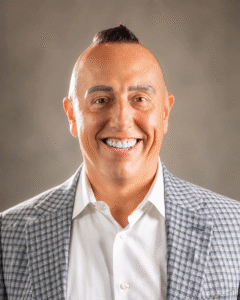
Attorney Armando Edmiston is the founder of Armando Personal Injury Law in Tampa and St. Pete, Florida. A U.S. Marine veteran, Hillsborough County native, and ACS Forensic Lawyer-Scientist, he represents Floridians in serious personal injury and wrongful death cases.