Armando Personal Injury Law extends its condolences to the family of the 87-year-old Wesley Chapel man who died after a Tesla crash in Pasco County. Serious and fatal crashes are always difficult, but cases involving driver-assistance technology raise additional questions about evidence, responsibility, and whether the vehicle, the driver, or the technology itself played a role.
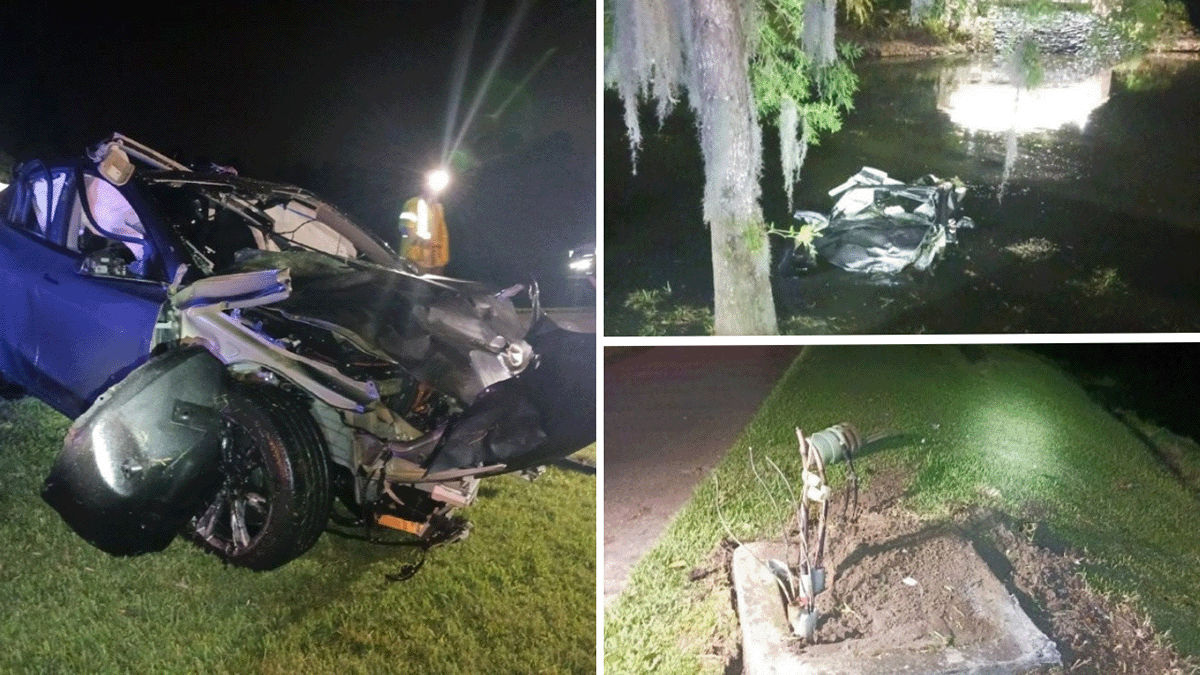
A fatal Tesla crash in Wesley Chapel raises serious questions about driver-assistance technology, evidence preservation, and Florida wrongful death claims.
According to Tampa Bay 28, the crash happened shortly after 8 p.m. on May 26. The report states that the man was driving a Tesla Model Y SUV eastbound on Overpass Road in Wesley Chapel while the vehicle was in autopilot mode. Florida Highway Patrol said the Tesla left the roadway, struck an electrical box, and continued into a pond just east of Infinite Drive. The driver was taken to a hospital, where he died from his injuries. A 75-year-old Wesley Chapel woman was a passenger and was transported with injuries that were not considered life-threatening.
That last detail matters. This was not just a fatal crash involving a driver. It was also a passenger injury crash, a potential insurance coverage case, and possibly a technology-related evidence case. Because apparently even cars with advanced cameras, computers, warnings, sensors, and software can still leave families with the same old question: who is responsible?
Autopilot Does Not Mean the Vehicle Is Fully Autonomous
The phrase “autopilot” can create confusion. People hear it and assume the vehicle is driving itself. That is not how these systems are supposed to work.
Tesla’s own support materials state that Full Self-Driving (Supervised) features require active driver supervision and do not make the vehicle autonomous. Tesla also states that drivers must remain attentive and use additional caution when these features are engaged.
Tesla also explains that Traffic-Aware Cruise Control and active safety features are designed to assist drivers, but the driver remains responsible for staying alert, driving safely, and being in control of the vehicle at all times.
NHTSA explains the same general point about Level 2 advanced driver-assistance systems. These systems may provide both speed and steering input when engaged, but they still require the human driver to remain fully engaged in the driving task at all times. That distinction is critical in any Florida car accident claim. Driver-assist technology may affect how the crash happened, but it does not automatically erase human responsibility.
Why Tesla Autopilot Crashes Require a Different Type of Investigation
A typical Florida crash investigation looks at speed, roadway conditions, driver behavior, vehicle damage, witness statements, traffic controls, and medical evidence. A Tesla crash involving autopilot or driver-assistance technology may require much more.
- Whether Autopilot, Traffic-Aware Cruise Control, Autosteer, or Full Self-Driving features were active
- Whether the system disengaged before impact
- Whether the driver received warnings or inattentiveness alerts
- Whether the driver touched the steering wheel, applied the brake, or attempted to steer before impact
- Vehicle speed, braking, acceleration, and steering inputs
- Camera, sensor, event data, and telemetry records
- Software version and update history
- Roadway conditions, lighting, lane markings, edge-of-road visibility, and weather
- Whether any prior safety recall, defect allegation, or software issue may be relevant
This is why evidence preservation matters immediately. In modern vehicle cases, the most important evidence may not be sitting in the road. It may be stored inside the vehicle, in manufacturer systems, in event data, or in digital records that can become difficult to access if nobody acts quickly.
Families dealing with a technology-related crash should not rely only on the first crash summary. They should consider whether a deeper investigation is needed, especially when the crash involves a fatality, a passenger injury, or questions about vehicle automation. For more on preserving crash evidence, see our guide on dashcam footage in Florida car accident claims and our article on what evidence proves a Florida driver was distracted before a crash.
Passenger Injury Claims After a Tesla Crash
The passenger in this crash survived, according to the Tampa Bay 28 report. Passenger claims can be legally different from driver claims because the passenger usually did not control the vehicle.
A passenger injured in a Florida crash may have potential claims through several insurance sources, including Personal Injury Protection benefits, bodily injury liability coverage, uninsured or underinsured motorist coverage, medical payments coverage, and other available policy layers depending on ownership and household coverage.
Florida coverage issues can get tedious fast, because apparently suffering injuries in a crash was not already enough paperwork. But these details matter because the available insurance may determine what compensation can realistically be recovered. Injured passengers and families can read more about dealing with insurance companies after a car accident and PIP claims after a car accident before giving recorded statements or signing releases.
Can a Family Bring a Wrongful Death Claim After a Fatal Tesla Crash?
Florida’s Wrongful Death Act allows a civil claim when a person’s death is caused by the wrongful act, negligence, default, or breach of contract or warranty of another person or entity.
In a fatal Tesla crash, a wrongful death investigation may look at several possible theories, including driver negligence, vehicle owner liability, defective vehicle technology, failure to warn, product liability, roadway design or maintenance issues, negligent maintenance or repair, and insurance coverage disputes.
That does not mean every fatal crash involving autopilot creates a product liability claim against Tesla or another manufacturer. It means the question should not be dismissed without evidence review. If a driver-assistance system was active, the system’s performance, limitations, warnings, and data may become relevant.
Families can learn more about fatal crash claims on our Tampa fatal car accident lawyer page and our Florida wrongful death lawyer page.
When Could Product Liability Be Involved?
Product liability may become an issue if evidence suggests the vehicle or software failed in a way that contributed to the crash. In a Tesla crash, questions may include whether the driver-assistance system performed as designed, whether warnings were adequate, whether the driver was reasonably alerted to intervene, and whether the system was being used in conditions where it should not have operated.
- Defective design
- Defective manufacture
- Failure to warn
- Misleading instructions or marketing
- Software or system performance issues
- Inadequate safeguards against foreseeable misuse
NHTSA requires certain manufacturers and operators to report qualifying crashes involving automated driving systems or Level 2 advanced driver-assistance systems. For Level 2 ADAS crashes, reporting may be required when the system was in use within 30 seconds of the crash and the crash involved a fatality, a vulnerable road user being struck, an airbag deployment, or any person being transported to a hospital for medical treatment. That federal reporting framework recognizes a simple reality: when driver-assistance technology is involved in serious crashes, regulators need real-world data. Families do too. See NHTSA’s Standing General Order on Crash Reporting for more information.
For more on claims involving dangerous products and defective vehicle components, visit our Tampa product liability lawyer page.
Florida Comparative Fault May Become a Major Issue
In Florida negligence cases, fault can be divided between multiple people or entities. Florida’s modified comparative negligence statute generally bars recovery if a party is found greater than 50 percent at fault for their own harm, with certain exceptions.
In a Tesla autopilot crash, insurers and defense lawyers may argue about whether the driver failed to supervise the vehicle, whether the driver misunderstood the technology, whether the vehicle system failed to warn or disengage properly, whether roadway conditions contributed, whether another driver or hazard forced the vehicle off course, and whether the passenger has a claim independent of the driver.
This is exactly why these cases should be investigated carefully before conclusions are drawn. A crash report may describe what happened. It may not fully explain why it happened. For a broader explanation of crash liability rules, see our page on Florida car accident laws and our guide on how to read your Florida car accident report.
What Damages May Be Available in a Florida Wrongful Death Case?
Florida wrongful death damages depend on the facts, the survivors, the relationship to the person who died, and the evidence of financial and emotional loss.
Under Florida Statute § 768.21, recoverable damages may include lost support and services, loss of companionship and protection, mental pain and suffering for certain survivors, and medical or funeral expenses depending on who paid them and how the claim is brought.
The personal representative of the estate may also recover certain damages on behalf of the estate. Because wrongful death cases involve both survivors and the estate, families should speak with a lawyer before signing insurance paperwork. A quick settlement may not account for every available claim. For more on case value and settlement issues, see how car accident settlements work in Florida.
Florida Wrongful Death Claims Have a Strict Deadline
Florida Statute § 95.11 places wrongful death actions within the two-year limitations category.
That does not mean families should wait anywhere near two years. In a Tesla crash or any technology-related fatal crash, delay can make the case harder. Vehicle data can be lost. Software can be updated. Witnesses can disappear. Physical evidence can be repaired, altered, or destroyed. The legal system, being the legal system, rarely rewards people for assuming evidence will politely preserve itself.
What Families Should Do After a Fatal Tesla or Driver-Assist Crash
After a serious or fatal crash involving a Tesla or another vehicle with driver-assistance technology, families should consider taking these steps:
- Preserve the vehicle before repairs, storage changes, inspections by only one side, or destruction
- Send preservation letters to insurers, vehicle owners, repair facilities, storage yards, and any involved manufacturer
- Request the crash report when available
- Identify witnesses and nearby cameras
- Preserve phone records, navigation history, and vehicle account records
- Determine whether any driver-assistance system was engaged
- Review available PIP, bodily injury, UM/UIM, medical payments, and umbrella coverage
- Avoid broad insurance releases
- Speak with a lawyer before allowing vehicle data or physical evidence to be controlled by only one party
Technology-related crash cases can involve both ordinary negligence and product-based evidence. That combination makes early preservation extremely important. To understand how a lawyer can help protect evidence and deal with insurers, visit How Can a Car Accident Lawyer Help Me?.
Talk to a Florida Tesla Accident Lawyer
If your loved one died in a Tesla crash, driver-assist crash, or fatal car accident in Wesley Chapel, Pasco County, Tampa Bay, or anywhere in Florida, Armando Personal Injury Law can help your family understand the next steps.
These cases require more than a surface-level review. Our team investigates serious crashes, preserves evidence, deals with insurance companies, and looks for every available path to accountability.
Call (813) 482-0355 or contact Armando Personal Injury Law for a free consultation.
About the Author
Attorney Armando Edmiston is the founder of Armando Personal Injury Law in Tampa and St. Pete, Florida. A U.S. Marine veteran, Hillsborough County native, and ACS Forensic Lawyer-Scientist, he represents Floridians in serious personal injury and wrongful death cases.