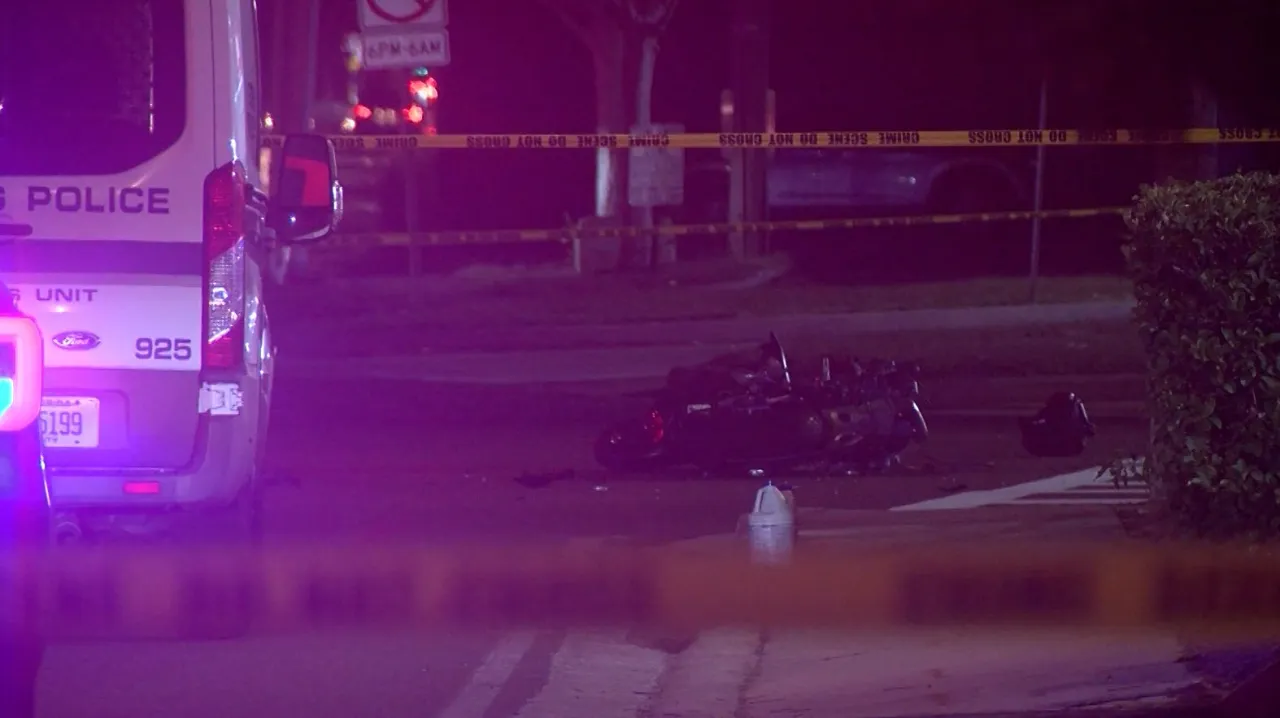
A motorcyclist was seriously injured after police said an officer failed to yield while turning in St. Petersburg.
A St. Petersburg motorcyclist was hospitalized with serious injuries after a crash involving a marked St. Petersburg Police Department cruiser Friday evening.
According to WFLA’s report, the crash happened around 8:30 p.m. on May 1, 2026, near 54th Avenue North and 16th Street North. Police said an officer in a marked cruiser was heading west on 54th Avenue North and attempted to turn left onto 16th Street North when he failed to yield to an oncoming Yamaha motorcycle.
The motorcycle rider was taken to the hospital with serious injuries. The officer was also taken to the hospital with minor injuries. The crash remains under investigation.
When police report that a driver failed to yield before a motorcycle crash, it raises important questions about right-of-way, intersection safety, government vehicle liability, and what injured riders can do to protect their claim.
Why Failure-to-Yield Motorcycle Crashes Are So Serious
Motorcyclists have very little protection when another vehicle turns across their path.
A passenger vehicle has doors, airbags, a frame, and seatbelts. A motorcycle rider does not. When a car, SUV, or police cruiser turns left in front of an oncoming motorcycle, the rider may have little time or space to avoid impact.
These crashes can cause serious injuries, including:
- Broken bones
- Head injuries
- Spinal injuries
- Internal injuries
- Road rash and deep abrasions
- Knee, shoulder, and leg injuries
- Permanent disability or long-term pain
That is why left-turn and failure-to-yield crashes are often aggressively disputed by insurance companies. Even when the police report points to another driver’s failure to yield, insurers may still try to blame the motorcyclist for speed, visibility, lane position, or reaction time.
An injured rider should speak with a St. Petersburg motorcycle accident attorney as early as possible so evidence can be preserved before it disappears.
Florida Law Requires Left-Turning Drivers to Yield
Under Florida Statute § 316.122, a driver intending to turn left must yield the right-of-way to vehicles approaching from the opposite direction when those vehicles are in the intersection or close enough to create an immediate hazard.
That rule matters because left-turn crashes often happen in seconds. A driver may believe there is enough room to turn, but if the oncoming vehicle is too close, the turn can create a dangerous and preventable collision.
In this St. Petersburg crash, police said the officer attempted a left turn and failed to yield to the oncoming motorcycle, according to WFLA’s report. The investigation will likely examine vehicle positions, traffic signals, roadway lighting, witness statements, impact points, cruiser data, motorcycle damage, and any available camera footage.
Police Vehicles Still Have to Follow Safety Rules
A crash involving a police cruiser can be more complicated than a standard car accident.
Police vehicles may have certain privileges in emergency situations, but those privileges are not unlimited. The key questions often include whether the officer was responding to an emergency, whether emergency lights or sirens were activated, whether department policy was followed, and whether the officer acted with due regard for the safety of others.
The available reporting describes the officer as driving a marked cruiser and attempting a left turn when he failed to yield. The article does not state that the officer was pursuing a suspect or responding to an emergency at the time. See WFLA’s report.
That distinction can matter in a civil claim.
If the officer was acting within the scope of employment, the case may involve the City of St. Petersburg, government liability rules, insurance coverage, and Florida’s sovereign immunity statute. Under Florida Statute § 768.28, certain tort claims may be brought against government agencies or subdivisions for injury or death caused by the negligent or wrongful act of an employee acting within the scope of employment, subject to statutory requirements and limitations.
Evidence Matters After a Police Cruiser Motorcycle Crash
Serious motorcycle crashes are evidence-heavy. When a government vehicle is involved, the evidence may include materials that are not always present in an ordinary crash.
Important evidence may include:
- Petersburg Police Department crash records
- Body camera or dash camera footage
- Police cruiser event data
- Dispatch and radio traffic
- Intersection camera footage
- Nearby business surveillance footage
- 911 calls
- Witness statements
- Vehicle damage photos
- Motorcycle damage photos
- Roadway measurements and debris field
- Medical records documenting the rider’s injuries
- Department policy or training materials
The sooner this evidence is requested and preserved, the stronger the injured rider’s position may be.
A St. Petersburg car accident attorney can help identify the available evidence, communicate with insurance companies, and determine whether a claim may involve a private insurer, a government agency, or both.
Government Injury Claims Can Have Special Rules
When an ordinary driver causes a crash, the claim usually begins with insurance coverage.
When a government employee or police officer may be involved, the process can be different. There may be notice requirements, investigation procedures, claim limitations, and legal defenses that do not apply in the same way to a standard car accident case.
That does not mean an injured person has no rights. It means the case should be reviewed carefully and quickly.
A lawyer may need to examine:
- Whether the officer was acting within the scope of employment
- Whether the officer violated traffic law or department policy
- Whether the city may be legally responsible
- Whether Florida’s sovereign immunity rules apply
- Whether written notice must be provided
- Whether insurance coverage exists
- Whether the rider’s injuries meet Florida’s serious injury standards
- Whether future medical care, lost income, or long-term impairment should be included in the claim
In serious injury cases, early legal action can help prevent important evidence from being lost, overwritten, repaired, or destroyed.
What This St. Petersburg Crash Reminds Florida Drivers
This crash is a reminder that motorcycles have the same right to the road as any other vehicle.
Drivers must look carefully before turning left. That includes checking for oncoming motorcycles, judging distance accurately, and yielding when the rider is close enough to create a hazard. A motorcycle can be smaller and harder to see, but that does not remove a driver’s responsibility to yield.
For injured riders, the aftermath of a crash can be overwhelming. There may be emergency treatment, surgery, follow-up care, missed work, insurance calls, motorcycle damage, and uncertainty about who will pay for the losses.
A civil injury claim can help uncover what happened, identify responsible parties, and pursue compensation for the harm caused by the crash.
Injured in a St. Petersburg Motorcycle Crash?
Armando Personal Injury Law helps injured motorcyclists and crash victims throughout St. Petersburg, Pinellas County, Tampa Bay, and across Florida.
If you were injured in a motorcycle crash because another driver failed to yield, turned across your path, or violated your right-of-way, our team can help investigate what happened and explain your legal options.
Speaking with a St. Petersburg motorcycle accident lawyer early can help protect evidence, preserve your claim, and prevent the insurance company from unfairly blaming you for the crash.
Call Armando Personal Injury Law at (813) 482-0355 or message us to request a consultation.
About the Author
Attorney Armando Edmiston is the founder of Armando Personal Injury Law in Tampa and St. Pete, Florida. A U.S. Marine veteran, Hillsborough County native, and ACS Forensic Lawyer-Scientist, he represents Floridians in serious personal injury and wrongful death cases.