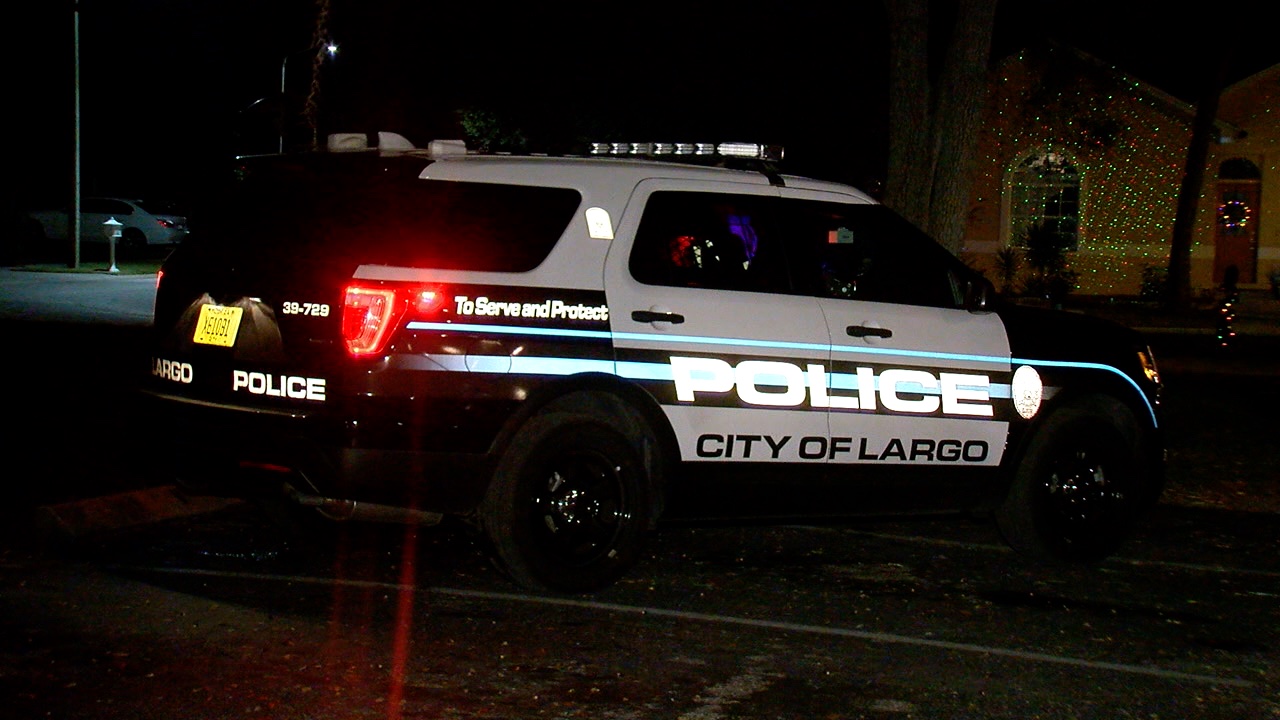
Investigators are working to piece together the sequence of events in Wednesday morning's multi-vehicle crash in Largo.
Ten vehicles were involved in a crash Wednesday morning on 66th Street North in Largo. Four people were taken to area hospitals, and one of them had life-threatening injuries.
Largo Police said officers were called to the 13000 block of 66th Street North shortly before 7:45 a.m.
Three of the people taken to the hospital suffered bodily injuries. Six other people involved in the crash declined medical treatment at the scene.
Police have not said what caused the crash. Early information indicated impairment was not believed to be a factor, but the investigation is still open.
Northbound 66th Street North was closed while officers worked the scene. Traffic was diverted at 126th Avenue North.
At this point, that is about as far as the facts go.
What Largo Police Have Reported So Far
Police have confirmed the following:
- 10 vehicles were involved.
- The crash happened in the 13000 block of 66th Street North.
- Officers were called shortly before 7:45 a.m.
- Four people were taken to hospitals.
- Three suffered bodily injuries.
- One person had life-threatening injuries.
- Six people declined medical treatment.
- Preliminary information indicated impairment was not a factor.
- Investigators are still trying to determine what caused the crash.
With 10 vehicles involved, it would be a mistake to look at the first report and start deciding who caused it.
We do not know the order of the impacts. We do not know whether traffic was moving normally, slowing down or already stopped. We also do not know whether one collision triggered the rest or whether more than one driver became involved independently.
Those details matter. The original report is available from Tampa Bay 28.
Sorting Out a 10-Vehicle Crash Takes Time
A two-car accident can be difficult enough to reconstruct when the drivers give different accounts.
Ten vehicles is a different kind of investigation.
Police may have to work through the crash one impact at a time. Which car hit first? Which vehicles were already stopped? Did one impact shove a vehicle into another? Did somebody farther back fail to stop in time?
Vehicle damage can help answer some of that. So can debris, tire marks, photographs, witness statements, nearby cameras and event data recorded by some vehicles. NHTSA notes that event data recorders can capture technical information from the seconds before, during and after a crash, although the data should be considered with other evidence.
The order matters because the driver involved in the first impact is not automatically responsible for every collision that follows.
Someone several cars back could still have played a role depending on speed, following distance, braking and what was happening immediately before the crash.
That is one reason a serious Largo car accident involving several vehicles can become complicated very quickly. We also have a separate guide on what to do after a multi-car pileup in Florida and a broader resource for Pinellas County car accident claims.
Fault in a Chain-Reaction Crash Is Not Always Obvious
There is no simple rule that the last driver in a pileup is automatically responsible.
There is also no rule that whoever caused the first collision is responsible for every impact after that.
You have to look at what each driver was doing.
Florida law requires drivers to keep a reasonable and prudent following distance based on speed, traffic and roadway conditions. Florida Statute 316.0895 addresses following too closely, an issue that often comes up in rear-end accident cases.
That does not mean following distance caused this crash. Police have not said that.
It may eventually become part of the investigation. Or investigators may find something completely different.
Speed, distraction, lane changes, braking and traffic conditions could all matter. Right now, we just do not know.
Florida also allows fault to be divided among more than one person. Under Florida Statute 768.81, responsibility can be apportioned according to each party's percentage of fault, and a party found more than 50 percent at fault for his or her own harm may not recover damages in a negligence action covered by the statute.
Our guide to Florida car accident laws explains those rules in more detail.
Ten Vehicles Can Also Mean Several Insurance Issues
The insurance side of a crash like this can turn into a mess.
There may be several carriers looking at the same accident, each one trying to figure out what its driver did and how much of the damage or injury should be assigned to that person.
One insurer may dispute how its vehicle became involved. Another may argue that a different impact caused a particular injury. There can also be disagreements over which collision caused damage to a particular vehicle.
Then there is the amount of insurance available. If several people are badly hurt and the responsible driver has limited coverage, there may simply not be enough liability insurance to cover every loss.
Our Florida car accident insurance guide explains some of the issues that come up when insurers investigate crashes.
Uninsured and underinsured motorist coverage can matter too. If the person responsible for serious injuries has little or no bodily-injury coverage, an injured person's own UM or UIM policy may come into play. We explain that coverage in our guide to uninsured and underinsured motorist claims.
Six People Declined Treatment at the Scene
Police said six people involved in the crash declined medical treatment.
That does not tell us much about how they were doing later.
Some people feel fine immediately after a collision and notice pain a few hours later. Others never develop symptoms at all. There is no way to know from the initial police report. Our article on delayed symptoms after a car accident explains why symptoms may not always be obvious at the scene.
Florida's PIP law does create one deadline worth knowing about. Under Florida Statute 627.736, a person generally must receive qualifying initial medical services within 14 days of a motor vehicle crash for PIP medical benefits to apply.
Our guide to Florida PIP claims explains the 14-day requirement and how Florida's no-fault coverage works.
Some Evidence Does Not Hang Around
A crash scene changes fast.
Cars get towed. Roads reopen. Debris gets swept up. Surveillance systems record over old footage.
Witnesses are another problem. Someone may stop, give a quick statement and leave. Weeks later, finding that person again can be difficult.
In a multi-vehicle crash, useful evidence may include:
- Photos or video of the vehicles
- Pictures of the roadway and crash scene
- Witness names and contact information
- Surveillance or traffic-camera footage
- Vehicle event data
- Insurance information
- Medical records showing when symptoms were first reported
With 10 vehicles involved, the damage patterns alone may help investigators understand which impacts happened first and which came later. Once a report is available, our guide to reading a Florida car accident report can help explain the information it contains. Official Florida crash reports can also be obtained through the Florida Crash Portal when available to the requester under Florida law.
What Happens Now?
Largo Police are still investigating.
They have not said what caused the first collision. They have not explained how each of the 10 vehicles became involved. And they have not said whether one driver or several drivers may ultimately be found responsible.
There was also no public update in the initial reporting on the condition of the person who suffered life-threatening injuries.
That is where the story stands for now.
For more information about crashes in the area, readers can visit our Largo car accident page, Pinellas County car accident guide or St. Petersburg car accident resource.
Questions After a Serious Largo Crash
A crash involving several vehicles can leave people dealing with multiple insurance companies and completely different accounts of how the collision happened.
Armando Personal Injury Law represents people injured in car accidents in Largo, St. Petersburg and throughout Pinellas County. When fault or insurance coverage is disputed, those questions should be answered by the evidence from the crash, not by whoever gets their version of the story out first.
Primary news source: Tampa Bay 28
About the Author
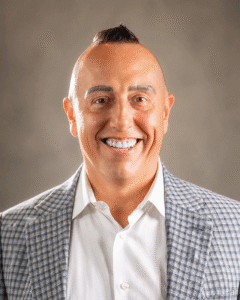
Attorney Armando Edmiston is the founder of Armando Personal Injury Law in Tampa and St. Pete, Florida. A U.S. Marine veteran, Hillsborough County native, and ACS Forensic Lawyer-Scientist, he represents Floridians in serious personal injury and wrongful death cases.