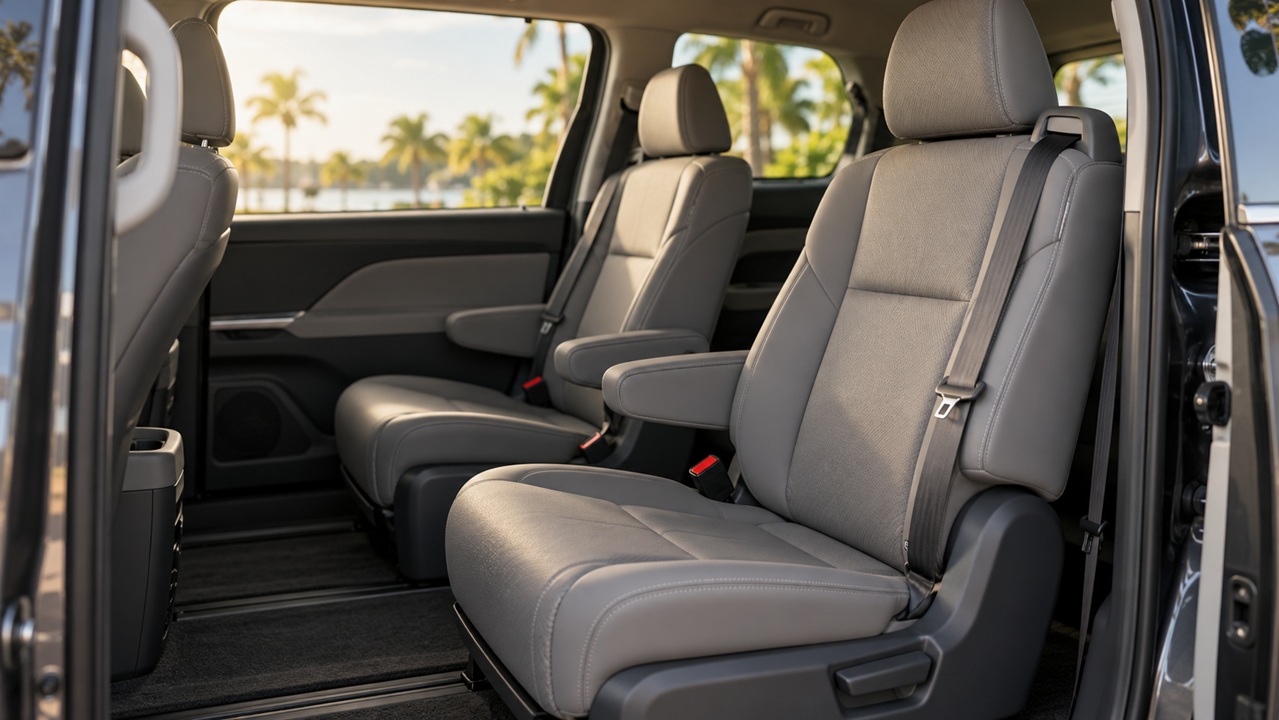
Toyota is recalling more than 228,000 Sienna Hybrid minivans because second-row seat backs may not stay secured in a crash.
After a serious car accident, most people focus on the drivers. Who ran the light? Who was speeding? Who failed to stop?
Those questions matter. But the vehicle itself may also deserve a closer look. A defective part can contribute to a collision or make an occupant’s injuries worse when the crash happens.
Toyota’s recall of more than 228,000 Sienna Hybrid vehicles illustrates that second concern. The reported problem involves seat backs that may fail to stay secured during a crash, potentially leaving passengers without the protection they should have.
For injured people and their families, this raises an important question: Did the collision cause all of the harm, or did a vehicle defect contribute to it? Answering that question can change how a Florida car accident claim is investigated.
What Is the Toyota Sienna Recall About?
The October 27, 2026, NewsNation report carried by WFLA described a recall affecting approximately 228,367 Toyota Sienna Hybrid vehicles from model years 2022 through 2026. The affected vehicles have second-row seat backs that may become unsecured during a collision, increasing the risk of injury.
The reported remedies include an update to the supplemental restraint system’s electronic control unit software. Vehicles equipped with the “Mobility as a Service” package are slated to receive replacement second-row seat backs. Owner notification letters were expected to be mailed around December 7, 2026. Read the syndicated recall report.
The recall concerns certain seven-passenger Sienna Hybrid vehicles, not every Sienna from those model years. Owners should confirm their vehicle’s status through Toyota’s recall lookup or NHTSA’s recall search, using campaign number 26V690000 when searching by recall number.
A corresponding Canadian recall explains the mechanical concern: under certain conditions, activation of a seat belt pretensioner can disengage the mechanism that locks the second-row seat recliner, allowing the seat back to move during a crash. Transport Canada’s recall notice.
A Defect Can Make Injuries Worse Without Causing the Crash
Some vehicle defects affect a driver’s ability to avoid a collision. Others affect how well the vehicle protects people once a collision occurs.
The second situation is often called a crashworthiness or enhanced injury claim. Florida law expressly recognizes product liability claims alleging that a defective product caused greater injuries than the person otherwise would have sustained. Florida Statutes § 768.81.
Consider a hypothetical collision in which one driver runs a red light and strikes a family’s vehicle. If a defective seat back then fails and worsens a passenger’s injuries, an investigation may need to examine both the driver’s conduct and the seat’s performance.
That example does not establish what happened in any particular Toyota crash. It explains why identifying the driver who caused the collision may be only part of a serious injury investigation.
What Makes a Vehicle Part Legally Defective?
A damaged part is not necessarily a defective part. Vehicles can sustain extensive damage during collisions even when their components function as designed.
A product liability investigation must determine whether there was an actual defect and whether it contributed to the injury. Depending on the evidence, the claim may involve:
- A manufacturing defect: A component differed from its intended design and failed to perform as safely as intended.
- A design defect: The product’s design made it unreasonably dangerous under the applicable legal test.
- Inadequate instructions or warnings: Reasonable warnings could have reduced foreseeable harm, and their absence made the product unreasonably dangerous.
Florida’s product liability instructions address these distinct theories and the need to connect the alleged defect to the harm. Florida Supreme Court product liability instructions.
The responsible parties depend on the facts. An investigation may examine the vehicle manufacturer, a component manufacturer, or another company involved in supplying the product. Their involvement alone does not establish liability.
Does a Recall Automatically Prove an Injury Claim?
No. A recall identifies a safety issue affecting a group of vehicles. An injury claim requires evidence about the particular vehicle, collision, and occupant.
Important questions include whether the vehicle falls within the recall, whether it had already received a repair, whether the affected component failed, and whether that failure caused or worsened the injuries.
For example, a recalled seat mechanism may deserve close examination after a passenger is seriously hurt. The recall does not establish that the mechanism failed in that collision. Engineers may need to inspect the seat and restraint system, while medical and crash-reconstruction experts evaluate the forces involved and the injury pattern.
Likewise, the absence of an open recall does not settle whether a product was defective. NHTSA notes that its VIN search does not show completed recalls and may not immediately include every vehicle affected by a newly announced campaign. Complaints and investigations can also precede a recall. NHTSA’s recall search guidance.
Can the Driver and Manufacturer Both Be Responsible?
Potentially, if the evidence supports claims against both.
A driver’s negligence may cause the collision, while a defective component contributes to the resulting injuries. Florida law requires consideration of the fault of all people who contributed to an accident when allocating responsibility in an enhanced injury product liability case.
Fault attributed to the injured person can also affect recovery. In actions governed by Florida’s current modified comparative fault rule, a person found more than 50 percent responsible for their own harm cannot recover damages. Lesser responsibility generally reduces the recovery proportionately. The applicable law and timing of the claim must be evaluated individually. Florida Statutes § 768.81.
For someone hurt in Tampa, this is a reason to have the entire incident reviewed before assuming the case involves only the other driver’s insurance. Our Tampa car accident lawyer page explains how we approach serious crash claims and evidence preservation.
Preserve the Vehicle Before Important Evidence Is Lost
After a collision, a damaged vehicle may quickly move from a tow yard to an insurer’s salvage process. Repairs, dismantling, or disposal can remove evidence needed to investigate a suspected defect.
If you believe a seat, restraint, or another component failed, tell your attorney promptly where the vehicle is stored and who controls it. An attorney can coordinate preservation notices and an appropriate inspection before the relevant evidence is altered.
Useful evidence may include:
- The vehicle and the components suspected of failing.
- Photographs of the interior, seats, restraints, and collision damage.
- Recall notices, repair orders, and maintenance records.
- Medical records documenting the injuries.
- Available vehicle event data, witness accounts, and crash photographs.
Not every vehicle records the same information, and not every crash produces recoverable event data. Physical inspection and the surrounding evidence remain important.
Evidence preservation should be coordinated with safety needs. Do not continue using an unsafe vehicle or disregard recall instructions while waiting for a legal review.
What Should Owners Do If Their Vehicle Is Recalled?
Check the vehicle’s VIN through Toyota or NHTSA, then contact an authorized Toyota dealer for the latest repair availability and interim safety instructions. Ask specifically whether any seating positions should remain unused until the repair is completed.
Keep copies of the recall notice, appointment records, and completed repair paperwork. Because remedies and availability can change, rely on current instructions for your vehicle rather than an older news story.
If someone has already been injured, a recall repair does not answer the separate question of whether a defect contributed to that injury. Let your attorney know about the planned repair so necessary inspections and preservation can be coordinated.
Looking Beyond Driver Error After a Serious Crash
A thorough car accident investigation should account for how the vehicle performed as well as how the drivers behaved. That is especially important when there are signs that a seat or restraint system failed to protect an occupant.
At Armando Personal Injury Law, we help injured people and families examine the evidence and identify potential sources of responsibility. If you were seriously hurt in a Florida crash and suspect a defective vehicle component contributed to your injuries, call (813) 482-0355 or request a free consultation.
You do not need to know exactly why a component failed before asking for help. An early review can help determine whether a product liability investigation is warranted and what evidence needs to be protected.
About the Author
Attorney Armando Edmiston is the founder of Armando Personal Injury Law in Tampa and St. Pete, Florida. A U.S. Marine veteran, Hillsborough County native, and ACS Forensic Lawyer-Scientist, he represents Floridians in serious personal injury and wrongful death cases.