
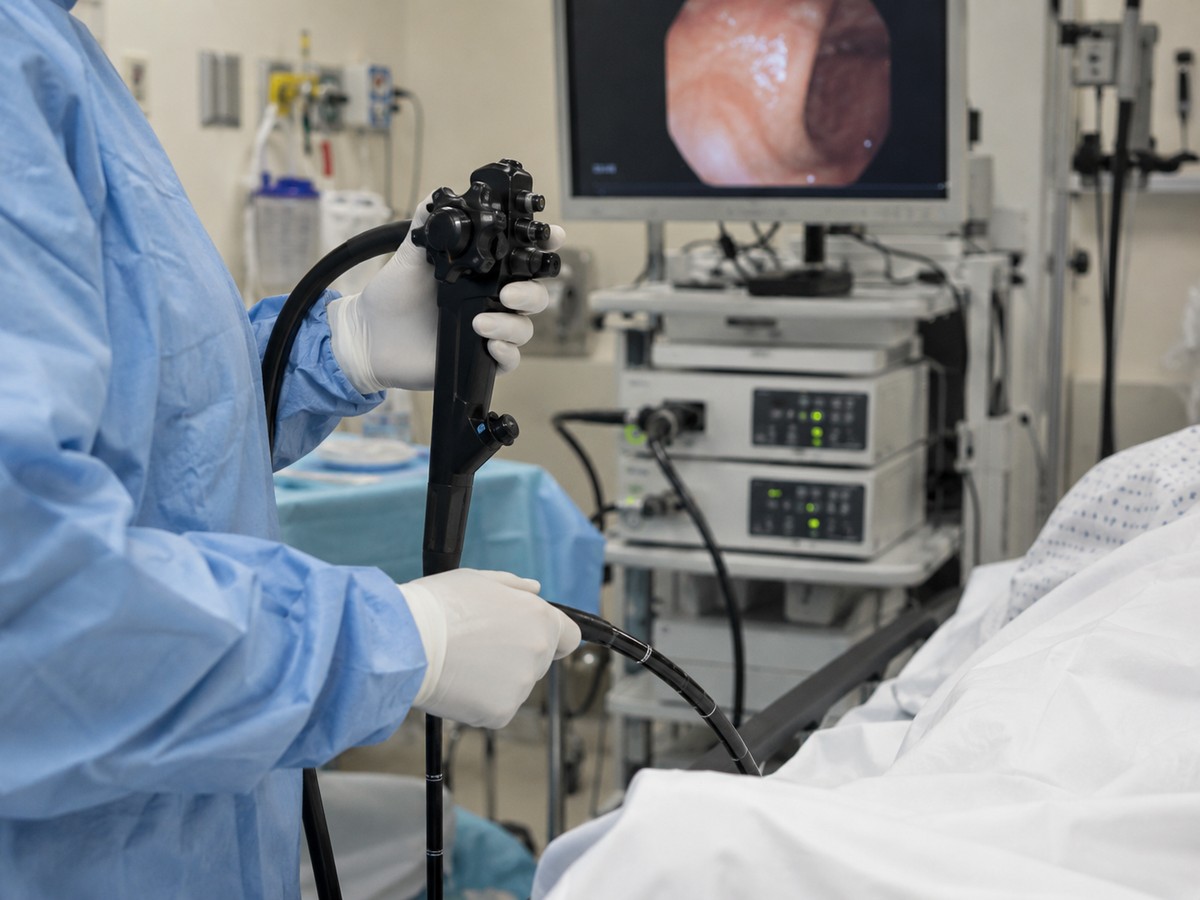
Endoscopes like this one are reused on multiple patients after cleaning, but improper reprocessing can leave dangerous bacteria behind. Olympus duodenoscopes have been linked to serious, sometimes fatal infections tied to design flaws that make thorough cleaning difficult. Patients harmed by a contaminated scope may have grounds for a product liability claim.
A Serious Infection After an Olympus Scope Procedure Can Raise More Than One Type of Claim
A serious infection after a scope procedure can leave a patient wondering whether something went wrong with the device, the way it was cleaned, or the medical care that followed. Those questions are at the center of Olympus scope infection claims involving reusable scopes, accessories, and reprocessing systems.
One recent FDA action shows why identifying the exact equipment matters. The agency has classified a recall involving the Olympus MAJ-891 forceps/irrigation plug as its most serious type. According to the FDA's Olympus MAJ-891 recall update, improper or incomplete reprocessing of the reusable accessory can expose patients to contamination that may cause infection, urinary tract infection, sepsis, hospitalization, or death. Olympus reported 120 injuries and one death following procedures in which the MAJ-891 was used with a CYF cystoscope.
That does not mean every infection after a colonoscopy, endoscopy, cystoscopy, or other scope procedure involves the MAJ-891. The accessory is used with certain Olympus cystoscopes, ureteroscopes, choledochoscopes, and hysteroscopes. A real investigation has to identify the procedure, scope, accessory, and reprocessing equipment actually used on the patient.
Quick Facts About Olympus Scope Infection Claims
The Device Matters: “Olympus scope” can refer to different scopes, accessories, and reprocessing systems. The exact model and accessory may change the investigation.
Timing Matters, But There Is No Universal 30-Day Rule: An infection that appears soon after a procedure can strengthen the medical timeline, but timing alone does not prove where the infection came from.
More Than One Legal Claim May Apply: A defective product may support a product-liability claim, while improper reprocessing, maintenance, diagnosis, or treatment may raise medical-negligence or facility-liability issues.
The Records Usually Matter More Than the Patient's Memory: Procedure logs, device tracking records, cultures, reprocessing logs, maintenance records, and infection-control documents can help identify what happened.
What Counts as a Serious Infection After a Scope Procedure?
Not every symptom after a scope procedure means a contaminated device caused an infection. Mild discomfort may occur after some procedures, while fever, chills, worsening pain, weakness, confusion, rapid heart rate, or other significant symptoms can require prompt medical attention.
Doctors may use blood, urine, tissue, or other cultures and laboratory testing to identify an infectious organism. Hospital records can also show when symptoms began, whether the patient developed bacteremia, sepsis, or another complication, and what treatment became necessary.
The clearest legal cases often involve more than a brief illness. Hospitalization, IV antibiotics, intensive care, additional surgery, organ injury, or lasting impairment can establish the seriousness of the harm. None of those facts proves that an Olympus device caused the infection, but they can justify a closer investigation.
Why Does the Timing of the Infection Matter?
The closer an infection appears to a medical procedure, the easier it may be to investigate whether the procedure played a role. A patient who develops a documented bacterial infection several days after a scope procedure presents a very different causation question from someone whose infection appears months later after several unrelated medical events.
There is no single 30-day rule that decides whether someone has a claim. The relevant timeline depends on the organism, procedure, patient's condition, other possible exposures, and medical evidence.
The treatment record matters, too. IV antibiotics, hospitalization, repeat procedures, or intensive care create documentation of severity. Culture results and infectious-disease records may help determine whether the organism is consistent with the procedure and whether other explanations need to be ruled out.
Patients who developed serious infections after endoscopy procedures may have legal options if those infections were linked to an Olympus scope, a defective accessory, or a reprocessing failure at a medical facility. Product liability and medical device defect claims against manufacturers like Olympus require thorough investigation of medical records, device history, and sterilization protocols. An attorney with experience in Olympus scope infection lawsuits can review your case and help determine whether the manufacturer, the facility, or both may be held accountable for your harm.
Why Identifying the Exact Scope and Accessory Can Change the Case
A patient usually leaves the hospital knowing what procedure was performed, not the model number of every piece of equipment that was used. The ordinary discharge papers may not identify the scope, accessory, or automated reprocessor.
That information may instead appear in procedure-room logs, equipment tracking systems, sterile-processing records, maintenance records, repair histories, or unique device identification records.
Those records can answer questions that a general medical chart cannot:
- Which scope was used? The manufacturer, series, model, serial number, or other identifying information may narrow the investigation.
- Which accessories were attached? A recalled accessory such as the MAJ-891 presents a different issue from a claim involving the scope itself.
- How was the equipment reprocessed? Cleaning, disinfection, drying, storage, and automated reprocessor records may show whether manufacturer instructions were followed.
- Was the device damaged or repaired? Maintenance, inspection, leak-testing, and repair records can show whether equipment should have been removed from service.
- Were other infections reported? Evidence of an infection cluster can become important when evaluating whether one patient's illness was an isolated event or part of a larger problem.
This is one reason early evidence preservation matters. The patient's own medical records are only one part of the investigation.
Who Could Be Legally Responsible for an Olympus Scope Infection?
An infection after a scope procedure may involve product liability, medical negligence, facility negligence, or more than one theory. The correct claim depends on what the evidence shows.
| Potential Party | What the Investigation May Examine |
|---|---|
| Device or Accessory Manufacturer | Whether a design, manufacturing, warning, or reprocessing-instruction issue contributed to contamination or injury. |
| Hospital or Surgery Center | Whether staff properly cleaned, disinfected, dried, stored, inspected, tracked, and maintained the equipment. |
| Physician or Other Health Care Provider | Whether the device was used appropriately and whether infection symptoms were reasonably recognized and treated after the procedure. |
| Reprocessing Contractor | Whether an outside company responsible for cleaning or servicing reusable equipment followed required procedures. |
A claim involving the manufacturer may fall under product liability law. A claim arising from the rendering of medical care may instead involve medical malpractice. Sometimes the evidence supports investigating both.
That distinction matters because the legal elements, expert witnesses, presuit requirements, and filing deadlines can be different.
What Compensation Could an Olympus Scope Infection Claim Cover?
Compensation depends on the legal theory, governing law, available evidence, and severity of the infection. Recoverable damages in an appropriate case may include:
- Medical Expenses – Emergency treatment, hospitalization, IV antibiotics, intensive care, additional procedures, rehabilitation, and future medical care tied to the infection.
- Lost Income – Wages missed during treatment and, when supported by the evidence, reduced future earning capacity.
- Pain and Suffering – Physical pain, emotional distress, disability, and disruption of normal life where allowed by applicable law.
- Permanent Complications – Organ damage, lasting impairment, or other long-term effects of a severe infection.
If an infection results in death, surviving family members may also have a wrongful death claim, depending on the applicable state law and the evidence connecting the death to the device, facility, or medical care.
No settlement amount from another case can establish what a particular Olympus infection claim is worth. Case value depends on causation, injury severity, future medical needs, lost income, the responsible defendants, and the law that applies.
How Long Do You Have to File an Olympus Scope Infection Claim in Florida?
The deadline depends heavily on the type of claim. This is one area where labeling every Olympus infection case as ordinary negligence can create a serious mistake.
Under Florida Statute § 95.11, an action for injury based on the design, manufacture, distribution, or sale of personal property generally falls within a four-year limitations period. Florida's separate product-liability accrual statute generally measures that period from when the facts giving rise to the product-liability claim were discovered or should have been discovered with reasonable diligence. Florida also has statutes of repose that may affect older products.
A claim against a health care provider follows different rules. Florida medical malpractice actions generally have a two-year limitations period running from the incident or from when the incident was discovered or should have been discovered, subject to a four-year statute of repose and certain exceptions.
Medical-negligence cases also have special presuit requirements. Before filing suit, Florida law generally requires a claimant to conduct a reasonable presuit investigation and obtain a corroborating verified written opinion from a qualified medical expert. The claimant must then provide the prospective defendant with a notice of intent to initiate medical-negligence litigation under Florida Statute § 766.106 and satisfy the investigation requirements in § 766.203.
A single infection may therefore create different deadlines against different defendants. An out-of-state procedure can introduce another state's laws as well. The safest approach is to evaluate the possible defendants and deadlines early rather than assuming one general deadline controls every claim.
What Evidence Should Be Preserved After a Serious Scope Infection?
A patient does not need to collect every record before calling a lawyer. A procedure date, facility, type of procedure, infection diagnosis, and treatment history can be enough to begin an initial review.
Once an investigation begins, records worth identifying may include the full procedure record, microbiology and culture results, hospital records, device and accessory logs, unique device identifiers, reprocessing records, automated endoscope reprocessor logs, maintenance and repair history, infection-control reports, and communications about possible contamination.
This evidence can become more difficult to reconstruct over time. Equipment may be serviced or returned, staff members may change, electronic records may be retained under different schedules, and routine reprocessing documentation may not remain readily available indefinitely.
Early preservation can help establish not only that an infection occurred, but which device was used and what happened to it before and after the procedure.
How Can an Olympus Scope Infection Lawyer Help?
Olympus scope infection cases sit at the intersection of medical evidence, microbiology, product design, federal regulation, and hospital reprocessing practices. Identifying the infection is only the beginning. The case still has to connect that infection to a particular device, accessory, cleaning failure, or act of medical negligence.
Armando Personal Injury Law evaluates serious scope infection claims in Florida and nationwide. The legal team can identify the equipment used, obtain the relevant medical and reprocessing records, determine which parties may be responsible, evaluate the applicable deadlines, and work with appropriate medical or technical experts when necessary.
If you developed a serious infection, sepsis, or another major complication after a procedure involving an Olympus scope or accessory, you don't need to know the device model before reaching out. Contact us for a free case review. We can start with the procedure and medical timeline and determine what records need to be investigated.

About the Author
Attorney Armando Edmiston is the founder of Armando Personal Injury Law in Tampa and St. Pete, Florida. A U.S. Marine veteran, Hillsborough County native, and ACS Forensic Lawyer-Scientist, he represents Floridians in serious personal injury and wrongful death cases.