
Quick Answer: In Florida, rideshare insurance depends heavily on the driver’s app status at the moment of the crash. If the driver is logged into the app and waiting for a request, lower statutory limits apply. Once the driver accepts the ride, Florida requires higher coverage, including $1 million in primary liability coverage during the prearranged ride period under Fla. Stat. § 627.748.
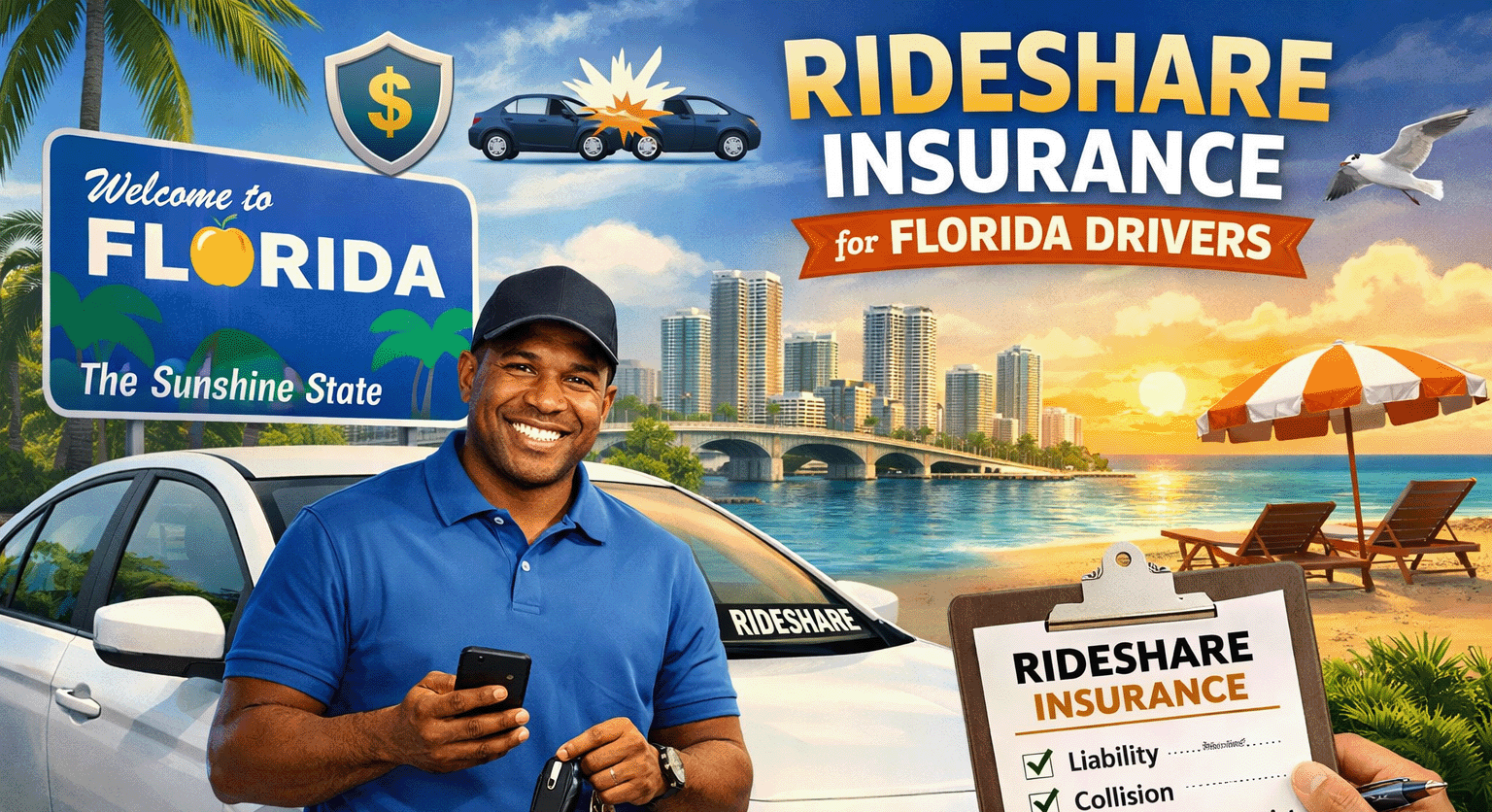
Florida law applies different insurance requirements to Uber and Lyft drivers depending on whether they are waiting for a ride request, have accepted a trip, or are transporting a passenger.
Uber and Lyft crashes are not handled exactly like ordinary Florida car accidents. In Florida, transportation network companies, or TNCs, operate under a specific statute that sets different insurance requirements depending on what the driver was doing at the time of the crash. Whether the driver was waiting for a ride request, on the way to pick someone up, or actively transporting a passenger can dramatically affect what coverage applies.
For injured passengers, drivers, pedestrians, cyclists, and people in other vehicles, one of the first legal questions is not just who caused the crash. It is also whether the Uber or Lyft driver was logged into the app and whether the trip had already been accepted. Under Florida law, a prearranged ride begins when the driver accepts the ride request and ends when the last rider exits the vehicle.
What Florida Calls a Rideshare Company
Florida law uses the term transportation network company, or TNC, for services like Uber and Lyft. A TNC uses a digital network to connect riders with drivers who provide prearranged rides for compensation. The law applies statewide, which means Florida uses one statewide framework rather than a patchwork of local insurance rules under Fla. Stat. § 627.748.
Florida Rideshare Insurance Coverage by Phase
Florida’s current rideshare insurance law is easiest to understand in two main phases.
| Driver Status | Required Coverage |
| Logged into the app, but has not accepted a ride | $50,000 bodily injury or death per person, $100,000 per incident, $25,000 property damage, plus required PIP benefits and UM/UIM coverage referenced in the statute. |
| Has accepted the ride, is en route to pickup, or is transporting the rider | $1 million in primary liability coverage, plus required PIP benefits and UM/UIM coverage referenced in the statute. |
Phase 1: The Driver Is Logged Into the App but Has Not Accepted a Ride Yet
While a TNC driver is logged into the digital network but is not yet engaged in a prearranged ride, Florida requires automobile insurance with at least:
- $50,000 for death and bodily injury per person
- $100,000 for death and bodily injury per incident
- $25,000 for property damage
- Personal injury protection benefits meeting the required minimum amounts
- Uninsured and underinsured motorist coverage as required by Stat. § 627.727
This phase usually applies when the driver is available for rides and waiting for a request to come through the app. It is the lower rideshare coverage tier under Fla. Stat. § 627.748.
Phase 2: The Driver Has Accepted the Ride, Is En Route to Pickup, or Is Transporting the Rider
This is where many people get confused.
Under Florida law, the prearranged ride starts when the driver accepts the ride request, not when the passenger gets into the vehicle. That means the higher rideshare coverage can apply even before pickup, as long as the driver had already accepted the trip.
During a prearranged ride, Florida requires automobile insurance with at least:
- $1 million in primary liability coverage for death, bodily injury, and property damage
- Personal injury protection benefits meeting the minimum coverage amounts required under the statute
- Uninsured and underinsured motorist coverage as required by Stat. § 627.727
For injury victims, that timing can be critical. A crash that happens after the driver accepts the trip but before pickup may still fall into the higher-coverage phase under Fla. Stat. § 627.748.
Who Has to Provide the Coverage?
Florida allows the required rideshare coverage to be satisfied in different ways. The insurance may be provided by:
- the rideshare driver
- the vehicle owner
- the TNC itself
- a combination of those policies
The statute also contains an important protection for injury victims. If the driver’s insurance has lapsed or does not provide the required coverage, the TNC’s insurance must provide the required coverage from the first dollar of the claim and has the duty to defend the claim. The law also says TNC coverage cannot depend on the personal auto insurer denying the claim first under Fla. Stat. § 627.748.
That matters in real-world claims because multiple insurers may try to shift responsibility, especially in serious crashes involving hospital bills, surgery, lost income, or long-term care.

Contact Armando Personal Injury for a free consultation after you have been involved in an accident with an Uber or Lyft driver.
Why a Driver’s Personal Auto Policy May Not Be Enough
Many Florida drivers assume their regular car insurance automatically covers them while driving for Uber or Lyft. That assumption can create serious problems.
Florida’s rideshare statute expressly allows personal auto insurers to exclude coverage while a driver is logged into the app or providing a prearranged ride. Those exclusions can apply not only to bodily injury liability, but also to UM/UIM, medical payments, comprehensive, collision, and PIP coverage. The statute also states that a personal auto policy is not required to provide coverage during app-on or active-trip periods under Fla. Stat. § 627.748.
This is one reason rideshare accident claims are often more complex than ordinary crash claims. Determining which insurer is responsible may require confirming exactly when the driver logged in, when the trip was accepted, and whether the driver was actively in the ride period at the time of the crash.
What Happens After a Florida Rideshare Crash?
Florida law requires a TNC driver to carry proof of the applicable coverage while using the vehicle in connection with the digital network. After a crash, the driver must provide insurance information to involved parties, insurers, and investigating officers. The driver must also disclose whether they were logged into the digital network or engaged in a prearranged ride at the time of the crash. Proof may be shown electronically. under Fla. Stat. § 627.748.
The TNC must also provide the driver’s precise log-on and log-off times within the 12-hour period before and after the crash when requested during a coverage investigation. That information can become extremely important when an insurer disputes whether the higher rideshare policy applies. under Fla. Stat. § 627.748.
In many Florida Uber and Lyft claims, the fight is not only about fault. It is also about coverage tier. If the company, driver, or insurer disputes whether the ride had already been accepted, app data and timeline evidence can become central to the case.
Common Florida Rideshare Accident Scenarios
If You Were a Passenger in an Uber or Lyft
If you were injured while riding in an Uber or Lyft, the $1 million liability layer may be in play if the crash happened during the prearranged ride period. Because Florida defines that period as starting when the trip is accepted and ending when the last rider exits, coverage issues often turn on the app status and trip timing.
When the Rideshare Driver Hit You While Waiting for a Request
If the driver was logged in and waiting for a trip, the lower waiting-period coverage generally applies: $50,000 per person, $100,000 per incident, and $25,000 property damage, along with the other statutory coverages.
If the Driver Had Accepted a Trip but Had Not Picked Up the Rider Yet
Under the current published statute, that situation is still part of the prearranged ride. That means the higher $1 million primary liability requirement may apply.
an Uninsured or Underinsured Driver Caused the Crash
Florida’s TNC statute references uninsured and underinsured motorist coverage as required by Fla. Stat. § 627.727 during both the waiting phase and the prearranged ride phase. Coverage questions can still become technical, but UM/UIM is a major part of the rideshare insurance framework.
A 2026 Bill Tried to Reduce Coverage in One Phase, but It Did Not Change Current Law
In 2026, lawmakers introduced a bill that would have created a separate lower-coverage phase for the period after a driver accepted a ride but before the rider entered the vehicle. Florida Senate Bill 632 shows a last action of March 13, 2026, died in Transportation, so the proposal did not become current law.
That means Florida still uses the higher prearranged-ride framework once the ride is accepted under the current published Fla. Stat. § 627.748.
Why This Matters in Injury Claims
Rideshare insurance cases often turn on timing, app status, and overlapping insurance policies. A claim may involve the driver’s insurer, the rideshare company’s insurer, and disputes over exclusions or priority of coverage. For injured passengers and other crash victims, that can affect how much insurance is available and how quickly a claim moves.
This is especially important in serious injury cases involving surgery, rehabilitation, lost wages, permanent impairment, or wrongful death. The difference between waiting-period coverage and prearranged-ride coverage can be enormous.
FAQs About Rideshare Insurance in Florida
What insurance is required when an Uber or Lyft driver is logged in but has not accepted a ride yet?
When a Florida rideshare driver is logged into the app and available for rides, but has not yet accepted a trip, the law requires at least $50,000 for bodily injury or death per person, $100,000 per incident, and $25,000 for property damage, plus required PIP benefits and uninsured/underinsured motorist coverage under Fla. Stat. § 627.748.
What insurance is required after the rideshare driver accepts a trip?
Once the driver accepts a ride request, Florida treats that as the start of the prearranged ride. At that point, the law requires at least $1 million in primary liability coverage for death, bodily injury, and property damage, along with required PIP benefits and uninsured/underinsured motorist coverage under Fla. Stat. § 627.748.
Does the higher rideshare coverage start only after the passenger gets into the car?
No. Under Florida’s statute, a prearranged ride begins when the driver accepts the ride request, not when the passenger enters the vehicle. See Fla. Stat. § 627.748.
Is a rideshare driver’s personal auto insurance always enough?
Not necessarily. Florida law allows personal auto insurers to exclude coverage during periods when a driver is logged into the app or engaged in a prearranged ride under Fla. Stat. § 627.748.
Who provides the required insurance coverage in a Florida rideshare accident?
The required coverage may be provided by the driver, the vehicle owner, the transportation network company, or a combination of those policies. If the driver’s policy lapses or does not provide the required coverage, the TNC’s policy must provide the required coverage from the first dollar and defend the claim. See Fla. Stat. § 627.748.
Does Florida require uninsured or underinsured motorist coverage for rideshare activity?
Florida’s statute references uninsured and underinsured motorist coverage as required by Fla. Stat. § 627.727 during both the logged-in waiting period and the prearranged ride period.
What should a rideshare driver provide after a crash?
A rideshare driver must carry proof of the applicable insurance coverage and disclose whether they were logged into the app or engaged in a prearranged ride at the time of the crash. See Fla. Stat. § 627.748.
Can Uber or Lyft app records matter in a Florida injury claim?
Yes. Florida law requires the transportation network company to provide log-on and log-off times within the 12-hour period before and after the crash when requested during a coverage investigation under Fla. Stat. § 627.748.
Final Thoughts
Florida rideshare insurance law is more specific than many people realize. The most important takeaway is this: coverage depends heavily on what the Uber or Lyft driver was doing at the exact moment of the crash. Was the app off? Logged in and waiting? Or had the ride already been accepted? Under current Florida law, that timing can make a major difference in the insurance coverage available.
If you were injured in an Uber or Lyft accident in Florida, it is important to identify all available insurance early, preserve app-status evidence, and review the exact policy layers that may apply before accepting any settlement. These cases often involve coverage disputes that do not arise in a typical car accident claim.
Hurt in or by an Uber or Lyft Driver?
If you were hurt in an Uber or Lyft accident in Florida, whether as a passenger, driver, pedestrian, cyclist, or occupant of another vehicle, early legal guidance can help you determine which insurance policy applies, what evidence needs to be preserved, and what compensation may be available.
Armando Personal Injury Law helps injury victims evaluate complex Florida accident claims, including cases involving multiple insurers, disputed coverage layers, and serious injuries. For a free consultation, call (813) 482-0355.
Get a free consultation with Tampa personal injury lawyer Armando Edmiston.