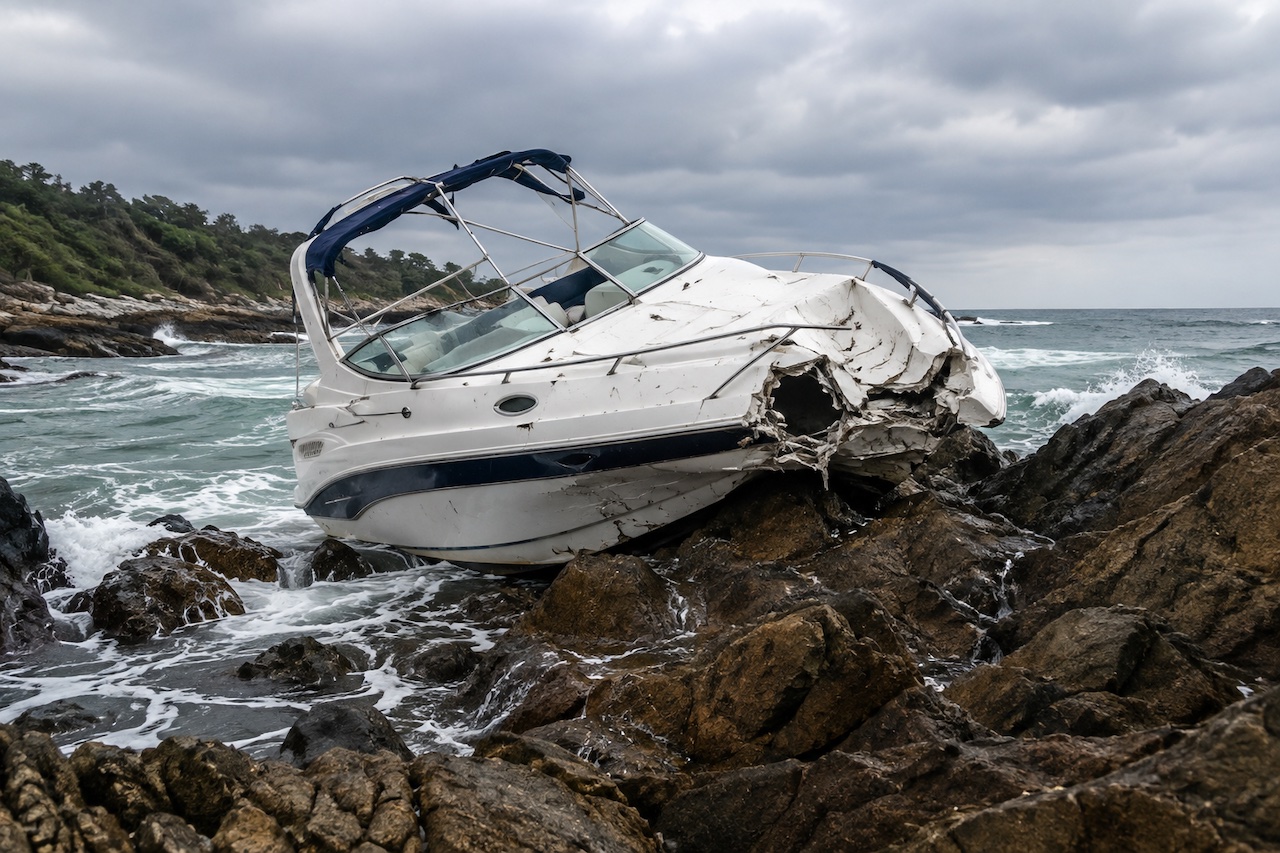
FWC is investigating a fatal boat crash near Picnic Island Park in Tampa.
A 61-year-old Tampa man was killed Saturday when a 27-foot boat slammed into a rock jetty near Picnic Island Park, throwing both people aboard into Tampa Bay, according to Tampa Bay 28.
The Florida Fish and Wildlife Conservation Commission identified him as David A. Hochberg. Emergency crews pulled him from the water, but he had died. The other person aboard reached shore and was taken to a hospital. Officials have not released that person’s condition.
The investigation belongs to FWC, with help from Tampa Police and Hillsborough County Fire Rescue, FOX 13 reported. Much is still unknown. Investigators have not said who was at the controls or why the boat hit the jetty. They also have not said whether speed, visibility, weather, impairment, distraction, or a mechanical problem had anything to do with it.
What this could mean: Not every fatal boat crash becomes a wrongful death case. There has to be evidence that someone else caused the death through negligence or another wrongful act. Here, that means finding out who controlled the boat, what happened before impact, whether the vessel failed in some way, and what insurance was in place.
What Investigators Know About the Picnic Island Crash
The boat struck the jetty in Tampa Bay near Picnic Island Park, a waterfront park in South Tampa. Both people aboard were thrown into the water.
That tells us the impact was severe. It does not tell us why it happened. Right now, anyone assigning fault is guessing.
Could This Lead to a Florida Wrongful Death Claim?
It could, but the evidence has to lead there. Florida’s Wrongful Death Act allows a civil case when negligence, a wrongful act, default, or a breach of contract or warranty causes a death. The firm’s Florida wrongful death lawyer page explains how these cases work and who can bring them.
The basic rule comes from Florida Statute 768.19: could Hochberg have brought a claim if he had survived? In a crash like this, the answer often begins with one blunt question. Who was driving the boat?
From there, investigators will look at what the operator was doing before impact. Was the boat moving too fast for the conditions? Was anyone keeping watch? Were navigation markers missed? Distraction or impairment could matter. So could a steering, engine, or equipment failure. A proven mechanical problem might shift part of the focus to an owner, repair shop, manufacturer, or rental company. So far, none of those causes has been reported.
Florida Law Requires Careful Vessel Operation
Florida law does not ask boat operators to be perfect. It does require them to be careful. Florida Statute 327.33 says a vessel must be operated reasonably and prudently for the traffic, posted speed and wake limits, and conditions on the water. The FWC boating regulations also require operators to follow navigation rules and avoid putting people or property at risk.
There is another Florida rule that often surprises people. The state treats a vessel as a dangerous instrumentality, but boat-owner liability is narrower than the familiar rule for car crashes. Under Florida Statute 327.32, careless or reckless operation generally falls on the person operating the boat unless the owner was also operating it or was aboard when the injury happened. That makes the details important: who owned it, who was driving, and who else was on board.
Who Could Be Responsible After a Fatal Boat Crash?
The public facts are too thin to name anyone as responsible. Depending on what investigators find, the focus could turn to:
- The operator, if speed, inattention, impairment, or a navigation mistake caused the collision.
- The owner, if the owner was operating or aboard, or if poor maintenance or unsafe equipment played a part.
- A rental, charter, or commercial business that supplied an unsafe boat or failed to provide competent operation.
- A repair shop or manufacturer, but only if evidence proves a mechanical or equipment failure contributed.
- Another boater or third party whose actions forced an evasive move or caused the impact.
Responsibility does not always stop with one person. The firm’s Tampa personal injury lawyer resources explain how negligence, shared fault, and insurance investigations fit together after a serious local accident.
What Evidence Matters in a Boat Crash Investigation?
A crash on Tampa Bay does not leave the same trail as a wreck on Dale Mabry Highway. There may be no traffic camera, no tire marks, and no ordinary vehicle data waiting to be downloaded. Water, weather, and time can erase evidence fast.
Investigators and attorneys may need to secure:
- The FWC crash report, scene photographs, measurements, officer notes, and witness accounts.
- GPS tracks, chartplotter history, engine data, phone records, and other marine electronics.
- The boat itself, especially the hull, steering, throttle, engine, navigation lights, and safety gear.
- Weather, tide, visibility, lighting, and the condition of channel markers near the jetty.
- Ownership, repair, maintenance, rental, charter, and insurance records.
Florida also imposes duties after a serious boating accident. Florida Statute 327.30 covers aid to injured people and reporting when a crash causes death, disappearance, injury, or major property damage.
Insurance Coverage Is Often More Complicated on the Water
Boat insurance is rarely as simple as asking for one auto policy. Coverage might come from a marine or watercraft policy. A homeowners policy may offer something, but often only within strict limits. Rentals and charters can bring commercial insurance into the picture. An umbrella policy might matter too.
And the first policy found may not be the last. Coverage can turn on ownership, permission to use the boat, the operator’s relationship to the owner, where the vessel was kept, and whether the trip was personal or commercial. There is no useful shortcut here. The policies have to be found and read.
Who Files a Florida Wrongful Death Case, and What Can Be Recovered?
Florida requires the estate’s personal representative to file the case for the survivors and the estate. That rule is in Florida Statute 768.20. What can be recovered depends on the family and the facts. Florida Statute 768.21 addresses lost support and services, funeral expenses, certain losses to the estate, and damages available to qualifying survivors.
Money does not repair a death. It can, however, protect the people left behind and force a clear accounting of what went wrong.
The FWC Investigation Is Still Open
FWC has not named a cause or assigned fault. It needs time to do that work. Evidence does not always wait. Electronics can overwrite data. The boat can be moved or repaired. Memories fade.
Armando Personal Injury Law represents people and families in personal injury claims across Florida. When someone else may have caused a fatal boating crash, the first job is practical: preserve the vessel and its data, locate the insurance, and build the facts before they disappear.
Families can contact Armando Personal Injury Law to discuss a fatal boating accident privately. The consultation is free. There is no fee unless the firm recovers compensation.
This article is general information, not legal advice. The Picnic Island crash remains under investigation. Based on what has been publicly reported, no one has been accused here of civil wrongdoing.
About the Author
Attorney Armando Edmiston is the founder of Armando Personal Injury Law in Tampa and St. Pete, Florida. A U.S. Marine veteran, Hillsborough County native, and ACS Forensic Lawyer-Scientist, he represents Floridians in serious personal injury and wrongful death cases.