FHP says a drowsy driver caused a four-vehicle crash on I-75 in Pasco County. The crash highlights the danger of fatigued driving and why company-owned vehicle crashes require quick investigation.
A Spring Hill man allegedly fell asleep behind the wheel before causing a four-vehicle crash on Interstate 75 in Pasco County, according to the Florida Highway Patrol.
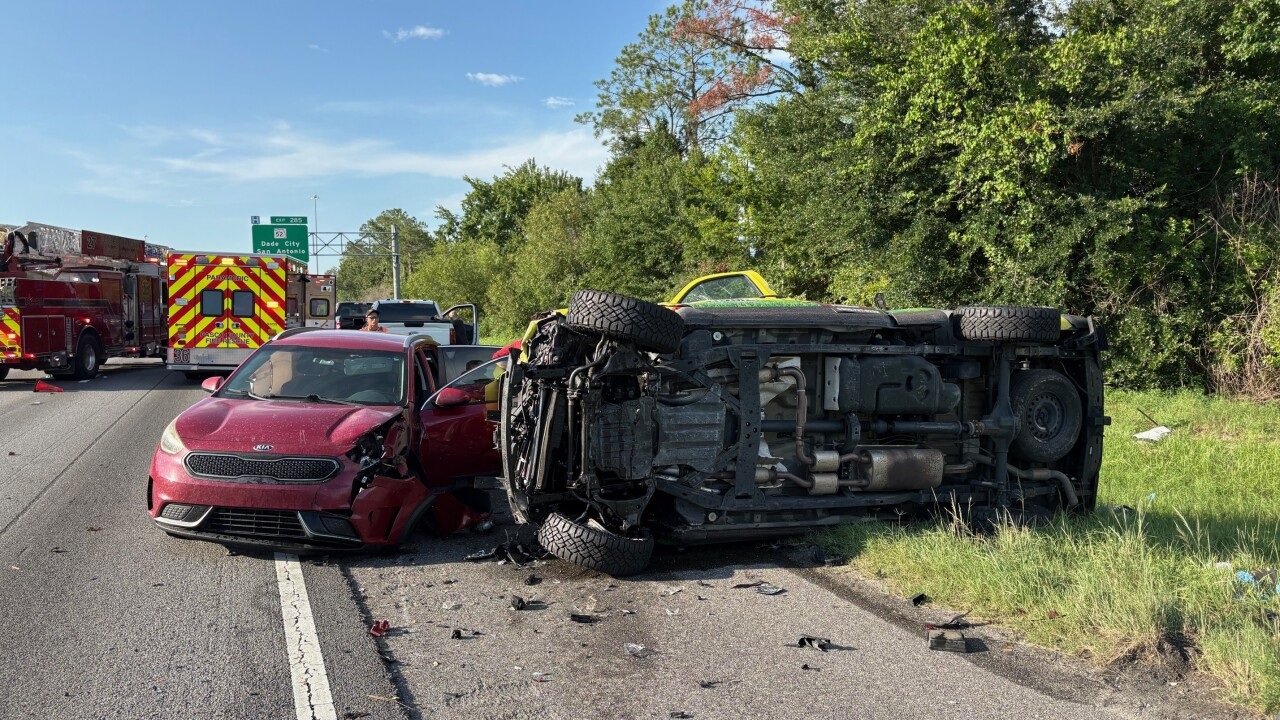
Tampa Bay 28 reported that the crash happened Wednesday near mile marker 284 as traffic slowed in the outside lane near an exit ramp. FHP said a Nissan Frontier driven by 27-year-old Jesse Palmer was traveling north in the inside lane when it drifted across lanes and hit the rear of a Tesla Model Y driven by a 34-year-old Tampa man.
The impact caused the Nissan to rotate and overturn onto its driver’s side before hitting a Kia Niro driven by a 38-year-old Dade City man. FHP said that collision pushed the Kia into the rear of a Ford F-150 driven by a 66-year-old San Antonio man.
Troopers said the Nissan overturned again and came to rest on its passenger side off the roadway. The Tesla stopped partially on the shoulder, the Kia remained in the outside lane, and the Ford pulled onto the shoulder.
According to the report, dash camera video from the Tesla captured the crash. FHP said Palmer told investigators he fell asleep while driving and did not remember much about the collision. He was cited for careless driving.
Drowsy Driving Can Cause Serious Chain-Reaction Crashes
Drowsy driving is not a small mistake. A driver who falls asleep, even for a few seconds, can drift across lanes, fail to brake, miss stopped traffic, or cause a multi-vehicle collision before other drivers have time to react.
The National Highway Traffic Safety Administration has warned that drowsy-driving crashes are likely underreported because fatigue can be difficult to prove after a collision. Unlike alcohol impairment, there is no simple roadside test that confirms how tired a driver was at the moment of impact.
In this Pasco County crash, FHP said the driver was cited for careless driving. Under Florida Statute § 316.1925, drivers must operate vehicles in a careful and prudent manner based on traffic, road conditions, and surrounding circumstances.
Why Company-Owned Vehicle Crashes Require a Closer Look
A crash involving a pickup truck may seem like a standard car accident at first. But if the truck is company-owned, used for work, or driven by an employee during a job-related trip, the legal and insurance issues can change quickly.
That does not mean every pickup truck crash is treated like an 18-wheeler crash. But company-owned vehicle accidents can involve questions that are not always obvious from the crash report:
- Who owned the vehicle?
- Was the driver working at the time?
- Was the driver driving for a delivery, service call, job site, or work errand?
- Did the employer know the driver was too tired to drive safely?
- Were there scheduling pressures or supervision issues?
- Was the vehicle covered by a commercial insurance policy?
- Were there GPS records, dash camera footage, dispatch logs, or phone records?
- Did the company preserve the vehicle and post-crash evidence?
These questions matter because company-owned vehicles may carry higher insurance coverage than a standard personal auto policy. A business may also have access to evidence that can disappear quickly if no one acts to preserve it.
For people injured in a crash involving a company vehicle, work truck, delivery vehicle, or commercial driver, it is important not to assume the police report tells the full story. Our Florida truck accident lawyer page explains how commercial vehicle crashes may involve driver records, company policies, maintenance records, insurance coverage, and post-crash evidence.
Fatigue Evidence Can Disappear Quickly
When fatigue may have played a role in a crash, timing matters. Some of the most important evidence may not be visible at the crash scene.
In a company-owned vehicle or commercial vehicle crash, useful evidence may include:
- Driver work schedules
- Timecards or payroll records
- Dispatch logs
- GPS data
- Dash camera footage
- Cell phone records
- Delivery or job assignments
- Vehicle ownership records
- Commercial insurance policies
- Maintenance records
- Prior safety complaints
- Statements from coworkers or supervisors
If the vehicle qualifies as a commercial motor vehicle, federal safety rules may also become relevant. The Federal Motor Carrier Safety Administration explains that hours-of-service rules are designed to limit driving time and require rest periods for certain commercial drivers. FMCSA also states that a driver should not operate, and a motor carrier should not require or permit operation, when a driver is too tired or sick to drive safely.
Not every work pickup falls under the same rules as a large commercial truck. That is why vehicle ownership, vehicle use, employer relationship, route purpose, and insurance coverage need to be reviewed early.
Our page on investigating trucking companies after a crash explains why company records and vehicle data can become critical after a serious collision.
Four-Vehicle Crashes Can Create Complicated Insurance Claims
Multi-vehicle crashes often create disputes over fault, injury causation, and available insurance coverage.
One insurance company may blame the first impact. Another may argue that a later collision caused the injury. A company insurer may try to limit its responsibility. A personal auto carrier may point to a commercial policy. Meanwhile, injured drivers and passengers are left dealing with medical care, vehicle damage, lost wages, and competing insurance adjusters.
After a serious multi-vehicle crash, injured people should:
- Get medical care, even if symptoms seem manageable at first.
- Save crash photos, dash camera footage, and witness information.
- Request the crash report when available.
- Notify their own insurance company without guessing about fault or injuries.
- Avoid assuming the at-fault driver’s personal policy is the only available coverage.
- Speak with a lawyer early if a company vehicle, work vehicle, or commercial policy may be involved.
For crashes that begin as ordinary auto claims, our Florida car accident lawyer page explains the basic insurance and evidence issues that can affect recovery after a serious collision.
The Main Takeaway From the I-75 Pasco Crash
This crash appears to have started with one driver allegedly falling asleep. But when a vehicle drifts across lanes and causes a chain-reaction collision, the legal questions can go beyond one citation.
Was fatigue the only issue? Was the driver working? Was the pickup company-owned? Was there commercial insurance? Were there work schedules, GPS records, or dash camera footage that could explain what happened before the crash?
Those answers can matter for anyone injured in a multi-vehicle collision.
Drowsy driving is preventable. Crashes involving company-owned vehicles can be more complex than they first appear. And when a commercial or work vehicle may be involved, waiting too long can make it harder to preserve the evidence that may decide the case.
Armando Personal Injury Law represents people injured in serious car, truck, and commercial vehicle accidents across Florida, including Tampa Bay and Pasco County. To learn more, visit our Florida truck accident lawyer page or our truck accident FAQ.

About the Author
Attorney Armando Edmiston is the founder of Armando Personal Injury Law in Tampa and St. Pete, Florida. A U.S. Marine veteran, Hillsborough County native, and ACS Forensic Lawyer-Scientist, he represents Floridians in serious personal injury and wrongful death cases.