
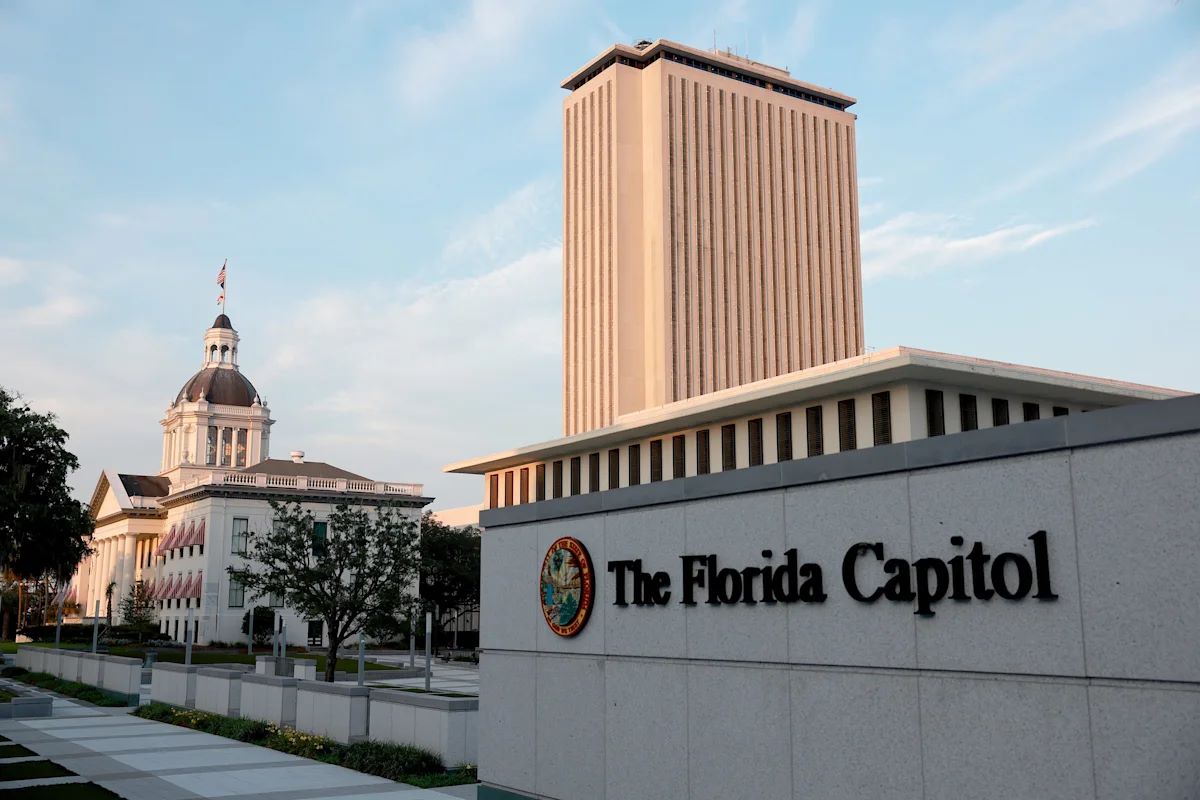
Florida homeowners have spent years hearing why the property insurance market went sideways. Lawsuits. Lawyers. Too many claims. Insurers were supposedly getting hammered, and unless Tallahassee changed the rules, the market was going to keep falling apart.
So the rules changed. And not in some obscure way that only insurance lawyers noticed. Florida took away one-way attorney fees in property insurance cases and made it harder for policyholders to fight a carrier when a claim was denied or underpaid.
Now there is a taxpayer-funded report sitting in the middle of that history, and after reading what the Orlando Sentinel and South Florida Sun Sentinel investigation found, I keep coming back to the same thought: were homeowners ever getting the whole story?
The numbers are not subtle. The newspapers reported that roughly 50 Florida property insurers showed a combined $432 million in losses from 2017 through 2019 while affiliated companies connected to those insurers generated about $1.3 billion in net income.
I read that twice. Then I went back and read it again.
Maybe there are legitimate explanations for every one of those transactions. There may be. But after years of hearing how badly insurers were supposedly bleeding in Florida, $432 million in losses sitting next to $1.3 billion in affiliate income is the kind of thing that deserves daylight. A lot of it.
The State Paid Someone to Look at This
Insurers are allowed to do business with affiliated companies. That part is not scandalous by itself. A parent company can have related businesses handling management, claims, commissions, investments or other services.
Florida law does put a guardrail around that, though. Under Florida Statute 624.424, payments to affiliates have to be fair and reasonable, and the Office of Insurance Regulation can ask for information needed to evaluate them.
According to the investigation, the consultant hired by the state concluded that 20 property insurers were paying affiliates fees that exceeded the consultant's interpretation of that fair-and-reasonable standard.
That is where this stops being an abstract accounting debate for me. The state paid professionals to examine the transactions. They found things they believed needed attention. Yet Florida was having a full-blown public fight over why insurance was broken, and homeowners were not reading this report.
And We Paid for the Report
The report reportedly cost taxpayers about $150,000.
That is our money. Meanwhile people were watching premiums jump, policies disappear, insurers fail and lawmakers tell them litigation had become one of the big problems that needed fixing.
If the state had a report looking at money moving from insurers to related companies, I would have liked that on the table too. Not three years later. Not after the laws changed. At the time.
Instead, the newspapers say the information stayed out of public view while lawmakers were debating major insurance reforms.
Then Reporters Got It. And the Response Was... Shred It?
The newspapers eventually obtained the material through a public-records request. According to the reporting, the Florida Senate's general counsel then warned the news organizations about possible civil or criminal consequences and demanded that the records be destroyed, including an instruction to "shred all physical copies."
Seriously, what are we doing here?
If the report was flawed, explain the flaws. If the consultant used a bad methodology, walk through it. If the payments were perfectly justified, show what the affiliates did and why those amounts made sense.
Trying to claw the documents back from journalists does not answer any of that. It just creates a second story on top of the first one.
And yes, the state's current insurance commissioner has pushed back on the analysis. The reporting says Commissioner Michael Yaworsky has called the consultant's work flawed and outdated and said it contained errors and data problems. Fair enough. That is important context.
But it also makes the obvious next question unavoidable: which findings were wrong? Which numbers were bad? What changes the conclusion? The public deserves more than dueling adjectives.
Remember What Homeowners Were Told
Go back to the 2022 property insurance special session. The Florida Senate's own summary of SB 2-A said the bill addressed "excessive litigation" by eliminating one-way attorney fees in property insurance cases.
That mattered in the real world. A homeowner with a denied roof claim does not have an insurance company's legal department or litigation budget. Changing the attorney-fee rules changes whether some people can realistically afford to fight.
Maybe lawmakers believed that change was necessary. I am not pretending every property insurance lawsuit was wonderful or every claim was legitimate. Fraud exists. Bad lawsuits exist. Florida also gets hit by hurricanes, reinsurance is expensive and construction costs have been brutal.
The market was genuinely messed up.
But that is exactly why the financial picture needed to be complete. If insurer losses were being used to justify changing homeowners' rights, then affiliate payments belonged in that conversation too.
These Numbers Do Not Prove Fraud. They Still Need an Explanation.
The reporting gives examples that are hard to shrug off.
- American Platinum Property and Casualty and Universal Property & Casualty reportedly showed a combined loss of about $11.1 million while an affiliate generated roughly $166 million in net income.
- Heritage Property & Casualty reportedly showed nearly $81 million in losses while affiliates generated about $174 million in net income.
- FedNat and a subsidiary reportedly showed about $42 million in losses while affiliates made at least $79.4 million. FedNat was later declared insolvent.
None of that, standing alone, proves a crime. It does not prove every payment was improper, and it does not prove those transfers caused premium increases or insurer failures.
Still, come on. If a carrier is reporting losses while related businesses are making substantially more, regulators should be able to explain what those businesses were paid to do, how the fees were calculated and why the amounts were reasonable.
That is not a conspiracy theory. It is the kind of boring financial oversight government is supposed to be good at.
Florida Even Tried to Tighten the Rules in 2026
This issue did not disappear. In 2026, Florida lawmakers considered HB 1399, dealing specifically with property-insurance affiliates. The proposal would have required more documentation showing affiliate payments were fair and reasonable, expanded the factors regulators could consider and given the Office of Insurance Regulation more authority over certain transfers.
The bill ultimately died in the Senate Rules Committee in March 2026.
I am not going to pretend a failed bill proves the original consultant was right about everything. It doesn't. But it tells you the issue was serious enough that lawmakers were still trying to write more oversight around it years later.
Why Personal Injury Victims Should Care About Any of This
This report is about property insurers. It is not evidence that every automobile or liability carrier operates the same way, and it would be reckless to write as if it were.
The larger policy issue is different.
In 2023, Florida passed HB 837, a sweeping civil-remedies law that changed the rules for Florida personal injury claims. It repealed one-way attorney-fee provisions for most insurance cases, reduced the negligence statute of limitations and changed comparative negligence, bad-faith rules and how medical damages can be presented.
Those are not abstract changes for car crash victims or families bringing wrongful death cases. They affect how claims are evaluated, how cases are litigated and, in some situations, whether a person can recover at all.
So when industry finances and litigation costs are used to support laws that reduce legal remedies, I want the underlying information to be complete. That seems like a pretty low bar.
Lawyers Were an Easy Target. That Does Not Make the Story Complete.
Florida heard a lot about "lawsuit abuse" during the insurance debate. Some of that criticism was deserved. There are frivolous claims and bad actors in every system.
There are also legitimate claims that insurers deny, delay or undervalue. Anyone who works around Florida car accident and insurance claims has seen how quickly an insurance dispute can become a fight over evidence, coverage and money.
What bothers me about this report is not that it magically proves lawyers were innocent and insurers were villains. Life is rarely that tidy, unfortunately.
It is that the public argument sounded much tidier than the finances apparently were.
Floridians were hearing about litigation costs while a state consultant was examining hundreds of millions of dollars moving through insurer-affiliate relationships. That information should not have been treated like a side note.
The Part I Cannot Get Past
I keep coming back to the government's reaction after journalists got the records.
Maybe the Senate has a serious legal argument about trade secrets or privilege. Maybe the documents were released by mistake. Those issues can be argued in court if necessary.
But the first thing homeowners need is an explanation of the substance.
Where did the money go? What did the affiliates provide? Which transactions did the consultant get wrong? Which ones does the state still believe were fair? And why wasn't this analysis part of the public debate when lawmakers were being asked to remake the insurance system?
Those are not partisan questions. They are not anti-business questions. They are the questions you ask when people are paying thousands of dollars a year for a product they cannot realistically go without.
Florida Homeowners Were Owed the Whole Picture
I do not know that every insurance reform Florida passed was wrong. This report cannot prove that, and pretending otherwise would just replace one oversimplified story with another.
Some reforms may have helped. Some may have been necessary. Some may have gone too far.
What I do know is that Florida homeowners spent years being told lawsuits, legal fees and claims were a major reason their insurance system was falling apart.
Now we know a taxpayer-funded analysis was examining a very different part of the money trail: insurers reporting hundreds of millions in losses while affiliated companies generated about $1.3 billion in net income. The consultant reportedly questioned affiliate payments involving 20 insurers. The public did not have that analysis while major reforms were being debated.
Then journalists got the records and were reportedly told to destroy them.
Maybe the state has good answers. Maybe the insurers do too.
At this point, put the answers on the table.
Because after the premiums, the deductibles, the assessments and years of being told consumers were part of the problem, "trust us" is not enough anymore.
Primary reporting: Yahoo News / Scott Maxwell column and Orlando Sentinel / South Florida Sun Sentinel investigation (syndicated).
About the Author
Attorney Armando Edmiston is the founder of Armando Personal Injury Law in Tampa and St. Pete, Florida. A U.S. Marine veteran, Hillsborough County native, and ACS Forensic Lawyer-Scientist, he represents Floridians in serious personal injury and wrongful death cases.