
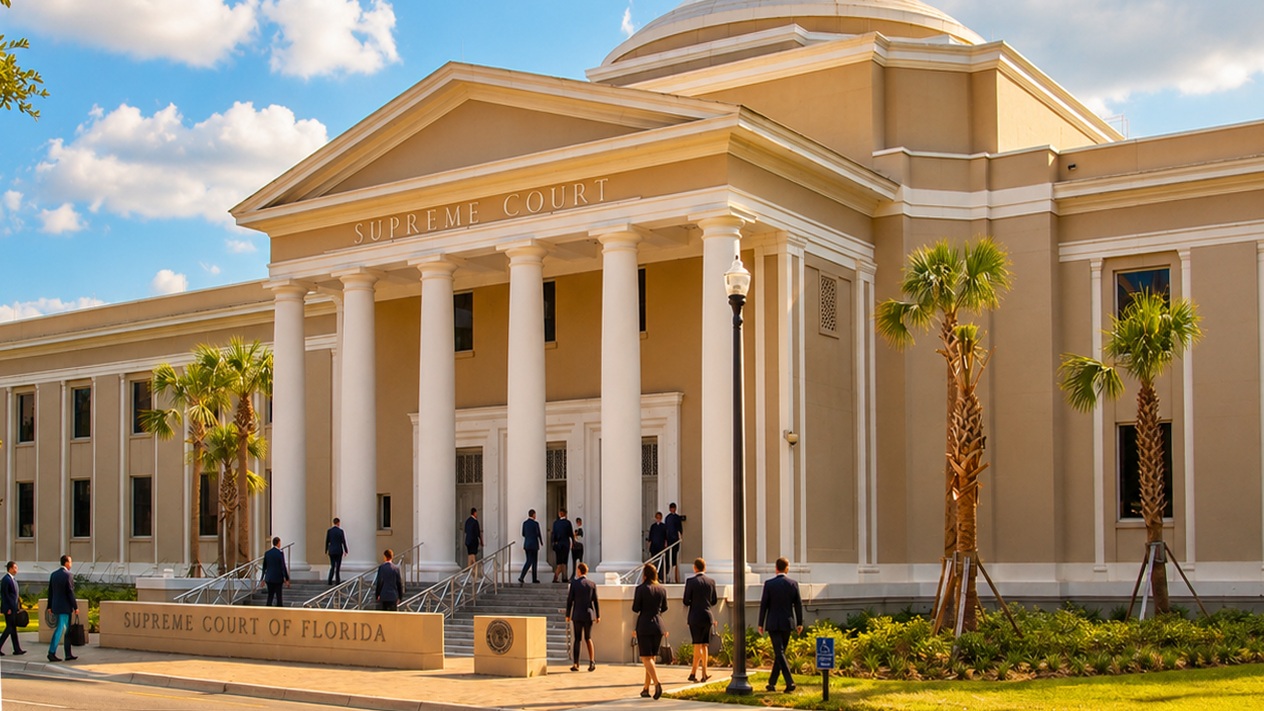
Florida’s Perlmutter decision clarified when punitive damages can be added in civil injury cases.
Florida personal injury law recently received an important clarification from the Florida Supreme Court. While the issue may sound technical at first, it can make a real difference in serious injury cases where the defendant’s conduct goes beyond ordinary carelessness.
The case is called Perlmutter v. Federal Insurance Company, and the Florida Supreme Court issued its decision on June 11, 2026. The case itself was not a typical car accident, truck accident, nursing home abuse, or wrongful death case. But the ruling affects a legal issue that can come up in many serious injury lawsuits:
When can an injured person ask the court to add a claim for punitive damages?
That question matters because punitive damages are different from the damages most people think about after an accident. They are not available in every case, and they are not meant to compensate someone for medical bills or lost wages. Punitive damages are reserved for conduct that is especially reckless, dangerous, or intentional.
For injured people and their families, the Perlmutter decision helps clarify what must be shown before a punitive damages claim can move forward in a Florida civil case.
What Are Punitive Damages?
Most personal injury claims focus on compensatory damages.
These are the damages meant to help compensate an injured person for what the accident has cost them physically, emotionally, and financially. That may include:
- Medical bills
- Future medical care
- Lost income
- Reduced ability to work
- Pain and suffering
- Property damage
- Loss of enjoyment of life
- Out-of-pocket expenses
Punitive damages serve a different purpose.
They are meant to punish a defendant for especially harmful conduct and to discourage similar conduct in the future. In other words, punitive damages are not just about what happened to the injured person. They are also about the seriousness of the defendant’s behavior.
Under Florida Statute § 768.72, punitive damages may be available when there is a reasonable showing of intentional misconduct or gross negligence.
That does not mean every careless driver, unsafe business, or negligent property owner will face punitive damages. Ordinary negligence is usually not enough. The conduct must be more severe.
Punitive damages may become an issue in cases involving things like drunk driving, extreme recklessness, intentional harm, repeated safety violations, or a conscious disregard for the safety of others.
You can learn more about this issue on our Florida punitive damages page.
Why the Perlmutter Decision Matters
Before Perlmutter, Florida courts were not all applying the same standard when injured plaintiffs asked to add punitive damages to a lawsuit.
That created confusion for injury victims, attorneys, defendants, and judges.
In Florida, a plaintiff generally cannot include a punitive damages claim in the first version of the lawsuit. Instead, the injured person must ask the court for permission to amend the complaint and add that claim later.
That rule exists because punitive damages can open the door to financial discovery about the defendant. Once punitive damages are properly added, the defendant may have to disclose financial information that would not normally be part of the case.
Because that is a serious step, Florida law requires the judge to act as a gatekeeper.
The key question in Perlmutter was whether a plaintiff must prove punitive damages by clear and convincing evidence at that early stage, or whether the plaintiff only needs to make a reasonable evidentiary showing that punitive damages may be supported.
That distinction is important.
If courts require injured people to meet the full trial burden too early, the motion to add punitive damages can start to look like a trial before the actual trial. That can be unfair, especially when some of the strongest evidence may still be in the defendant’s possession.
What the Florida Supreme Court Clarified
The Florida Supreme Court clarified that the clear and convincing evidence standard applies at trial, not at the earlier stage when a plaintiff asks permission to add a punitive damages claim.
At the pleading stage, the judge’s role is to decide whether the injured person has made a reasonable evidentiary showing that could support punitive damages. The judge is not supposed to weigh all of the evidence as if the case is already being tried before a jury.
That does not mean punitive damages are automatic.
It does not mean every injury case will now include punitive damages.
It does not mean an injured person wins punitive damages simply because the court allows the claim to be added.
It means the early question is whether there is enough evidence for the claim to move forward.
Later, at trial, the plaintiff still has to prove entitlement to punitive damages by clear and convincing evidence under Florida Statute § 768.725.
That is the important balance. Perlmutter helps clarify the path to bringing a punitive damages claim, but it does not remove the higher burden that applies at trial.
Why This Matters in Serious Injury Cases
For many injury victims, the case is about proving that someone failed to act with reasonable care. That is the foundation of most negligence claims.
But some cases involve conduct that is much more serious.
Examples may include:
- A drunk driver causing a severe crash
- A company ignoring repeated safety warnings
- A trucking company putting an unsafe driver on the road
- A nursing home failing to correct repeated neglect concerns
- A property owner ignoring a known dangerous condition
- A business choosing profit over known safety risks
In these situations, punitive damages may need to be considered.
Not because every bad accident deserves punishment, but because some conduct is so dangerous that the law allows more than ordinary compensation. In the right case, punitive damages can help hold the wrongdoer accountable and send a message that the conduct should not happen again.
At Armando Personal Injury Law, we represent people hurt in serious accidents across Florida, including car accidents, truck accidents, motorcycle accidents, premises liability claims, nursing home abuse and neglect cases, and wrongful death claims.
Perlmutter Does Not Make Punitive Damages Easy
It is important to be clear about what Perlmutter does and does not do.
The decision does not make punitive damages easy to win. It does not turn every negligence case into a punitive damages case. It does not lower the burden of proof at trial.
Florida law still limits punitive damages. Courts still review whether the claim is supported. Plaintiffs still need evidence. And at trial, the burden remains high.
Under Florida Statute § 768.73, punitive damages are also subject to limits in many cases. The amount available may depend on the facts, the type of misconduct, and whether certain exceptions apply.
So this decision does not mean every case suddenly becomes a punitive damages case. What it does mean is that Florida now has clearer guidance on the standard courts should use when deciding whether a punitive damages claim can be added.
That clarity matters. It helps injured people understand the process, and it helps prevent the early stage of a case from becoming more burdensome than the law requires.
Evidence Still Matters
Even after Perlmutter, evidence is still everything.
A punitive damages claim cannot be based on frustration, suspicion, or the simple fact that someone was badly hurt. It must be supported by facts.
Evidence may include:
- Crash reports
- Video footage
- Witness statements
- Internal company records
- Prior complaints
- Inspection records
- Cell phone records
- Toxicology results
- Maintenance logs
- Safety policies
- Training records
- Medical records
- Expert opinions
The stronger the evidence, the stronger the argument.
This is one reason injured people should speak with an attorney early after a serious accident. Important evidence can disappear quickly. Surveillance video can be erased. Vehicles can be repaired or destroyed. Witnesses can become harder to locate. Businesses and insurance companies may begin protecting themselves almost immediately.
The injured person should not be the last one to understand what evidence matters.
If you have been seriously injured, our Florida personal injury lawyer page explains how injury claims work and why early investigation can make a difference.
What This Means for Florida Injury Victims
The Perlmutter decision gives injury victims a clearer path when the facts may support punitive damages.
It does not guarantee punitive damages. It does not lower the trial burden. It does not turn ordinary negligence into gross negligence.
But it does help make sure the early pleading stage does not become a full trial before discovery is complete.
That matters because some of the most important evidence in a serious injury case may not be available at the beginning. It may be found in company records, internal communications, inspection reports, training documents, prior complaints, or other materials that only become available through the legal process.
Without the ability to move the case forward properly, injured people may never get access to the evidence needed to show how serious the defendant’s misconduct really was.
That is why this decision matters.
Why Legal Strategy Matters in Serious Injury Cases
Not every personal injury case needs a punitive damages claim. Most do not.
But when the facts support it, punitive damages should be evaluated carefully. That requires understanding the difference between ordinary negligence, gross negligence, and intentional misconduct.
It also requires knowing when to ask for punitive damages, what evidence is needed, and how to build the record correctly.
At Armando Personal Injury Law, we take serious injury cases apart piece by piece. We look at what happened, why it happened, who may be responsible, what evidence needs to be preserved, and whether the conduct involved something more than simple carelessness.
That approach matters because the insurance company’s version of events is often designed to protect the insurance company. Injured people deserve someone who is looking out for them, not just looking for the cheapest way to close a claim.
Talk to a Florida Personal Injury Lawyer
If you were seriously injured because of reckless, dangerous, or intentional conduct, you may have more rights than you realize.
Punitive damages are not available in every case. But when the facts support them, they can be an important part of holding the wrongdoer accountable.
Armando Personal Injury Law represents injured people and families across Florida. We can review what happened, investigate the evidence, identify available insurance coverage, and explain whether punitive damages may be an issue in your case.
Call (813) 482-0355 for a free consultation.
You pay nothing unless we win.

About the Author
Attorney Armando Edmiston is the founder of Armando Personal Injury Law in Tampa and St. Pete, Florida. A U.S. Marine veteran, Hillsborough County native, and ACS Forensic Lawyer-Scientist, he represents Floridians in serious personal injury and wrongful death cases.