A DUI crash on I-275 in St. Petersburg shows how fast a construction zone collision can turn into a serious injury claim.
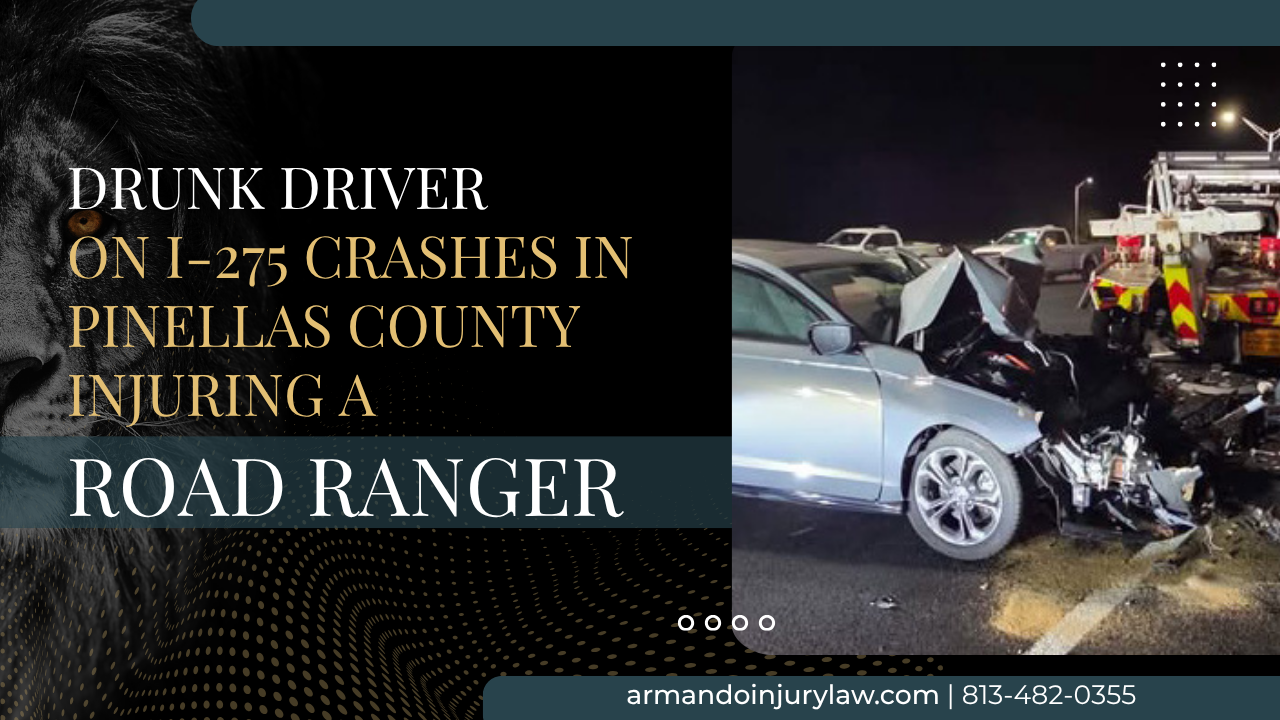
A recent crash on I-275 in St. Petersburg is a reminder that one impaired driving decision can leave another person dealing with injuries, medical bills, lost income, and a long insurance fight. According to local reporting citing the Florida Highway Patrol, a driver allegedly failed to stop or slow down in a construction zone and crashed into a stopped Road Ranger truck in northbound traffic near 4th Street N in Pinellas County.
For injured people, the criminal side of a DUI case is only part of the story. A DUI arrest may support accountability, but it does not automatically resolve the civil injury claim. Victims still need to protect evidence, document injuries, and understand how Florida injury laws may affect compensation.
If you were hurt in a similar crash, start with our St. Petersburg car accident attorney page for a broader overview of your rights. If alcohol or drugs may have played a role, see our St. Petersburg drunk driving accident page. If the impact involved a vehicle striking the rear of another vehicle, our St. Petersburg rear-end accident page explains how these claims are often investigated and challenged.
Why this I-275 crash matters in a Florida injury claim
When a crash involves an alleged DUI driver, a stopped service vehicle, and a lane closure on a major corridor like I-275, several legal issues can come into play at once. Evidence may include the crash report, witness statements, vehicle damage, toxicology-related evidence, dash or traffic camera footage, emergency response records, and the timeline of medical treatment.
Florida's DUI statute, section 316.193, defines driving under the influence and sets out penalties that can become more severe when a DUI causes injury, serious bodily injury, or death. That criminal framework matters, but injured victims usually still need a separate civil case or insurance claim to pursue compensation.
A DUI arrest does not replace a civil injury claim
Many people assume that if the other driver is arrested, the injury case is basically over. It is not. A criminal case is about punishment by the state. A civil injury claim is about the victim's losses.
That means the injured person still has to prove the extent of the harm, the effect on work and daily life, the medical treatment required, and the damages that should be paid. Even in a strong liability case, insurers may still question causation, the seriousness of the injury, and whether the treatment was reasonable and necessary.
Rear-end crash dynamics can still cause serious injuries
FHP's description of this incident points to a rear-impact collision into a stopped vehicle. Rear-end crashes are often minimized by insurers, but that can be a mistake. These collisions can cause neck injuries, back injuries, disc injuries, shoulder trauma, concussive symptoms, and delayed pain that does not fully appear until hours or days later.
That is one reason rear-end crashes deserve a careful legal and medical review. Even when property damage looks moderate, the body can absorb force in ways that produce ongoing symptoms, treatment needs, and disputes over permanency.
For a closer look at how these cases are handled, visit our rear-end accident page for St. Petersburg.
Florida PIP rules can affect your injury claim right away
Florida is still a no-fault state for many car accident cases, which means Personal Injury Protection coverage can matter immediately after a crash. Under Florida Statute section 627.736, PIP generally provides limited medical and disability benefits, but the injured person usually needs initial services and care within 14 days of the crash.
That makes early medical evaluation important. Waiting too long can hurt both the insurance claim and the injury case. It can also give the insurer an opening to argue that the crash was not the real cause of the symptoms.
When can an injured person seek pain and suffering damages?
Not every Florida car accident claim allows recovery for pain and suffering. Under Florida Statute section 627.737, a person generally must meet the serious injury threshold before seeking non-economic damages in an auto case.
That threshold may apply where the injury involves:
- significant and permanent loss of an important bodily function
- permanent injury within a reasonable degree of medical probability
- significant and permanent scarring or disfigurement
- death
In real cases, that often means the medical records, imaging, physician opinions, and long-term effect of the injury become central to the claim.
Can punitive damages apply in a drunk driving crash?
Sometimes, but not automatically. Under Florida Statute section 768.72, punitive damages in a civil case require a reasonable evidentiary showing and proof standards beyond an ordinary negligence claim.
In the right drunk driving case, punitive damages may become part of the analysis because the law allows them where the evidence supports intentional misconduct or gross negligence. Still, they are not automatic, and the facts have to justify that step.
Learn more about how these claims are evaluated on our drunk driving accident page.
Comparative fault can still be an issue in Florida injury cases
Even when the other driver appears clearly at fault, insurance carriers may still try to shift blame. Under Florida Statute section 768.81, a party found to be more than 50 percent at fault for his or her own harm generally cannot recover damages in a negligence action.
That is one more reason evidence preservation matters. The sooner an injury claim is investigated, the harder it is for an insurer to rewrite the facts.
Do not wait too long to protect a Florida injury claim
Deadlines matter. Under Florida Statute section 95.11, negligence claims are generally subject to a two-year limitations period. That does not mean you should wait. In practice, key evidence can disappear long before the filing deadline becomes the main problem.
Vehicles get repaired. Surveillance footage is overwritten. Witnesses become harder to locate. Medical timelines get more complicated. The earlier the case is evaluated, the better the chance of preserving the proof that matters.
What to do after a St. Petersburg crash involving a suspected drunk driver
If you were hurt in a similar crash in St. Petersburg or elsewhere in Pinellas County, practical first steps often include:
- getting medical care as soon as possible
- reporting the crash and obtaining the crash report information
- photographing vehicle damage, roadway conditions, and visible injuries
- preserving witness names and contact information
- avoiding recorded insurance statements before you understand your injuries
- speaking with a lawyer before important evidence is lost
Talk to a St. Petersburg car accident lawyer about your options
A crash involving an alleged DUI driver can create serious legal and insurance issues very quickly. If you were injured in a similar collision, Armando Personal Injury Law can review what happened, explain how Florida law may apply, and help protect the evidence your case may depend on.
Start here: St. Petersburg car accident attorney. For alcohol-related crashes, visit our drunk driving accident lawyer page. For rear-impact cases, review our rear-end accident lawyer page.
About the Author
Attorney Armando Edmiston is the founder of Armando Personal Injury Law in Tampa and St. Pete, Florida. A U.S. Marine veteran, Hillsborough County native, and ACS Forensic Lawyer-Scientist, he represents Floridians in serious personal injury and wrongful death cases.