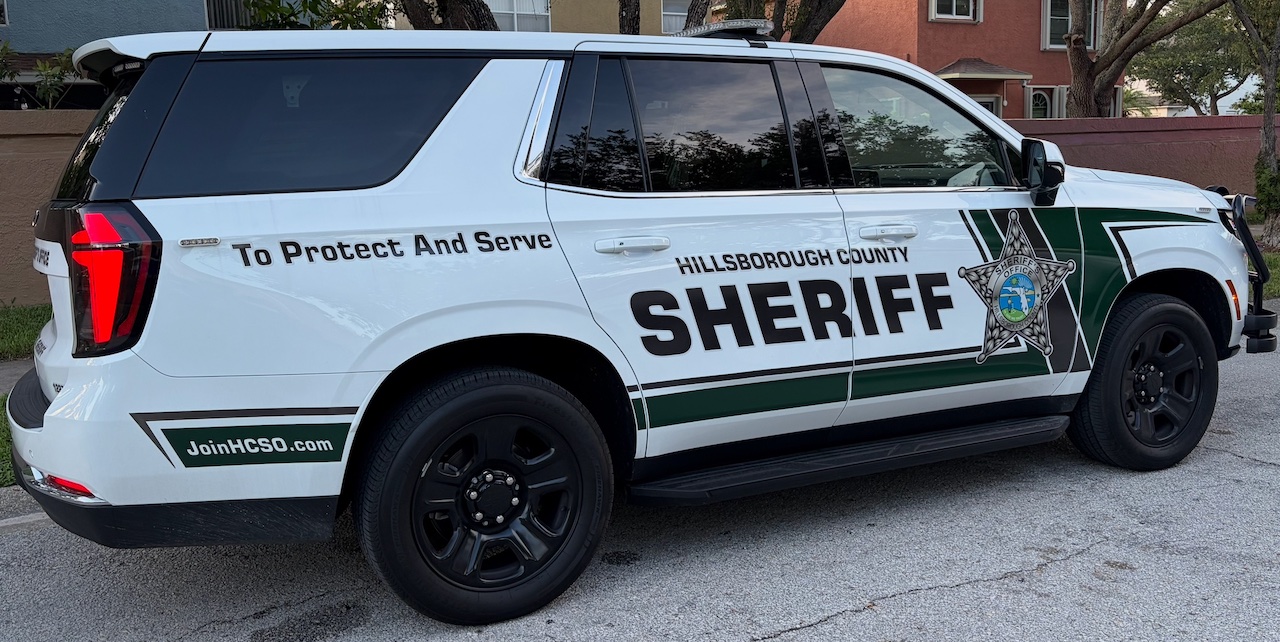
A fatal accident involving a Hillsborough County deputy is currently under investigation.
A Fatal Pedestrian Crash in Hillsborough County Raises Serious Legal Questions
A 27-year-old man died after being struck by an unmarked Hillsborough County Sheriff's Office vehicle in Town 'N Country, according to reports from WFLA and the Hillsborough County Sheriff's Office.
The crash happened around 10:20 p.m. on Saturday, June 20, 2026, near West Hillsborough Avenue and Ambassador Drive. According to HCSO, Deputy Jonathan Kennon was driving an unmarked 2024 Chevrolet Silverado eastbound in the center lane of West Hillsborough Avenue when the vehicle made contact with pedestrian Dudane Anderson III, who was reportedly crossing outside a marked crosswalk.
HCSO stated that the deputy immediately stopped and rendered aid until EMS arrived. Anderson was taken to St. Joseph's Hospital - Main, where he was later pronounced deceased on June 21, 2026. The Florida Highway Patrol is handling the investigation, and the deputy has been placed on administrative duty pending the outcome.
For Anderson's family, the legal details matter. But the human reality comes first. A man lost his life. His family now has to grieve while also trying to understand what happened, what evidence exists, and what rights they may have under Florida law.
At Armando Personal Injury Law, we help families after devastating pedestrian, bicycle, and wrongful death crashes throughout Tampa, Hillsborough County, and across Florida. Fatal pedestrian crashes are never simple. When the vehicle involved belongs to a government agency, the legal questions can become even more complicated.
A Pedestrian Outside a Crosswalk Does Not Automatically End the Case
One of the first things insurance companies and defense lawyers look for in a pedestrian accident case is whether the pedestrian was inside a marked crosswalk. That fact can matter. It does not, by itself, answer every question.
Under Florida Statute 316.130, pedestrians crossing outside a marked crosswalk generally must yield the right-of-way to vehicles. But the same statute also requires drivers to exercise due care to avoid colliding with any pedestrian and to use proper precaution when necessary.
That means the investigation should not stop with one sentence in a crash report. A pedestrian crossing outside a crosswalk may still have a claim depending on the facts, including whether a driver had enough time and visibility to avoid the crash. Important questions may include:
- Was the driver speeding or driving too fast for the conditions?
- Was the driver distracted?
- Was the pedestrian visible from a reasonable distance?
- Were streetlights, headlights, or poor lighting conditions involved?
- Were there nearby intersections, bus stops, stores, apartments, or other signs of pedestrian activity?
- Were roadway design issues making the area dangerous for people walking?
- Did the driver have enough time to react?
- Was the vehicle being operated safely for nighttime conditions?
- Is there dashcam, bodycam, surveillance, or traffic camera footage?
These details can change how fault is evaluated. Families can learn more in our guide on determining fault in a Florida pedestrian accident.
Why Nighttime Pedestrian Crashes Are Often So Dangerous
This crash happened at night, which can make pedestrian crashes more severe and more difficult to investigate. The National Highway Traffic Safety Administration warns that drivers should use extra caution at night because pedestrians may be harder to see.
But darkness is not a complete explanation. Drivers still have a duty to adjust to the conditions around them. That may mean reducing speed, scanning carefully, maintaining proper headlights, avoiding distractions, and staying alert in areas where people may be walking.
West Hillsborough Avenue is a busy corridor. In areas like Town 'N Country, people may be walking near intersections, apartment complexes, convenience stores, bus stops, and commercial driveways. A serious investigation should look at the entire environment, not just the moment of impact.
That review may include lighting conditions, lane layout, posted speed limits, actual vehicle speed, headlight visibility, nearby crosswalk placement, traffic signal timing, roadside obstructions, pedestrian pathways, and prior crash history in the area.
When someone is killed, families deserve more than a short summary. They deserve a complete investigation.
What Changes When a Government Vehicle Is Involved?
Pedestrian crashes involving government vehicles can be legally different from crashes involving private drivers.
If a law enforcement officer or other government employee is driving within the scope of employment, the claim may involve Florida's sovereign immunity statute, Florida Statute 768.28. This law allows certain claims against government agencies, but it also creates special rules, notice requirements, defenses, deadlines, and recovery limits.
That is one reason early legal guidance matters. A family may need to determine:
- Which agency owned the vehicle
- Whether the deputy was acting within the scope of employment
- Whether the crash involved official duties
- Whether the agency has applicable insurance coverage
- Whether a formal notice of claim is required
- Whether sovereign immunity limits apply
- Whether additional claims or defendants may exist
- Whether dashcam, bodycam, radio traffic, CAD records, GPS data, or vehicle data must be preserved
Administrative duty is not the same thing as a finding of fault. It also does not mean a family has no civil claim. It simply means the agency has taken an employment-related step while the investigation continues. The civil case depends on the evidence and how Florida law applies.
Florida Wrongful Death Claims After Fatal Pedestrian Accidents
When a pedestrian dies because of another party's negligence, the case may become a wrongful death claim under Florida Statute 768.19. In plain terms, if the injured person would have had the right to bring a personal injury claim had they survived, eligible survivors may have the right to pursue a wrongful death claim after the person's death.
Wrongful death claims may help families seek compensation for losses such as:
- Funeral and burial expenses
- Medical expenses related to the final injury
- Loss of support and services
- Loss of companionship and protection
- Mental pain and suffering for eligible survivors
- Lost earnings and net accumulations in certain cases
No amount of money can replace a loved one. A wrongful death claim is not about pretending that it can. It is about accountability, financial stability, and forcing the responsible parties to answer for what happened.
For a broader explanation, read our article on how wrongful death lawsuits work in Florida or visit our Florida wrongful death lawyer page.
Comparative Fault May Become a Major Issue
Florida follows a modified comparative fault system under Florida Statute 768.81. In many negligence cases, a person's recovery may be reduced by their percentage of fault. If a claimant is found more than 50 percent at fault, recovery may be barred in many negligence cases.
In pedestrian accident cases, this issue often becomes a fight. The defense may argue that the pedestrian caused the crash by crossing outside a marked crosswalk. The family's attorney may investigate whether the driver still had the ability to see, react, slow, stop, or avoid the collision.
That investigation may involve crash reconstruction, scene measurements, vehicle speed analysis, headlight visibility, surveillance footage, witness testimony, cell phone records, event data recorder information, roadway design review, and expert analysis of reaction time and stopping distance.
Families should be cautious about accepting early conclusions before all available evidence has been reviewed.
Why This Also Matters for Bicycle Accident Cases
Although this reported crash involved a pedestrian, many of the same roadway-danger issues also appear in serious Florida bicycle accident cases. People walking and people riding bicycles are both vulnerable road users. They are exposed, harder to see than vehicles, and much more likely to suffer severe or fatal injuries when a vehicle hits them.
Florida bicycle law, including Florida Statute 316.2065, can become important when a person is injured while riding a bicycle. But just like pedestrian cases, the legal analysis should not stop with one fact, one sentence in a crash report, or one insurance company talking point.
Families dealing with a serious cycling injury can review our Tampa bicycle accident lawyer page, our guide on what to do if hit by a car on a bike, our resource on bicycle accident insurance claims, our guide to reading a Florida bike accident report, our explanation of Florida bike laws, and our page on determining fault in a Florida bike accident.
The common thread is evidence. Whether a person was walking or riding, the case often turns on visibility, driver attention, speed, roadway design, insurance coverage, and whether the defense tries to shift blame onto the injured person or the family.
Evidence That Should Be Preserved After a Fatal Pedestrian Crash
After a deadly pedestrian crash, evidence can disappear quickly. Nearby businesses may overwrite video. Vehicles may be repaired. Roadway conditions may change. Witnesses may become harder to find. Digital records may not be saved unless someone demands preservation.
Important evidence may include:
- The Florida Highway Patrol crash report
- HCSO vehicle records
- Dashcam or bodycam footage
- Dispatch and CAD records
- Radio communications
- GPS or AVL vehicle data
- Event data recorder information
- Scene photographs
- Surveillance video from nearby businesses
- Traffic camera footage
- Witness statements
- Lighting measurements
- Roadway design records
- Prior crash history near the intersection
- Medical examiner findings
- Hospital records
In cases involving government vehicles, preservation letters and public records requests may need to happen quickly and correctly. Families should not have to manage that alone while grieving.
What Families Should Do After a Fatal Pedestrian Crash in Florida
After a fatal pedestrian crash, the family's immediate focus is grief, funeral arrangements, and supporting one another. At the same time, there are practical steps that can help protect the family's legal rights.
- Request the crash report when it becomes available.
- Save all documents from the hospital, medical examiner, and funeral home.
- Avoid recorded statements to insurance representatives without legal advice.
- Write down any information known about the crash location, timeline, and witnesses.
- Preserve the loved one's clothing, phone, shoes, and personal items if available.
- Look for nearby businesses or homes that may have cameras.
- Avoid social media posts about fault, blame, or legal responsibility.
- Speak with a pedestrian accident lawyer as soon as possible.
For additional guidance, visit our page on what to do if you get hit by a car while walking. Families should also know that Florida negligence and wrongful death deadlines are time-sensitive under Florida Statute 95.11, so delay can make an already difficult case harder.
Pedestrian Safety Is Everyone's Responsibility
The NHTSA pedestrian safety resource, the FLHSMV bicycle and pedestrian safety page, and the FDOT pedestrian and bicycle safety program all point to the same reality: people walking and biking are vulnerable, and serious crashes often involve visibility, speed, roadway design, and driver attention.
Drivers must look for pedestrians everywhere, especially at night, near intersections, near bus stops, and along busy commercial corridors. Pedestrians also need safe crossing options, working signals, visible crosswalks, and roadway designs that do not force people into dangerous choices.
Pedestrian deaths are not just "accidents" in the casual sense. Many involve preventable decisions, poor roadway design, inadequate lighting, dangerous speeds, or failures to pay attention.
When a person dies, the investigation should not stop at "the pedestrian was outside a crosswalk." That may be one fact. It should not be the only fact.
Talk to a Tampa Pedestrian Accident Lawyer
If your loved one was killed in a pedestrian crash in Tampa, Town 'N Country, or anywhere in Hillsborough County, you deserve answers. That is especially true when the crash involves a government vehicle or law enforcement agency.
At Armando Personal Injury Law, we help families investigate serious pedestrian crashes, preserve critical evidence, and understand their rights under Florida law. We also represent injured cyclists and families after serious Florida bicycle accidents. We handle pedestrian accident, bicycle accident, and wrongful death cases with the seriousness they deserve.
About the Author
Attorney Armando Edmiston is the founder of Armando Personal Injury Law in Tampa and St. Pete, Florida. A U.S. Marine veteran, Hillsborough County native, and ACS Forensic Lawyer-Scientist, he represents Floridians in serious personal injury and wrongful death cases.