The police investigation remains open. Separate questions about supervision, negligence, and insurance are already taking shape.
A child’s death inside a caregiver’s home may require investigation of supervision, property conditions, and available liability insurance.
WFLA News Channel 8 reports that a 3-year-old girl died after becoming trapped in a wooden play kitchen at a babysitter’s home in Boynton Beach. She and a sibling had been left there to be watched. The children were downstairs. The adult caring for them was upstairs when the little girl became stuck.
Police are still investigating, and no criminal charges had been filed when the story was reported. But that does not settle the civil side of what happened. A child’s death can be accidental and still be preventable.
What this could mean: If the evidence shows that the person responsible for the child failed to provide reasonable supervision, or that someone allowed a dangerous condition to remain in the home, the family could have grounds for a Florida wrongful death claim. Homeowners, renters, childcare, business, or umbrella insurance could provide coverage. The claim itself and the available insurance still have to be investigated separately.
What Police Say Happened
ABC News reported that the toddler and a sibling were at the babysitter's home on July 23, 2026. Police said the babysitter left and turned the children's care over to the babysitter's spouse. The spouse stayed upstairs. The children played downstairs. He checked on them from time to time and brought them snacks.
On one of those checks, he found the toddler with her head trapped in the playset. Her sibling reportedly told investigators that toys had fallen inside and the children were trying to get them out. The spouse freed her and started life-saving efforts. Police and emergency crews took over, and she was rushed to the hospital in critical condition. She died four days later, on July 27.
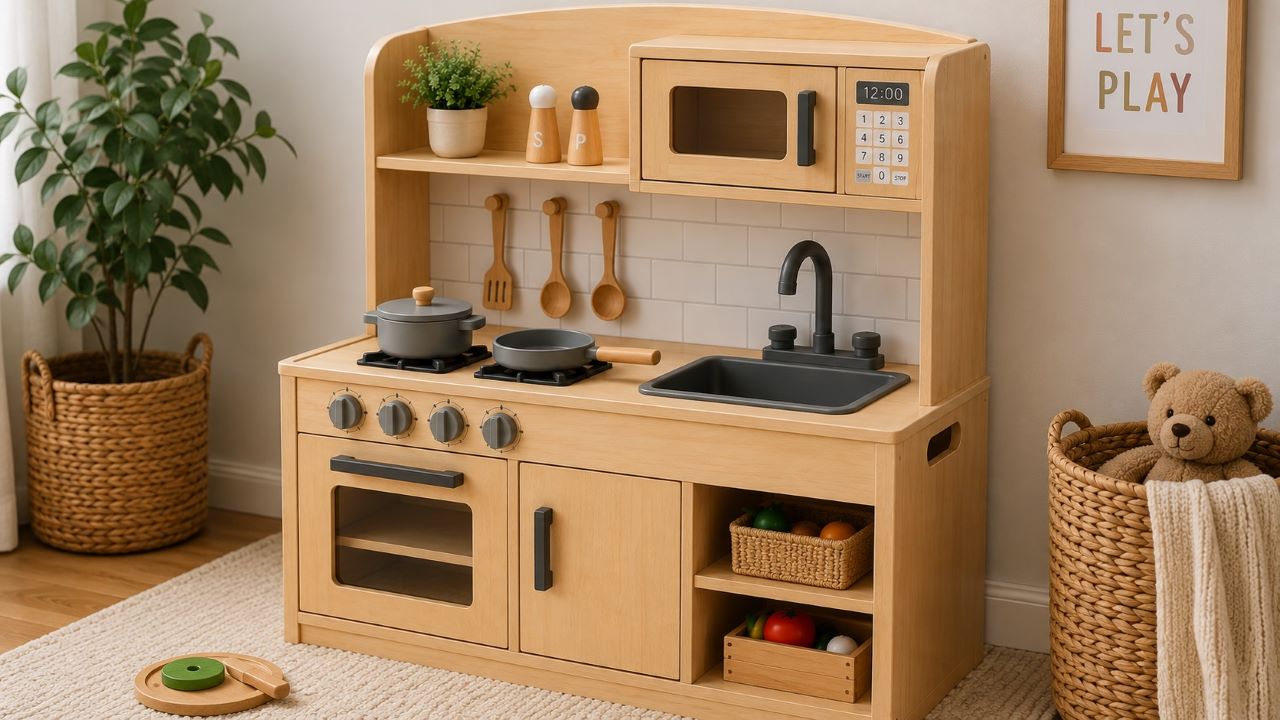
Police later released a photo of the wooden play kitchen. CBS12/CW34 reported that it had been bought used through Facebook Marketplace years earlier. Investigators could not find markings showing a brand, make, or model.
Could the Family Have a Florida Wrongful Death Claim?
Possibly. Under Florida Statute Section 768.19, a wrongful death action may be brought when a death is caused by negligence, a wrongful act, default, or a breach of contract or warranty. What matters here is not the label placed on the death. It is what the evidence shows about the care this child received and the condition of the playset.
The first question is simple and uncomfortable: who was supposed to be watching this child, and were they close enough to protect her? A few details will matter a great deal:
- Who agreed to watch the toddler, and did the parents know that responsibility would be handed to someone else?
- Where was the supervising adult, and how long were the children downstairs without direct supervision?
- Was the playset damaged, altered, missing a part, or built with an opening that could trap a child?
- Had toys fallen into that space before, giving anyone reason to know a child might reach or climb inside?
- Was this an occasional favor or regular paid childcare? That distinction could change the insurance analysis.
The answer could come from a text message, a payment record, a photograph, a witness, or the playset itself. That evidence needs to be protected now.
This May Be About Supervision and the Playset
More than one failure could be involved. Negligent supervision focuses on the care the toddler received. A property-based negligence claim would examine who controlled the home or the playset, whether it presented an unreasonable danger, and whether the responsible person knew or should have known about it. That is the same core issue examined in many Florida premises liability claims.
Those issues can run together. If the playset had a dangerous opening, an adult nearby might have been able to stop the child before she became trapped. If the children were left alone on another floor, a problem with the equipment had more time to become deadly.
Her age matters. Toddlers climb, reach, and chase after toys. They do not understand that a small opening can trap them or cut off their air. The adult watching them has to account for that.
Could Homeowners Insurance Pay a Wrongful Death Claim?
If an insured person’s negligence caused a child’s death, homeowners insurance could provide liability coverage. Coverage is not automatic. The Florida Office of Insurance Regulation explains that homeowners coverage can protect an owner from liability for an accidental injury or death for which the owner is legally responsible. Renters and condominium policies can carry similar protection.
Depending on who lived there, who was providing care, and how the childcare arrangement worked, the family may need to look for:
- Homeowners personal liability coverage
- A renters or condominium liability policy
- A separate childcare or in-home daycare policy
- A business endorsement added to a homeowners policy
- A personal or commercial umbrella policy
- Coverage for another resident who qualifies as an insured
The policy language matters. If this was regular, paid childcare rather than an occasional favor, the insurer may point to a business-activity exclusion. The Florida Department of Financial Services notes that an in-home daycare may need separate coverage or an endorsement. That is why every possible policy has to be found, including daycare, renters, business, and umbrella coverage.
An insurance denial is not the last word on liability, and it is not always the last word on coverage. The facts, the insureds, the childcare arrangement, and the exact exclusions all need to be checked before anyone accepts the carrier’s answer.
Who Files the Claim, and What Can the Family Recover?
Under Florida Statute Section 768.20, the child’s personal representative files the wrongful death case for the survivors and the estate. For the death of a minor child, Florida Statute Section 768.21 allows each parent to seek damages for mental pain and suffering. Recoverable losses can also include qualifying medical expenses, funeral costs, and other damages recognized by the statute.
What is recoverable will turn on the family relationships recognized by the statute, the available insurance, the policy limits, and whether more than one person or company shares responsibility.
The Playset Itself Cannot Be Overlooked
The playset was reportedly bought used and had no identifying markings. That makes preserving it even more important. Someone needs to determine who made it, whether anything was missing, whether it had been changed or damaged, and whether warnings or assembly instructions once came with it. Investigators should also look for recalls and similar incidents.
None of that proves the playset was defective. It does mean nobody should throw it away, repair it, take it apart, or send it back before qualified experts examine it. If the evidence later points to a defect, a manufacturer, distributor, seller, or another company could become part of the case.
Evidence Can Vanish Fast
Two years can sound like plenty of time. It is not. Before the legal deadline becomes the problem, evidence can be moved, overwritten, forgotten, or thrown away. The family should try to preserve:
- The entire playset, including every loose, missing, or detached piece
- Photos and video showing the room and playset as they were after the incident
- Texts, calls, childcare agreements, schedules, and payment records
- Security video, doorbell footage, baby-monitor data, and smart-home records
- Every homeowners, renters, daycare, business, and umbrella policy
- Police, fire rescue, dispatch, hospital, and medical examiner records
- The Marketplace listing, messages, receipts, manuals, and warnings tied to the playset
Florida generally gives families two years to file a wrongful death action under Florida Statute Section 95.11(5)(e). But waiting can hurt the case almost immediately. Electronic records disappear. A room gets rearranged. Memories blur. Some cases may also involve different deadlines or special notice rules.
Talk With a Florida Wrongful Death Lawyer
The evidence will not preserve itself. A lawyer can send preservation notices, secure the playset and electronic records, identify every available policy, and bring in the right experts before the trail goes cold.
Armando Personal Injury Law represents families in Florida wrongful death cases and other serious personal injury claims, including cases involving dangerous property conditions. If your child or another loved one died while in someone else’s care, you can request a free, confidential case evaluation or call (813) 482-0355. There is no fee unless we recover compensation for you.
This article provides general information, not legal advice. The investigation remains open. Nothing here is a finding that any person or company was negligent or legally responsible.
About the Author
Attorney Armando Edmiston is the founder of Armando Personal Injury Law in Tampa and St. Pete, Florida. A U.S. Marine veteran, Hillsborough County native, and ACS Forensic Lawyer-Scientist, he represents Floridians in serious personal injury and wrongful death cases.